Rikugien Garden: Tokyo's Most Refined Edo-Period Landscape
Rikugien Garden in Bunkyo is one of Tokyo's most accomplished classical Japanese gardens, designed in the stroll-garden tradition of the Edo period. With a central pond, forested hills, and teahouses framing seasonal beauty, it rewards visitors in every season.
Quick Facts
- Location
- 6-16-3 Hon-komagome, Bunkyo-ku, Tokyo 113-0021
- Getting There
- JR Yamanote Line / Tokyo Metro Namboku Line: Komagome Station (7 min walk from South Exit / Exit 2); Toei Mita Line: Sengoku Station Exit A3 (10 min walk)
- Time Needed
- 60–90 minutes for a full circuit; 2+ hours during autumn illumination events
- Cost
- ¥300 general; ¥150 for ages 65+; free for primary school children and younger, and Tokyo junior high students. Open 9:00–17:00 (last entry 16:30). Closed Dec 29–Jan 1.
- Best for
- Slow, contemplative garden walks; seasonal foliage; escaping inner-city crowds without leaving Tokyo
- Official website
- www.tokyo-park.or.jp/teien/en/rikugien
What Rikugien Actually Is
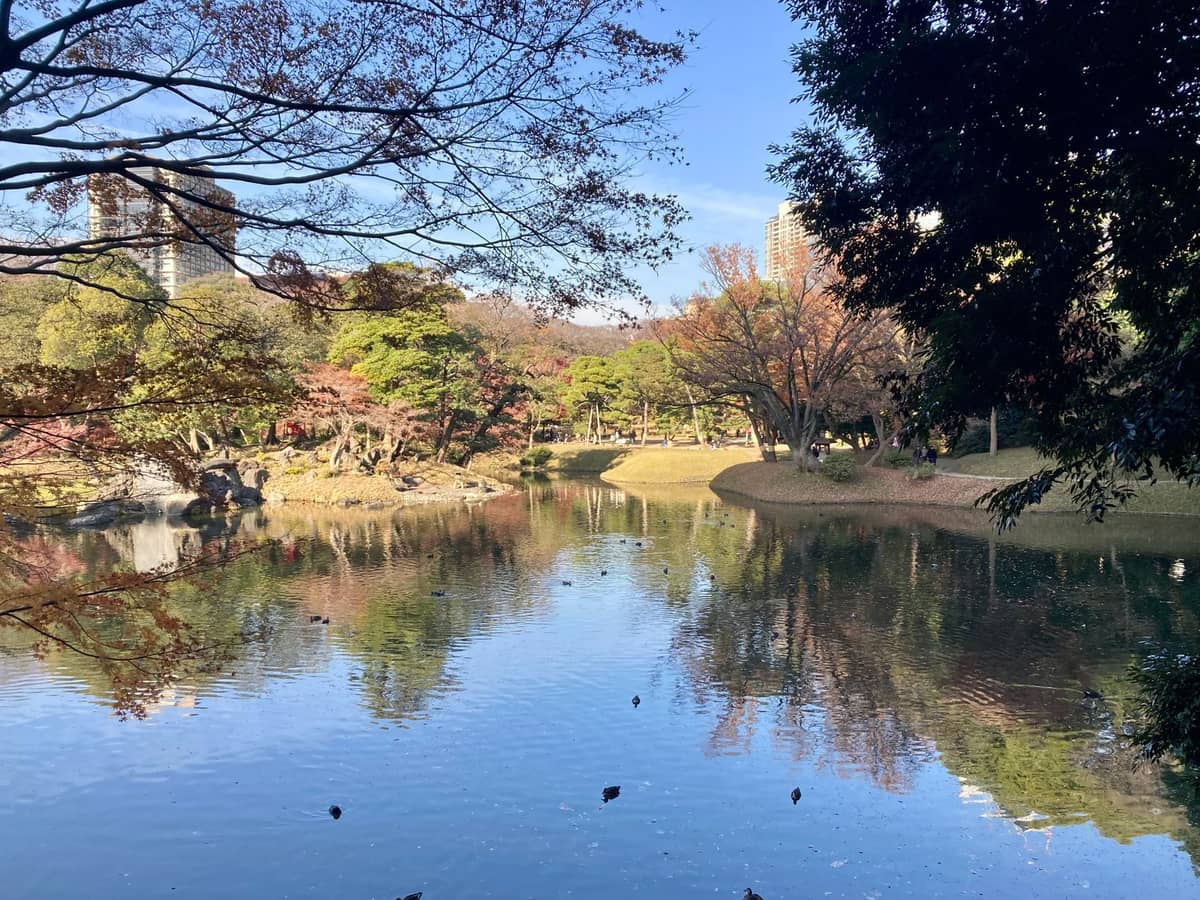
Rikugien Garden (六義園) is a classical Japanese stroll garden in Bunkyo, north-central Tokyo. It belongs to the category of kaiyu-shiki teien, gardens designed so that the entire composition reveals itself gradually as you walk a circuit path around a central pond. Every view is framed, every turn calculated. This is not a park where children kick footballs or joggers do circuits. It is a garden conceived as a three-dimensional poem, and it operates like one.
The garden traces its origins to the early Edo period. It was later acquired by Iwasaki Yataro, the founder of Mitsubishi, who used it as a private villa estate. The Iwasaki family donated it to the city of Tokyo in 1938, after which it was designated a Special Place of Scenic Beauty under Japanese law. That designation matters practically: it means the grounds are maintained to museum-grade standards, and alterations are tightly regulated. What you see today is a landscape preserved with unusual fidelity to its original intent.
💡 Local tip
Arrive at opening time (9:00) on weekdays for the quietest experience. The garden fills noticeably after 11:00, especially on weekends and during autumn foliage season. Last entry is 16:30 sharp.
The Walk: What You Actually See
From the main Komagome Gate entrance, the path drops almost immediately into a different acoustic world. The traffic noise from Hakusan-dori fades within a minute. What replaces it depends on the season: in spring, the hum of bees in the wisteria; in autumn, the dry rustle of maple leaves underfoot. The soil path is firm but uneven in places, and the garden has a gentle topography of small hills and dips that feels much larger than the grounds actually are.
The circuit around the central pond takes roughly 40 to 50 minutes at a slow pace. Stone bridges, small islands with pine trees, and strategically placed rocks punctuate the shoreline. None of this is accidental: the garden's design references 88 scenic spots drawn from classical Japanese waka poetry, each one evoking a named landscape from literature or mythology.
On the western side of the circuit, a small hill provides the best elevated views back over the pond and the tree canopy. It requires a short climb up a packed-earth path. The summit is modest but the perspective shifts enough to be worth the two-minute detour. A teahouse sits near the hill; it serves basic matcha and Japanese sweets on most days, and the experience of sitting on tatami overlooking the garden is genuinely different from the walking circuit.
Tickets & tours
Hand-picked options from our booking partner. Prices are indicative; availability and final rates are confirmed when you complete your booking.
Tsukiji Fish Market Walking Food Tour
From 40 €Instant confirmationFree cancellationMt.Fuji,Owakudani, Hakone Cruise & Ropeway, Oshino Hakkai 1-Day Trip
From 54 €Instant confirmationFree cancellationTour to Mt. Fuji Area, Oshino Hakkai and Kawaguchi Lake from Tokyo
From 57 €Instant confirmationFree cancellationNikko UNESCO Shrine and Nature View 1-Day Tour from Tokyo
From 78 €Instant confirmationFree cancellation
How the Garden Changes by Season
Rikugien is widely associated with two seasons above all others: late March for the weeping cherry tree near the main gate, and November through early December for autumn foliage. The weeping cherry (shidarezakura) near the entrance is a single, ancient tree that becomes one of Tokyo's most photographed spots during peak bloom. Lines form at the gate before opening. Evening illumination events extend hours and draw large crowds. If solitude matters to you, visit early morning on a weekday or wait until the week after peak bloom when the flowers are still falling but the crowds have thinned.
Autumn is arguably Rikugien's most complete season. The maple and zelkova trees turn through orange and deep crimson over several weeks, typically peaking in mid-to-late November. Unlike many Tokyo spots, the colour is distributed throughout the garden rather than concentrated at one point, so the entire walk feels immersive. Evening illumination events also run during this period, transforming the garden after dark into something genuinely different from the daytime version. Crowds are heavy at weekends; arrive on a Tuesday or Wednesday morning if you can.
Summer is underrated here. The garden is green, cool under the canopy, and largely free of the crowds that dominate spring and autumn. Midsummer mornings before 10:00 are particularly peaceful, though Tokyo's humidity is real and you will feel it. Winter strips the garden back to its structural bones: the pine trees dominate, the pond reflects a grey sky, and the composition becomes more austere. It is a legitimate way to experience the garden and attracts far fewer visitors.
For a broader picture of how Tokyo's gardens compare across the seasons, the Tokyo gardens guide covers Rikugien alongside Hamarikyu, Koishikawa Korakuen, and other classical landscapes worth comparing.
Getting There and Practical Logistics
The most straightforward approach is via JR Yamanote Line or Tokyo Metro Namboku Line to Komagome Station. From the South Exit (JR) or Exit 2 (Metro), the main gate is a 7-minute walk along a clear, signposted route. If you are coming via the Toei Mita Line, Sengoku Station Exit A3 is a 10-minute walk to the garden's secondary entrance. Both approaches pass through quiet residential streets with a few small cafes and convenience stores.
Admission is ¥300 for adults and ¥150 for visitors aged 65 and over. Primary school children and younger enter free, as do Tokyo junior high school students. Payment is made at the gate.
ℹ️ Good to know
The garden closes December 29 through January 1 each year. Opening hours are 9:00–17:00 with last entry at 16:30. During special illumination events (typically cherry blossom season and autumn foliage season), evening hours may be extended. Check the official Tokyo Metropolitan Park website before visiting during these periods as hours and ticket prices can differ.
The main circuit path is generally accessible but contains unpaved sections and gentle inclines that may be difficult for wheelchair users. Visitors with specific mobility requirements should contact the garden directly before visiting.
Photography: What Works and When
Morning light between 9:00 and 10:30 produces the softest conditions for pond reflections, particularly on calm days when there is no wind to ripple the water. The weeping cherry tree near the entrance photographs well from slightly to the left of the main path, where the gate frames the tree against the sky. During autumn, the most saturated foliage tends to be on the northern and eastern sides of the pond circuit, where maples cluster most densely.
Wide-angle lenses work better here than telephoto. The garden rewards compositions that include foreground elements (rocks, roots, fallen leaves on the path) along with the middle distance of the pond and the far treeline.
Cultural and Historical Context
The name Rikugien (六義園) references waka poetry, and the garden was conceived as a physical interpretation of poetic themes, with scenic viewpoints linked to classical verses and place-names. The garden was conceived not merely as a landscape but as a physical interpretation of poetic themes, each scenic viewpoint linked to a specific verse or classical place-name. This literary dimension is rarely explained on the garden's signage, but it shapes everything about how the circuit is structured: the views are sequential, like stanzas.
The Meiji-era connection to the Iwasaki family added a layer of estate culture to the grounds. The family maintained the garden during their tenure, though what visitors see today is primarily the Edo-period landscape. The donation of the garden to Tokyo in 1938 preserved it from redevelopment pressures that eliminated most comparable private estates in the city.
Rikugien pairs well with a visit to the nearby Kyu-Furukawa Gardens, which combine a Japanese lower garden with a Western rose garden and a Josiah Conder-designed stone mansion. The two gardens are about 15 minutes apart on foot and make a coherent half-day itinerary.
Who Will Not Enjoy This
Rikugien is not for visitors who need constant stimulation or a long checklist of activities. There is one path, one pond, one teahouse. The experience is repetitive by design: the point is to slow down and notice change in light, reflection, and small seasonal detail. Travelers with limited time who are prioritizing major landmarks will likely find the 90-minute round trip from central Tokyo harder to justify outside of autumn or cherry blossom season.
For visitors focused on iconic viewpoints rather than contemplative walks, Shinjuku Gyoen offers a larger garden experience with more variety of landscape styles and is more centrally located. For a guide to how Rikugien fits into a broader Tokyo autumn itinerary, see the Tokyo in autumn guide.
Insider Tips
- The teahouse on the western side of the garden serves matcha and seasonal wagashi sweets. It is often overlooked by visitors who stick to the pond circuit. Sitting here for 20 minutes on a weekday morning can feel like the garden is entirely yours.
- During the autumn illumination event, the night and day experiences are genuinely different enough to justify two visits. If you can only go once, evening light on the maples reflected in the pond is the harder image to replicate elsewhere in Tokyo.
- The secondary entrance near Sengoku Station deposits you at a less trafficked part of the circuit, which means you effectively walk the loop in reverse from most visitors. On busy days this can give you 10 to 15 minutes of relative quiet before the main crowds catch up.
- Lockers near the main entrance accept bags up to suitcase size. If you are traveling between accommodations and carrying luggage, this makes a midday garden visit practical without backtracking to a station.
- The garden's surroundings in Hon-komagome are worth a short extension before or after. The streets between Komagome Station and the garden have several small independent coffee shops, a few temple approaches, and a neighborhood feel that contrasts sharply with the tourist-heavy zones of central Tokyo.
Who Is Rikugien Garden For?
- Travelers who want a genuine break from Tokyo's density, not just a different kind of crowd
- Photographers visiting during cherry blossom season or autumn foliage, particularly for early-morning pond reflections
- Japan first-timers who want to understand what a classical Edo-period stroll garden actually feels like, as opposed to a modern park
- Couples or solo travelers looking for a slow, unhurried half-day with minimal logistical complexity
- Visitors pairing it with Kyu-Furukawa Gardens for a coherent half-day focused on Tokyo's historic garden culture
Nearby Attractions
Combine your visit with:
- Akasaka Palace (State Guest House)
The State Guest House, Akasaka Palace is Japan's principal diplomatic residence and one of the few Western-style palaces in Asia open to the public. Built in neo-baroque style for the Crown Prince in the early 20th century, it now receives heads of state and, on select days, ordinary visitors. The combination of ornate gilded interiors, formal French gardens, and a Japanese-style annex makes it one of the most architecturally unusual stops in Tokyo.
- Edo-Tokyo Open Air Architectural Museum
Spread across the grounds of Koganei Park, the Edo-Tokyo Open-Air Architectural Museum rescues and reassembles more than 30 historic structures spanning the Edo period through the early 20th century. From a dismantled farmhouse to a reconstruction of a Showa-era Tokyo streetscape, it is one of the most thoughtful and undervisited cultural sites in the metropolitan area.
- Enoshima
A small island off the Shonan coast of Kanagawa Prefecture, Enoshima packs a surprising amount into a short walk: a three-part Shinto shrine, ancient sea caves, a hilltop botanical garden, a lighthouse observation tower, and seafood stalls lining a stone-paved shopping street. It works as a half-day excursion or a full day if you combine it with nearby Kamakura.
- Gotokuji Temple
Gotokuji Temple in Setagaya is a working Soto Zen Buddhist temple that happens to be one of the claimed birthplaces of the maneki-neko, Japan's iconic beckoning cat. Hundreds of white ceramic cats line the shelves of a dedicated shrine, creating one of Tokyo's most quietly striking visual spectacles. Entry is free, crowds are manageable, and the surrounding grounds offer genuine calm.