Museum of Krakow at Krzysztofory Palace: The City's Story in a Baroque Townhouse
Occupying a 17th-century Baroque palace right on Kraków's Main Market Square, the Museum of Krakow at Krzysztofory Palace tells the full arc of the city's history from its medieval origins to the present. It's one of the few places in the Old Town where the building itself is as compelling as the collection inside.
Quick Facts
- Location
- Rynek Główny 35, Old Town (Stare Miasto), Kraków
- Getting There
- Tram stops Teatr Bagatela or Plac Wszystkich Świętych, then walk into the pedestrianised square
- Time Needed
- 1.5 to 2.5 hours for the permanent exhibition
- Cost
- 31 PLN normal / 26 PLN reduced / 62 PLN family / Free on Tuesdays
- Best for
- History enthusiasts, architecture lovers, and anyone wanting context for Kraków before exploring the city
- Official website
- muzeumkrakowa.pl/en/branches/krzysztofory-palace
What Is Krzysztofory Palace and Why Does It Matter?
The Museum of Krakow at Krzysztofory Palace is the main seat of a municipal institution founded in 1899, making it one of Poland's oldest city museums. It occupies a Baroque palace at Rynek Główny 35, right on the corner where Szczepańska Street meets the Main Market Square. The address alone tells you something: this is not a museum tucked away in a quiet quarter. It sits at the literal centre of Kraków's public life, sharing the square with the Cloth Hall and the towers of St. Mary's Basilica.
The palace's origins as a magnate residence date to the mid-17th century. Between 1640 and 1649 it was owned and significantly rebuilt by Adam Kazanowski, royal chamberlain to King Władysław IV. The structure is a classic example of Polish Baroque townhouse architecture: a street-facing facade that reads as restrained from the outside, opening into a courtyard that reveals the building's true scale. Since 1963, the palace has served as a branch of what was then called the Historical Museum of the City of Kraków, now officially the Museum of Krakow.
💡 Local tip
Free admission to the permanent exhibition every Tuesday. If your schedule allows, this is the obvious day to visit, especially since Tuesday crowds in the museum tend to be lighter than weekend afternoons.
The Permanent Exhibition: Krakow From the Beginning, to No End
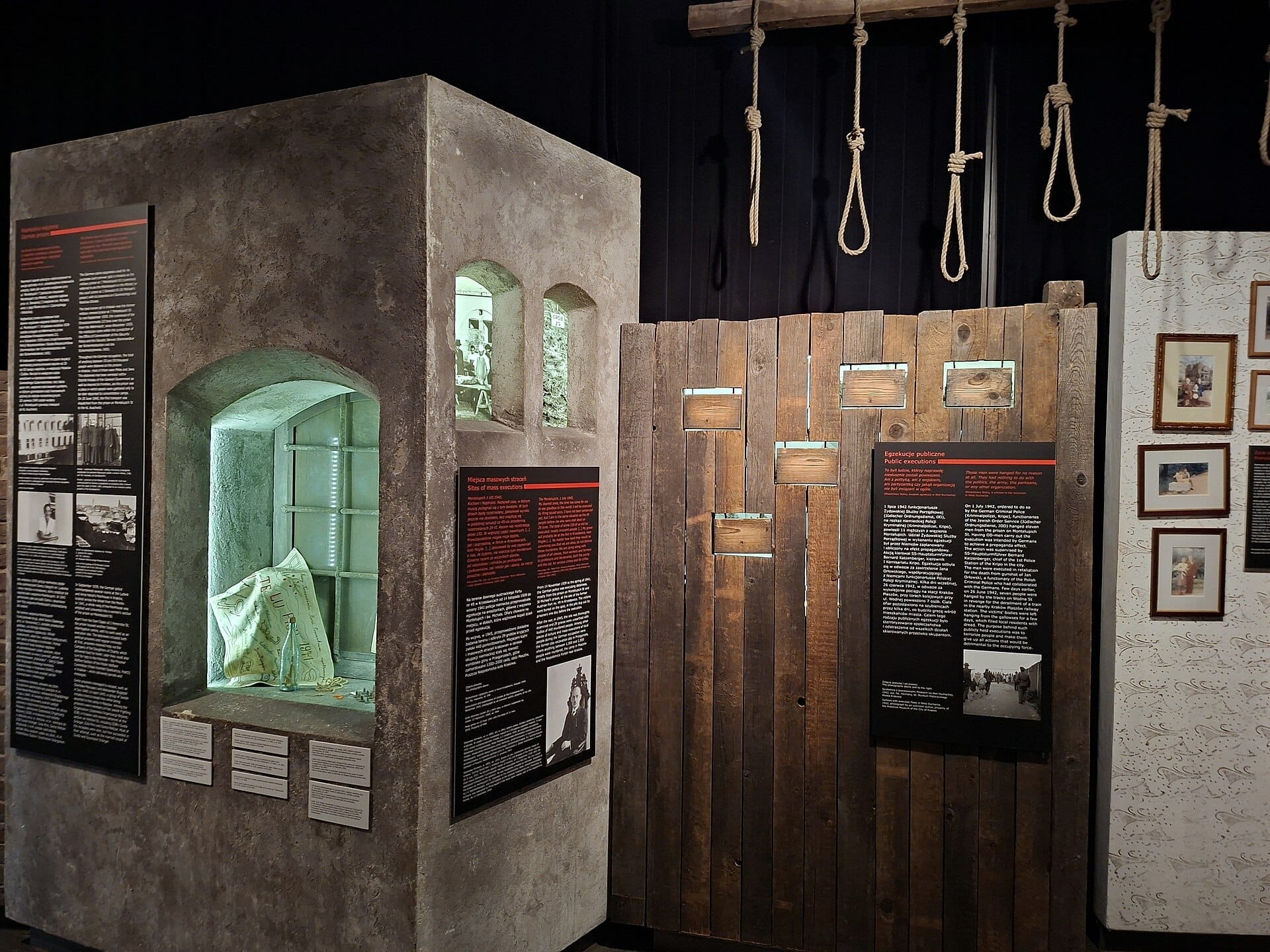
The permanent exhibition, titled 'Krakow from the beginning, to no end,' is the core reason to visit. It traces the city's development from its earliest settlements through the medieval golden age when Kraków served as the royal capital of Poland, the Swedish invasions and Partitions that stripped it of that status, the 19th-century period of relative cultural autonomy under Austrian rule, the devastation and occupation of World War II, the communist decades that followed, and the city's gradual reinvention after 1989.
What makes this exhibition work is its specificity. The displays are not a generic survey of Polish history with Kraków in the margins. They focus tightly on the city as a physical and social organism: how its streets were laid out, who controlled what neighbourhoods, how its industries changed, what daily life looked like across different eras. Artefacts include historical maps, guild records, urban models, and objects from ordinary Kraków households that rarely appear in the more famous collections down the street.
If you plan to spend serious time in the city, visiting this exhibition early in your trip pays dividends. The context it provides changes how you read the streets outside. Details that might otherwise seem incidental — the proportions of a particular courtyard, the location of a market, the arrangement of a synagogue relative to a church — become legible once you understand the layered history behind them.
Tickets & tours
Live prices and dates from our booking partner. If you book, we may earn a commission at no extra cost to you.
Street food and historical adventure in Krakow
From 30 €Instant confirmationFree cancellationEntrance ticket for the Legends of Krakow robotic show
From 9 €Instant confirmationFree cancellationWieliczka Salt Mine guided tour with hotel pickup from Krakow
From 58 €Instant confirmationFree cancellationWieliczka salt mine guided tour from Krakow
From 60 €Instant confirmationFree cancellation
The Building Itself: Architecture Worth Paying Attention To
Krzysztofory Palace is one of the better-preserved Baroque residential buildings in the Old Town, and it functions as an exhibit in its own right. The street facade facing Rynek Główny is solid and composed, typical of 17th-century merchant and aristocratic architecture in this part of Central Europe. The real architectural reward is the inner courtyard, which has the colonnaded arcades and proportional rhythm common to Italian-influenced Baroque design that spread through Polish aristocratic building in the mid-1600s.
Inside, the rooms retain something of their original spatial logic even where modern exhibition design has been overlaid. Ceiling heights vary between floors in ways that reflect the original social hierarchy of the building: grander proportions in the principal reception rooms, tighter spaces in what were service areas. For visitors with an interest in how historic European townhouses actually functioned, this is worth noticing as you move through the galleries.
Visiting by Time of Day
The museum opens at 10:00 Tuesday through Sunday and closes at 18:00, with the last individual admission at 17:00. Morning visits, particularly on weekdays, tend to be the quietest. The Main Market Square outside fills up steadily from mid-morning onward, and by early afternoon the noise and foot traffic of the square are at their peak, though the museum interior itself stays relatively calm regardless of what is happening outside.
Weekend afternoons draw more visitors, including organized school groups, which can make some gallery sections feel congested. If you are visiting with young children or have limited mobility, a weekday morning is the most comfortable window. In winter, the museum provides a warm and dry alternative to hours of outdoor walking, and the crowds on weekday mornings in January or February can be sparse enough that you have rooms to yourself.
⚠️ What to skip
The museum is closed on Mondays. Check the official website before visiting, as the museum also observes specific closure dates throughout the year that are listed in their 'Closed days for visitors' section.
Getting There and Getting In
The palace is on Rynek Główny, Kraków's main square in the heart of the Old Town. The square itself is pedestrianised, so you approach on foot from whichever tram stop is most convenient. Teatr Bagatela and Plac Wszystkich Świętych are the nearest tram stops, both within a few minutes' walk. For general orientation around the city's transport options, the getting around Kraków guide covers tram routes and ticketing in detail.
Admission for the permanent exhibition is 31 PLN for a standard ticket and 26 PLN for a reduced ticket (for students, seniors, and other qualifying categories). Family tickets are 62 PLN. Group rates apply for organised visits. All of these figures should be verified at the ticket desk or on the official website before your visit, as prices are subject to change.
Accessibility in a 17th-century building comes with the limitations you would expect. Historic townhouses of this type typically involve uneven floor surfaces, threshold steps, and staircases that were not designed with modern accessibility standards in mind. Visitors with specific mobility requirements are advised to contact the museum directly in advance to understand which areas of the exhibition are accessible and what arrangements can be made.
Photography and Practical Details
Photography policies in Polish municipal museums vary by exhibition and can change when temporary shows rotate in. As a general rule, non-flash photography of permanent collections is often permitted for personal use, but this should be confirmed at the entrance. The courtyard, if accessible during your visit, is one of the more photogenic spaces in the building: the arcaded galleries photograph well in the diffuse light of overcast days, which are common in Kraków for much of the year.
There is no dress code, but the interior is cool relative to summer outdoor temperatures, so a layer is worth having. The museum has cloakroom facilities, which is relevant if you are carrying a heavy bag after arriving from elsewhere in the city.
Honest Assessment: Who This Is For and Who Might Pass
This museum rewards visitors who come with genuine curiosity about urban history. It is not a spectacle destination — there is no single iconic object with the drawing power of, say, the Leonardo da Vinci painting at the Czartoryski Museum a few streets away. What it offers instead is depth and coherence: a serious, well-curated account of how one city developed across nine centuries.
Visitors looking for a quick visual highlight or a single standout experience may find the exhibition format less immediately satisfying than some of Kraków's more theatrical attractions. It asks you to read, engage with chronological narrative, and sit with complexity. That is not a criticism; it is an accurate description of what kind of visit this is.
If you are interested in how Kraków fits into the broader sweep of Central European history, particularly the city's role during World War II and its relationship to sites like Schindler's Factory Museum in Podgórze, this exhibition provides essential background. Similarly, anyone planning to spend time in the Jewish quarter of Kazimierz will find relevant historical context here.
Insider Tips
- Tuesday free admission is listed as applying to the permanent exhibition specifically. Temporary exhibitions may carry separate admission charges even on Tuesdays — check the current exhibition listing on the museum's website before assuming everything is free.
- The inner courtyard is worth walking through slowly before you enter the galleries. The Baroque arcade proportions are easier to appreciate when you are not yet mentally inside 'museum mode'.
- Last individual admission is at 17:00, a full hour before closing. If you arrive after 16:30 expecting to see the full exhibition, you will be turned away at the door. Plan to arrive by 15:30 at the latest for a comfortable visit.
- The museum is one of 25 branches operated under the Museum of Krakow institution. If you plan to visit multiple branches — including the Underground Museum on the square or Schindler's Factory in Podgórze — ask about combined ticketing options, which the museum periodically offers.
- The exhibition text is available in Polish and English throughout. Audio guide availability should be confirmed with the museum directly, as this can change with exhibition updates.
Who Is Historical Museum of Kraków (Krzysztofory Palace) For?
- First-time visitors to Kraków who want historical context before exploring the city on foot
- History and architecture enthusiasts interested in Central European urban development
- Travellers on rainy or cold days looking for a substantive indoor experience in the Old Town
- Anyone planning visits to WWII-related sites in Kraków and wanting broader historical framing
- Budget travellers visiting on a Tuesday, when entry to the permanent exhibition is free
Nearby Attractions
Other things to see while in Kraków Old Town (Stare Miasto):
- Cloth Hall (Sukiennice)
Standing at the centre of Rynek Główny since the Middle Ages, Kraków's Cloth Hall is part market, part museum, and part architectural monument. The ground-floor arcade sells amber, linen, and crafts; upstairs, the National Museum's Gallery of Polish Art fills Renaissance rooms with 19th-century masterpieces.
- Collegium Maius
Collegium Maius is the oldest surviving building of the Jagiellonian University, founded in 1364. Housing a museum of rare globes, scientific instruments, and royal regalia beneath a serene Gothic arcade, it offers one of Kraków's most quietly impressive indoor experiences.
- Czartoryski Museum
The Czartoryski Museum holds one of Poland's oldest and most important art collections, anchored by Leonardo da Vinci's Lady with an Ermine. Housed in a historic Old Town complex near the Florian Gate, it combines fine art, antiquities, and decorative arts across several interconnected buildings.
- Florian Gate & City Walls
St. Florian's Gate is the sole surviving medieval gate of the eight that once pierced Kraków's city walls. Standing about 33 metres tall at the northern tip of the Old Town, it anchors the Royal Route that once led from the city entrance down to Wawel Castle. Walking through is free; climbing the wall gallery costs a small fee and pairs naturally with the adjacent Barbican.
Planning a trip? Discover personalized activities with the Nomado app.