Koneser Center & Museum of Polish Vodka: The Full Visitor Guide
Housed in a restored neo-Gothic vodka factory on Warsaw's east bank, the Polish Vodka Museum (Muzeum Polskiej Wódki) offers guided tours through five centuries of distilling history, original industrial architecture, and optional tastings. The Koneser Center complex surrounding it has become one of Praga's most compelling destinations.
Quick Facts
- Location
- Plac Konesera 1, Centrum Praskie Koneser, Praga-Północ, Warsaw
- Getting There
- Tram (lines 3, 6, 26) or bus (lines 102, 125, 145, 169, 521) to Zabkowska or Kijowska stops, or metro to Dworzec Wileński (M2) then a short walk; all are a short walk from the Praga district center
- Time Needed
- 1.5 to 2.5 hours (tour plus tasting and complex exploration)
- Cost
- Paid guided entry (PLN); optional upgraded tasting available. Verify current prices on the official site.
- Best for
- History enthusiasts, food-and-drink travelers, architecture lovers, adults 18+
- Official website
- muzeumpolskiejwodki.pl/en/
What Is the Polish Vodka Museum?
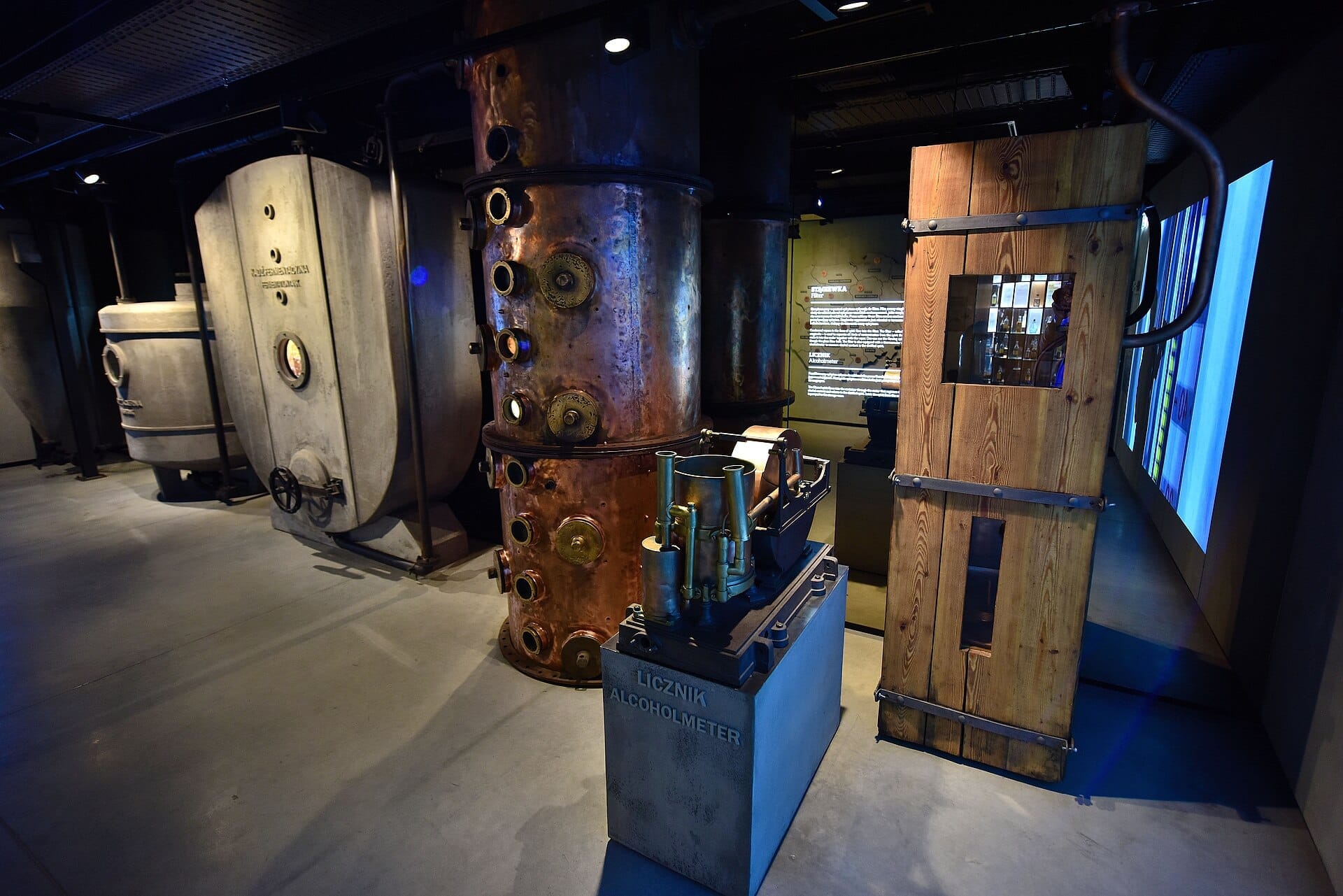
The Muzeum Polskiej Wódki, or Polish Vodka Museum, is not a gift shop dressed up as a cultural attraction. It is a serious, well-produced museum inside a genuinely historic building: the former rectification hall of the Warsaw Vodka Factory "Koneser," constructed around 1900 in a striking neo-Gothic brick style. The factory operated for over a century on the eastern bank of the Vistula, and many of its original industrial fixtures and architectural bones survive in the renovation. When the museum opened on 12 June 2018 as part of the broader Koneser Center revitalization, it gave Warsaw something it had long lacked: a focused, narrative-driven experience explaining how vodka became so central to Polish identity, commerce, and cuisine.
Entry is guided-only, with tours departing every 20 minutes. English-language tours are offered regularly, though exact times can shift seasonally, so confirming in advance is wise. The format means you move through the exhibition with a knowledgeable guide rather than wandering solo, which suits the layered, story-driven structure of the displays. For visitors who find self-guided museums passive, this format works well. For those who prefer to linger, it can feel slightly brisk.
💡 Local tip
Book your time slot online before arriving. Tour groups fill up, especially on weekends and during afternoon hours. English tours at :40 past the hour are popular, so aim for a mid-morning slot on weekdays for the smallest group size.
The Building: Industrial History You Can Touch
Before the exhibition begins, the building itself demands attention. The Koneser complex covers a large former industrial block across a network of late 19th- and early 20th-century brick structures bordering Ząbkowska, Nieporęcka, Białostocka, and Markowska streets. The rectification building that houses the museum is among the most intact original structures on the site, and the renovation, completed in 2018, preserved rather than polished over the patina of industrial use. The exposed brick, heavy timber beams, and original staircase at the tour's opening sequence set the atmosphere immediately: this is a place with genuine material memory.
Neo-Gothic industrial architecture is not common in Warsaw. The city lost the overwhelming majority of its pre-war urban fabric during World War II, and most surviving pre-1939 industrial buildings are now concentrated in Praga, which was spared the systematic demolition that leveled the western bank. Visiting Koneser means stepping into one of the few places in Warsaw where late 19th-century brick construction still stands at scale, which gives the museum a physical weight that newer cultural venues cannot replicate.
The surrounding Koneser Center complex, now a mixed-use district of restaurants, offices, a hotel, and public spaces, is worth exploring before or after the museum. The courtyard is open to the public at no charge and gives a good sense of the overall scale of the former factory site. It fits naturally into a broader exploration of Praga's east-bank character, where industrial heritage and contemporary culture coexist without much artifice.
Tickets & tours
Hand-picked options from our booking partner. Prices are indicative; availability and final rates are confirmed when you complete your booking.
Museum of John Paul II and Primate Wyszyński entrance ticket
From 8 €Instant confirmationPub crawl in Warsaw
From 28 €Instant confirmationFree cancellationWarsaw Museum of Modern Art entrance ticket
From 8 €Instant confirmationSafe and Convenient Luggage Storage in Warsaw Old Town
From 6 €Instant confirmationFree cancellation
What the Tour Actually Covers
The tour moves through the history of vodka production in Poland across roughly five centuries, beginning with early medicinal distillation in the 15th century and tracking through the rise of noble-estate distilleries, the 19th-century industrial expansion, the communist-era state monopoly on production, and the modern craft revival. The narrative is not just about the drink: it touches on the economics of the landed gentry, the politics of state control, the role of vodka in Polish social rituals, and the ongoing legal battles over what can legally be called Polish vodka.
Displays combine original artifacts, reconstructed distillery equipment, interactive elements, and archival materials. The sensory design is deliberate: at various points in the tour, smells are introduced to help visitors distinguish different base ingredients and botanical additives. This is one of the more memorable techniques, particularly if you have no prior knowledge of how rye vodka differs from potato vodka in aroma. Labels and exhibits are available in Polish and English throughout.
The standard ticket includes a guided tour and, for visitors aged 18 and over, a vodka tasting at the end of the experience. A premium "Connoisseur" upgrade offers a wider tasting selection. The tasting component is modest in scale but carefully curated to illustrate the differences discussed during the tour, so it functions as a genuine educational conclusion rather than just a promotional sample session.
ℹ️ Good to know
The tasting is optional and decided at the point of entry, not pre-booked. If you are not a drinker, the tour stands fully on its own. Non-drinking visitors are not penalized or given a lesser experience.
How the Experience Changes by Time of Day
Morning visits, particularly on weekdays, tend to draw smaller groups, which gives the guide more space to answer questions and move at a slightly relaxed pace. The rectification building's tall windows admit good natural light in the morning hours, and the brick interior takes on a warmer tone before midday. Weekend afternoon tours fill faster and can run with larger groups, which compresses the question-and-answer dynamic.
After the museum, the Koneser Center courtyard is a useful place to decompress. In warmer months, the outdoor seating areas at the surrounding restaurants and cafes fill by early afternoon and remain animated through the evening, with a crowd that skews younger and local rather than tourist-heavy. This is one of the better places in Praga to observe the neighborhood's shift from post-industrial scruffiness to something more polished, without losing the east-bank edge entirely.
Getting There and Getting Around
The museum is located in Praga-Północ, on the eastern side of the Vistula. From central Warsaw, trams (3, 6, 26) and buses (102, 125, 145, 169, 521) cross the river and connect to Zabkowska or Kijowska stops near Ząbkowska Street, or you can take the M2 metro to Dworzec Wileński and walk about 15 minutes; the journey from the city center typically takes around 15–20 minutes depending on your starting point and the route taken. Ride-hailing services such as Bolt and Uber are widely available and offer a faster point-to-point option.
If you are planning a broader day on the east bank, the area around Koneser connects well to Praga's wider street-level culture. The neighborhood rewards slow walking: the pre-war residential streets, courtyard architecture, and street art scene are concentrated within a short radius. The street art of Praga and the historic character of Ząbkowska Street are easy to combine with a museum visit without needing additional transport.
Parking within the Koneser complex is available, but the streets directly around the site can be tight. Arriving by public transit or ride-hailing eliminates that friction entirely. The complex entrance from Plac Konesera is clearly marked and visible from the main approach street.
Who This Museum Works For, and Who Might Skip It
The Polish Vodka Museum is a genuinely strong cultural experience for visitors with curiosity about Polish history, industrial heritage, or food-and-drink culture. It belongs to the same category of attraction as the Fryderyk Chopin Museum: a focused, well-resourced institution that takes its subject seriously and delivers more than casual visitors might expect.
Visitors who find guided formats restrictive, prefer self-paced exploration, or have little interest in the subject matter may feel the tour is too structured. The museum is also not suitable for children under 18 for the tasting component, and the content, while not exclusively about drinking, is consistently adult in framing. Families traveling with young children will find the format awkward, though the Koneser complex itself is accessible and the courtyard is child-friendly.
Travelers short on time who are weighing major Warsaw attractions may find that the Warsaw Uprising Museum or the POLIN Museum of the History of Polish Jews address larger historical narratives. The Vodka Museum is best positioned as a complementary visit, not a centerpiece of a short trip.
Practical Notes Before You Go
Tickets are purchased in Polish złoty (PLN). Booking online in advance is strongly recommended for weekend visits and is advisable for weekdays during peak tourist months. The museum's guided-only format means walk-in visitors who arrive without a booking may face a wait or find the next available English tour fully subscribed.
The building has been modernized as part of the Koneser revitalization, and contemporary infrastructure is in place throughout the complex. Visitors with specific mobility requirements are encouraged to contact the museum directly before arrival to confirm step-free access within the exhibition spaces, as some original architectural features remain in place.
Comfortable, flat footwear is appropriate. The tour involves standing and movement through a series of rooms across multiple levels. There is no formal dress code. Photography policies within the exhibition should be confirmed at entry, as they can vary.
⚠️ What to skip
Opening hours and ticket prices change seasonally and for private events. Always check the official museum website before your visit. The Koneser complex occasionally hosts private functions that may affect public access to certain areas.
Insider Tips
- Arrive about 10 minutes before your chosen English tour time. The small lobby fills quickly and latecomers sometimes miss the opening section, which includes the original factory staircase and sets the industrial context for everything that follows.
- If you are interested in the premium tasting upgrade, ask about the Connoisseur option when booking or at the entrance, not at the end of the tour. Availability can be limited and is not always prominently advertised.
- The Koneser Center courtyard has several restaurant and bar options worth lingering in after the tour. The evening atmosphere on the square is markedly different from the tourist-facing restaurant strips in the Old Town: more local, more relaxed, and less expensive.
- Combine your visit with a walk along Ząbkowska Street before or after the museum. The street is one of the few places in Warsaw where interwar residential architecture, local bars, and a genuine neighborhood atmosphere coexist within a single block.
- If your group includes non-drinkers, confirm at booking that the tour experience is complete without the tasting component. The exhibition itself carries the visit; the tasting is a bonus, not the main event.
Who Is Koneser Center & Museum of Polish Vodka For?
- Adults with an interest in Polish cultural history and how everyday commodities shaped national identity
- Food-and-drink travelers who want context behind what they are tasting rather than just a sampling session
- Architecture and industrial heritage enthusiasts drawn to preserved 19th-century factory spaces
- First-time visitors to Praga looking for an anchor attraction before exploring the wider neighborhood
- Couples or small groups wanting a structured but sociable experience with a tasting component built in
Nearby Attractions
Other things to see while in Praga:
- Neon Museum (Muzeum Neonów)
The Neon Museum (Muzeum Neonów) preserves over a hundred hand-crafted neon signs from communist-era Poland, now displayed inside the Palace of Culture and Science in central Warsaw. It is one of the few institutions in the world dedicated entirely to saving this form of socialist commercial art, and the juxtaposition of glowing mid-century signs inside Stalin's most iconic Warsaw building makes it one of the city's most visually striking cultural stops.
- Orthodox Cathedral of Saint Mary Magdalene
Built between 1867 and 1869, the Metropolitan Cathedral of Saint Mary Magdalene is Warsaw's first architecturally independent Orthodox church and the seat of the Polish Autocephalous Orthodox Church. Standing in the Praga district with its gleaming onion domes intact, it is one of the few Warsaw religious buildings to have survived World War II almost untouched.
- Praga Street Art
The Praga district on Warsaw's east bank hosts a notable concentration of murals and graffiti art, spread across pre-war tenements, former factory walls, and courtyards around ul. Ząbkowska. Free and accessible 24/7, it rewards slow walking and careful looking — especially in the flat, directional light of early morning or late afternoon.
- Warsaw Zoo
One of Poland's oldest and largest zoological gardens, Warsaw Zoo sits on the Praga side of the Vistula River across from the Old Town. Spread across 40 hectares of mature trees and winding paths, it houses over 500 species and carries a remarkable wartime history that sets it apart from most European zoos.