Julian, California: The Mountain Town That Trades Sand for Apple Pie and Gold Rush History
Perched in the Cuyamaca Mountains about an hour east of San Diego, Julian is an unincorporated historic town where California Gold Rush heritage meets apple orchards, pine-scented air, and one of the most scenic drives in San Diego County. Entry to the historic district costs nothing, and the pace slows the moment you leave the freeway.
Quick Facts
- Location
- Julian, CA 92036 — approx. 60 miles east of downtown San Diego in the Cuyamaca Mountains
- Getting There
- Car only (no direct public transit); approx. 1 hour 15 min from San Diego via CA-78 east or CA-79 north
- Time Needed
- Half day minimum; full day recommended to include lunch, a farm stop, and a short hike
- Cost
- Free to enter the historic district; individual shops, farms, and mine tours charge separately
- Best for
- Couples, families, food lovers, history buffs, and anyone ready for a break from the coast
- Official website
- visitjulian.com
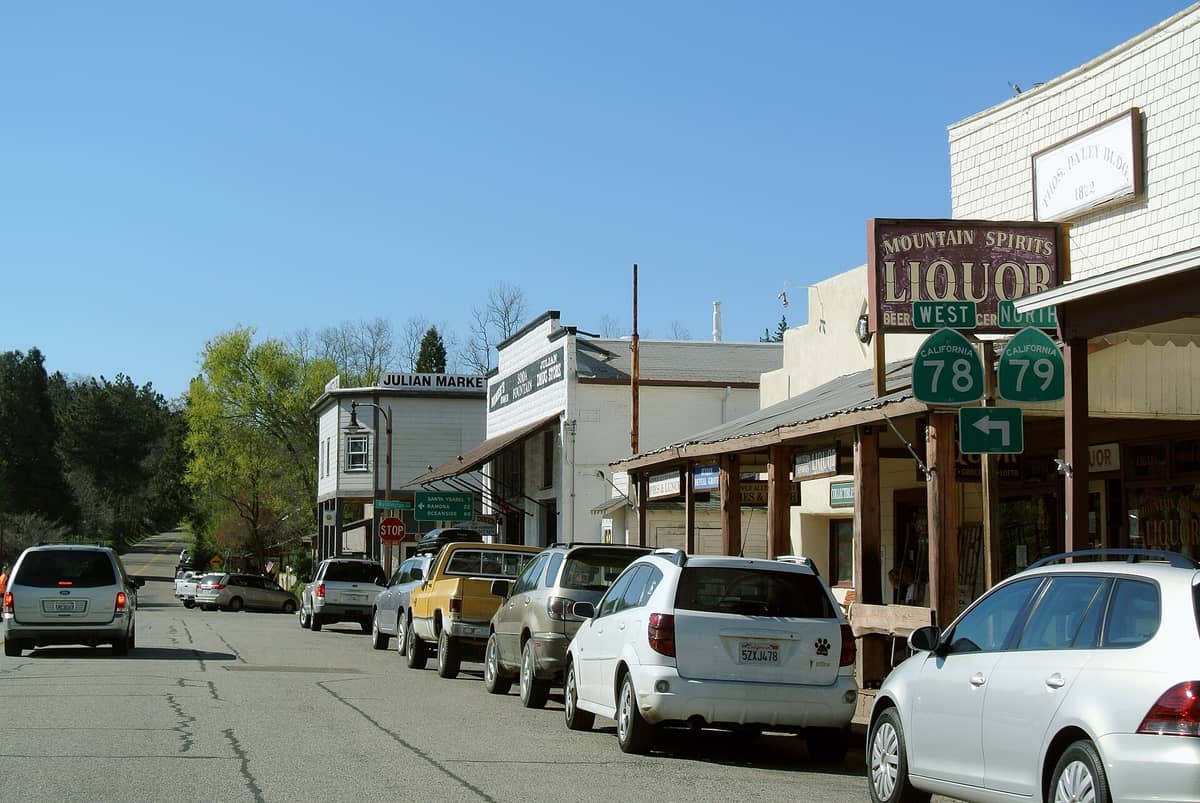
What Julian Actually Is
Julian, California is not a park, a single museum, or a gated attraction. It is an unincorporated mountain town in the Cuyamaca range of San Diego County, sitting at roughly 4,225 feet in elevation, and its entire historic commercial core along Main Street is open to anyone who drives up. There are no tickets to walk the street, no queues at the gate, and no wristbands. What you get instead is a compact, authentic California foothill town that has traded on its Gold Rush heritage and apple orchards for well over a century.
The Julian Historic District covers the central blocks around Main Street and the immediately surrounding streets. It is a functioning community, not a theme park recreation. Residents live here year-round, the post office handles real mail, and the cafes serve regulars alongside weekend visitors. That mix gives the place a texture that more heavily commercialized destinations in the region lack.
ℹ️ Good to know
Julian sits at approximately 4,225 feet elevation. Even in summer, mornings can be 15–20°F cooler than San Diego. Bring a layer regardless of the season — the temperature shift surprises nearly every first-time visitor.
The Drive Up: Half the Experience
The approach to Julian matters. Coming from San Diego, most visitors take CA-78 east through Ramona, climbing gradually through chaparral and boulder fields before the road curves into conifer and oak woodland. The alternative, CA-79 north from the Sunrise Highway junction, is more dramatic, with mountain views opening across the higher ridges south of Julian. Either route takes roughly 70 minutes from downtown San Diego under normal conditions, though weekend traffic through Ramona can add time.
The change in landscape is gradual but unmistakable. Coastal scrub gives way to manzanita, then to stands of black oak and Jeffrey pine. By the time you reach the outskirts of Julian, the air smells different: cooler, with the faint sweetness of pine resin and, in autumn, the unmistakable scent of apple orchards. For San Diego residents accustomed to sea-level marine air, the shift registers immediately.
⚠️ What to skip
In winter (roughly November through March), snow is possible, and tire chain requirements are sometimes enforced on mountain roads leading to Julian. Check Caltrans road conditions at quickmap.dot.ca.gov before departing if there is any chance of winter weather.
Main Street and the Historic District: What to Expect on the Ground
Julian's Main Street runs only a few blocks, and most visitors cover it entirely on foot within 30 to 45 minutes at a leisurely pace. The buildings are a mix of late 19th-century wood-frame structures and early 20th-century brick storefronts, several of which are on state and national historic registers. The Julian Gold Rush Hotel, built in 1897, is commonly cited as the oldest continuously operating hotel in Southern California. Even if you are not staying there, the exterior is worth a look: narrow Victorian proportions, a covered porch, and the kind of faded signage that signals genuine age rather than calculated rustic styling.
The shops along Main Street skew toward food, local crafts, and apple-related products. You will find multiple bakeries, a handful of cider operations, antique stores, and outfitters. Quality varies. Some shops lean into tourist souvenir territory; others carry genuinely interesting local goods. The Julian Pie Company and Mom's Pies are the two most well-known bakeries, and on autumn weekends both tend to have lines. Getting there before 11:00 on a Saturday sidesteps most of the wait.
Most shops open around 10:00 and close by 17:00, with weekend hours more reliably extended than weekday hours. A handful of restaurants keep later dinner hours, but Julian is not a nightlife destination. If you plan to be there past 17:00, confirm in advance that your intended restaurant is open.
Apple Country: The Seasonal Rhythm That Defines Julian
Julian's association with apples is not a marketing construct. Spanish missionaries introduced apple trees to the region in the 18th century, and by the late 1800s, after gold mining declined, apple farming became the town's economic base. Today the surrounding hills still contain working orchards, and several farms offer u-pick experiences during harvest season, which runs roughly from September through November. This is when Julian is at its most visited and most itself simultaneously.
Outside apple season, Julian is noticeably quieter. Winter and early spring bring fewer crowds and the occasional dusting of snow on the peaks above town, which locals and photographers find worth the trip on its own. For those planning a San Diego trip around seasons, the best time to visit San Diego guide covers how Julian's autumn peak fits into the broader regional calendar.
Apple pie in Julian is not hyperbole. Several bakeries produce whole pies daily, and slices are available from mid-morning until they sell out, which happens earlier than most visitors expect on busy weekends. The pies are made with local varieties including Winesap, Jonathan, and Granny Smith. If you want a whole pie to take home, ordering ahead is advisable during October.
Gold Rush History and What Remains of It
Gold was discovered in the Julian area in 1869, touching off San Diego County's only significant gold rush. The boom was relatively short-lived, but it established the town's street grid, its hotel, and much of the building stock that survives today. The Eagle and High Peak Mine, located just above the town center, offers underground tours that walk visitors through hand-dug tunnels and explain the basic mechanics of hard-rock gold mining. The tours are guided and last approximately 45 minutes; fees apply and hours should be confirmed before visiting.
The Julian Pioneer Museum preserves artifacts from the gold rush and early agricultural eras, including period tools, photographs, and household items. It is a small institution, appropriately modest in scale for the town's size, and provides useful context before or after walking the main street. Admission is charged and seasonal hours apply.
Julian fits naturally into a broader exploration of San Diego's Spanish and early American history. Visitors interested in the region's deeper past sometimes pair it with Mission Basilica San Diego de Alcalá closer to the coast, or with the preserved Mexican-period buildings at Old Town San Diego State Historic Park.
Outdoor Access: Hiking and Nature Near Julian
Julian is surrounded by public land, and the trailheads within a short drive of Main Street are among the most accessible mountain hiking in San Diego County. Cuyamaca Rancho State Park begins just southeast of town, offering trails through mixed conifer forest, across meadows, and up to Cuyamaca Peak at 6,512 feet. Lake Cuyamaca, a few miles south, provides fishing and a more relaxed lakeside walking option.
William Heise County Park, just west of the town center, is a family-friendly option with shorter, shaded loop trails through oak and pine. For those who want to combine the Julian visit with a more substantial hiking day, the best hikes in San Diego guide covers the broader range of options across the county, including several trails within the Julian area.
💡 Local tip
Trailhead parking near Julian fills by 9:00 on autumn weekends. If hiking is your priority, arrive early and do the trails before walking Main Street, not after.
Practical Logistics: Parking, Crowds, and Timing
There is no public transit to Julian. A car is required. Parking in the historic district is available along Main Street and in small lots off adjacent streets. On weekday visits outside apple season, finding a space is straightforward. On autumn weekends, particularly Saturday afternoons in October, parking becomes genuinely difficult and the town fills to the point where the charm is harder to access. Friday visits during fall, or arriving by 9:30 on weekends, make a meaningful difference.
The town is small enough that most visitors cover everything they want to see in two to four hours. A full day works well if you plan to include a farm visit, a hike, and a sit-down meal. The Main Street strip alone takes under an hour to walk end-to-end at a comfortable pace, including browsing a few shops.
Julian pairs naturally with an overnight stay, particularly in the apple season. If that appeals, the where to stay in San Diego guide covers accommodation across the region, though Julian itself has a handful of bed-and-breakfast options and a small inn along the main street. It also works well as a day trip from San Diego without an overnight stay.
Who Julian Is Not For
Julian is a quiet, small mountain town. Visitors expecting theme-park infrastructure, consistent restaurant hours, or a range of evening entertainment will be disappointed. There are no major indoor attractions, no large museums, and limited dining options after 17:00. Travelers without a car cannot get here via any direct public transit from San Diego. Those sensitive to altitude or visiting in winter without appropriate vehicle equipment should plan carefully. Julian also gets genuinely cold by San Diego coastal standards, and light clothing that works at the beach will not be comfortable at 4,200 feet on a January afternoon.
Insider Tips
- Friday is the sweet spot for autumn visits: apple season is in full swing, shops are open, but the weekend crowds have not arrived. October Saturdays can see Main Street packed to the point where it undercuts the experience.
- The Julian Cider Mill produces apple cider on-site during the harvest season. Buying fresh-pressed cider is a more memorable use of time than most of the souvenir shops.
- If you want pie and the bakeries are sold out or have long lines, walk one block off Main Street. Several smaller shops and a diner carry decent alternatives with zero queue.
- Cuyamaca Rancho State Park, just south of town, offers significantly better hiking than the trails immediately adjacent to Julian. If hiking is a priority, drive the extra ten minutes rather than settling for the closest trailhead.
- Cell coverage in Julian can be unreliable depending on your carrier. Download offline maps before departing San Diego, and note that some restaurants and shops do not have reliable card readers when connectivity drops.
Who Is Julian For?
- Couples looking for a scenic day trip that feels distinctly different from the San Diego coast
- Families with older children interested in gold mining history and farm experiences
- Food-focused travelers who want to eat apple pie where it actually means something locally
- Hikers wanting mountain trails within easy driving distance of a coastal city
- Photographers chasing autumn color and mountain light in a landscape most San Diego visitors never see
Nearby Attractions
Combine your visit with:
- Anza-Borrego Desert State Park
Anza-Borrego Desert State Park stretches across more than 600,000 acres of Colorado Desert in eastern San Diego County, making it one of the largest state parks in the United States. From spring wildflower carpets to ancient slot canyons and some of the darkest skies in Southern California, it rewards visitors who plan carefully and respect the terrain.
- Border Field State Park
Border Field State Park occupies the southwestern corner of the continental United States, where Pacific surf meets the U.S.–Mexico border fence. It offers coastal wetlands, a historic marble boundary monument, and views toward Friendship Park — the U.S.-side gathering space has been closed since 2020, so confirm current access before you go.
- Cedar Creek Falls
Cedar Creek Falls is a backcountry waterfall deep inside Cleveland National Forest, reached by a strenuous 6-mile round-trip hike from Ramona. A mandatory day-use permit keeps crowds manageable, but you'll earn every step of the descent into this rugged gorge. This guide covers the permit process, trail conditions, safety warnings, and what to realistically expect.
- Chicano Park
Chicano Park is a National Historic Landmark tucked beneath the San Diego–Coronado Bridge in Barrio Logan, where more than 80 monumental murals cover the concrete pillars of a freeway overpass. Free to enter and open daily, it is one of the most culturally layered outdoor spaces in the American Southwest.