Inquisitor's Palace, Birgu: Inside One of the World's Last Surviving Inquisition Palaces
Hidden in the narrow streets of Birgu (Vittoriosa), the Inquisitor's Palace is one of the rarest buildings of its kind still open to the public anywhere in the world. From its forbidding prison cells to the grandeur of the inquisitor's private quarters, the palace traces over 400 years of Maltese legal, religious, and social history under a single roof.
Quick Facts
- Location
- Main Gate Street, Birgu (Vittoriosa), BRG 1023, Malta
- Getting There
- Bus to Birgu; closest stop is a 3-minute walk. Water taxi from Sliema or Valletta is a scenic alternative.
- Time Needed
- 1.5 to 2.5 hours for a thorough visit
- Cost
- Check heritagemalta.mt for current ticket prices; Heritage Malta multi-site passes may apply
- Best for
- History enthusiasts, architecture lovers, and travellers curious about Malta's ecclesiastical past
- Official website
- heritagemalta.mt/explore/the-inquisitors-palace
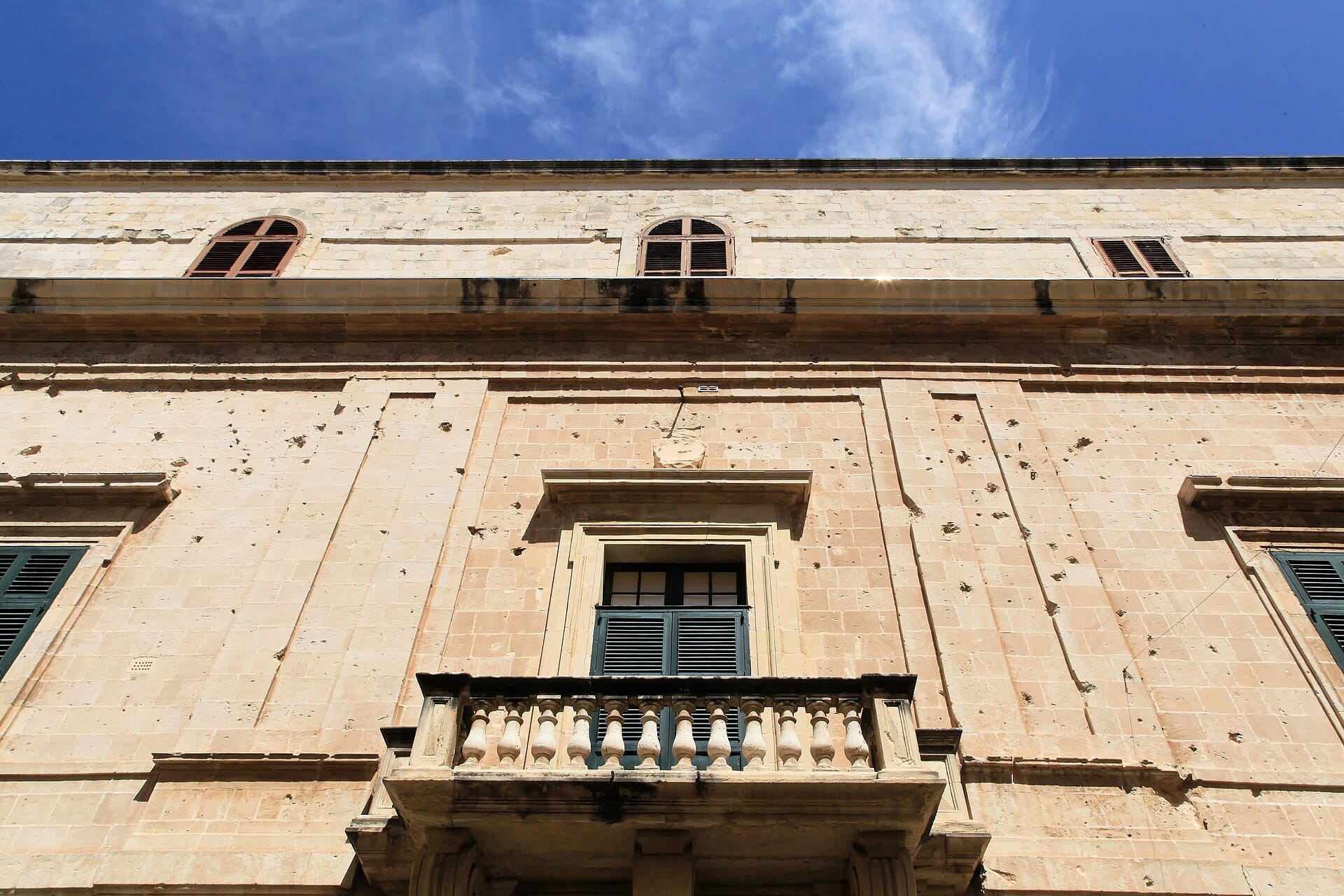
What the Inquisitor's Palace Actually Is
The Inquisitor's Palace, known in Maltese as Il-Palazz tal-Inkwiżitur and historically as the Palazzo del Sant'Officio, sits on Main Gate Street in Birgu, one of Malta's Three Cities. It is widely regarded as one of the only inquisitor's palaces in the world still intact and accessible to the public. That alone sets it apart from nearly every other site connected to the Catholic Inquisition.
The building was not always a seat of religious authority. It was constructed in the 1530s as the Magna Curia Castellania Melitensis, functioning as a civil tribunal for the island. That role ended in 1572, and two years later, in 1574, the building was converted into the official residence and working palace of Malta's first Apostolic Inquisitor, Pietro Dusina. From that point until the Inquisition's dissolution in 1798 under Napoleon's invasion, over 60 inquisitors passed through its rooms, several of whom later rose to become cardinals or popes.
Since 1992, the palace has served as the National Museum of Ethnography, managed by Heritage Malta. It also houses Malta's National Textiles Collection. If you're building an itinerary around the Three Cities, it pairs well with a broader exploration of Birgu, Senglea, and Cospicua and the nearby Fort St. Angelo, which is visible from the palace's upper windows.
💡 Local tip
Opening hours and admission prices are managed by Heritage Malta and are subject to seasonal change. Confirm details at heritagemalta.mt or call +356 21 827 006 before your visit. A Heritage Malta multi-site pass can offer savings if you're visiting other managed sites.
Moving Through the Palace: What You'll Actually See
The palace is best understood as three overlapping worlds stacked together: the formal, the functional, and the punitive. Entering from Main Gate Street, the ground floor reception gives little hint of what lies ahead. The building's exterior is restrained, characteristic of the Maltese baroque sensibility, where surface ornament takes second place to solid limestone construction.
The tribunal rooms on the lower levels are sobering. The actual interrogation chamber retains its austere arrangement, and the adjacent prison cells are small, low-ceilinged, and genuinely oppressive. Graffiti scratched by prisoners into the limestone walls survives and is among the most quietly affecting details in the entire building. The marks are not dramatic, just names, crosses, dates, and crude figures, but they shift the experience from museum visit to something closer to a real encounter with the past.
The torture chamber is clearly signed and honestly presented. Its contents will disturb some visitors, particularly families with young children. The museum does not sensationalize the space, but neither does it sanitize it. This balance is one of the palace's genuine strengths as a heritage site.
Moving upstairs to the piano nobile, the scale of the rooms shifts dramatically. The inquisitor's private apartments, audience hall, and chapel reflect the considerable political and social status the office commanded. The furniture, textiles, and decorative objects on display here give the rooms a period authenticity that many reconstructed historic interiors lack.
Tickets & tours
Hand-picked options from our booking partner. Prices are indicative; availability and final rates are confirmed when you complete your booking.
City Sightseeing hop-on hop-off bus tour of Gozo
From 20 €Instant confirmationFree cancellationThe Malta Experience Audio-Visual Show and La Sacra Infermeria Tour
From 20 €Instant confirmationFree cancellationLuggage Storage in Malta
From 6 €Instant confirmationFree cancellation6-day heritage and attractions pass in Malta
From 80 €Instant confirmationFree cancellation
The Kitchen and Ethnographic Collections
One of the palace's most unexpectedly engaging spaces is its historic kitchen. Large, vaulted, and equipped with original cooking apparatus, it offers a tangible sense of the self-contained world the palace represented. The inquisitor's household was effectively its own institution, requiring staff, stores, and infrastructure quite separate from the city outside its walls.
The National Museum of Ethnography collection, spread across several rooms, documents Maltese domestic life, religious traditions, and craftsmanship across several centuries. For visitors whose primary interest is the Inquisition history, these rooms can feel like a detour. But for anyone curious about how ordinary Maltese people lived alongside these grand ecclesiastical structures, the collection adds real depth. The National Textiles Collection, in particular, is carefully curated and includes fine lace work that reflects one of Malta's most historically significant craft traditions.
How the Experience Changes by Time of Day
Birgu is a small, quiet town. The streets around the palace are narrow enough that morning light barely reaches the lower facades until mid-morning. Arriving early on a weekday gives you the best chance of moving through the prison and tribunal rooms without other visitors present, which genuinely improves the atmosphere in those spaces. Solitude matters in a room like the interrogation chamber.
By mid-morning, small group tours begin to arrive, and the audio landscape shifts from near-silence to a low murmur of commentary. The upper-floor rooms handle crowds well due to their size, but the cells and lower corridors feel noticeably different when you're not alone. If you have any flexibility, aim for opening time or the final hour before closing.
ℹ️ Good to know
The palace is built from Maltese limestone, which stays cool inside even in summer. In the height of July and August, this makes it a genuinely comfortable mid-day stop. Bring a light layer if you're sensitive to cool air in enclosed spaces.
Getting There and Navigating Birgu
Birgu is accessible by public bus, with the closest stop a short walk from the palace. The more atmospheric option is the water taxi service that runs between Valletta's Grand Harbour and the Three Cities, delivering you to Birgu's waterfront within a few minutes' walk of the entrance. If you're planning a broader day in the area, the range of things to do in Malta makes the Three Cities worth a half-day at minimum.
Main Gate Street runs directly into Birgu's fortified core. The palace is signposted from the waterfront and from the main gate. Parking in Birgu itself is limited, and the streets inside the walls are too narrow for comfortable driving. Arriving by water taxi or bus and walking is the practical approach for most visitors.
Wear comfortable shoes. Birgu's streets are cobbled limestone, uneven in places, and the palace interior involves multiple staircases. The building is historic, and while Heritage Malta has made efforts toward accessibility, the original architecture presents real challenges for visitors with limited mobility. Check with Heritage Malta directly if this is a concern.
Honest Assessment: Is It Worth Your Time?
The Inquisitor's Palace is not the most polished or technically sophisticated museum in Malta. Some rooms feel underlit, and the signage, while adequate, is not always as detailed as you might expect from a site of this historical importance. But these are minor complaints against a major asset: the building itself is irreplaceable, and the fact that it survives at all, largely intact, sets it in a category of its own.
For travellers with a serious interest in Maltese history, the palace belongs on the itinerary alongside the Hal Saflieni Hypogeum and the Grandmaster's Palace in Valletta. All three are managed by Heritage Malta and collectively represent the broadest sweep of the island's historical narrative, from prehistoric to medieval to the age of religious authority.
Travellers who prefer outdoor attractions, beaches, or contemporary culture may find this a less compelling use of time. The subject matter is heavy, the building is interior-focused, and the experience rewards patience and interest in Maltese ecclesiastical history. If that is not your particular interest, the time might be better spent on Birgu's waterfront or at Fort St. Angelo.
For those building a focused historical itinerary, see the Knights of Malta history guide for essential context on the political landscape that shaped the Inquisitor's Palace and the Three Cities as a whole.
Insider Tips
- The prisoner graffiti on the cell walls is easy to miss. Take your time in the lower prison rooms and look at the walls carefully, particularly at eye level and below. Some marks have survived for centuries and are among the most direct human traces in any Maltese museum.
- The inquisitor's chapel on the piano nobile is small but contains genuinely fine decorative work. Most visitors move through it quickly on the way to the larger apartments. Pause here for a few minutes.
- If you're visiting in summer, the palace's thick limestone walls make the interior noticeably cooler than the streets outside. It's a practical mid-afternoon stop during the hottest months when outdoor sightseeing becomes uncomfortable.
- Combine the palace with a walk along Birgu's waterfront fortifications immediately afterward. The contrast between the palace's interior austerity and the open Grand Harbour view takes less than five minutes to reach on foot.
- Heritage Malta occasionally runs evening events and special access tours at the palace. Check the Heritage Malta website before your trip, as these provide a different atmosphere to a standard daytime visit.
Who Is Inquisitor's Palace For?
- History enthusiasts with an interest in religious, legal, or Mediterranean history
- Architecture lovers drawn to Maltese baroque and vernacular limestone buildings
- Travellers who enjoy authentic, unrestored historic interiors rather than reconstructed museum environments
- Anyone spending a full day in the Three Cities who wants to understand the area's layered past
- Visitors seeking an indoor, air-cooled activity during the hottest part of a summer day
Nearby Attractions
Other things to see while in The Three Cities:
- Fort Rinella
Fort Rinella in Kalkara houses one of only two surviving Armstrong 100-ton rifled muzzle-loading guns in the world. Built between 1878 and 1886 to defend the Grand Harbour, this Victorian battery is now a living museum run by the Malta Heritage Trust, open exclusively on Saturdays with guided tours included in admission.
- Fort St. Angelo
Perched at the tip of the Birgu peninsula above the Grand Harbour, Fort St. Angelo has been at the center of Mediterranean history for over 700 years. From the Knights of St. John's Great Siege of 1565 to its role as a Royal Navy shore base in WWII, this is the fortress where Malta's story was repeatedly decided.
- Gardjola Gardens
Perched at the southern tip of Senglea in Malta's Three Cities, Gardjola Gardens offers one of the most striking views of the Grand Harbour anywhere in the archipelago. Entry is free, the historic vedette watchtower is right at the garden's edge, and the whole place rewards those willing to cross the water from Valletta.