Huanglongxi Ancient Town: The Old River Town Worth the Trip from Chengdu
Huanglongxi Ancient Town, located in Shuangliu District of Chengdu, is a historic river town in Sichuan. With free entry to the main street area, Ming and Qing dynasty architecture, three riverside temples, and traditional snack vendors lining cobbled lanes, it offers a more relaxed alternative to the city's more commercialized historic quarters.
Quick Facts
- Location
- Huanglongxi Town, Shuangliu District, Chengdu
- Getting There
- Bus 808 from Shuangliu Passenger Transport Center to Huanglongxi Passenger Station, then walk; confirm current Chengdu departure points and schedules before travel
- Time Needed
- 2 to 4 hours for the main street and riverside area; allow half a day if combining with a boat trip
- Cost
- Free entry to the town area; separate fees apply for select temples, the county government offices, and boat services
- Best for
- History enthusiasts, families, photographers, and anyone wanting a quieter look at old Sichuan life
What Huanglongxi Actually Is
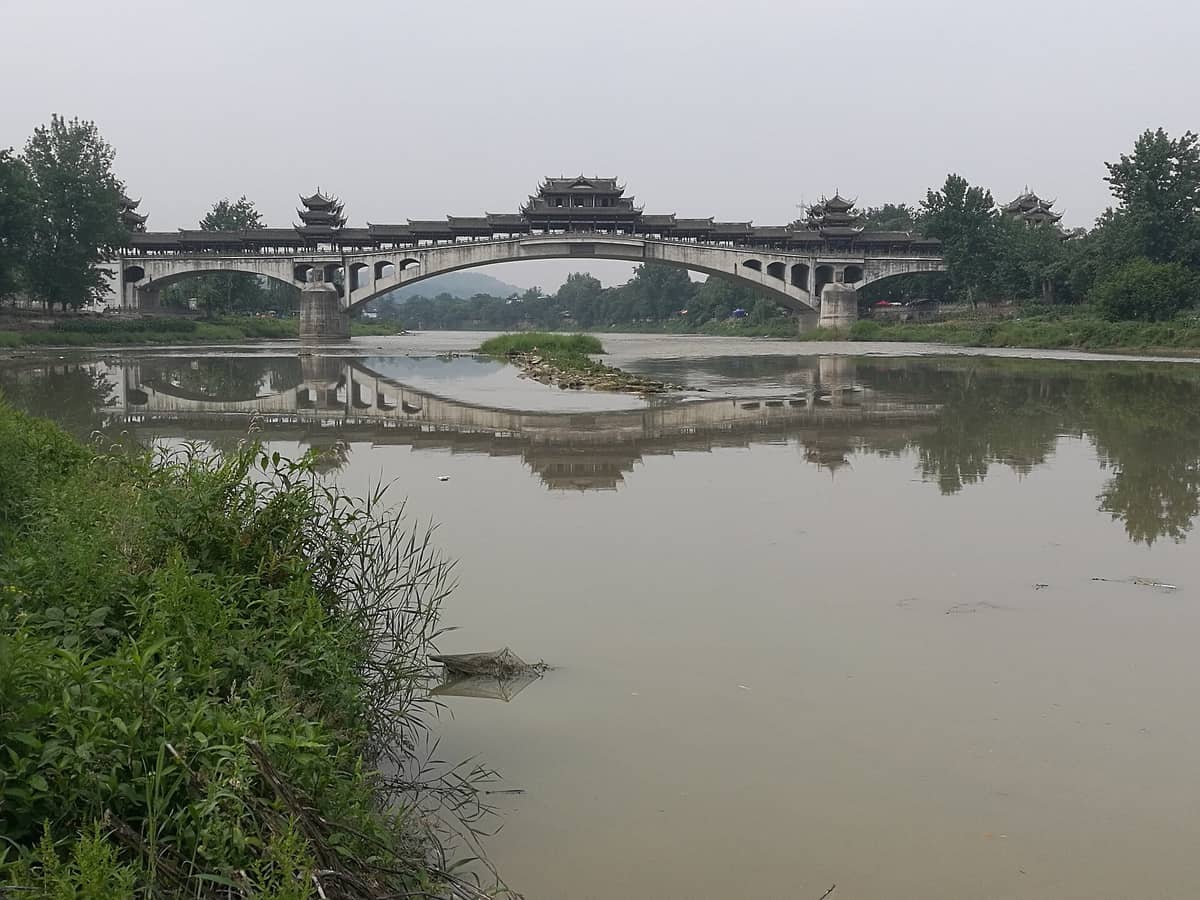
Huanglongxi Ancient Town (黄龙溪古镇) is a historic river settlement with more than 1,700 years of recorded history, sitting at the confluence of the Fuhe and Jinjiang rivers in Shuangliu District. That age puts its origins in the late Han dynasty period, though the architecture you see today is predominantly Ming and Qing dynasty, with wooden shopfront facades, overhanging eaves, and stone-paved main streets that have remained largely intact.
The town is often called a filming location, and for good reason. Its three principal temples, the well-preserved civilian and official buildings along the main street, and the tree-lined river banks have appeared in dozens of Chinese period dramas and films. The physical setting, old banyan trees shading the river embankment, stone steps leading down to the water, timber-framed tea houses projecting over the bank, reads as genuinely antique rather than reconstructed.
If you have already visited Jinli Ancient Street or Kuanzhai Alley in the city center, expect a noticeably different atmosphere here. Huanglongxi is not pedestrianized in the same managed, sanitized sense. It is a functioning small town that also receives tourists, which means you will find residents going about daily routines alongside tour groups and weekend visitors from Chengdu.
The Layout: What You Walk Through
The historic core is compact. The main cobbled street, known for its 'one street, three temples' arrangement, runs roughly parallel to the Fuhe River. The three temples, Zhenjiang Temple, Chaoyin Temple, and Gulong Temple, are spaced along the street and each charges a small, separate admission fee. Their courtyards tend to be quieter than the commercial lane outside and worth a few minutes to step inside.
Branching off the main street are narrower lanes where locals still live in timber-framed courtyard houses. The smells along these side alleys shift between woodsmoke, drying chili, and the faint mineral scent of river water. In the late afternoon, residents sometimes set out low stools and play cards or mahjong near their doorways, which gives these lanes a lived-in texture the main tourist strip lacks.
The river embankment is a separate experience worth time on its own. Old banyan trees with wide, knotted roots overhang the stone steps, and small wooden boats are available for short river trips. The view looking back at the town from the water, with its stacked timber buildings rising from the bank, is one of the better photographs available at this site.
💡 Local tip
Walk to the river embankment first thing after arriving. By midday on weekends, the main street fills with visitors and the embankment becomes crowded. Early morning, the light on the water and the near-empty stone steps make for far better photographs and a calmer introduction to the town.
Tickets & tours
Hand-picked options from our booking partner. Prices are indicative; availability and final rates are confirmed when you complete your booking.
Giant Buddha and Huanglongxi Old Town private day tour from Chengdu
From 368 €Instant confirmationFree cancellationPanda Base and city highlights private day tour in Chengdu
From 302 €Instant confirmationFree cancellationFull day private tour Giant Panda Base and city highlights
From 365 €Instant confirmationFree cancellationChengdu to Yibin private tour with Wuliangye Liquor Museum visit
From 300 €Instant confirmation
How the Experience Changes by Time of Day
Weekday mornings before 10 AM are the quietest window. Tea houses along the river set out their chairs early, and the sound of tea being poured and mah-jong tiles being shuffled carries across the water. The main street vendors are just opening, and the cobblestones are still damp from overnight moisture. This is the version of Huanglongxi that feels closest to its everyday self.
By late morning on weekends, tour buses begin arriving from Chengdu, and the main commercial lane becomes genuinely crowded. Vendors selling rabbit head skewers, sweet glutinous rice cakes, and local snacks create a corridor of competing smells and sounds. It is lively and not unpleasant, but navigating the narrower sections with a pushchair or stroller becomes difficult.
Late afternoon, after about 3 PM on weekdays, is another good window. Day-trippers begin leaving, the light turns warm and low over the river, and the riverside tea houses are at their most comfortable. Many vendors stay open into the early evening. The town is not set up as a nightlife destination, and by 8 PM most of the commercial activity has wound down.
⚠️ What to skip
During Chinese public holidays, particularly Golden Week in October and the Spring Festival period, Huanglongxi draws very large crowds from Chengdu. The main street can become difficult to move through comfortably. If you are visiting during a national holiday, arrive before 9 AM or consider choosing a different date.
History and Cultural Context
A settlement at this river confluence has existed for over 1,700 years, with origins attributed to the late Eastern Han dynasty. The location made practical sense: two rivers meeting provided both water access and a natural defensive barrier. During the Ming and Qing dynasties, Huanglongxi developed as a commercial river port serving the broader Sichuan Plain, and it is from this period that most of the surviving architecture dates.
The 'three temples along one street' arrangement is historically significant. In traditional Chinese town planning, temples served civic as well as religious functions, anchoring community life and providing spaces for merchants to conduct transactions and settle disputes. The presence of three separate temples along a single commercial street indicates how active this trading corridor once was.
The town has been designated at the provincial level as a protected historic area, which has helped limit the kind of wholesale reconstruction seen at some other ancient towns in China. Visitors interested in understanding this broader tradition of Sichuan historic settlements might also want to read about Luodai Ancient Town, another well-preserved example east of Chengdu with a distinct Hakka heritage.
Getting There from Chengdu
Huanglongxi is not served by the Chengdu Metro, so you will need to use a bus or hire a vehicle. The most direct public-transport route runs from Xinnanmen Bus Station in central Chengdu, with buses operating to Huanglongxi. From the Shuangliu Passenger Transport Center, bus 808 connects to Huanglongxi Passenger Station, from which the historic town is a short walk. Confirm current bus schedules and departure points before travel, as these can change.
By car or via ride-hailing, the route from central Chengdu typically follows Jiannan Avenue South and then connects via local roads including Huanglong Avenue. Journey time by car varies considerably depending on traffic, particularly on weekend mornings when day-trippers are heading south from the city. Allow at least 45 minutes to one hour from the city center. Confirm current bus schedules and departure points before travel, as these can change.
If you are planning a longer day trip combining Huanglongxi with other destinations south or west of Chengdu, the day trips from Chengdu guide outlines how to sequence multiple stops efficiently.
ℹ️ Good to know
The town sits in Shuangliu District, which is also home to Chengdu Shuangliu International Airport (CTU). If you are arriving or departing from CTU, it is logistically possible to include Huanglongxi on the same day, though you should leave substantial time buffer before any flight.
Food, Shopping, and What to Actually Buy
The main street is lined with snack vendors and small restaurants serving Sichuan staples. Rabbit head, a local delicacy that divides visitors firmly into enthusiasts and the deeply reluctant, appears on several stalls. Glutinous rice preparations, locally made fermented doubanjiang (broad bean chili paste), and sweet potato noodles are among the more approachable options. Sit-down restaurants along the river do reasonably priced Sichuan lunches, and the experience of eating overlooking the water is one of the better meals you can have for the price in the Chengdu day-trip circuit.
Souvenir shopping here follows the standard ancient-town pattern: tea, locally branded liquor, embroidery, and small ceramic items. The quality varies widely. If buying tea, ask for a taste before committing, and be aware that 'locally produced' labeling is not always straightforward. For a deeper look at Sichuan food culture in Chengdu, the Chengdu street food guide provides context on what is genuinely local versus tourist-targeted.
Practical Notes: What to Know Before You Go
The town area itself has no admission charge. Separate fees apply for the three temples along the main street, the county government office buildings, and boat trips on the river. Confirm current prices at the gate, as they are subject to change.
The streets are historic cobblestone, which is uneven in places. Footwear with a flat, grippy sole is sensible. After rain, the stone can be slippery, and some sections of the embankment steps require care. The town is not well-suited to wheelchair users based on its historic street surfaces, though no official accessibility information has been confirmed for this site.
Chengdu's climate means that summer visits (June through August) bring heat and humidity alongside the possibility of afternoon rain. A compact umbrella is useful year-round given the region's tendency toward overcast and wet conditions. Spring and autumn visits, roughly March to May and September to November, offer the most comfortable temperatures for walking.
For broader context on planning your time in Chengdu, the Chengdu ancient towns guide compares Huanglongxi with other historic settlements accessible from the city, which is useful if you are deciding between options on a short itinerary.
Who Should Skip This
Huanglongxi is a good half-day excursion, but it has real limitations. Visitors with only two or three days in Chengdu who have already seen the city's core sights might reasonably ask whether the travel time is justified. The town is genuinely old and has architectural character, but the commercial main street does share the souvenir-shop formula common to ancient towns across China. If your interest is in Sichuan history at depth, the Sanxingdui Museum outside Chengdu offers something architecturally different and historically far more singular.
Those traveling with very young children should note the cobbled terrain, which makes strollers impractical. Families looking for a more structured day trip might prefer Chengdu Panda Base, which has better-maintained paths and is closer to the city center.
Insider Tips
- The best embankment photography happens in the first hour after sunrise, when mist sometimes sits on the river and the main street is nearly empty. The same shot at midday looks completely different and considerably less interesting.
- If you want to eat along the river, walk past the first cluster of tourist-facing restaurants near the main entrance. Restaurants positioned further along the embankment, away from the entry point, tend to have lower prices and more local clientele.
- The side alleys branching off the main commercial street contain the oldest and least-altered residential architecture. Explore these before settling into any tea house; they are easy to miss if you follow the crowd straight down the main lane.
- Bus schedules back to Chengdu can thin out in the late afternoon, particularly on weekdays. Check the return departure times when you arrive at the bus station so you are not caught waiting unexpectedly.
- If visiting during summer, the riverside tea houses provide shade and a river breeze that makes the midday heat manageable. Ordering a pot of tea and staying seated for thirty minutes is a legitimate strategy, not just a tourist activity.
Who Is Huanglongxi Ancient Town For?
- Day-trippers from Chengdu wanting a break from the city's urban core without a long journey
- History and architecture enthusiasts interested in Ming and Qing dynasty vernacular building
- Photographers looking for riverside townscapes, banyan trees, and early-morning mist
- Families with older children who can manage cobblestone streets comfortably
- Travelers wanting to eat Sichuan food in a riverside setting outside the city's tourist center
Nearby Attractions
Combine your visit with:
- Chengdu Botanical Garden
Established in 1983, the Chengdu Botanical Garden spans 42 hectares. At ¥10 entry, it offers a rare combination of scientific plant collections, seasonal blooms, and genuine quiet within a city of 21 million people.
- Luodai Ancient Town
Luodai Ancient Town (洛带古镇) sits about 30 km east of central Chengdu in Longquanyi District and preserves one of China's most intact Hakka communities outside Guangdong. Entry is free, the main stone-paved street is walkable in a morning, and the food alone justifies the bus ride.
- Sanxingdui Museum
Sanxingdui Museum, located in Guanghan about 40 km north of Chengdu, houses one of the most extraordinary archaeological collections in the world. Massive bronze masks with protruding eyes, a 3,000-year-old gold staff, and towering ritual trees pull you into a Bronze Age civilization that developed entirely outside the Yellow River narrative. This is not background-reading history — it is confrontational and genuinely strange.
- Sichuan Opera (Bianlian Face-Changing)
Sichuan Opera is one of Chengdu's most distinctive cultural experiences, best known for its jaw-dropping Bianlian face-changing sequences where performers swap ornate masks in fractions of a second. Evening shows run at multiple venues across the city, blending acrobatics, fire-breathing, and traditional music into a 90-minute performance unlike anything else in China.