Chengdu Botanical Garden: What to Expect, When to Go, and How to Make the Most of It
Established in 1983, the Chengdu Botanical Garden spans 42 hectares. At ¥10 entry, it offers a rare combination of scientific plant collections, seasonal blooms, and genuine quiet within a city of 21 million people.
Quick Facts
- Location
- No. 1116 Rongdu Avenue, Tianhui Town, Jinniu District, Chengdu
- Getting There
- Metro Line 3, Botanical Garden Station (植物园站); buses 254, 143, 650, 659, 660, X15
- Time Needed
- 1.5 to 3 hours
- Cost
- ¥10 general admission; Sand Plant Pavilion hours: 08:30–17:00 year-round
- Best for
- Leisurely walks, plant lovers, families, photography, weekend escape from the city core
- Official website
- http://www.cdzwy.com
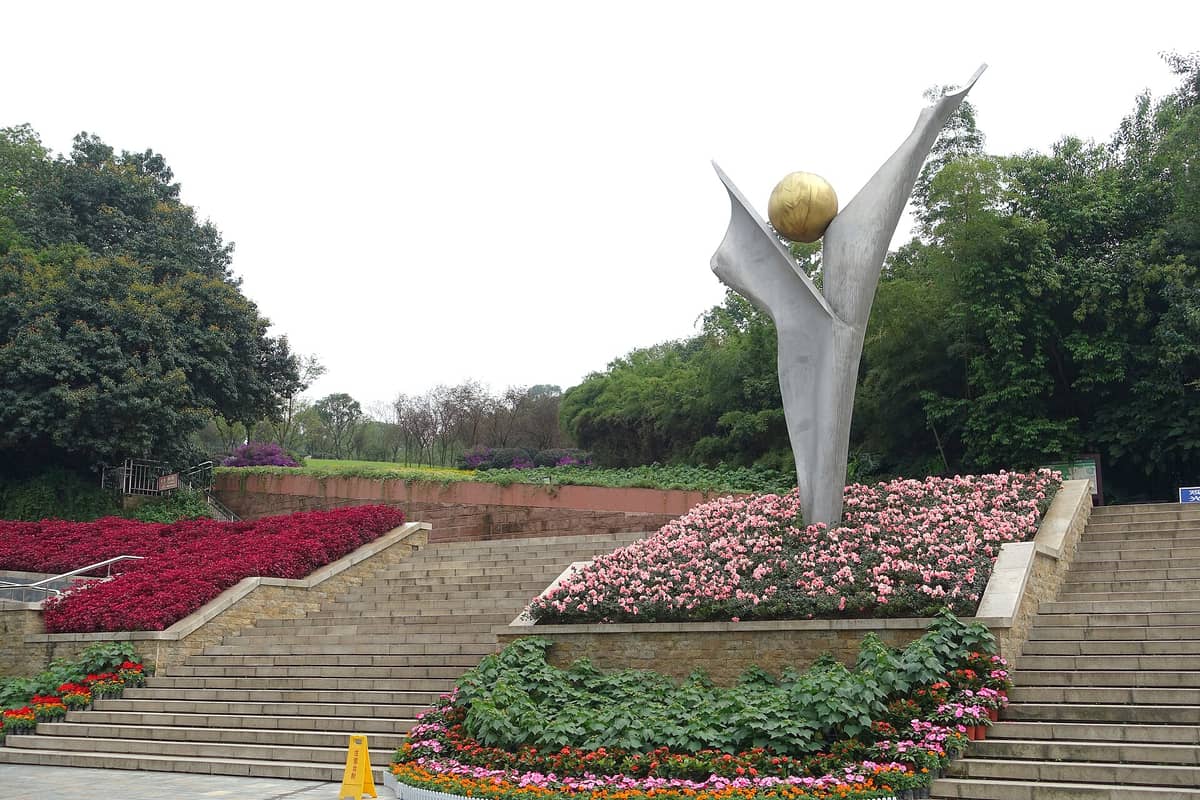
What the Chengdu Botanical Garden Actually Is
The Chengdu Botanical Garden (成都市植物园, Chéngdū Shì Zhíwù Yuán) is a municipally managed green space and living plant collection in the northern reaches of the city, covering approximately 42 hectares. It was built in 1983 and developed in Tianhui Town, giving the terrain a naturalistic, slightly hilly character unusual for urban parks in this part of Sichuan.
The garden is not a manicured showpiece in the European tradition. The paths feel well-used rather than pristine. Expect a mix of labeled botanical collections, open lawns used by families on weekends, a dedicated Sand Plant Pavilion (succulent and cactus greenhouse), and sections of dense tree canopy where the light shifts noticeably as you walk. The combination of scientific intent and neighborhood park atmosphere is what makes it distinctive.
💡 Local tip
Opening hours change seasonally: 07:00–19:00 from September 1 to May 31, and 06:30–20:00 from June 1 to August 31. The Sand Plant Pavilion keeps fixed hours of 08:30–17:00 year-round regardless of season.
How the Experience Changes by Time of Day
Early morning is the most rewarding window for a visit. In the first hour after opening, the garden draws retirees doing tai chi near the main plaza, small groups of older residents walking for exercise, and the occasional photographer trying to capture light filtered through bamboo groves before the haze thickens. The sounds at this hour are primarily birds, the crunch of gravel underfoot, and soft music from a personal speaker somewhere down a side path. The air carries a faint earthiness from the leaf litter and damp soil, especially after an overnight rain.
By mid-morning on weekdays, foot traffic remains light. Weekends change this significantly: families arrive with strollers, school groups occasionally appear in organized lines, and the main pathways near the entrance get noticeably more crowded. If you are visiting for photography or the quieter botanical experience, Saturday morning is the worst time to arrive. A weekday visit, or arriving right at opening on any day, avoids the bulk of the weekend crowd.
Afternoons in summer (June through August) can be warm and humid. Temperatures in Chengdu during these months regularly reach 29–31°C, and with the garden's dense canopy providing only partial shade on open stretches, the heat is noticeable. The garden's extended summer hours (closing at 20:00) make a late afternoon visit followed by staying for dusk a practical strategy: the temperature drops meaningfully after 17:00, and the long light of early evening turns the tree lines golden.
Tickets & tours
Hand-picked options from our booking partner. Prices are indicative; availability and final rates are confirmed when you complete your booking.
Panda Base and city highlights private day tour in Chengdu
From 302 €Instant confirmationFree cancellationChengdu to Yibin private tour with Wuliangye Liquor Museum visit
From 300 €Instant confirmationChengdu private evening tour with hot pot dinner
From 247 €Instant confirmationFree cancellationGiant Buddha and Huanglongxi Old Town private day tour from Chengdu
From 368 €Instant confirmationFree cancellation
Seasonal Highlights: When to Visit for the Best Display
Cherry blossom season is the garden's peak period for foot traffic and visual impact. Chengdu's cherry trees typically bloom in late February to mid-March, depending on the year's temperature pattern, making this one of the earlier large-scale blossom displays in China. The garden becomes genuinely crowded during peak bloom weekends. If you plan around this, arrive before 08:00 and expect the main cherry areas to be busy by 09:30.
Outside of cherry season, the garden is at its most pleasant from March through May and again from September through November. Spring brings warmth without the summer humidity, and the tree collections show new growth across the bamboo groves and broadleaf sections. Autumn brings cooler air and color change in the deciduous plantings. Winter visits are quiet to the point of near-solitude, and the garden's evergreen structure holds up well; frost is possible but snow is uncommon in Chengdu's urban core.
For context on Chengdu's climate patterns and how to plan around them, the best time to visit Chengdu guide covers seasonal trade-offs across the city's main attractions.
What to See Inside: The Collections and Spaces
The garden is organized into themed sections rather than a single loop path. The main entrance on Rongdu Avenue leads into a transitional plaza before the paths diverge. Navigation within the garden is reasonably intuitive, though signage is predominantly in Chinese. A basic printed map at the entrance desk can help orient you.
The Sand Plant Pavilion is the single most distinct indoor space: a greenhouse housing succulents, cacti, and desert-adapted plants from outside Sichuan's climatic zone. The contrast between the pavilion's warm, dry interior and the humidity outside is immediately noticeable when you step in. It is a short visit (15 to 20 minutes) but a genuinely different texture from the rest of the garden experience. Remember the pavilion closes at 17:00 regardless of when the main garden closes.
The bamboo sections are worth spending time in. Sichuan is one of the centers of bamboo diversity in China, and the garden holds multiple species at varying maturities. The rustle of bamboo in a light breeze and the specific quality of diffused green light inside a bamboo stand are sensory details that distinguish this from a typical urban park. The bamboo groves are also cooler than the open areas on hot days.
Visitors interested in Sichuan's broader ecological significance should note that the province's biodiversity, including its bamboo forests, underpins the giant panda's habitat. For a very different but complementary green-space experience, the Chengdu Research Base of Giant Panda Breeding is accessible on the same Metro Line 3 corridor.
Getting There and Practical Logistics
Metro Line 3's Botanical Garden Station (植物园站) is the most straightforward way to arrive. The station name matches the destination directly, which removes navigation uncertainty for visitors unfamiliar with the area. Bus routes 254, 143, 650, 659, 660, and X15 also serve the area if you are connecting from a part of the city not directly on Line 3.
Admission is ¥10 per person, paid at the entrance. Detailed information on current concessions and step-free routes was not confirmed in available sources, so visitors with specific accessibility requirements should verify current conditions before visiting.
⚠️ What to skip
Opening hours, ticket prices, and internal facility availability can change with season, public holidays, and maintenance schedules. Verify current information at http://www.cdzwy.com/ or by calling ahead before making a special trip.
The garden is in Jinniu District in the northern part of the urban core. It is not within walking distance of Chengdu's main tourist cluster around Tianfu Square or Wuhou, but the Metro connection is direct and uncomplicated. A Didi ride from the city center takes roughly 25 to 40 minutes depending on traffic; the Metro is typically faster and more predictable during peak hours.
For a full picture of moving around the city efficiently, the guide to getting around Chengdu covers metro, buses, and ride-hailing options in detail.
Photography and What to Wear
The garden offers strong photography conditions in spring and early morning year-round. Cherry blossom season produces the most visually dramatic material but also the most competition for unobstructed frames. The bamboo sections and the long allées of mature trees photograph well in soft overcast light, which Chengdu provides frequently given its famously cloudy skies. Overcast days actually work in your favor here: flat diffused light eliminates harsh shadows and brings out the green tones in the canopy.
Wear comfortable walking shoes with grip; some paths have slight elevation changes from the original forest-farm terrain, and sections can be slick after rain. In summer, light breathable clothing and sun protection for open stretches are practical. In winter, a mid-layer is sufficient on most days, though temperatures can drop to around 6°C in January and February.
Honest Assessment: Who This Is and Isn't For
At ¥10 entry, the Chengdu Botanical Garden is one of the most affordable large green spaces in the city, and the quality of the plant collections and tree canopy genuinely rewards that price. However, visitors expecting a world-class botanical garden with exhaustive bilingual interpretation panels, manicured displays, or cutting-edge visitor facilities will find it modest. The signage is primarily in Chinese, the internal pathways are functional rather than designed for spectacle, and some areas show their age.
For visitors with limited time in Chengdu, this garden makes most sense as a half-morning excursion, particularly if you are combining it with a Metro Line 3 visit to the Panda Base or if you are staying in the northern part of the city. If you are looking for a more centrally located park experience, People's Park in Qingyang District delivers a different but equally authentic slice of Chengdu daily life, with its famous teahouses and ballroom dancing, and requires no dedicated transit journey from the main sightseeing areas.
Visitors who want a curated overview of Chengdu's best outdoor spaces can consult the Chengdu parks and outdoor spaces guide to compare options before committing to the journey north.
Travelers on a tight 2 to 3 day itinerary who have not yet seen the major cultural sites should probably prioritize elsewhere. The garden is most suited to visitors who have already covered the headline attractions and want a slower, greener morning away from the tourist circuit.
Insider Tips
- Arrive within the first 30 minutes of opening on any day for the thinnest crowds and the best light. The entrance plaza clears out quickly as visitors spread through the 42 hectares, and the early morning birdsong is noticeably richer than mid-day.
- The Sand Plant Pavilion closes at 17:00 even when the main garden stays open until 20:00 in summer. If the greenhouse is on your list, don't leave it until last.
- During cherry blossom peak (typically late February to mid-March), weekday visits are meaningfully quieter than weekends. Even a Tuesday visit can feel crowded at 10:00 during full bloom, so arriving at opening is more important than picking the right day of the week.
- Chengdu is one of China's cloudiest cities; bring a light rain layer even on days with no forecast rain. The canopy provides partial cover, but a sudden shower on uncovered paths can make the sloped terrain slippery.
- Line 3 continues south toward the city center and connects to key interchange stations. You can combine the botanical garden with a visit to the Panda Base, which is served in the area by Panda Avenue Station, for an efficient full morning using Chengdu's Metro network.
Who Is Chengdu Botanical Garden For?
- Plant enthusiasts and anyone interested in bamboo diversity and Sichuan's native flora
- Families with children looking for open space without a heavy entrance cost
- Photographers targeting spring blossoms or early-morning canopy light
- Repeat visitors to Chengdu who have covered the main cultural circuit and want something quieter
- Budget travelers: at ¥10, it is one of the most affordable half-day experiences in the city
Nearby Attractions
Combine your visit with:
- Huanglongxi Ancient Town
Huanglongxi Ancient Town, located in Shuangliu District of Chengdu, is a historic river town in Sichuan. With free entry to the main street area, Ming and Qing dynasty architecture, three riverside temples, and traditional snack vendors lining cobbled lanes, it offers a more relaxed alternative to the city's more commercialized historic quarters.
- Luodai Ancient Town
Luodai Ancient Town (洛带古镇) sits about 30 km east of central Chengdu in Longquanyi District and preserves one of China's most intact Hakka communities outside Guangdong. Entry is free, the main stone-paved street is walkable in a morning, and the food alone justifies the bus ride.
- Sanxingdui Museum
Sanxingdui Museum, located in Guanghan about 40 km north of Chengdu, houses one of the most extraordinary archaeological collections in the world. Massive bronze masks with protruding eyes, a 3,000-year-old gold staff, and towering ritual trees pull you into a Bronze Age civilization that developed entirely outside the Yellow River narrative. This is not background-reading history — it is confrontational and genuinely strange.
- Sichuan Opera (Bianlian Face-Changing)
Sichuan Opera is one of Chengdu's most distinctive cultural experiences, best known for its jaw-dropping Bianlian face-changing sequences where performers swap ornate masks in fractions of a second. Evening shows run at multiple venues across the city, blending acrobatics, fire-breathing, and traditional music into a 90-minute performance unlike anything else in China.