Happy Valley Beijing: The Complete Visitor Guide
Happy Valley Beijing is the capital's largest Western-style theme park, spread across 560,000 square metres in Chaoyang District. With seven themed zones, 47 rides, and seasonal evening operations, it draws families, thrill-seekers, and locals looking for a full-day escape. Here is everything you need to decide if it belongs on your itinerary.
Quick Facts
- Location
- Southeast corner of Sifang Bridge, East Fourth Ring Road, Chaoyang District, Beijing
- Getting There
- Happy Valley Scenic Area Station (欢乐谷景区), Beijing Subway Line 7
- Time Needed
- 5–9 hours for a full day; families with young children typically need 6+ hours
- Cost
- From CNY 299 (adult); from CNY 195 (child/senior). Prices vary by date — verify before purchasing.
- Best for
- Families, thrill-seekers, groups celebrating birthdays or school holidays
- Official website
- bj.happyvalley.cn
What Is Happy Valley Beijing?
Happy Valley Beijing (北京欢乐谷) opened on 29 July 2006 and is the flagship property of the OCT-backed Happy Valley chain, which operates parks in multiple Chinese cities. Covering approximately 560,000 square metres in Chaoyang District, it is the largest theme park within Beijing's urban limits and one of the largest in northern China. The park is divided into seven themed areas, each with a distinct visual identity, and it hosts 47 rides alongside over 60 cultural and ecological landscape features.
Unlike Universal Studios or Disney parks, Happy Valley Beijing is a domestically developed attraction with no major international IP tie-ins. That distinction matters: you will not find familiar characters or franchise theming here. What you will find is a legitimately large, well-maintained park that serves an enormous local and domestic tourism audience. It is a genuine amusement park, not a cultural attraction dressed up as one.
ℹ️ Good to know
Happy Valley Beijing is primarily designed for the Chinese domestic market. English signage is available at key points, but ride safety announcements, live shows, and most food-stall menus are in Mandarin only. Bring a translation app.
What the Park Looks and Feels Like
Arriving at the main gate on a weekend morning, the first thing you notice is the scale. The entrance plaza is wide and open, with queues already forming at ride entrances by 10:00. The park's layout is circular, radiating outward from a central plaza, which makes navigation more intuitive than it first appears on a map. Paths are broad enough to handle the crowd volume on peak days, though they can feel genuinely congested on public holidays and summer weekends.
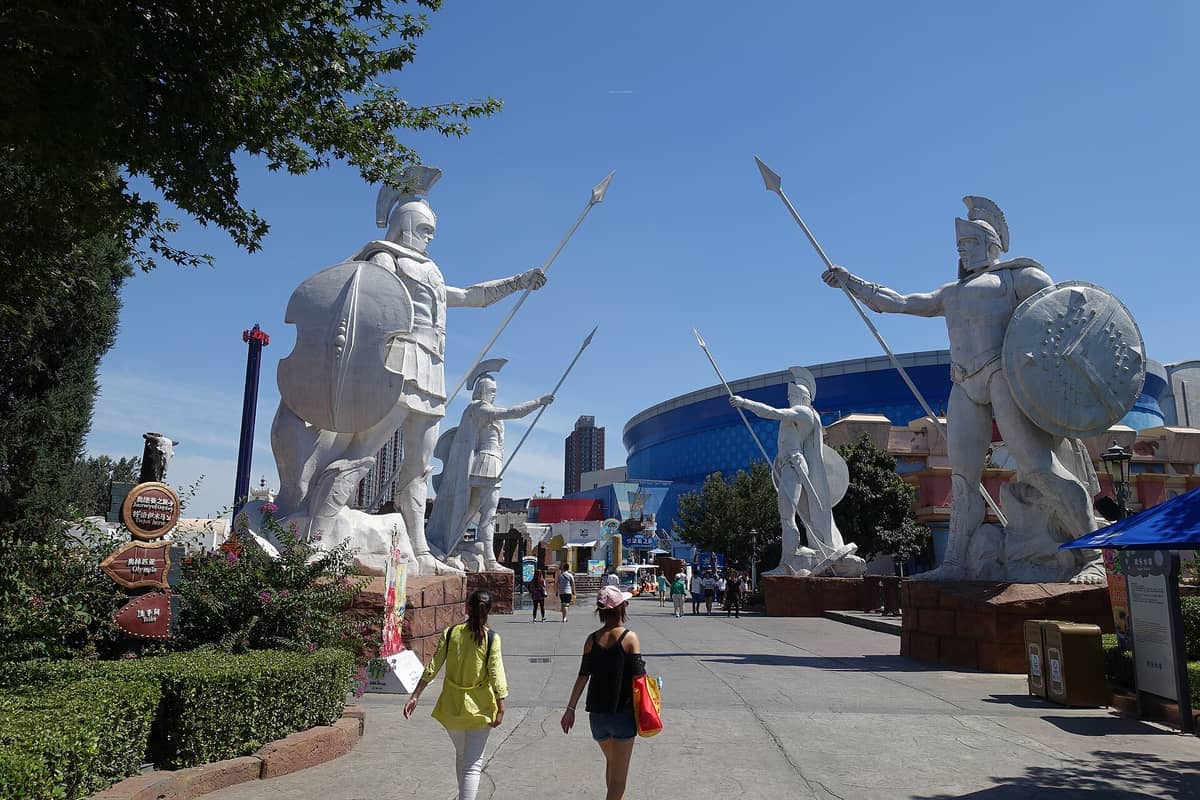
The seven themed zones range from an ancient Greece-inspired area with dramatic columned architecture to a zone styled around ancient civilisations with layered waterfall features. The landscaping is more deliberate than you might expect: mature trees provide shade across significant portions of the park, and several water features, including a lake in the central section, give the grounds a less concrete-heavy feel than many comparable parks. On a clear autumn day, the foliage and reflective water create genuinely photogenic conditions.
Ride quality varies considerably across the park. The headline coasters include multi-inversion designs that attract serious thrill-seekers, and several receive consistent positive notices from domestic visitors. Spinning rides, water rides, and gentler family attractions fill out the offering. The water rides operate seasonally, so check the schedule if that is a priority. Younger children have dedicated zones with age-appropriate rides, but the park does not rival a Disney or Universal facility in terms of queue management, ride storytelling, or overall polish.
⚠️ What to skip
On Chinese public holidays (Golden Week in October, Labour Day in May, and the Spring Festival period), Happy Valley Beijing can reach peak capacity with very long wait times. If you visit during these windows, arrive at opening and expect crowds that significantly affect the experience.
Tickets & tours
Hand-picked options from our booking partner. Prices are indicative; availability and final rates are confirmed when you complete your booking.
Beijing Summer Palace Entrance Ticket
From 7 €Instant confirmationFree cancellationMutianyu Great Wall and Summer Palace small-group tour from Beijing
From 171 €Instant confirmationFree cancellationPrivate Customized Beijing Tour with Local Guide and Transfer
From 53 €Instant confirmationFree cancellationLama Temple entrance tickets in Beijing
From 6 €Instant confirmationFree cancellation
Morning vs. Evening: How the Experience Changes
The park opens at 09:00, and arriving near opening is generally the best time to tackle the most popular rides. Queues at headline attractions can become substantially longer on busy days. Arriving at 09:00 and heading directly to the major coasters before the bulk of visitors arrive can improve your chances of riding more than once.
On days when the park stays open until 22:00, the evening hours have a genuinely different character. Lighting and performances may operate according to the daily schedule, and crowd levels vary by date. For visitors primarily interested in atmosphere rather than maximum ride count, arriving in the late afternoon and staying through the scheduled closing time is a viable strategy that also avoids the midday heat in summer.
Summer afternoons between roughly 13:00 and 16:00 are the least comfortable time to be in the park. Beijing summers run hot and humid, and exposed queues in direct sun can be genuinely taxing. If you visit in July or August, take a midday break indoors, eat in one of the air-conditioned restaurants, and let the peak heat pass before returning to the ride queues.
Getting There and Getting Around
The most straightforward way to reach Happy Valley Beijing is the Beijing Subway. Take Line 7 to Happy Valley Scenic Area Station (欢乐谷景区站); the park entrance is at the southeast corner of Sifang Bridge, a short walk from the station exit. The subway is almost always faster than driving, particularly on weekends when the East Fourth Ring Road experiences heavy congestion.
Driving or taking a taxi is an option, but parking at the park itself can fill up on peak days, and the drop-off and pick-up logistics around the main entrance can involve significant waiting. If you use DiDi, set your destination to the main entrance specifically rather than the general address, as the park perimeter is large enough that an imprecise pin can add a 10-minute walk.
Within the park, the seven themed zones are connected by a route that can be walked end to end, though the park is large enough that you will cover considerable ground over a full day. Comfortable, well-broken-in shoes are essential. There is no internal park transport listed; factor in walking fatigue when planning with children or elderly visitors.
💡 Local tip
Buy your tickets in advance through the official Happy Valley Beijing website or a verified third-party platform. On-site box offices can have long queues on peak days, and advance purchase sometimes includes date-specific pricing that is lower than the walk-up rate.
Tickets and Pricing
Current published standard prices list adult admission at CNY 299 and child and senior tickets at CNY 195; date-specific promotions and other ticket categories may differ. The official Happy Valley Beijing ticketing page (bj.happyvalley.cn) is the authoritative source; prices on third-party resale sites vary and should be verified carefully.
Visitors with state-issued second- or third-generation disability certificates are admitted free of charge. Blind visitors and those with intellectual disabilities or limited self-care ability must be accompanied by a family member who purchases admission separately. These policies are in place as published on the official site, but it is worth confirming current accessibility provisions before your visit if they are relevant to your party.
Food and beverages inside the park are priced at a premium over street-level Beijing prices, which is standard for large theme parks. You can bring sealed snacks and non-alcoholic drinks in most cases, but confirm the current bag policy at the entrance on the day.
Honest Assessment: Who This Is Really For
Happy Valley Beijing works well for families with children who want a full-day outing with variety, for groups who enjoy thrill rides and do not require internationally branded experiences, and for domestic travellers familiar with the Happy Valley format across China. It is a legitimate, well-run amusement park with real infrastructure and a broad enough ride selection to fill a day.
Visitors on a tight itinerary focused on Beijing's extraordinary historical and cultural depth should think carefully before committing a full day here. Beijing holds the Forbidden City, the Temple of Heaven, and some of the world's most significant imperial monuments. A day at Happy Valley is a day not spent at those sites, and for first-time visitors with limited time, that is a meaningful trade-off.
Happy Valley is also most appropriate as a standalone day trip from Chaoyang or the wider city. It does not pair naturally with nearby cultural sites in the way that, say, the 798 Art District does with Sanlitun. If you are specifically in Chaoyang for the day and the park matches your group's interests, the logistics are convenient.
⚠️ What to skip
First-time visitors to Beijing with 3 to 5 days in the city should weigh this visit carefully. The city's imperial and cultural heritage is unmatched globally, and a theme park day is better suited to second visits or longer stays.
Photography and Practical Logistics
The park's most photogenic windows are the first hour after opening, when the grounds are less crowded and morning light falls across the themed architecture, and the evening period after sunset when the lighting installations are fully active. Midday harsh light and peak-crowd density make the middle of the day the weakest period for both photography and overall experience.
Beijing's air quality varies by season and weather conditions. On clear autumn days, which autumn is widely considered the best season to visit Beijing, the skies above the park can be genuinely blue and the outdoor spaces are comfortable. On days with reduced air quality or winter cold waves, the outdoor experience is less pleasant. Check air quality forecasts before committing to an outdoor-heavy day.
The park is large enough that it is worth identifying your priority rides and themed zones before arriving, particularly if you are visiting with children who have specific height requirements. Height restrictions apply to a number of the more intense attractions, and the park provides a guide; check the official website before your visit if your group includes younger children.
Insider Tips
- Arrive at 09:00 sharp and head directly to the headline coasters before the queues build. The 90 minutes after opening are the most efficient time in the entire park for high-demand rides.
- The evening hours from 19:00 onward see noticeably thinner crowds and the lighting installations across the themed zones create a different atmosphere worth staying for, even if you have been in the park since morning.
- Wear light, breathable layers in spring and autumn; temperatures can swing significantly between morning arrival and late evening closing. In summer, sun protection is essential for the exposed queuing areas.
- Lockers are available near the main entrance and are strongly recommended for bags and larger items before boarding high-intensity rides. The cost is modest and avoids the hassle of managing large bags at each ride.
- If your group speaks limited Mandarin, download a translation app before entering. Live show content, PA announcements, and most food menus are in Chinese, and having a quick translation tool on your phone reduces friction throughout the day.
Who Is Happy Valley Beijing For?
- Families with children aged 6 and above looking for a full-day activity with a wide range of ride types
- Groups of friends or young adults seeking thrill rides and a social day out that does not require cultural or historical engagement
- Travellers visiting Beijing on a second or longer trip who have already covered the major imperial and historical sites
- Domestic tourists and Beijing residents celebrating birthdays, school holidays, or group outings
- Evening visitors who want to experience the park's lighting displays without committing to a full-day visit
Nearby Attractions
Other things to see while in Chaoyang District:
- 798 Art District
The 798 Art District in Chaoyang is Beijing's most concentrated hub for contemporary art, housed in a repurposed 1950s military electronics factory complex. Entry to the district is free, galleries cluster along wide concrete lanes, and the atmosphere shifts dramatically between a quiet Tuesday morning and a packed Saturday afternoon. Here is what to expect, and whether it deserves your time.
- Beijing National Stadium (Bird's Nest)
The National Stadium, universally known as the Bird's Nest, is Beijing's most recognizable piece of contemporary architecture. Built for the 2008 Summer Olympics, it now operates as a visitor attraction and events venue in the Olympic Park area of Chaoyang District. Here is everything you need to know to decide whether it belongs on your itinerary.
- Olympic Park
Beijing Olympic Park, the remains one of the city's most architecturally striking outdoor spaces. Entry to the park is free, remains one of the city's most architecturally striking outdoor spaces. Entry to the park is free, and the Bird's Nest and Water Cube stadiums stand as permanent landmarks of modern Chinese ambition. This guide covers what to see, when to go, and how to make the most of a half-day visit.
- China National Film Museum
The China National Film Museum in Chaoyang is one of the largest film museums in the world, covering approximately 38,000 square metres across 20 exhibition halls. Admission to the permanent collection is free, and the complex includes working cinema screens for classic and contemporary films. It rewards curious visitors with surprising depth on Chinese film history.