Granary Square, King's Cross: What to See, Do, and Know Before You Go
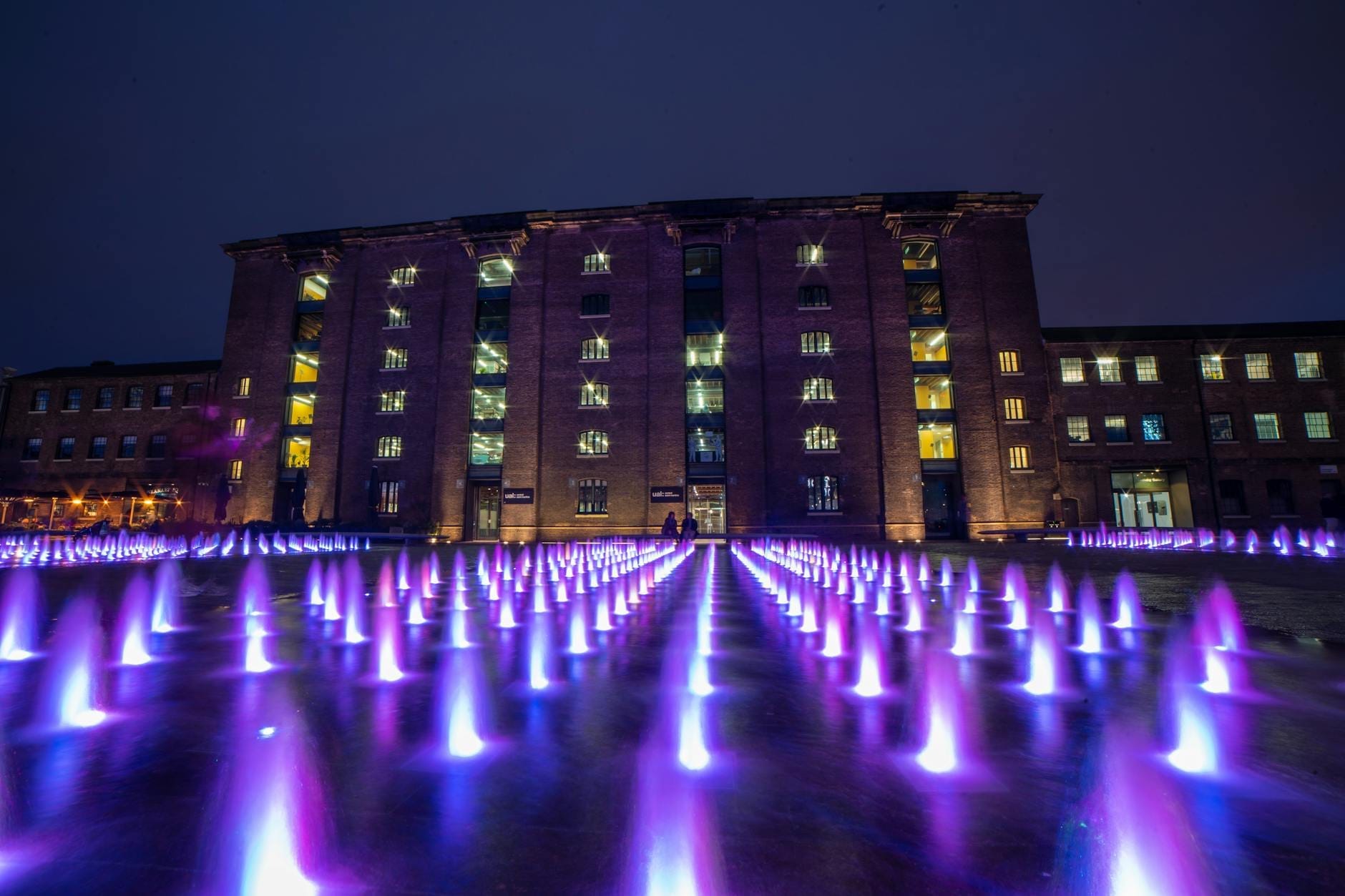
Once a derelict freight yard, Granary Square has been transformed into one of London's most impressive public spaces. Anchored by a choreographed fountain display with over a thousand individually controlled water jets, the square sits beside the Regent's Canal and is flanked by the converted Victorian Granary Building. Entry is free, it never closes, and it rewards a visit at almost any hour.
Quick Facts
- Location
- Granary Square, King's Cross, London N1C 4BH
- Getting There
- King's Cross St. Pancras Underground (about a 5–10 minute walk; follow signs toward Regent's Canal / King's Boulevard)
- Time Needed
- 30 minutes to 2 hours depending on dining and exploring
- Cost
- Free to enter (public access at all hours, though fountains only run during set daytime schedules)
- Best for
- Architecture lovers, families, canal walks, casual dining
- Official website
- www.kingscross.co.uk/granary-square
What Is Granary Square?
Granary Square is a large public square in the King's Cross regeneration zone, one of the most ambitious urban renewal projects in recent London history. Covering a footprint comparable in size to Trafalgar Square, it sits on the north bank of the Regent's Canal and is framed on one side by the Victorian-era Granary Building, now home to Central Saint Martins art college. The square is the civic centrepiece of the King's Cross development: a mix of restaurants, canal-side terraces, residential blocks, and cultural venues that rose from what had been derelict rail freight sidings and industrial yards.
The defining feature at ground level is the fountain installation: over 1,000 individually controlled water jets set flush into the paving, capable of being choreographed into different patterns and heights. On warm afternoons they become an unofficial splash pad for children, and on summer evenings they're lit from below, drawing crowds who sit on the broad steps leading down from the square to the canal towpath.
💡 Local tip
Getting here from King's Cross St. Pancras station takes about 5–10 minutes on foot. Follow signs toward Regent's Canal or King's Boulevard from the Underground to avoid the busier street-level route and arrive alongside the water.
The Architecture and the Industrial Past
The Granary Building itself dates from 1852 and was designed by Lewis Cubitt, who also designed King's Cross station. It was built to store grain transported to London by rail and canal. The building's long, relatively plain brick facade with its repetitive arched windows is characteristic of Victorian industrial pragmatism: no ornament that wasn't necessary, proportions dictated by function. That restraint actually gives the square a calmer visual anchor than if the building had been dressed up.
The redevelopment of the wider King's Cross area began in earnest in the mid‑2000s, with Granary Square and the surrounding blocks developed by Argent. The project converted several Victorian transit structures into contemporary offices, galleries, and residences. The result is one of the rare examples in London where modern and historic construction coexist without the modern making apologies for itself. The Canal Building, Gas Holder Park, and Coal Drops Yard, all within short walking distance, share a similarly confident design approach.
For travelers with an interest in adaptive reuse architecture, the King's Cross precinct is worth comparing to other London examples like Coal Drops Yard, a converted Victorian coal-handling facility about five minutes' walk south along the canal, which now houses independent retailers and restaurants.
Tickets & tours
Hand-picked options from our booking partner. Prices are indicative; availability and final rates are confirmed when you complete your booking.
Soho Instagram a self-guided walking tour to top photo spots
From 6 €Instant confirmationFree cancellationTootbus London by Night: Bus tour
From 32 €Instant confirmationFree cancellationIFS Cloud Cable Car Ride and Uber Boat Hop-on Hop-off 1 Day Ticket
From 38 €Instant confirmationFree cancellationThe Making of Harry Potter Guided Tour of London Warner Bros. Studio
From 201 €Instant confirmationFree cancellation
How the Square Changes Through the Day
Early morning, before 8am, Granary Square is almost empty. The fountains may not yet be running, and the square has a wide, slightly austere quality. The canal below catches early light well, and the residential blocks mean there's usually some foot traffic from locals heading to the coffee shops along the ground floors. It's a good time for photography if you want the architecture without people.
By mid-morning on weekdays, the square shifts into a working district rhythm. Students from Central Saint Martins move through with portfolio cases. Office workers collect coffees from the surrounding units. The fountains begin their patterns, cycling between low ripples and sudden upward jets that catch walkers briefly off guard.
Weekend afternoons, especially in summer, are when the square reaches full capacity. The tiered stone steps descending to the canal fill up with people eating, drinking, and watching children run through the fountain jets. The atmosphere is relaxed rather than crowded in a stressful sense: the square is large enough that it absorbs groups without feeling oppressive. Evenings bring a different tone: the fountain lights activate after dark, the canal-side restaurants fill up, and the square's brick walls glow warm against the sky.
ℹ️ Good to know
The fountains are illuminated after dark in the evenings. Summer evenings (roughly May to September) offer the best combination of warm temperatures, long daylight, and the lit fountain display once the sun drops.
Eating, Drinking, and What's Around the Square
The ground floors of the buildings surrounding Granary Square have a range of restaurants and cafes, from casual all-day spots to more formal sit-down restaurants. The canal-side terrace below the square, accessed by the steps, has outdoor seating at several venues with direct water views. Prices are mid-to-upper range for London. This is not the part of King's Cross where you go for a cheap meal: the rents reflect the premium of the development.
The Regent's Canal towpath runs directly below the square, connecting westward toward Camden and eastward through Islington and beyond. Walking the towpath in either direction is a reasonable way to extend a visit. The canal walk toward Camden takes around 30 minutes on foot and passes through some quieter stretches before arriving at the market.
If you're planning to combine Granary Square with a broader area walk, Coal Drops Yard is the most natural extension: walk south past the canal and follow the signage. From there, the whole King's Cross retail and dining strip is contained within about a 10-minute walk.
Practical Information: Getting There, Accessibility, and What to Bring
King's Cross St. Pancras station is served by six Underground lines: the Victoria, Piccadilly, Circle, Hammersmith and City, Metropolitan, and Northern lines. It's one of the best-connected stations in London. From the station, follow signs for the Regent's Canal exit (sometimes signed as the 'Goods Way' exit depending on construction work in the area) and the walk takes roughly 6 minutes along the canal path or slightly longer via street level.
The square itself is flat and paved, with ramp access from the street level. The steps down to the canal are the main physical barrier: there is level access to the canal towpath via an alternative route nearby. The area is pushchair and wheelchair navigable across most of its surface. Evening visits are well-lit.
There are no lockers, bag storage, or visitor facilities specifically for Granary Square as a public space. Toilets are available in the surrounding restaurants and bars, but these are typically for customers. If you're planning a longer visit and not eating at one of the venues, factor this in.
⚠️ What to skip
If you're visiting with young children who plan to play in the fountains during summer, bring a change of clothes. The jets activate unpredictably and can soak children (and distracted adults) very quickly. The paving can also be slippery when wet.
Worth Knowing: Who Will Like It and Who Might Not
Granary Square delivers most reliably for people who appreciate thoughtful urban design, enjoy watching a public space work as intended, or simply want a well-located break from the indoor intensity of London's major attractions. The fountain installation is impressive at scale, and the combination of Victorian industrial buildings and contemporary architecture gives the space a visual quality that few comparable squares in London match.
Travelers expecting a traditional London experience, historic interiors, or anything resembling the tourist-facing parts of the city centre will likely be puzzled by Granary Square. It is fundamentally a modern urban development, not a heritage site. The historical interest is architectural and contextual rather than displayed or explained. There are no information panels, guided tours, or exhibitions within the square itself.
If you're building a broader itinerary, Granary Square fits well into a half-day that combines the King's Cross area with a visit to the British Library, which is a 10-minute walk south. The Library's courtyard and exhibitions are free to enter and provide strong contrast to the industrial-to-modern transformation of the King's Cross end.
For travelers on a wider London exploration, the London walking tours guide includes routes that take in the Regent's Canal and King's Cross area as part of longer cross-city walks.
Insider Tips
- The best photography angle for the Granary Building facade is from the far south end of the square, early morning or during golden hour, when the brick picks up warm light and the fountain paving reflects it.
- The steps down to the canal are some of the most popular informal seating in the area. On busy weekends, arrive before noon to find a good spot on the lower tiers with an unobstructed canal view.
- Coal Drops Yard, a five-minute walk south along the canal, has a roof terrace accessible from inside the development. It's a good elevated vantage point back toward Granary Square and the wider King's Cross skyline.
- The fountains have a low-activity setting during colder or quieter periods. If you're visiting specifically for the fountain display, warm weekday lunchtimes or weekend afternoons in summer give the best chance of seeing them at full choreographed output.
- The Regent's Canal towpath below the square is a useful quiet shortcut to skip the King's Cross station crowds entirely. Head west along the water if you're connecting to Camden or Islington.
Who Is Granary Square For?
- Architecture and urban design enthusiasts who want to see London's most successful regeneration project up close
- Families with young children looking for free outdoor space with the fountain play area in summer
- Travelers building a King's Cross half-day combining the canal, Coal Drops Yard, and the British Library
- Photographers who want striking industrial-to-contemporary cityscapes without fighting large crowds early in the morning
- Canal walk enthusiasts using the Regent's Canal towpath as a route between King's Cross and Camden
Nearby Attractions
Other things to see while in West End:
- British Library
The British Library holds over 170 million items spanning thousands of years of human thought, from the Magna Carta to Beatles lyrics. Entry to the building and permanent collection galleries is free, making it one of the most rewarding stops in central London for curious travellers.
- British Museum
The British Museum holds one of the world's great collections of human history and culture, spanning two million years across more than 60 free galleries. Entry to the permanent collection is free, but knowing how to navigate the scale of it makes the difference between a rewarding visit and an overwhelming one.
- Carnaby Street
Carnaby Street is the pedestrianised shopping district in Soho that defined the look of 1960s London and continues to draw fashion lovers, food hunters, and curious walkers today. Free to explore and five minutes from Oxford Circus, it rewards those who slow down and wander its connecting lanes.
- Coal Drops Yard
Coal Drops Yard is a redeveloped Victorian industrial estate in King's Cross, now home to independent retailers, restaurants, and bars set beneath strikingly restored brick vaults. The public outdoor spaces are free to enter and a short walk from King's Cross St Pancras station.