Estonian Open Air Museum: A Full Village Frozen in Time
Spread across 72 hectares of coastal forest in Tallinn's Haabersti district, the Estonian Open Air Museum (Eesti Vabaõhumuuseum) reconstructs rural and fishing life from the 18th and 19th centuries. Twelve farmyards, a working tavern, a church, mills, a schoolhouse, a fire station, and net sheds make this Estonia's largest and most immersive open-air history experience.
Quick Facts
- Location
- Vabaõhumuuseumi tee 12, Haabersti district, Tallinn — about a 15-minute drive from the city centre
- Getting There
- Bus connections from central Tallinn; check the museum's 'Getting Here' page at evm.ee for current routes
- Time Needed
- 2.5 to 4 hours for a thorough visit; casual walkers can cover the highlights in under 2 hours
- Cost
- Paid admission; check evm.ee/visitors/ticket-information for current adult and concession rates
- Best for
- Families, history enthusiasts, photographers, and anyone curious about Estonian rural heritage
- Official website
- evm.ee/en
What Is the Estonian Open Air Museum?
The Estonian Open Air Museum, known in Estonian as Eesti Vabaõhumuuseum, is a living-history site on the former Rocca al Mare summer estate on the western edge of Tallinn. Established on 22 May 1957 and opened to visitors in August 1964, it has grown into the largest open-air museum in Estonia, covering roughly 72 hectares of mixed woodland, meadow, and shoreline. The collection spans twelve farmyards, a wooden church, a village tavern, a schoolhouse, windmills, a fire station, and coastal net sheds — all original structures relocated from different Estonian regions and reassembled to represent rural and fishing community life from the 18th and 19th centuries.
Unlike many heritage sites where buildings sit behind glass or rope barriers, the museum encourages visitors to step inside the structures. You can walk into smoke-blackened farmhouse interiors, sit in a 19th-century schoolroom, or order a beer at the tavern using period-appropriate wooden furniture. The effect is something between a history lesson and a set from a Bergman film: quiet, textured, and genuinely atmospheric.
💡 Local tip
The museum park opens at 10:00 and stays open until 20:00, while the individual buildings generally close at 18:00. If you arrive just before the buildings close, you can still walk the grounds — but arrive by mid-afternoon to see interiors properly.
The Grounds: What You Are Actually Walking Through
The site is laid out loosely by region and farmstead type rather than in a straight line, so the experience rewards wandering. Paths wind through pine and birch forest, opening onto clearings where thatched-roof structures sit against the tree line. The air smells of resin and old timber, and on warm days the sound of woodpeckers and rustling leaves competes with any background hum from the city. You genuinely feel removed from Tallinn's urban rhythm within five minutes of entering.
The farmyard complexes are the museum's core. Each one consists of several buildings — a main dwelling house, grain storage, threshing barn, and sometimes a sauna — arranged around a central yard just as they would have been on a working 18th or 19th-century Estonian farm. The construction techniques vary by region: south Estonian farms use different timber-joining methods and roof pitches than west Estonian coastal farms. These differences are subtle but become visible once a guide or the on-site information panels point them out.
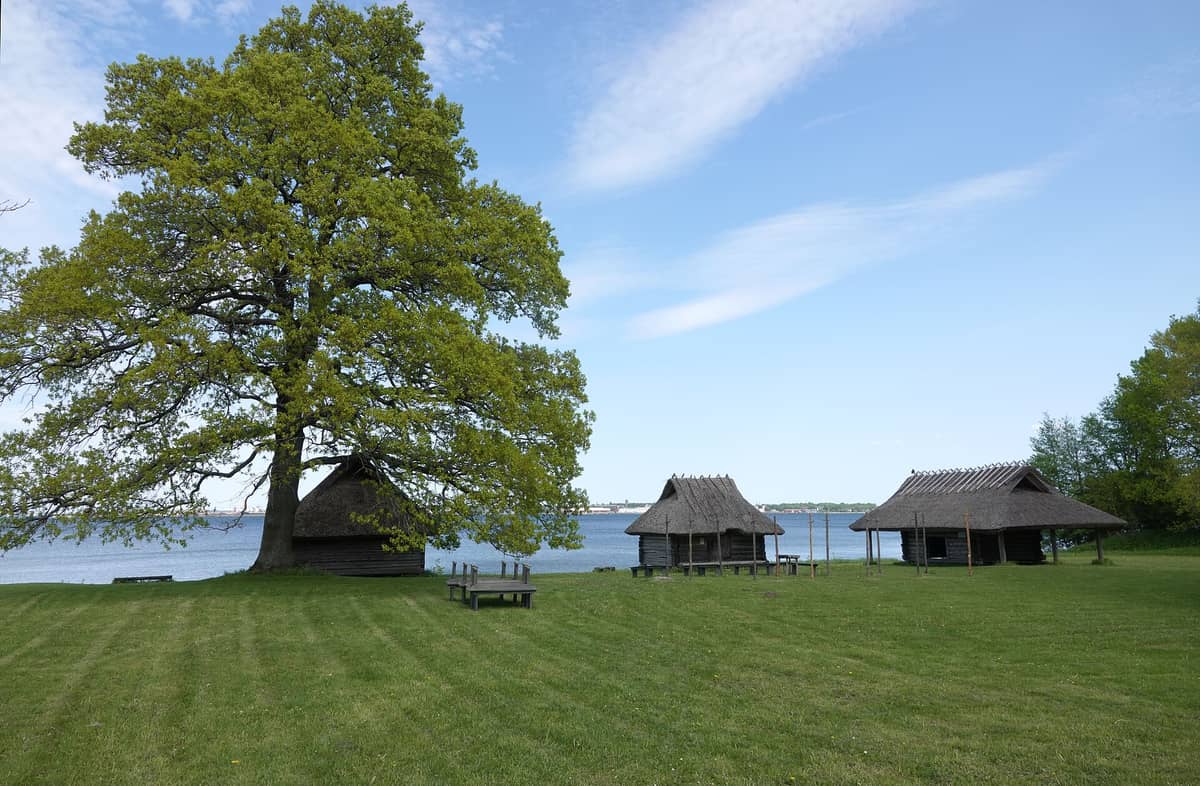
Toward the sea side of the estate, the fishing village section includes net sheds and boat storage structures that reflect the lives of coastal Estonian communities. The wooden church, relocated from the Sutlepa village on the western coast, stands near the centre of the site and is one of the most photographed structures. Its interior, with painted wooden beams and simple pews, is open during building hours.
Tickets & tours
Hand-picked options from our booking partner. Prices are indicative; availability and final rates are confirmed when you complete your booking.
Estonian food, drinks and history tour in Tallinn
From 79 €Instant confirmationFree cancellationSelf-guided Discovery Walk of Tallinn city contrasts beyond the medieval walls
From 26 €Instant confirmationFree cancellationTallinn's art and culture tour with a local
From 62 €Instant confirmationFree cancellationHistorical walking tour of Tallinn with a local
From 599 €Instant confirmationFree cancellation
How the Experience Changes Through the Day
Morning visits, especially on weekdays, offer something rare in tourism: near-total quiet. Before 11:00 the crowds are thin, the low northern light filters through the forest canopy, and the farmyard chickens and geese (kept on-site during warmer months) are the most active presences you will encounter. This is the best window for photography, particularly for the thatched rooftops and weathered timber walls, which catch raking light beautifully.
By early afternoon, school groups and families with children arrive, which makes the site livelier but also more instructive — guides are more frequently present, demonstrations may be running in the farmyards, and the tavern fills up with visitors taking a break. The tavern, modelled on a 19th-century Estonian country inn, serves traditional food and drinks; it is a legitimate lunch stop, not a tourist gimmick.
Late afternoon in summer is perhaps the most pleasant time to walk the grounds even if the buildings have closed. The long Estonian summer evenings stretch well past 21:00 near the solstice, and the park is open until 20:00 during the main season. The light at that hour is warm and low, the crowds have thinned, and the forest paths are quiet enough to hear the birds again.
⚠️ What to skip
The paths between farmsteads are unpaved and uneven in places — packed earth and gravel over woodland terrain. Comfortable walking shoes are essential. Heels, sandals without straps, or footwear that cannot handle light mud after rain will cause problems.
Seasonal Considerations and Special Events
The museum is genuinely different in each season, and that difference matters when deciding when to visit. Summer (roughly late April through September) is the main operating season: all buildings are open, costumed interpreters work the farmyards on busier days, and the grounds are in full leaf. This is when the site is most complete and most populated, with exhibits covering life from the 18th century through the modern period.
Winter opening hours are reduced and buildings close earlier (from late September to late April, the park operates Tuesday through Sunday, with the ticket office and outdoor areas open from 10:00 to 17:00). However, a winter visit has its own logic. Snow on thatched roofs is a striking visual, and the reduced crowds make the site feel more contemplative. The museum hosts seasonal events, including Midsummer celebrations and Christmas-period programming, which draw significant local attendance.
For general context on how seasons shape visits around the city, the Tallinn seasonal guide covers temperature ranges, daylight hours, and event calendars across the year.
ℹ️ Good to know
The museum is closed on Mondays during the off-season (29 September to 22 April). During the main summer season (23 April to 28 September) it operates daily. Always confirm current hours at evm.ee before visiting, as seasonal transition dates shift slightly year to year.
Historical and Cultural Context
Open-air museums became a major Scandinavian and Baltic institution in the 20th century, partly as a response to rapid industrialisation and the associated loss of traditional rural built forms. The Estonian Open Air Museum follows in this tradition, but its founding in 1957 during the Soviet period carries additional weight. The preservation of distinctly Estonian vernacular architecture and rural cultural practices was, in that context, an act of national identity as much as a conservation exercise.
The structures at the museum were dismantled from their original locations across Estonia — from western islands such as Kihnu and Saaremaa, from the forested interior, and from coastal fishing communities — and rebuilt on the Rocca al Mare estate with scholarly attention to original construction techniques. The result is not a single idealized village but a comparative cross-section of how Estonians lived across different regions and social strata. A wealthy south Estonian farm looks markedly different from a coastal fisherman's compound, and the museum makes this visible.
Understanding the broader arc of Estonian history, including the Soviet occupation period that shaped the museum's founding context, adds depth to a visit. Tallinn's medieval history guide and the Vabamu Museum of Occupations and Freedom offer complementary perspectives on Estonian cultural continuity and disruption.
Practical Walkthrough: Getting There and Making the Most of It
The museum is located in the Haabersti district, west of central Tallinn, at Vabaõhumuuseumi tee 12. By car the drive from the Old Town takes around 15 minutes, depending on traffic. By public bus, the journey is manageable; the museum's website includes a 'Getting Here' section at evm.ee/contact-us with current bus route details, which is the most reliable source since routes and schedules do change.
The site is too large to see in a single rushed hour. Two and a half hours is a comfortable minimum; families with children or anyone who wants to enter most buildings and eat at the tavern should allow three to four hours. The grounds are extensive enough that you will walk two to four kilometres over the course of a visit on uneven terrain.
If you are using the Tallinn Card during your stay, check whether the museum is included in current card benefits — the Tallinn Card guide has a breakdown of what is and is not covered.
Photography is unrestricted on the grounds and in most buildings. A wide-angle lens or a phone with a good ultra-wide mode handles the farmyard interiors well — the rooms are small and dark, so interiors benefit from the high dynamic range processing most modern smartphones offer. The forest paths also make for strong compositions in low-contrast overcast light, which is common in Tallinn for much of the year.
Accessibility across the site is limited by its outdoor, naturalistic character. The paths between structures are unpaved and include gentle slopes; visitors with mobility impairments or those using wheelchairs should review the accessibility information on the museum's visitor page at evm.ee/visitors before planning a trip, as the terrain may present challenges.
Who Should Skip This
The museum requires a real time investment and genuine curiosity about vernacular architecture and rural history. If you have one day in Tallinn and your priorities are the medieval Old Town, the view from Toompea, and lunch on a cobbled square, the Open Air Museum will feel like a detour too far. It sits outside the city centre and cannot be efficiently combined with a walking tour of the Old Town on the same half-day.
Visitors with very limited time in Tallinn should consider whether the Old Town's own architectural heritage covers enough ground. The Tallinn Old Town walking tour and attractions like Kiek in de Kok offer medieval history within walking distance of the centre.
Visitors who find outdoor walking in variable weather difficult, or who are expecting a climate-controlled gallery experience, will also find the museum less comfortable. On rainy days the site becomes muddy in places, and there is no large indoor space to retreat to. The tavern provides shelter, but it is not designed as a refuge.
Insider Tips
- The village tavern (kõrts) serves traditional Estonian food including black bread, smoked meats, and local beer. It is a legitimate place to eat, not a tourist canteen — arrive before 13:00 on weekends to get a table without waiting.
- Costumed guides and craft demonstrations are more likely on weekends and during summer school holidays. If you want to see blacksmithing, bread-baking, or weaving demonstrations, check the museum's events calendar before you visit.
- The park opens at 10:00 and stays open until 20:00, while most buildings are accessible from 10:00 to 18:00. Arriving at opening time lets you walk the grounds before the first tour groups arrive and before the farmyard animals have been brought out for demonstrations.
- The museum's wooden church hosts occasional concerts and seasonal services. Acoustics in the space are remarkable. Check the events calendar at evm.ee for scheduled performances during your travel window.
- The Rocca al Mare shoreline is visible from the western edge of the park grounds. A short detour toward the sea at the end of your visit adds a different visual register to the farmyard interiors you will have spent most of the day looking at.
Who Is Estonian Open Air Museum For?
- Families with children aged 5 and up who respond well to hands-on or walkable history
- Architecture and vernacular building enthusiasts interested in regional Estonian construction traditions
- Photographers looking for textured organic subjects well outside Tallinn's Old Town postcard circuit
- Travellers spending three or more days in Tallinn who want to move beyond the city centre
- Anyone with an interest in how national identity is preserved through material culture and built heritage
Nearby Attractions
Combine your visit with:
- Aegna Island
Aegna Island sits 14 km off the Tallinn coast in the Bay of Tallinn, reachable in about 30 minutes by boat. The entire island is a protected landscape conservation area, covered in dense forest, glacial boulders, and coastal meadows. Entry to the island is free, making it one of the most rewarding half-day escapes from the city.
- Glehn Park
Glehn Park is a free, forested public park in Tallinn's suburban Nõmme district, built around a 19th-century castle by the eccentric Baron Nikolai von Glehn. With natural woodland trails, stone carvings, and a refreshing distance from the Old Town crowds, it rewards visitors who want something genuinely different from the medieval core.
- Jägala Waterfall
Standing 8 metres tall and stretching over 50 metres wide, Jägala Waterfall is Estonia's largest natural waterfall. Located just 25 kilometres east of Tallinn on the Jägala River, it is free to visit year-round and rewards visitors differently in every season, from frozen curtains of ice in winter to a thundering torrent in spring snowmelt.
- Keila-Joa Waterfall
Standing 6 metres tall and stretching up to 60 metres across, Keila-Joa Waterfall is a dramatic manor-park waterfall and one of the most rewarding easy escapes from Tallinn. Set inside a forested river park beside a 19th-century Gothic Revival manor, the site is free to enter and open year-round. It rewards a visit in every season.