Aegna Island: Tallinn's Forested Island Escape in the Bay
Aegna Island sits 14 km off the Tallinn coast in the Bay of Tallinn, reachable in about 30 minutes by boat. The entire island is a protected landscape conservation area, covered in dense forest, glacial boulders, and coastal meadows. Entry to the island is free, making it one of the most rewarding half-day escapes from the city.
Quick Facts
- Location
- Bay of Tallinn, ~14 km from city centre; administratively part of Tallinn
- Getting There
- Boat from Tallinn harbour (approx. 30 min); regular summer service organised by Sunlines
- Time Needed
- Half day to full day (3–6 hours on the island)
- Cost
- Island entry is free; boat ticket prices vary by operator and season
- Best for
- Nature walks, birdwatching, WWII history, picnics, families, and anyone needing distance from the city
- Official website
- www.tallinn.ee/aegna
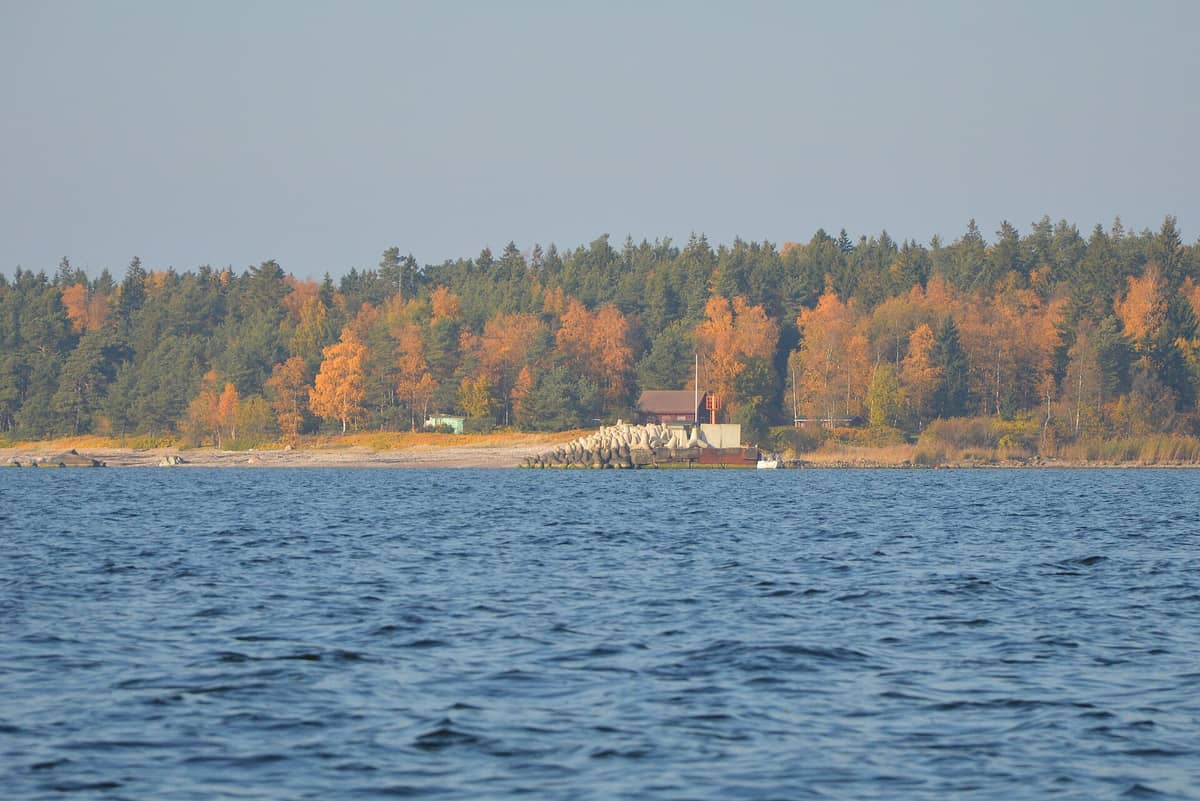
What Aegna Island Actually Is
Aegna Island is the only island within Tallinn's administrative borders, and the contrast with the city couldn't be sharper. Where Tallinn is medieval spires and cobblestones, Aegna is pine and birch forest, rocky shoreline, and the sound of wind in the canopy. The island measures roughly 2 km by 1.5 km, covering around 3 square kilometres, and the entire area is protected as the Aegna Landscape Conservation Area. There are no tourist facilities, no roads connecting it to the mainland, and no entry fee. You arrive by boat, you walk, and you leave when the last ferry goes.
That simplicity is the point. Aegna isn't set up as a polished tourist destination with interpretive signs at every turn and a gift shop at the dock. It's a working nature reserve that happens to be accessible to the public, and that distinction matters. The trails are real forest trails: rooted, sometimes muddy, occasionally unmarked. The boulders left by glacial retreat thousands of years ago sit where they landed. It rewards the visitor who comes with comfortable shoes and no particular agenda.
ℹ️ Good to know
Boat services to Aegna are seasonal and typically operate during the summer months. Check current schedules with Sunlines or the Tallinn city page for Aegna (tallinn.ee/aegna) before planning your trip, as sailings are not year-round.
The Crossing and First Impressions
The boat trip from Tallinn's harbour takes around 30 minutes, and the journey itself sets the mood. As the city skyline shrinks behind you and the Baltic air gets saltier and colder, Aegna comes into view as a low, dark line of trees on the horizon. There's no grand welcome, no marina village. The dock is a simple structure, and from it, forest begins almost immediately.
Early morning arrivals get the island at its quietest: bird calls are loud and layered, the light filters green through the birch canopy, and the air smells of pine resin and damp earth. By midday in high summer, day-trippers from Tallinn fill the picnic areas near the dock, and the atmosphere becomes more social. Late afternoon, as the crowd thins before the evening boat, is another good window to walk the more remote trails in relative solitude.
Tickets & tours
Hand-picked options from our booking partner. Prices are indicative; availability and final rates are confirmed when you complete your booking.
Self-guided Discovery Walk of Tallinn city contrasts beyond the medieval walls
From 26 €Instant confirmationFree cancellationTallinn's art and culture tour with a local
From 62 €Instant confirmationFree cancellationHistorical walking tour of Tallinn with a local
From 599 €Instant confirmationFree cancellationIntroductory walking tour of Tallinn with a local guide
From 109 €Instant confirmationFree cancellation
Trails, Terrain, and What to Expect Underfoot
The island has a network of walking and cycling trails that loop through the forest and along the shore. None of the routes are technically demanding, but the terrain is uneven. Glacial boulders of considerable size break the forest floor regularly, and after rain, low-lying sections can become muddy. Sturdy walking shoes or lightweight hiking boots are strongly advised; sandals will cause regret.
The coastal paths are the most rewarding, particularly on the island's northern and western edges where the forest opens onto rocky beaches and views across the Gulf of Finland. On clear days, you can see other islands in the archipelago. The southern shores are calmer and more sheltered, popular with families for picnics and supervised swimming in summer.
Cyclists can bring or hire bikes to cover more ground. The island's modest size means you can circle most of it on foot in two to three hours if you keep moving, but most visitors slow down to explore the shoreline or watch birds, which extends the day considerably.
⚠️ What to skip
The terrain across Aegna is uneven and rooted throughout. The island is not recommended for visitors with mobility impairments. There is no paved infrastructure on the island beyond the dock area.
Military History Beneath the Forest Floor
Aegna's natural beauty coexists with a layered military past that many visitors don't expect to find. The island served a strategic function during World War I and the Soviet occupation, and the remains of that history are visible throughout the forest if you know what to look for. Concrete bunkers sit partially buried in hillocks, their interiors dark and slightly eerie. Overgrown fortification lines are visible as raised ridges in the undergrowth. Gun emplacements have been reclaimed by moss and birch roots.
In 2022, a monument commemorating the 1790 naval Battle of Tallinn was relocated to Aegna Island, adding a formal historical marker to what had previously been an informal landscape of ruins. The battle, fought during the Russo-Swedish War, was a notable engagement in the Gulf of Finland. Finding the monument and reading its context is a worthwhile detour from the main walking circuit.
For visitors with a deeper interest in Estonia's complex military and Soviet-era past, Aegna fits naturally into a broader exploration. The KGB Prison Cells in Tallinn and the exhibits at Vabamu, the Museum of Occupations and Freedom, provide the historical framework that makes the island's ruins more legible.
Wildlife and the Case for Birdwatching
Aegna sits within one of the Gulf of Finland's important coastal flyways, and during spring and autumn migration, the island is a staging point for a wide variety of species. Even outside migration periods, the resident bird population is rich: woodpeckers are audible in the deeper forest sections, white-tailed eagles have been observed over the water, and the shorebird variety along the coast is consistently good. Bring binoculars if you have them.
The plant life is equally diverse for such a small area. The forest transitions between pine-dominated sections with a carpet of heather and lichen-covered boulders, and moister birch-alder stands near the island's low points. Along the coast, you'll find coastal meadow vegetation that supports pollinators in summer. The island is entirely within a protected conservation area, so picking plants and disturbing wildlife is prohibited.
If the natural setting of Aegna opens an appetite for more of Estonia's wild landscapes, the Tallinn nature guide covers the best green escapes within reach of the city, including bog walks and coastal parks.
Planning Your Day: Timing, Practicalities, and What to Bring
Aegna is a summer destination in practical terms. Boat services are seasonal, typically running from late May to early September, and the island experience is built around long daylight hours, warm enough water for swimming, and dry forest paths. June, July, and August are the busiest months. If you visit in late May or early September, you get better conditions for wildlife observation, fewer people on the trails, and the same access, though you should confirm boat schedules in advance for shoulder-season dates.
There are no shops or restaurants on the island. Bring all food, water, and supplies with you. A small backpack with water (at least 1.5 litres per person for a full day), snacks or a packed lunch, sunscreen, and insect repellent covers the basics. In midsummer, mosquitoes are present in the forest interior, particularly near the wetter areas. The exposed shoreline is less affected.
Photography on the island rewards patience. The light in the forest in the early morning and late afternoon is excellent, with shafts of light cutting through the canopy at low angles. The bunkers and fortifications photograph well in overcast conditions, which flatten the contrast and bring out the texture of the concrete and moss. The coastal boulders at low tide, with rockpools between them, are another consistent subject.
💡 Local tip
Pack out everything you bring in. There are no waste facilities on the island. Leaving no trace is both a legal requirement within the conservation area and basic courtesy to the other visitors and wildlife.
For travellers building a wider Tallinn itinerary, a three-day Tallinn itinerary can comfortably incorporate an Aegna day trip alongside Old Town exploration and a visit to Kumu Art Museum in Kadriorg.
Who This Island Is Not For
Aegna is not the right choice for every visitor. If your time in Tallinn is limited to a day or two, the island trip will consume the better part of one of those days, and the experience is natural rather than cultural. Visitors primarily interested in architecture, museums, and medieval history are better served staying in the city, where the density of historic attractions is remarkable.
The island also requires reasonable physical condition and appropriate footwear. It is not suitable for visitors with mobility limitations. For those who want green space without the boat logistics, Kadriorg Park and the Tallinn Botanic Garden are accessible urban nature alternatives.
Insider Tips
- Check the return boat schedule the moment you arrive at the dock and photograph it or write it down. Missing the last boat is a genuine possibility, and there is no accommodation on the island.
- The western shoreline trail is the least walked and offers the most undisturbed views across the Gulf of Finland. Most day-trippers stay near the dock and the main central paths, so the edges of the island are noticeably quieter.
- Bring a physical map or download an offline map before you leave Tallinn. Mobile signal is unreliable in the forest interior, and the trail signage is not comprehensive enough to navigate by alone.
- If you visit during migration season (April to May, or August to September), arrive on the first boat of the day. Migratory bird activity is concentrated in the early morning hours, and the island has serious credentials as a birding site.
- The bunkers and military ruins are scattered across the whole island rather than concentrated in one area. Allow extra time if you want to explore them, as they are off the main trail circuits and require some off-path walking.
Who Is Aegna Island For?
- Nature walkers and hikers who want genuine forest and coastline within 30 minutes of a capital city
- Birdwatchers, especially during spring and autumn migration periods
- Families with older children who can manage uneven forest terrain and a boat crossing
- History enthusiasts interested in Baltic military heritage and WWII-era fortifications
- Photographers looking for forest light, coastal boulders, and atmospheric ruin subjects
Nearby Attractions
Combine your visit with:
- Estonian Open Air Museum
Spread across 72 hectares of coastal forest in Tallinn's Haabersti district, the Estonian Open Air Museum (Eesti Vabaõhumuuseum) reconstructs rural and fishing life from the 18th and 19th centuries. Twelve farmyards, a working tavern, a church, mills, a schoolhouse, a fire station, and net sheds make this Estonia's largest and most immersive open-air history experience.
- Glehn Park
Glehn Park is a free, forested public park in Tallinn's suburban Nõmme district, built around a 19th-century castle by the eccentric Baron Nikolai von Glehn. With natural woodland trails, stone carvings, and a refreshing distance from the Old Town crowds, it rewards visitors who want something genuinely different from the medieval core.
- Jägala Waterfall
Standing 8 metres tall and stretching over 50 metres wide, Jägala Waterfall is Estonia's largest natural waterfall. Located just 25 kilometres east of Tallinn on the Jägala River, it is free to visit year-round and rewards visitors differently in every season, from frozen curtains of ice in winter to a thundering torrent in spring snowmelt.
- Keila-Joa Waterfall
Standing 6 metres tall and stretching up to 60 metres across, Keila-Joa Waterfall is a dramatic manor-park waterfall and one of the most rewarding easy escapes from Tallinn. Set inside a forested river park beside a 19th-century Gothic Revival manor, the site is free to enter and open year-round. It rewards a visit in every season.