Jägala Waterfall: What to Know Before You Go
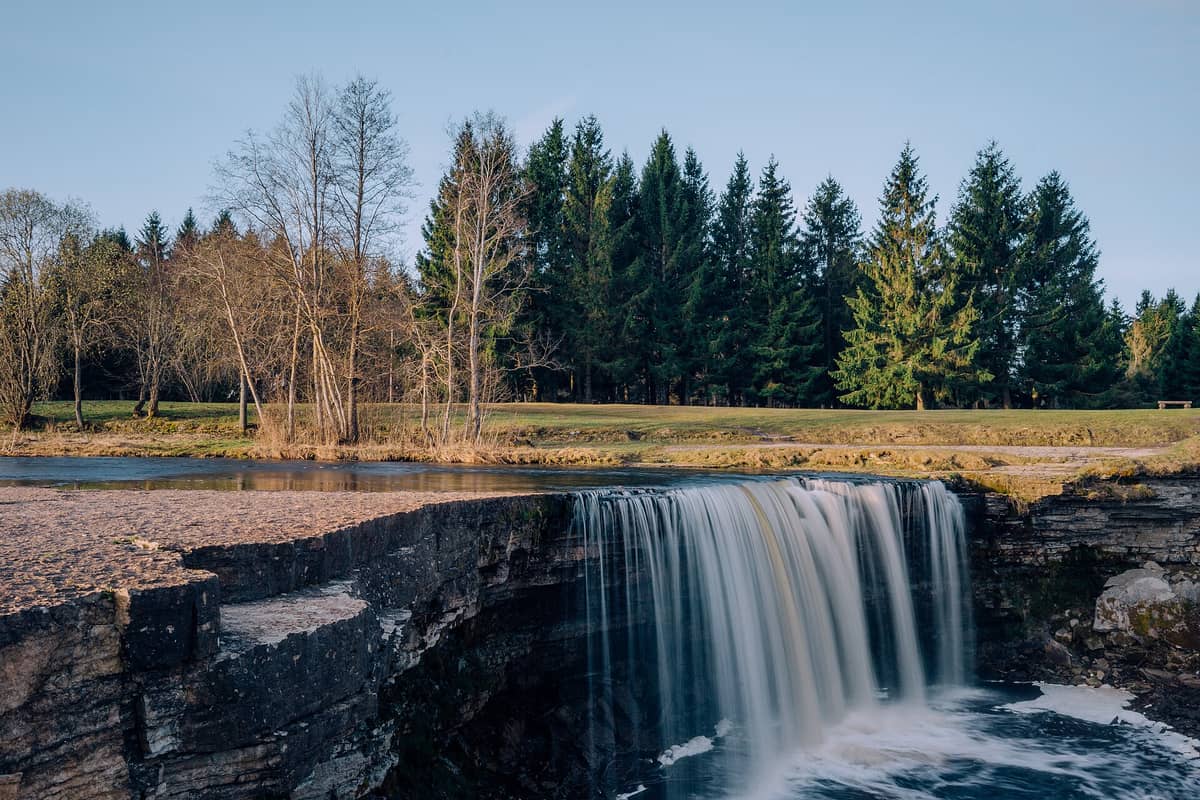
Standing 8 metres tall and stretching over 50 metres wide, Jägala Waterfall is Estonia's largest natural waterfall. Located just 25 kilometres east of Tallinn on the Jägala River, it is free to visit year-round and rewards visitors differently in every season, from frozen curtains of ice in winter to a thundering torrent in spring snowmelt.
Quick Facts
- Location
- Jägala-Joa, Harju County, ~25 km east of Tallinn
- Getting There
- Car recommended; organized day tours depart from Tallinn
- Time Needed
- 1–2 hours on site; half-day with travel from Tallinn
- Cost
- Free (no admission fee)
- Best for
- Nature lovers, photographers, families, day-trippers
- Official website
- visitestonia.com/en/jagala-waterfall
What Jägala Waterfall Actually Is
Jägala Waterfall, known in Estonian as Jägala juga, is not a dramatic Alpine plunge. It is a wide, shelf-like cascade where the Jägala River drops approximately 8 metres over a limestone ledge that spans more than 50 metres across. That breadth is what sets it apart. On a high-water day, the full curtain of white water fills the ledge from bank to bank and the noise carries well before you see it. On a quieter summer afternoon, the flow narrows and braids into separate channels, revealing the pale grey limestone beneath.
The waterfall sits in the lower course of the Jägala River, approximately 4 kilometres before the river empties into the Gulf of Finland. The surrounding area, called Joa puhkeala (Joa recreation area), is a low-key riverside park with gravel paths, benches, and picnic spots. There are no ticket booths, no turnstiles, and no entrance fees. You simply park, walk a short distance through mixed woodland, and arrive at the water's edge.
💡 Local tip
Wear shoes with grip. The limestone ledge and riverside paths become genuinely slippery when wet, and the spray zone near the base of the falls keeps the rocks damp even on dry days.
How the Experience Changes by Season
Spring, roughly April to May, is the most dramatic time to visit. Snowmelt swells the Jägala River and the waterfall runs at or near full width. The roar is audible from the car park. The air carries a cold mist that coats your jacket within a few metres of the ledge. Light is low-angled and green with new birch leaves, which makes for striking photographs, though the overcast skies common in Estonian spring are actually better for waterfall photography than harsh midday sun.
Summer brings a quieter flow and more visitors. Locals come to picnic on the riverbanks, and some wade into the shallows upstream. The water is cold enough that swimming is not comfortable for most people, but children paddle regardless. Mosquitoes are present in June and July near the wooded sections of the path, so bring repellent.
Winter transforms the site completely. In a cold year, the spray freezes into curtains and columns of pale blue ice that cling to the ledge and the surrounding rocks. The waterfall rarely freezes solid because the flow is too strong, but the ice formations around it are genuinely extraordinary. Visiting on a clear January or February day, with the ice catching low afternoon light, is one of the more unusual natural sights in the Tallinn day-trip range. Paths can be icy and treacherous; microspikes or traction cleats are worth bringing.
Autumn sits somewhere between: moderate water levels, golden birch canopy, and far fewer visitors than summer. If you are planning a day trip from Tallinn in September or October, this is a strong season. For broader context on timing your Estonia visit, the best time to visit Tallinn guide covers seasonal trade-offs across the region.
Tickets & tours
Hand-picked options from our booking partner. Prices are indicative; availability and final rates are confirmed when you complete your booking.
Self-guided Discovery Walk of Tallinn city contrasts beyond the medieval walls
From 26 €Instant confirmationFree cancellationTallinn's art and culture tour with a local
From 62 €Instant confirmationFree cancellationHistorical walking tour of Tallinn with a local
From 599 €Instant confirmationFree cancellationIntroductory walking tour of Tallinn with a local guide
From 109 €Instant confirmationFree cancellation
The Geology Behind the Falls
Jägala Waterfall exists because of the North Estonian Klint, a coastal limestone escarpment that runs along the northern edge of the Baltic countries. This ridge of Ordovician-age limestone, formed around 450 to 500 million years ago, creates a natural step across which rivers drop as they flow north toward the Gulf of Finland. The Jägala River hits this step and falls over it in a broad, even sheet, which is why the waterfall is wide rather than narrow and channelled.
The same klint formation that creates Jägala Waterfall also shapes the coastline visible from Tallinn's northern shores. Understanding this geological context helps explain why the waterfall looks the way it does: horizontal, shelf-like, and relatively low in profile. It is a landscape feature carved by ancient rock layers, not by erosion cutting a narrow gorge.
Getting There from Tallinn
The waterfall is located approximately 25 kilometres east of Tallinn along the Tallinn–Narva highway (E20/Road 1). By car, the drive takes around 30 to 40 minutes depending on traffic leaving the city. From the highway, you turn toward Jägala-Joa village and follow signs to the recreation area (Joa puhkeala). The address commonly used for navigation is Kubja tee, Jägala-Joa, 74212 Harju County. There is a car park at the site.
Without a car, your practical options are organized tour groups or hiring a taxi or ride-hailing vehicle. Bolt operates in Tallinn and a return trip by ride-hailing would likely run for one to two hours of waiting time, which makes organized tours the more efficient choice for those without a vehicle. Several Tallinn-based operators run half-day trips that combine the waterfall with other nearby stops. GetYourGuide lists options, and Visit Estonia's tour listings include a guided visit with a picnic component.
There is no reliable scheduled public bus service to Jägala-Joa that is practical for tourists. If you are combining this with other day trips around the Tallinn region, the day trips from Tallinn guide covers logistics for the wider area, including Lahemaa National Park, which lies further along the same highway.
ℹ️ Good to know
The waterfall is open round the clock year-round with no access fee. There are no facilities such as toilets or a café directly at the site, so plan accordingly before you leave Tallinn.
Photography and What to Expect at the Water's Edge
The main viewing area is at the top of the falls, where you can walk along the bank and look across the full width of the cascade. There are informal paths that lead down toward the base, giving a different perspective looking up at the ledge. Both angles are worth exploring, though the descent to the base involves uneven ground and wet rocks.
For photography, the wide horizontal shape of the falls benefits from a wider lens. A polarizing filter cuts the glare on the water and the wet limestone. Overcast light, which is common in Estonia, diffuses the scene and prevents blown-out highlights in the spray. Early morning visits in summer give soft light and the lowest crowd levels, though the site is rarely heavily congested except on warm weekend afternoons in July and August.
The spray radius is meaningful. Even on a moderate-flow day, standing within 3 to 4 metres of the ledge edge means your camera, phone, and outer layers will be damp. A waterproof bag or case for electronics is a sensible precaution, not an exaggeration.
Pairing Jägala With Other Stops
Jägala Waterfall on its own takes one to two hours at a relaxed pace. Most visitors combine it with other destinations along the eastern Tallinn corridor. Lahemaa National Park, Estonia's largest national park, begins roughly 50 kilometres further east along the E20 and adds forest, coastline, and manor houses to the itinerary. See the Lahemaa National Park guide for what to plan there.
Closer to the city, Pirita sits along the coast between Tallinn and Jägala and works as a midpoint stop, especially if you want to walk the beach or visit the Pirita Convent ruins on the same day. For a purely natural focus, the Tallinn nature guide maps out the best outdoor sites across the wider area.
If you are visiting Tallinn on a short itinerary of two or three days, be honest with yourself about travel time. Jägala is a half-day commitment when you factor in the drive. It is worth it if you have genuine interest in natural landscapes, but it does remove time from Old Town and city-centre attractions. Budget your days accordingly.
Who Should Think Twice
Visitors with limited mobility will find the site difficult. The paths are unpaved gravel and compacted earth, the bank areas are uneven, and the approach to the water's edge involves steps and irregular ground. There is no confirmed wheelchair-accessible route to the falls. Contact local tourism operators for the most current conditions before assuming access is possible.
Visitors expecting a dramatic, tall waterfall in the style of Scandinavian or Alpine falls may be underwhelmed. Jägala is wide, not tall. Its power is in its breadth and in its winter ice formations. If you are primarily drawn to the dramatic vertical drop of a narrow plunge waterfall, manage expectations in advance. If you appreciate the particular beauty of a broad, flat cascade over ancient limestone in a quiet forested setting, you will find it genuinely rewarding.
Insider Tips
- Visit on a weekday morning in shoulder season (May or September) and you may have the entire site to yourself. Weekend afternoons in July bring families with children in numbers that, while not overwhelming, do crowd the best viewpoints.
- In winter, check local weather and temperature forecasts before driving out. The waterfall looks spectacular when the surrounding ice formations are at their peak, but this requires sustained cold temperatures, typically below -5°C for several consecutive days.
- The limestone ledge upstream of the falls is accessible by wading from the bank in summer. Some visitors walk partway across the flat shelf with the water flowing around their ankles. Do not attempt this in high-water conditions in spring; the current across the ledge is stronger than it looks.
- If you are driving the E20 toward Lahemaa or the eastern coast anyway, Jägala is a natural stop without significant route deviation. It adds roughly 20 to 30 minutes to a Lahemaa day trip and is worth including rather than skipping.
- There are no food or drink vendors at the site. Bring your own water and snacks. The recreation area has picnic tables, which makes a packed lunch a practical and pleasant option.
Who Is Jägala Waterfall For?
- Nature photographers looking for a distinctive seasonal subject, especially winter ice formations
- Families with older children who can handle uneven ground and want an outdoor half-day activity near Tallinn
- Road-trippers heading east along the Tallinn–Narva corridor toward Lahemaa National Park
- Visitors who want to see Estonian natural landscapes beyond the city without a full-day commitment
- Travellers visiting Tallinn in spring who want to experience the waterfall at its most powerful
Nearby Attractions
Combine your visit with:
- Aegna Island
Aegna Island sits 14 km off the Tallinn coast in the Bay of Tallinn, reachable in about 30 minutes by boat. The entire island is a protected landscape conservation area, covered in dense forest, glacial boulders, and coastal meadows. Entry to the island is free, making it one of the most rewarding half-day escapes from the city.
- Estonian Open Air Museum
Spread across 72 hectares of coastal forest in Tallinn's Haabersti district, the Estonian Open Air Museum (Eesti Vabaõhumuuseum) reconstructs rural and fishing life from the 18th and 19th centuries. Twelve farmyards, a working tavern, a church, mills, a schoolhouse, a fire station, and net sheds make this Estonia's largest and most immersive open-air history experience.
- Glehn Park
Glehn Park is a free, forested public park in Tallinn's suburban Nõmme district, built around a 19th-century castle by the eccentric Baron Nikolai von Glehn. With natural woodland trails, stone carvings, and a refreshing distance from the Old Town crowds, it rewards visitors who want something genuinely different from the medieval core.
- Keila-Joa Waterfall
Standing 6 metres tall and stretching up to 60 metres across, Keila-Joa Waterfall is a dramatic manor-park waterfall and one of the most rewarding easy escapes from Tallinn. Set inside a forested river park beside a 19th-century Gothic Revival manor, the site is free to enter and open year-round. It rewards a visit in every season.