Glehn Park: Tallinn's Eccentric Forest Retreat in Nõmme
Glehn Park is a free, forested public park in Tallinn's suburban Nõmme district, built around a 19th-century castle by the eccentric Baron Nikolai von Glehn. With natural woodland trails, stone carvings, and a refreshing distance from the Old Town crowds, it rewards visitors who want something genuinely different from the medieval core.
Quick Facts
- Location
- Vana-Mustamäe tn 48, Nõmme district, Tallinn
- Getting There
- Take the commuter train from Balti jaam (Baltic Station) to Nõmme station; the park is a short walk from there. City buses also serve the area.
- Time Needed
- 1.5 to 2.5 hours for a relaxed walk
- Cost
- Free, open 24 hours year-round
- Best for
- Nature lovers, history seekers, photographers, and anyone wanting an escape from the Old Town
What Glehn Park Actually Is
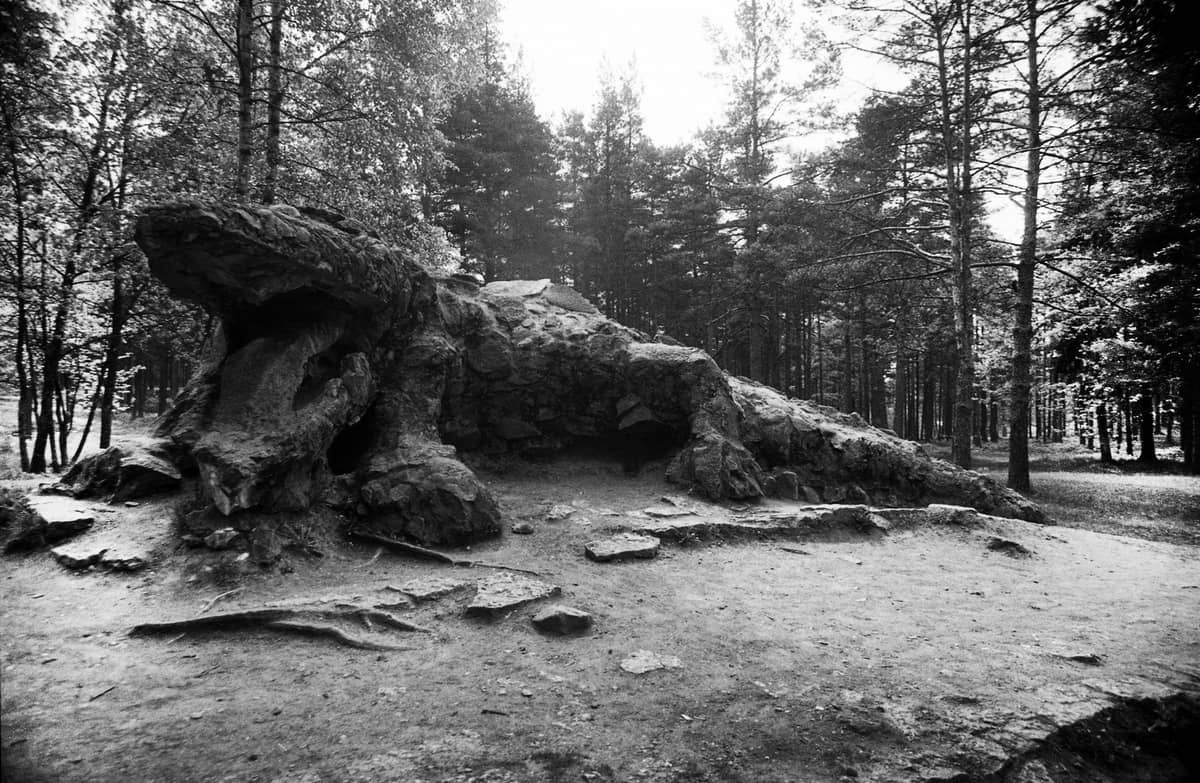
Glehn Park is not a manicured botanical garden or a formal city square. It is a genuine forest park, sitting on the hillside terrain of Nõmme, one of Tallinn's quieter suburban districts. The park covers a stretch of natural woodland punctuated by trails, stone sculptures, and at its heart, Glehn Castle, a 19th-century structure that looks less like a Baltic manor and more like something conjured from a medieval fantasy. This is a place shaped by one man's idiosyncratic vision, and that character has never quite worn off.
The park takes its name from Baron Nikolai von Glehn (1841–1923), the founder of Nõmme itself and a former owner of the nearby Jälgimäe manor. Glehn was an architect, inventor, and eccentric who designed the castle and the park's landscape in the late 19th century according to his own symbolist sensibility. He carved stones, built towers, and arranged the grounds to reflect his philosophical and aesthetic interests. The result is something that still feels slightly apart from the normal category of 'park'.
ℹ️ Good to know
Entry to Glehn Park is completely free, and it has no closing time. You can visit at dawn in summer or on a quiet winter afternoon without any ticket or reservation.
The Landscape: Trails, Terrain, and the Mustamäe Slope
The park sits on the Mustamäe hillside, which means the terrain is genuinely uneven. There are slopes, roots underfoot, and sections where the path narrows to little more than a dirt track through the trees. In summer the canopy closes in, and the temperature under the pines and birches drops noticeably compared to the open streets of Nõmme below. In autumn, the leaf fall brings a different palette entirely, and the stone sculptures take on a more moss-heavy, weathered look that suits them well.
The paths between the castle and the park's outer edges are unmarked in any formal sense, which adds a low-level sense of exploration. The park is not large enough to get seriously lost in, but it is large enough that you can find a quiet corner away from the entrance. Most visitors arrive, walk toward the castle, circle the surrounding structures, and then follow the woodland trails before heading back. A comfortable loop takes around 90 minutes at a relaxed pace.
⚠️ What to skip
The paths are unpaved and include slopes. Visitors with limited mobility or wheelchair users will find the terrain difficult, particularly on the hillside sections. No step-free access route has been confirmed by official sources.
Tickets & tours
Hand-picked options from our booking partner. Prices are indicative; availability and final rates are confirmed when you complete your booking.
Self-guided Discovery Walk of Tallinn city contrasts beyond the medieval walls
From 26 €Instant confirmationFree cancellationTallinn's art and culture tour with a local
From 62 €Instant confirmationFree cancellationHistorical walking tour of Tallinn with a local
From 599 €Instant confirmationFree cancellationIntroductory walking tour of Tallinn with a local guide
From 109 €Instant confirmationFree cancellation
Glehn Castle: The Park's Defining Structure
Glehn Castle, known in Estonian as Glehni loss, is the visual anchor of the park and the reason most first-time visitors make the trip out here. Built in the second half of the 19th century, it is not a castle in any defensive or royal sense. It is an elaborate personal residence, designed by Baron von Glehn himself, mixing stone towers, arched windows, and decorative carved figures into something that sits outside the usual Baltic architectural categories. It looks at home in the forest precisely because it was designed to be part of it.
The castle building is now owned by Tallinn University of Technology and primarily functions as an event venue, so the interior is not routinely open for unguided walk‑in visits. What you see from the path is the exterior, the surrounding structures, and the carved stone figures that von Glehn placed throughout the grounds. These stone carvings, depicting mythological and allegorical figures, have become mossy and worn over a century, which gives them an authenticity no reproduction could replicate.
If you are building a day around Tallinn's architectural range, consider pairing Glehn Park with Kadriorg Palace, which offers the formal baroque counterpoint to Glehn's idiosyncratic romanticism. The two are stylistically opposite but equally expressive of their eras.
How the Experience Changes by Time of Day and Season
Early mornings in Glehn Park are as close to silence as you will find in Tallinn. The Nõmme district is a quiet residential area at the best of times, and on weekday mornings the park often has more birdsong than people. The light through the pines in the morning is particularly useful for photography: the castle's stone surfaces pick up directional light well, and the woodland feels genuinely atmospheric rather than just scenic.
Midday on weekends sees local families with children using the paths and the areas around the castle. This is not a crowd by any Old Town standard, but it is worth knowing if you are looking for solitude. Late afternoons in summer bring a golden-hour quality to the canopy that is difficult to find in more manicured parks.
Winter visits are genuinely rewarding and underrated. Snow settles on the stone carvings and the castle towers in a way that photographs extremely well. The bare trees open up sightlines that are hidden in summer, giving you a clearer sense of the terrain and the castle's proportions. Dress warmly: temperatures in Tallinn regularly fall below 0°C from December through February, and the park offers no shelter or heated facilities.
For an overview of how Tallinn's seasons shape the visitor experience, the best time to visit Tallinn guide breaks down what each season offers and what trade-offs come with each.
Nõmme: The Neighbourhood Around the Park
Glehn Park cannot be fully separated from the district it sits in. Nõmme is often described as a village within the city, and that description is earned. The streets around the park are lined with wooden houses, many of them early 20th-century, with gardens and a pace that feels genuinely different from central Tallinn. Locals walk dogs along the park edges in the mornings, and there are small cafes and bakeries within a few minutes' walk of the entrance.
The Nõmme market, a few minutes from the park, is worth a stop if you arrive in the morning. It is a practical local market rather than a tourist attraction, selling seasonal produce, flowers, and local dairy. Combining the park with a walk through Nõmme's streets and a stop at the market makes for a half-day that feels entirely unlike the Old Town tourist circuit.
Nõmme pairs naturally with other off-the-beaten-path Tallinn experiences. For more ideas in this direction, the Tallinn hidden gems guide covers several lesser-visited spots that reward the extra travel time.
Getting There and Practical Details
The most straightforward route from central Tallinn is the commuter train from Balti jaam (Baltic Station) to Nõmme station, or bus no. 36 from downtown to the Nõmme stop; both take about 20–25 minutes and drop you in the centre of the Nõmme neighbourhood from where the park is a manageable walk. City buses also connect Nõmme with other parts of Tallinn, and timetables are available at transport.tallinn.ee, where you can check current routes and ticket prices. Bolt (formerly Taxify) and other ride-hailing apps operate in Tallinn and provide a straightforward option if you prefer a direct transfer.
There is no car park specifically for the park, but free street parking is generally available in the surrounding residential streets. Nõmme is not a part of Tallinn where parking is typically scarce.
Wear walking shoes with grip, especially if visiting after rain or in winter when the paths can be slippery. There are no food or drink facilities inside the park, so carry water if you plan an extended walk. The park is open 24 hours and has no admission fee, so there is no booking or planning required beyond getting yourself there.
💡 Local tip
If you have the Tallinn Card, note that it covers public transport across the city, including the train to Nõmme. This makes the trip to Glehn Park effectively free on top of the park's own free admission.
The Tallinn Card is worth evaluating if you are planning multiple attractions in one or two days. The Tallinn Card guide explains what it covers, the current pricing tiers, and whether it makes financial sense for your itinerary.
Photography Notes
The castle exterior and the stone carvings are the primary photographic subjects. The carvings benefit from overcast light, which reduces harsh shadows in the crevices and brings out the texture of the stone. The castle towers, which appear above the tree line from certain angles in the park, are most dramatic in winter when the bare branches frame them without blocking the view.
The woodland paths in autumn offer strong colour and depth when the birch leaves turn. For architectural detail, the morning light from the east catches the castle's carved surfaces in a way that direct midday sun does not. Bring a wide-angle lens if you have one: the castle is difficult to capture in full without stepping back significantly, and the tree cover limits the available distance.
Who Should Skip Glehn Park
Glehn Park is not the right choice for visitors with very limited time in Tallinn who are prioritising medieval history, major museums, or the concentrated attractions of the Old Town. Getting to Nõmme and back adds at least an hour of travel to your day, and the park offers atmosphere and character rather than a structured set of sights. If your Tallinn visit is a single day, the time is probably better spent in the Old Town or Kadriorg.
Visitors who want to see more of Tallinn in a short window should consult the 2 days in Tallinn itinerary for a framework that sequences the city's highlights efficiently.
Similarly, anyone expecting a formal garden with flower beds, manicured lawns, or interpretation panels will be disappointed. This is a wild-edged forest park with historical structures and uneven ground. Its appeal is precisely in what it lacks: signage, ticket booths, tour groups, and anything resembling a managed visitor experience.
Insider Tips
- Take the train from Balti jaam rather than a taxi for the full Nõmme experience: the train platform drops you into the neighbourhood's main street, and the walk to the park passes some of the district's best wooden architecture.
- The stone carvings placed by Baron von Glehn are easy to walk past without registering their detail. Take time to look closely at the figures: they reflect his personal symbolism and are more intricate than they appear from the path.
- Winter visits after fresh snowfall offer the most atmospheric conditions, particularly around the castle towers. Go early in the morning before footprints fill the paths and the snow is still undisturbed.
- The Nõmme market, a short walk from the park entrance, opens early on weekend mornings and sells locally produced food. Combine the two for a morning that feels nothing like a typical tourist itinerary.
- The park's interior paths are not lit at night. Evening visits in winter are possible given the 24-hour access, but bring a torch and expect genuine darkness on the forest trails.
Who Is Glehn Park For?
- Nature lovers wanting forest walks within the city limits
- Architecture and history enthusiasts interested in 19th-century Baltic eccentricity
- Photographers seeking textured stone, woodland light, and castle exteriors without crowds
- Visitors on a second or third trip to Tallinn who have already covered the Old Town and Kadriorg
- Anyone looking for a quiet half-day away from the tourist circuit
Nearby Attractions
Combine your visit with:
- Aegna Island
Aegna Island sits 14 km off the Tallinn coast in the Bay of Tallinn, reachable in about 30 minutes by boat. The entire island is a protected landscape conservation area, covered in dense forest, glacial boulders, and coastal meadows. Entry to the island is free, making it one of the most rewarding half-day escapes from the city.
- Estonian Open Air Museum
Spread across 72 hectares of coastal forest in Tallinn's Haabersti district, the Estonian Open Air Museum (Eesti Vabaõhumuuseum) reconstructs rural and fishing life from the 18th and 19th centuries. Twelve farmyards, a working tavern, a church, mills, a schoolhouse, a fire station, and net sheds make this Estonia's largest and most immersive open-air history experience.
- Jägala Waterfall
Standing 8 metres tall and stretching over 50 metres wide, Jägala Waterfall is Estonia's largest natural waterfall. Located just 25 kilometres east of Tallinn on the Jägala River, it is free to visit year-round and rewards visitors differently in every season, from frozen curtains of ice in winter to a thundering torrent in spring snowmelt.
- Keila-Joa Waterfall
Standing 6 metres tall and stretching up to 60 metres across, Keila-Joa Waterfall is a dramatic manor-park waterfall and one of the most rewarding easy escapes from Tallinn. Set inside a forested river park beside a 19th-century Gothic Revival manor, the site is free to enter and open year-round. It rewards a visit in every season.