Doi Inthanon Royal Twin Pagodas: Mountaintop Monuments Worth the Journey
Set high on the slopes of Thailand's tallest mountain, the Royal Twin Pagodas are two elaborately decorated chedis surrounded by manicured gardens and often wreathed in mist. Built to honor King Bhumibol Adulyadej and Queen Sirikit, they represent some of the finest contemporary Lanna Buddhist craftsmanship in northern Thailand.
Quick Facts
- Location
- Doi Inthanon National Park, ~90 km southwest of Chiang Mai city
- Getting There
- Private car, motorbike, or organized day tour from Chiang Mai; no direct scheduled public bus service to the pagodas
- Time Needed
- 45–90 minutes at the pagodas; allow a full day for the mountain
- Cost
- National park entry fee (300 THB for foreigners) is required, plus a separate 100 THB pagoda admission
- Best for
- Architecture lovers, photographers, couples, and travelers combining with Doi Inthanon summit
What Are the Royal Twin Pagodas?
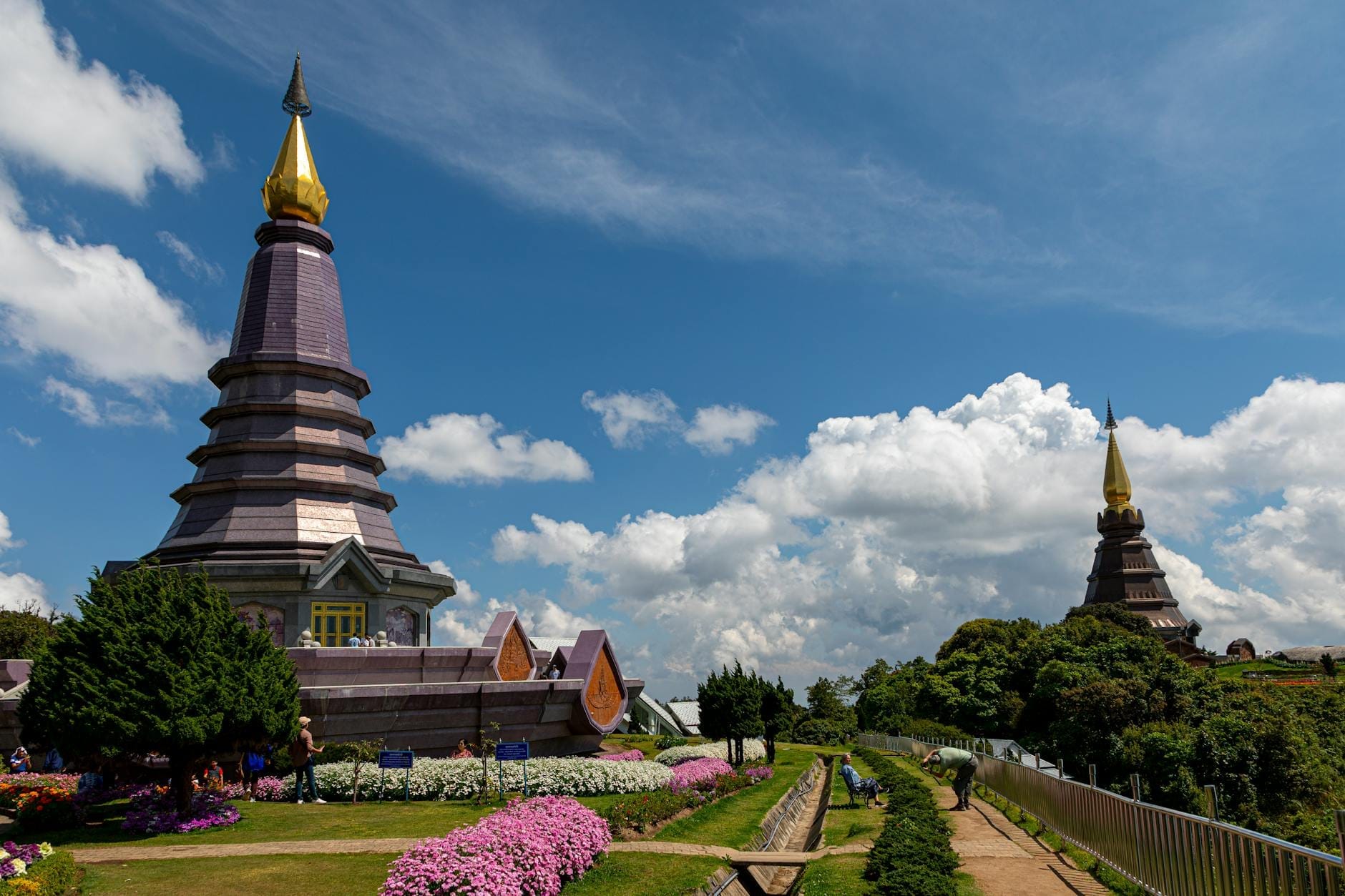
The Doi Inthanon Royal Twin Pagodas, known in Thai as Naphamethinidon and Naphaphonphumisiri, sit at roughly 2,100 metres above sea level on the road between Km. 41 and Km. 42 within Doi Inthanon National Park. They were constructed in 1987 to mark the 60th birthday of King Bhumibol Adulyadej (Rama IX) and in 1992 to honor Queen Sirikit on her own 60th birthday. The two chedis stand across from each other on opposite sides of the road, each rising from its own sculpted garden terrace, and together they form the most architecturally significant site on the mountain.
Despite their relatively recent construction, these structures are far from generic. Each pagoda is encrusted with intricate mosaic tilework in gold, terracotta, and deep blue, depicting Buddhist cosmology and royal iconography. The surrounding gardens are immaculate, planted with alpine flowers that thrive in the cool mountain climate, including dahlias, marigolds, and various species unique to the highland zone. On clear mornings, the chedis reflect light in a way that makes the mosaics shimmer. When the cloud rolls in, and it often does, the whole scene takes on a more solemn, contemplative quality.
💡 Local tip
Arrive before 9:00 AM on weekdays to have the gardens nearly to yourself. By mid-morning, tour buses from Chiang Mai begin arriving in significant numbers, particularly on weekends.
Architecture and Cultural Significance
The design of both pagodas draws on the Lanna Buddhist tradition, the dominant artistic and religious heritage of northern Thailand. Lanna architecture is distinguished by its tiered, tapering spires, intricate relief carvings, and the use of gilded and colored ceramic inlay. Here, those conventions are applied with modern craftsmanship and royal-grade materials, resulting in structures that feel simultaneously ancient in spirit and precise in execution.
Naphamethinidon, the pagoda dedicated to the King, is characterized by bold geometric patterns and warm golden tones. Naphaphonphumisiri, the Queen's pagoda, incorporates more floral motifs and softer color gradations. The distinction is deliberate: royal Thai artistic tradition encodes meaning into color, pattern, and symbolic form. Spending time examining the exterior surfaces rather than simply photographing from a distance reveals layers of iconographic detail that most visitors miss.
The pagodas sit within the broader context of the national park's cultural landscape. Combining a visit here with the nearby Kew Mae Pan Nature Trail and the Doi Inthanon summit makes for a full-day itinerary that balances natural and cultural experiences on the mountain.
Tickets & tours
Live prices and dates from our booking partner. If you book, we may earn a commission at no extra cost to you.
Doi Inthanon National Park small group guided tour
From 34 €Instant confirmationFree cancellationPrivate day trip with professional driver in Doi Inthanon
From 146 €Instant confirmationFree cancellationChiang Mai - Doi Inthanon full day tour
From 41 €Instant confirmationFree cancellationPrivate van with driver for 1 day, Pha Chor and Doi Inthanon
From 151 €Instant confirmationFree cancellation
The Experience at Different Times of Day
Early morning is the most rewarding time to visit. At 7:00 AM, the air temperature on the mountain typically sits between 12 and 18 degrees Celsius depending on the season, and the gardens hold a stillness that later evaporates. The low-angle light catches the mosaics at a raking angle, making textures and colors far more vivid than under the flat midday light. Monks from the small monastery near the base of the pagoda may be doing morning rounds, adding a layer of authentic religious atmosphere.
By 10:00 AM to noon, the site shifts noticeably. Tour groups move through at pace, guides speaking through microphones, and the viewing areas around the chedis become congested. Photography becomes more challenging, though not impossible if you work around the edges or use the geometry of the gardens themselves as foreground elements. The afternoon, particularly between 2:00 and 4:00 PM, sometimes offers a second window of calm as day-trip groups begin their descent, though mist frequently moves in during the afternoon hours and can obscure the spires.
Late afternoon mist is not necessarily a disadvantage. The diffused light and wisps of cloud drifting through the garden create a photographic atmosphere unavailable at any other time. Bring a light jacket regardless of season. Even during Chiang Mai's warmest months, the pagoda elevation means temperatures can feel surprisingly cold, especially when standing still.
⚠️ What to skip
The mountain road can close during heavy rain events or when visibility drops dangerously low. Check conditions before departing Chiang Mai, particularly during the rainy season from June through October.
Getting There: Practical Route Information
The pagodas are located inside Doi Inthanon National Park, approximately 90 kilometres southwest of Chiang Mai. There is no scheduled public bus service that reaches this section of the mountain. Your options are: renting a motorbike or car in Chiang Mai and driving yourself, booking a private driver for the day, or joining an organized day tour. The road is well-maintained and sealed, though it involves sustained switchbacks above Km. 30. For drivers unfamiliar with mountain roads, a guided tour removes the stress of navigation and timing.
The pagodas are at Km. 41-42 on Route 1009 inside the park. The national park entrance gate is at approximately Km. 8 from the junction with Route 108 near Chom Thong. National park entry fees are paid at the gate, while the additional pagoda fee is collected at the pagoda area. For a full breakdown of how to plan the day on the mountain, the Doi Inthanon day trip guide covers route options, timing, and what else to combine on the same visit.
Parking at the pagodas is available in a dedicated lot on the roadside. During peak season, particularly November through February, it fills quickly by mid-morning. If arriving by motorbike, there is typically more flexibility in finding a spot. The walk from parking to the pagoda grounds takes only two to three minutes on flat, paved paths.
Gardens, Atmosphere, and What to Look For
The gardens surrounding both chedis are maintained by the Royal Projects Foundation. They are some of the most carefully tended highland gardens in Thailand, planted with species that would be impossible to grow at lower elevations in the tropics. In the cool season, November through February, the flower beds are at their fullest. Rows of coxcomb, pansy, and salvia create color blocks around the pagoda bases that photograph well and give the complex a distinctly formal, royal character.
Look closely at the mosaic work on the lower sections of each pagoda, around knee and waist height, where the tilework depicts detailed scenes from Buddhist scripture and royal mythology. These are the areas most often overlooked because visitors naturally tilt their gaze upward toward the spires. The craftsmanship at this level is exceptional and worth five to ten minutes of slow examination.
Both pagodas are active religious sites. There are offering tables, incense holders, and small prayer areas at the base of each chedi. Visitors are welcome to participate respectfully. Dress covering shoulders and knees is appropriate, and removing shoes before entering any enclosed shrine area is expected.
ℹ️ Good to know
The pagodas face east and west respectively. Morning light falls directly on Naphamethinidon (the King's pagoda) first, making it the stronger subject for photography before 9:00 AM. The Queen's pagoda, Naphaphonphumisiri, receives better light in the mid-to-late morning.
Photography Tips and Practical Considerations
Wide-angle lenses capture both pagodas in a single frame from the road between them, though a mid-range zoom in the 24-70mm equivalent range is more versatile for isolating architectural detail. The mosaic surfaces respond well to polarizing filters, which reduce surface glare and saturate the ceramic colors. Tripods are permitted in the outdoor areas but can be awkward during peak crowd hours.
For photographers building a broader itinerary around Chiang Mai's visual highlights, the Chiang Mai photography guide covers timing, locations, and practical logistics across the region.
Accessibility at the pagodas is reasonably good. The main paths between parking and the garden terraces are paved and relatively level, suitable for most mobility levels. The inner garden terraces involve some shallow steps but are largely manageable. Wheelchair users may find a few sections requiring assistance. There are toilet facilities near the parking area.
Who Should and Shouldn't Visit
The Royal Twin Pagodas reward visitors who take their time. If you are looking for an adrenaline experience or prefer natural landscapes without human structures, the pagodas will feel underwhelming. The entire walkable area is relatively compact, perhaps 30 minutes if you move briskly, and there is no hiking trail, waterfall, or viewpoint attached. The value here is architectural and contemplative, not adventurous.
Travelers who are primarily visiting Doi Inthanon for the summit, waterfalls, or birdwatching can easily include the pagodas as a 45-minute stop on the same road. Those making the mountain journey specifically for the pagodas should pair them with other stops to justify the drive time. The combination of the pagodas, the summit, and one of the park's waterfalls makes for a well-rounded day that never feels rushed.
If you are traveling with children, the gardens and pagodas are generally engaging for older kids who have an interest in art or history. For families with younger children more focused on active exploration, the Mae Sa Waterfall might offer more immediate excitement on the same general route.
Insider Tips
- Visit on a weekday rather than a weekend. The difference in crowd density between a Tuesday morning and a Sunday morning in peak season is striking, and the atmosphere at the pagodas is substantially calmer during the week.
- Bring layers you can actually wear, not just carry. The temperature at 2,200 metres can be 10 to 12 degrees cooler than Chiang Mai city, and standing still in the garden for photography can feel quite cold when clouds move through.
- The gardens directly adjacent to the Queen's pagoda have a small formal section with a reflecting pool that most visitors walk past quickly. It offers a clean, symmetrical composition with the spire reflected in still water on calm mornings.
- If you are visiting during the cool season (November to February), the alpine flowers in the garden beds are in full bloom and can be as visually compelling as the pagodas themselves. This is the most photogenic time of year.
- Combine the pagoda visit with the Kew Mae Pan Nature Trail, which is approximately 4 kilometres further up the road toward the summit. The trail operates on a timed entry system, so book or arrive early to secure a slot for the same morning.
Who Is Doi Inthanon Royal Twin Pagodas For?
- Architecture and Buddhist art enthusiasts who want to examine contemporary Lanna craftsmanship in detail
- Photographers working on a Doi Inthanon day itinerary who want varied subjects beyond waterfalls and forest trails
- Couples looking for a scenic, peaceful stop on a mountain drive with genuine cultural weight
- Travelers on a broader northern Thailand cultural route who want to understand royal patronage of Thai religious art
- Day-trippers from Chiang Mai building a full mountain itinerary that balances natural and historical sites
Nearby Attractions
Other things to see while in Doi Inthanon National Park Area:
- Doi Inthanon Summit
At 2,565 metres above sea level, the Doi Inthanon summit is the highest point in Thailand. The peak sits inside Doi Inthanon National Park, roughly 70 kilometres southwest of Chiang Mai, and draws visitors for its cloud forest ecology, dramatically cooler temperatures, and the sense of standing above everything else in the country.
- Kew Mae Pan Nature Trail
The Kew Mae Pan Nature Trail is a 3-kilometre loop at the summit zone of Doi Inthanon National Park, winding through cloud forest and open ridgelines above 2,200 metres. On clear days, the views stretch across layered mountain ranges into Myanmar. This is one of northern Thailand's finest short hikes, and one of the coldest places you will stand in the country.
- Wachirathan Waterfall
Wachirathan Waterfall is the largest and loudest waterfall in Doi Inthanon National Park, dropping over 80 metres in a wide curtain of white water that generates a constant cool mist. Set deep in montane forest roughly 21 kilometres from the park entrance, it rewards visitors with raw natural power rather than picture-perfect serenity.
Planning a trip? Discover personalized activities with the Nomado app.