Croke Park Stadium & Museum: Ireland's Gaelic Games Cathedral
Croke Park is the 82,300-capacity home of the Gaelic Athletic Association, sitting in Drumcondra just north of Dublin city centre. Beyond match days, the stadium opens for guided tours and houses a museum dedicated to hurling, Gaelic football, and the cultural history that shaped modern Ireland.
Quick Facts
- Location
- Jones' Road, Drumcondra, Dublin 3
- Getting There
- Walkable from O'Connell Street (approx. 20 min); multiple Dublin Bus routes serve the area
- Time Needed
- 2–3 hours for museum and stadium tour combined
- Cost
- Paid entry; check current prices at crokepark.ie before visiting
- Best for
- Sports history fans, culture seekers, families, Irish diaspora
- Official website
- crokepark.ie
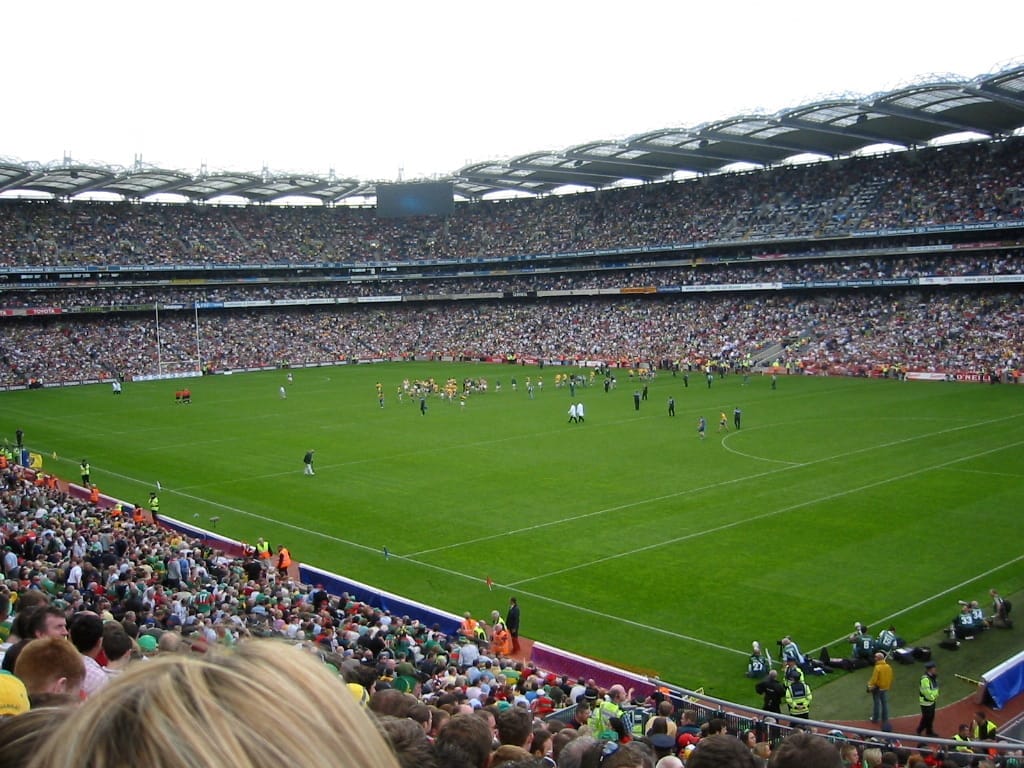
What Croke Park Actually Is
Croke Park, known in Irish as Páirc an Chrócaigh, is the headquarters and principal stadium of the Gaelic Athletic Association (GAA), the organisation that governs hurling, Gaelic football, camogie, and handball in Ireland. With a seated capacity of 82,300, it ranks among the largest stadiums in Europe and is, by a considerable margin, the biggest sporting venue on the island of Ireland.
The GAA has used the ground since 1891, and the stadium's current form is the result of a comprehensive redevelopment between 1991 and 2005 that replaced a patchwork of terraces with three modern, covered stands. The Cusack Stand, the Davin Stand, and Hill 16 now form a near-complete bowl, with the Hogan Stand completing the circuit on the western side.
Understanding what Croke Park means culturally requires some context. The GAA was founded in 1884 to revive and codify indigenous Irish sports at a time when British-administered rule was reshaping the country. The games played here, hurling in particular, predate written Irish history. For many visitors, especially those exploring Kilmainham Gaol or the GPO Witness History exhibition, Croke Park adds a civilian and sporting dimension to Irish identity that political sites alone cannot capture.
⚠️ What to skip
On All-Ireland Championship match days, the stadium is reserved for ticketed match attendees. Museum and tour access is either suspended or significantly restricted on these days. Always check the fixture calendar at crokepark.ie before planning your visit.
The GAA Museum: More Than a Trophy Cabinet
The GAA Museum sits beneath the Cusack Stand and covers the full arc of Gaelic games from ancient origins to the modern championship era. The layout moves chronologically but doesn't feel like a history lesson. Exhibits combine original artefacts, archival footage, interactive stations, and match audio that give the place genuine atmosphere even on quiet weekday mornings.
The hurling hall is a highlight. Hurling is one of the fastest field sports in the world, played with a curved ash stick called a hurl and a small leather ball called a sliotar. Seeing the evolution of equipment across decades, alongside footage of All-Ireland finals played in front of capacity crowds, makes the scale of these games viscerally clear. Many visitors arrive knowing nothing about hurling and leave wanting to watch a match.
There is also significant space given to the darker chapters of the stadium's history, most notably Bloody Sunday on 14 November 1920, when British forces opened fire on players and spectators during a GAA match, killing 14 people. This section is handled with care and is genuinely moving. It connects the stadium's story directly to Ireland's push for independence in a way that is hard to forget.
If you are building an itinerary around Irish history and identity, pairing the museum with the Dublin Gaelic games guide will help you understand when and where to catch a live fixture during your stay.
Tickets & tours
Hand-picked options from our booking partner. Prices are indicative; availability and final rates are confirmed when you complete your booking.
Giant's Causeway, Dark Hedges, and Belfast Tour from Dublin
From 85 €Instant confirmationFree cancellationDublin self-guided audio tour
From 10 €Instant confirmationBird of Prey, Cliffs of Moher and Aillwee Cave from Dublin
From 201 €Instant confirmationFree cancellationGame of Thrones Studio tour with return transfer from Dublin
From 63 €Instant confirmationFree cancellation
The Stadium Tour: Inside the Bowl
The guided stadium tour follows a route through areas of the ground that are off-limits on match days: the players' tunnel, the warm-up areas, the team dressing rooms, the pitch-side view, and the press box. The walk takes roughly an hour and is led by guides who know the building's history in detail.
Standing on the pitch perimeter with the three-tiered stands rising around you gives a clear sense of the stadium's scale. On a weekday morning with no event scheduled, the silence inside the bowl contrasts sharply with the roar of 82,000 that the guides describe. It is one of those spaces where the absence of a crowd makes its capacity feel even larger.
The Hogan Stand roof offers a view across the northside of Dublin on clear days, taking in the city skyline, the Dublin Mountains to the south, and, on days with good visibility, Dublin Bay to the east. Photography from the upper concourse is strong in the morning when the light comes in from the east behind the Hogan Stand.
💡 Local tip
Book the stadium tour in advance online, especially during summer (June to August) when school groups and tourist numbers are highest. Weekday morning tours are consistently less crowded than weekend afternoon slots.
How the Experience Changes by Time of Day
Arriving early in the morning, before 10:30, gives you the museum almost entirely to yourself. The interactive panels respond faster without queues, and the lighting in the archival film sections is easier on the eyes without crowds blocking sightlines. The cafe inside the stadium complex is also quieter at this hour, and the smell of fresh coffee and pastries drifts through the entrance foyer in a way that makes the place feel less institutional.
By early afternoon, school tour groups and organized coach parties tend to fill the museum concourse. The noise level rises sharply, particularly around the interactive skill stations where visitors can attempt virtual hurling or football kicks. If you are traveling with children, this energy is actually a positive, as kids quickly get absorbed into the activities. If you want a more contemplative visit to the Bloody Sunday memorial section, aim for a morning slot.
On match days, the entire neighborhood changes character. Jones' Road and the surrounding streets fill with supporters in county colours from early morning. Food stalls, jersey vendors, and informal street activity create a sensory intensity that is worth experiencing even if you don't have a ticket. The smell of fried food from temporary vendors, the sound of supporters singing in groups, and the visual chaos of competing county colours make the approach to Croke Park on a big-match afternoon one of the more memorable street experiences in Dublin.
Getting There and Moving Around the Area
Croke Park sits in Drumcondra, Dublin 3, roughly 2 kilometres north of O'Connell Street. The walk from the city centre takes around 20 minutes along a straightforward route up Gardiner Street or via Dorset Street. Several Dublin Bus routes serve the area; the official Croke Park website lists current services, which should be checked before travelling as routes and frequencies are subject to change.
There is no direct Luas or DART connection to the stadium. On non-match days, cycling is practical; the area has Dublin Bikes stations within reasonable distance of the venue. On match days, parking in the immediate area is heavily restricted and the roads around Drumcondra become congested well before throw-in. Public transport or walking is strongly recommended on those occasions.
The stadium itself has step-free access routes and lifts serving the main visitor areas. Specific accessibility requirements should be confirmed directly with the venue before booking, as provisions can vary by tour type and area accessed.
Honest Assessment: Is It Worth Your Time?
Croke Park is not a passive attraction. The museum rewards visitors who arrive with at least a passing curiosity about Irish sport or Irish history. Those who come purely because it appears on a sightseeing list, with no particular interest in either, may find the pacing slow and the content dense.
For anyone with Irish heritage, an interest in the 1916 to 1923 independence period, a genuine curiosity about sports cultures outside their own experience, or who is traveling with school-age children, Croke Park offers a consistently high-quality visitor experience. The production values in the museum are good, the guides on the stadium tour are knowledgeable without being performative, and the building itself is architecturally impressive in ways that photographs don't fully communicate.
The strongest argument for visiting is this: Croke Park tells a story about Ireland that isn't told anywhere else in the city. You can cover Irish political history at the National Museum or Kilmainham Gaol, literary culture along the Dublin literary trail, and pub culture almost anywhere. But the thread connecting sport, national identity, and community that runs through GAA history is particular to this building and to this organisation.
ℹ️ Good to know
If you can time your visit to coincide with an All-Ireland Senior Championship fixture (typically held between April and September, with finals in late summer), even a ticket in the upper tiers gives you one of the genuinely great live sporting experiences in European sport.
Insider Tips
- The museum's Bloody Sunday section is located toward the rear of the main exhibition floor. Many visitors rush past it heading for the interactive zones. Give it at least 20 minutes: the panel layout and archival material are among the best-curated historical displays in any Dublin attraction.
- If you want the rooftop view without a full stadium tour, check whether the Skyline Tour is available during your visit dates. It follows a different route along the stadium's upper exterior and offers unobstructed panoramas across the city.
- The stadium shop carries county-specific GAA jerseys for all 32 counties, not just Dublin. If you're buying a jersey as a gift or souvenir, the in-stadium shop typically has better stock depth than souvenir shops elsewhere in the city.
- Combination tickets covering both the museum and stadium tour represent better value than booking either separately. Check the official site for any bundled options or family pricing before arriving.
- For the best natural light inside the stadium bowl during a tour, the morning slot (typically the earliest available tour of the day) positions you with the sun behind the Hogan Stand rather than directly in your eyes from the Davin End.
Who Is Croke Park Stadium & Museum For?
- Sports history enthusiasts and anyone curious about cultures of sport outside mainstream European football
- Visitors with Irish heritage or an interest in 20th-century Irish history and independence
- Families with children aged 8 and over who respond well to interactive museum formats
- Architecture fans interested in large-scale stadium design and urban integration
- Travelers planning a longer Dublin stay who want to move beyond the standard city-centre circuit
Nearby Attractions
Combine your visit with:
- Abbey Theatre
Founded in 1904 by W.B. Yeats and Lady Gregory, the Abbey Theatre is Ireland's National Theatre and one of the most historically significant stages in the English-speaking world. Sitting on Lower Abbey Street in the heart of Dublin city centre, it continues to produce new Irish work alongside classic plays that shaped a nation's identity.
- Blessington Street Basin
Once the Royal George Reservoir supplying water to Dublin's north side, Blessington Street Basin is now a free public park in Phibsborough. The central lake, Tudor gate lodge, and resident wildfowl make it one of the most quietly rewarding green spaces within walking distance of Dublin city centre.
- Casino Marino
Casino Marino is an 18th-century Neo-Classical pleasure house in north Dublin, designed by Sir William Chambers for the Earl of Charlemont. Despite its compact exterior, the building conceals 16 rooms across three floors — a feat of architectural illusion that continues to astonish visitors. Access is by guided tour only, with admission from €3 for children and students and €5 for adults.
- Clontarf Promenade
Clontarf Promenade stretches 4.5 kilometres along Dublin Bay from Fairview to the Bull Wall at Dollymount, offering open sea views, public art, and a marked cycle route along much of its length. It costs nothing to visit, runs along a flat sea wall path, and delivers some of the most expansive coastal scenery accessible from Dublin city centre.