Cooks' Cottage: A Yorkshire House Rebuilt in Fitzroy Gardens
Cooks' Cottage is an 18th-century stone cottage built in Great Ayton, England, in 1755 by the parents of Captain James Cook, dismantled, shipped to Australia, and reassembled in Melbourne's Fitzroy Gardens in 1934. Modest in size but rich in context, it offers a rare look at Georgian domestic life and raises interesting questions about history, relocation, and what we choose to preserve.
Quick Facts
- Location
- Fitzroy Gardens, Wellington Parade, East Melbourne VIC 3002
- Getting There
- Tram 48 or 75, Stop 9 on Wellington Parade
- Time Needed
- 30–60 minutes
- Cost
- Adult A$8.20 | Concession A$6.10 | Child (5–15) A$4.50 | Family A$22
- Best for
- History enthusiasts, families, visitors combining with Fitzroy Gardens
- Official website
- whatson.melbourne.vic.gov.au/things-to-do/cooks-cottage
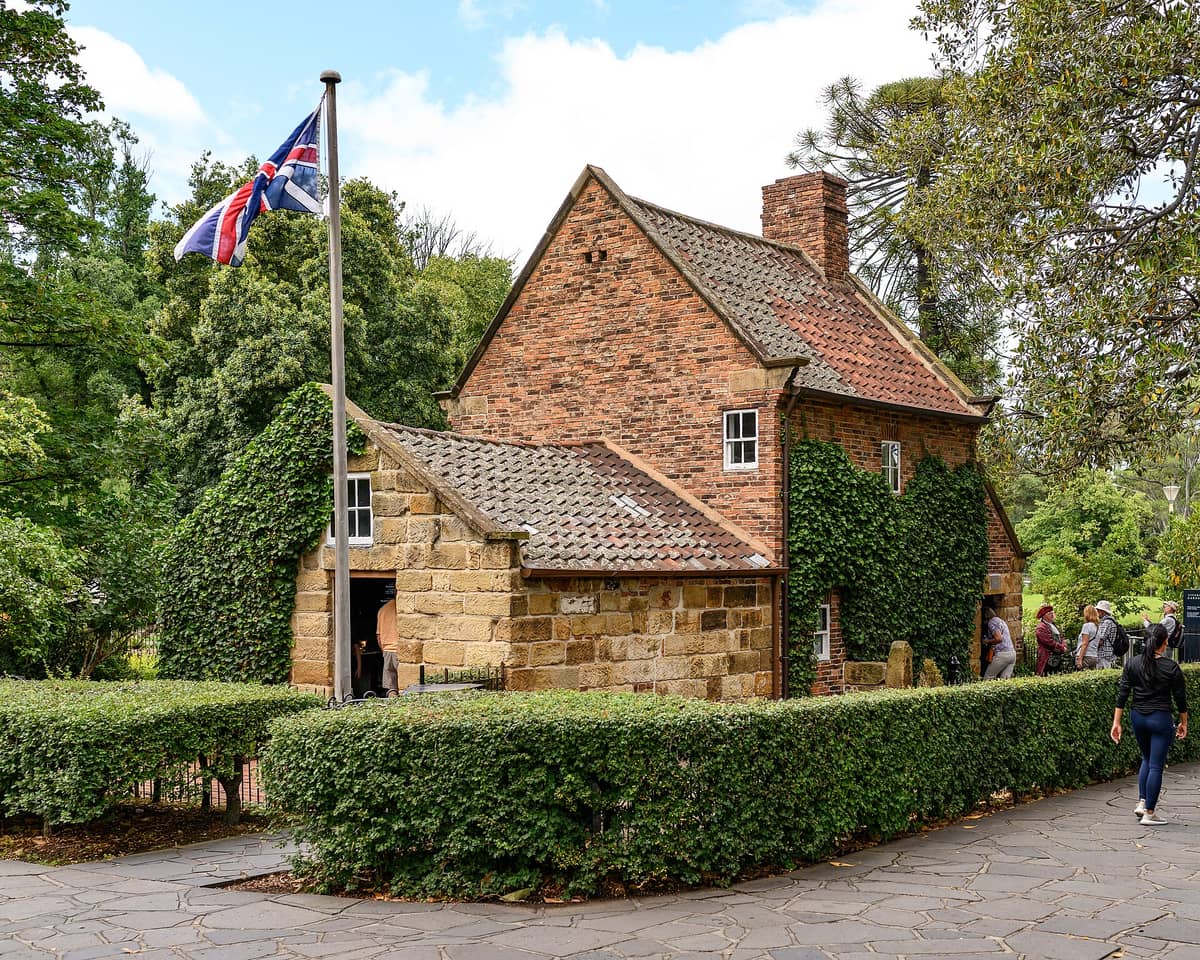
What Is Cooks' Cottage, Really?
Cooks' Cottage is often billed as the oldest building in Australia, but the story is more complicated than that framing suggests. The cottage was built in 1755 in Great Ayton, North Yorkshire, England, and is believed to have been the home of James Cook's parents. Cook himself, who would later chart the eastern coast of Australia, had been away from home for almost 10 years when his father built the cottage.
In 1934, to mark Melbourne’s centenary, Australian businessman Sir Russell Grimwade purchased the cottage, had it dismantled stone by stone, and shipped it to Melbourne. It was then reassembled and opened in Fitzroy Gardens as a historical curiosity and civic gift. So while the cottage is genuinely old, it is old in England. What you are visiting is an English cottage that happens to be in Melbourne.
That distinction is worth knowing before you arrive. If you expect the birthplace of a great explorer preserved in situ, this is not quite that. If you are curious about Georgian domestic architecture, the history of how colonists constructed identity through heritage, or just want to see a genuinely unusual attraction, there is more here than the modest entry fee suggests.
The Cottage Itself: What You See Inside
ℹ️ Good to know
Cooks' Cottage is open daily from 10 am to 4 pm, with last entry at 3:45 pm. Admission is A$8.20 for adults, A$4.50 for children aged 5–15, and A$22 for a family of two adults and two children. Concession admission is A$6.10.
The cottage is small. This is not a criticism but a fact worth knowing. The structure is a two-storey stone building of the kind common in rural Yorkshire in the 18th century: thick walls, low ceilings, narrow doorframes, and small rooms furnished to reflect the period. The ground floor includes a kitchen and living area; the upper floor has simple sleeping quarters. Interpretive displays throughout explain the cottage's history and provide context about James Cook's voyages.
The interior is cool even on warm Melbourne days, which is partly a function of the thick stone construction and partly because the cottage is shaded by the gardens around it. There is a faint smell of old timber and stone — not unpleasant, just noticeably different from the outside air. The low doorways require most adults to duck, and the floorboards creak in specific spots that guides have clearly memorised.
The displays are accessible rather than academic. Children tend to engage well with the scale of the rooms and the tangible contrast between 18th-century domestic life and the present day. Adults with a background in maritime or colonial history may find the interpretive content fairly introductory, but the building itself rewards attention. Look at the mortar joints where the stones were reassembled, and consider what it took to number, pack, ship, and rebuild a structure like this in the 1930s.
Tickets & tours
Live prices and dates from our booking partner. If you book, we may earn a commission at no extra cost to you.
Great Ocean Road reverse itinerary tour from Melbourne
From 77 €Instant confirmationFree cancellationGreat Ocean Road bus tour with a forest walk
From 90 €Instant confirmationFree cancellationYarra Valley Bus Wine Tour including lunch with a glass of wine and chocolate
From 107 €Instant confirmationFree cancellationHidden bars of Melbourne guided tour
From 115 €Instant confirmationFree cancellation
The Fitzroy Gardens Setting
The cottage sits within Fitzroy Gardens, one of Melbourne's finest formal garden spaces. The gardens themselves are worth more than a passing glance: they cover around 26 hectares and include elm tree avenues, ornamental fountains, a conservatory, and model Tudor village. If you are visiting Cooks' Cottage, budget additional time for a walk through the grounds.
In the morning, particularly on weekdays, the gardens are quiet. You will share the pathways mainly with local residents walking dogs and office workers cutting through from East Melbourne. By late morning on weekends, the cottage attracts modest queues, and the gardens fill with families. Afternoon light falls well across the cottage facade from the west, which is useful if you want photographs without harsh shadows.
Wellington Parade runs along the northern edge of the gardens, and the tram stop is a short walk from the cottage entrance. The surrounding East Melbourne neighbourhood is leafy and residential, a noticeable contrast to the CBD grid just a few hundred metres away.
Getting There and Practical Logistics
Tram routes 48 and 75 stop at Stop 9 on Wellington Parade, which is the most straightforward approach. Both run through the CBD, so you can board from Flinders Street or Spring Street without needing to navigate separately. For broader context on moving around the city, the getting around Melbourne guide covers the tram network in detail, including the Free Tram Zone boundaries, which end before this stop — so you will need a Myki card for this journey.
The cottage is also walkable from the eastern edge of the CBD in around 15 minutes, passing through Spring Street and across the gardens. This approach gives you a chance to orient yourself spatially relative to Parliament House and the Yarra corridor before arriving. There is no dedicated car park for the cottage, but street parking exists on surrounding East Melbourne streets, subject to time limits.
💡 Local tip
Arrive close to opening at 10 am on weekdays for the fewest visitors. Weekend mornings from 11 am onward see school groups and families. If you visit on a cool or overcast day, the cottage's interior and the surrounding gardens feel particularly atmospheric.
Historical Context: Cook, Yorkshire, and Melbourne's Centenary
James Cook was born in 1728 in Marton, Yorkshire. The cottage, built in 1755, is associated with his parents, James Cook Sr and Grace Pace. Cook himself was already away from home by the time it was built, so the romantic image of Cook growing up in this specific cottage requires qualification.
The decision to bring the cottage to Melbourne in 1934 reflects the cultural mood of that era. Victoria was marking its centenary, and there was a strong desire among civic leaders to anchor colonial identity to European — specifically British — heritage. Bringing a physical building associated with Cook to Australia was a deliberate symbolic act. Whether that act is viewed as a celebration or a product of its time is now a more open question than it was in 1934.
Understanding that broader context makes the visit richer. Melbourne sits on the traditional lands of the Wurundjeri Woi-wurrung and Bunurong peoples of the Kulin Nation, and Cook's voyages were the precursor to colonisation of a continent that had been continuously inhabited for tens of thousands of years. The cottage's interpretive materials acknowledge Cook's historical significance in exploration; visitors who want to explore the wider cultural and historical landscape of Melbourne more fully might also consider the Immigration Museum, which engages more directly with the human dimensions of Australian history.
Photography Tips and Accessibility
The cottage exterior photographs best in the morning or on overcast days. Direct afternoon sun from the west can wash out the pale stone. The garden path leading to the front door, framed by low hedges and seasonal plantings, tends to make a better composition than a straight-on shot of the facade. Interior photography is permitted; the low light inside requires patience, and a phone camera with a capable night mode will serve you better than flash, which flattens the textures of the stone and timber.
Accessibility inside the cottage is limited by the building's original structure: the low doorways, narrow stairs, and uneven stone floors mean that wheelchair access to the upper level is not possible. The City of Melbourne's listing notes assisted listening and service animals are accommodated. If mobility is a consideration, contact the cottage directly before visiting to confirm current access arrangements, as the self-reported accessibility information on the official listing has not been independently verified.
Is It Worth It?
At A$8.20 for an adult, Cooks' Cottage is one of the more affordable paid attractions in Melbourne. The experience lasts 30 to 45 minutes for most visitors, which is the right amount of time given what the cottage contains. It works especially well as part of a broader morning in the Fitzroy Gardens, combining the cottage with a walk through the elm avenues and a look at the conservatory.
Travellers whose primary interest is contemporary art, food, or nightlife will not find much here. History sceptics who are visiting only because it appeared on a list may feel the admission is steep for a small reconstructed building. But for anyone with genuine curiosity about 18th-century domestic life, the mechanics of heritage, or the personality of Melbourne as a city that has always curated its own identity with care, it is a rewarding stop. It pairs naturally with the Royal Exhibition Building and Melbourne Museum in Carlton, which together form a coherent half-day of historically grounded sightseeing.
If you are planning a broader exploration of Melbourne's gardens and parks, the Melbourne gardens and parks guide gives useful context for how Fitzroy Gardens fits into the wider network of green spaces across the city.
Insider Tips
- Weekday mornings between 10 and 11 am see the fewest visitors. Weekend afternoons can feel crowded in a cottage this size, where a dozen people fill a room.
- The gardens around the cottage change with the seasons. Spring (September to November) brings flowering beds close to the cottage path, making the approach more photogenic.
- If you have children, the contrast between the bedroom upstairs and a modern bedroom at home is a natural talking point. The guided displays are pitched to engage younger visitors, not just adults.
- Combine the cottage visit with the neighbouring model Tudor village, which is free to view in the gardens and adds context to the broader English heritage theme of this section of Fitzroy Gardens.
- The cottage is cash-free. Have a card or mobile payment method ready. Online booking is available through the City of Melbourne's website if you want to confirm your entry time in advance.
Who Is Cook's Cottage For?
- History and heritage enthusiasts who appreciate the context behind physical buildings
- Families with children aged 5 to 12, who respond well to the scale and tangibility of the space
- Visitors combining a broader morning walk through Fitzroy Gardens
- Travellers interested in how colonial societies constructed and imported identity
- Anyone on a Melbourne itinerary looking for a low-cost, low-pressure cultural stop near the CBD
Nearby Attractions
Other things to see while in Melbourne CBD:
- AC/DC Lane
Renamed in 2004 to honour one of Australia's most iconic rock bands, AC/DC Lane is a compact CBD laneway lined with street art, live music venues, and a raw energy that sets it apart from Melbourne's more polished laneways. Free to visit at any hour, it rewards those who show up after dark.
- Australian Centre for the Moving Image (ACMI)
The Australian Centre for the Moving Image (ACMI) sits at the heart of Federation Square and traces the full arc of screen culture, from silent cinema to interactive digital art. General entry and the permanent exhibition are free, making it one of the most rewarding stops in the Melbourne CBD regardless of your budget or the weather outside.
- Birrarung Marr
Birrarung Marr is a free, open-access riverside park on the northern bank of the Yarra River, a short walk from Flinders Street Station. Built on a former railway yard and opened in 2002, it offers terraced lawns, Indigenous cultural context, city skyline views, and a calendar of public events that transforms the space throughout the year.
- The Block Arcade
Built between 1892 and 1893, The Block Arcade is Melbourne's finest Victorian-era shopping arcade, a covered gallery of mosaic tile floors, ornate plasterwork, and a soaring glazed roof on Collins Street. Free to enter and open daily, it rewards slow exploration and offers one of the CBD's most atmospheric pauses from street-level traffic.
Planning a trip? Discover personalized activities with the Nomado app.