The Chicago Theatre: Inside the Loop's Most Iconic Marquee
The Chicago Theatre has anchored State Street since 1921, its vertical neon marquee one of the most photographed signs in the Midwest. Whether you're catching a live show inside the French Baroque auditorium or joining a Marquee Tour, this is one downtown stop that earns its reputation.
Quick Facts
- Location
- 175 N State St, Chicago, IL 60601 (The Loop)
- Getting There
- CTA Red Line – Lake station (subway) and Green/Orange/Pink/Purple Lines – State/Lake station (elevated), under 5-minute walk
- Time Needed
- 45–75 min for a Marquee Tour; 2–4 hours for a full show
- Cost
- Marquee Tour: ticketed (check official site for current price); Show tickets: vary by event in USD
- Best for
- Architecture lovers, music and comedy fans, history buffs, photographers
- Official website
- www.msg.com/the-chicago-theatre
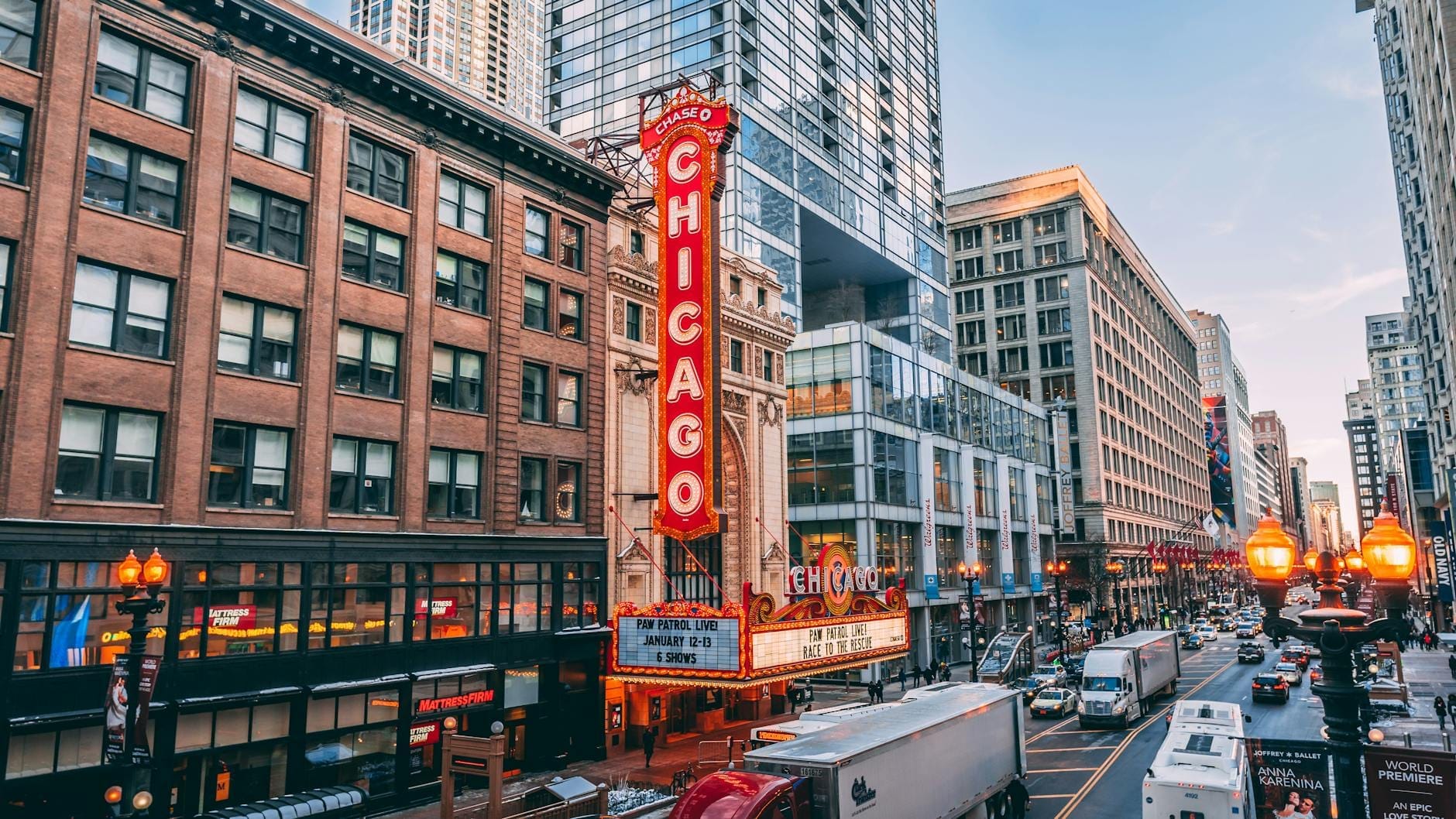
What You're Actually Looking At
The Chicago Theatre opened on October 26, 1921, as the Balaban and Katz Chicago Theatre, and it set a new standard for what a movie palace could be. Architects Cornelius W. Rapp and George L. Rapp modeled the facade on the Arc de Triomphe, then filled the interior with a seven-story French Baroque auditorium dripping in ornamental plasterwork, gilded details, and a grand staircase that still stops first-time visitors cold. The building seats 3,553 people in its current configuration and was, at the time of its opening, among the most elaborate entertainment venues in the United States.
Today it is listed on the National Register of Historic Places (since 1979) and carries official Chicago Landmark designation (since 1983). It is managed by Madison Square Garden Entertainment Corp. (MSG Entertainment), the same company that operates Madison Square Garden and Radio City Music Hall. That corporate pedigree matters practically: the building is professionally maintained, ticketing is reliable, and accessibility accommodations are built into the purchase process.
The theatre sits on North State Street in the Loop, Chicago's central business district. Its vertical blade sign spelling out C-H-I-C-A-G-O in neon has become shorthand for the city itself, appearing on more postcards, album covers, and film stills than perhaps any other single structure downtown.
The Marquee Sign: More Than a Photo Opportunity
The sign is impossible to ignore. During the day, the white and red vertical marquee reads clearly against the State Street streetscape. After dark, it goes fully neon, and the effect is the closest thing Chicago has to a Times Square moment: the glow bleeds onto the sidewalk, buses roll past with the illuminated letters as backdrop, and the smell of popcorn and car exhaust mixes in the air outside the lobby doors.
For photography, late afternoon on a clear day gives you the marquee lit in warm light with enough detail to read the lettering cleanly. After 7 p.m., the full neon effect kicks in and makes for stronger nighttime shots, though the pedestrian traffic on State Street means you'll need patience to find a clean foreground. Cross to the opposite sidewalk and use the width of the street to get the full sign and facade in frame without a wide-angle lens.
💡 Local tip
The best unobstructed view of the full marquee is from the east sidewalk of State Street, roughly 30 feet south of the entrance. Shooting from here keeps you parallel to the sign and avoids the angle distortion you get when standing directly underneath.
Tickets & tours
Hand-picked options from our booking partner. Prices are indicative; availability and final rates are confirmed when you complete your booking.
Go City | Chicago All-Inclusive Pass
From 127 €Instant confirmationFree cancellationiFLY Chicago Lincoln Park indoor skydiving experience
From 126 €Instant confirmationFree cancellationiFLY Chicago Rosemont indoor skydiving tickets
From 117 €Instant confirmationFree cancellationChicago lakefront neighbourhood bike tour
From 18 €Instant confirmationFree cancellation
The Marquee Tour: What Actually Happens
The Marquee Tour is the primary way to access the building if you don't have show tickets. Tours run on select days, typically once daily when operating, and the schedule shifts seasonally. You must book in advance through the official site; do not assume walk-up availability.
The tour covers the grand lobby, the main staircase, and the auditorium itself. The scale of the auditorium is genuinely impressive even if you've seen photos: the ceiling height across the main floor, the layered balconies rising into the upper gallery, and the proscenium arch create a kind of theatrical grandeur that the French Baroque style was specifically designed to produce. Guides explain the Rapp and Rapp design philosophy, the Balaban and Katz palace chain, and the theatre's cultural significance during the 20th century.
The tour sometimes includes access to the marquee itself, where you may be able to step outside onto the sign structure with State Street below, depending on operational constraints that day. That is, in fact, why it's called the Marquee Tour. The view north and south along State Street from that height offers a perspective on the Loop's architecture that you cannot get from street level.
⚠️ What to skip
Tour dates and times vary considerably by season and are sometimes suspended around major shows. Always check the official tour page at msg.com before making plans. Arriving without a confirmed booking is likely to result in disappointment.
Attending a Show: What to Expect Inside
The Chicago Theatre hosts a wide range of live programming, from major comedy acts and stand-up specials to music concerts spanning genres, corporate events, and occasional theatrical productions. The 3,553-seat configuration means even mid-range shows feel substantial here, and the acoustic quality, shaped by a century of refinement, holds up well for both amplified music and unamplified speech.
Seating is arranged across the main floor (orchestra), multiple mezzanine levels, and upper balconies. The steep rake of the upper sections means sightlines are actually better from above than the price differential might suggest. First-time visitors sometimes make the mistake of overpaying for orchestra seats in the rear, which have a flatter view than mezzanine rows at a comparable distance.
The lobby bars serve drinks before shows and during intermissions. The space fills quickly in the 20 minutes before curtain, so plan to arrive at least 30 minutes early if you want to explore the interior at a measured pace rather than navigating around a crowd.
ℹ️ Good to know
Accessible seating and assistive listening devices are available for most events. Request accommodations during ticket purchase or contact the box office directly. Details are listed on the official FAQ at msg.com/the-chicago-theatre/faq.
Getting There and Practical Logistics
The Chicago Theatre is walkable from virtually every CTA 'L' line that serves the Loop. The Lake station on the Red Line subway puts you less than a five-minute walk from the front doors. The State/Lake elevated station, which serves the Green, Orange, Pink, and Purple Lines, is equally close. If you're arriving by CTA, this is one of the easiest venues in the city to reach without a car.
Rideshare and taxi drop-off on State Street is straightforward during off-peak hours but can become congested around show times, particularly after 6:30 p.m. If you're coming from the north, consider being dropped at Wacker Drive and walking south. If you're combining the theatre with other Loop attractions, Millennium Park is roughly a 10-minute walk south, and the Chicago Riverwalk is four blocks west.
There is no dedicated parking lot attached to the theatre. Several public garages operate within two blocks on Wabash and Dearborn, but rates increase significantly on event nights. Transit is the more predictable option.
Architecture in Context: The Loop's Theatre Heritage
The Rapp and Rapp firm designed dozens of movie palaces across the United States in the early 20th century, but the Chicago Theatre was their most ambitious. It was also the first of the Balaban and Katz chain, a company that understood movies as a luxury experience and priced their venues accordingly. The State Street location was deliberate: this was the commercial heart of the city, and the theatre was meant to anchor it. Today the building sits within a district that rewards architecture-focused walking. The Chicago Architecture Center on the Riverwalk runs tours that often reference this corridor, and the Chicago architecture guide covers the broader context of why this block looks the way it does.
The French Baroque style was a deliberate choice to signal European cultural legitimacy during a period when American popular entertainment was still negotiating its social status. Inside, the profusion of plasterwork, chandeliers, and gilded surfaces was not merely decoration but an argument: that going to the movies deserved the same physical setting as attending the opera. That argument has aged well. Standing in the auditorium today, before a show or during a tour, the space still communicates a kind of aspirational theatricality that modern multiplex design has largely abandoned.
Honest Assessment: Is It Worth Your Time?
If you are attending a show here, the question answers itself: you have a reason to be inside, and the building will add to the experience regardless of the performance. The interior is among the best-preserved examples of American movie palace design in any city, and the auditorium alone justifies arriving early.
If you are considering the Marquee Tour without a show, the value depends heavily on your interest in architectural and entertainment history. The tour is not long, and the narration is professional without being academic. The marquee viewing platform is genuinely worth the climb. But if your Chicago itinerary is already dense with museum visits and you have no particular interest in theatre history, the exterior photograph from State Street accomplishes most of what the casual visitor actually wants.
The building is not a museum in the traditional sense. There are no permanent exhibits, no audio guides you can wander at your own pace between tours, and no cafe to linger in outside of show hours. It functions primarily as a working performance venue that occasionally opens its bones to the curious. That specificity is what makes it special, but it also means it rewards planning over spontaneity.
Insider Tips
- Book Marquee Tour tickets at least a week in advance during summer and around major holidays. The tours operate on a limited schedule and sell out without much public notice.
- If you're attending a show, seats in the front mezzanine rows (typically labeled as mezzanine center, first few rows) offer an excellent balance of proximity, sightlines, and the full visual impact of the auditorium ceiling above you.
- The building's exterior is best photographed at dusk rather than full dark. The transition period, when the neon is on but the sky still holds blue, produces the most balanced exposure between the sign and the facade stonework.
- State Street itself has changed considerably since the theatre's 1921 opening. Pair your visit with a short walk north toward the Chicago Cultural Center, where free exhibitions run year-round and the Tiffany glass dome interior is one of the most underappreciated architectural interiors in the Loop.
- If you want a more immersive look at how the Chicago Theatre fits into the city's broader performance landscape, the Chicago Architecture Center river cruise passes close enough to the Loop district to contextualize the scale of the building relative to the skyline it helped define.
Who Is Chicago Theatre For?
- Architecture and design enthusiasts interested in early 20th-century American movie palace design
- Live music and comedy fans looking for a mid-size venue with genuine character
- First-time Chicago visitors who want to understand why State Street has the cultural weight it does
- Photographers working on Chicago street photography or architectural portfolios
- Travelers on a Loop walking itinerary who want to combine history, architecture, and a possible evening show
Nearby Attractions
Other things to see while in The Loop:
- Art Institute of Chicago
One of the largest and most visited art museums in the United States, the Art Institute of Chicago anchors the eastern edge of the Loop with a collection of over 300,000 works spanning 5,000 years. From Georges Seurat's pointillist masterpiece to Grant Wood's American Gothic, the highlights alone demand the better part of a day.
- Buckingham Fountain
The Clarence Buckingham Memorial Fountain is one of the largest decorative fountains in the world, sitting at the heart of Grant Park since 1927. Free to visit during its seasonal run from spring through mid-October, it puts on hourly water displays and a nightly illuminated show that draws crowds from across the city.
- Chicago Architecture Center
Housed in Mies van der Rohe's One Illinois Center on the Chicago River, the Chicago Architecture Center packs nearly 10,000 square feet of exhibition space, a landmark scale model of the city, and access to some of the country's most informative architecture tours. It's the most comprehensive entry point into understanding what makes Chicago's skyline one of the world's most significant.
- Chicago Architecture Foundation River Cruise
The Chicago Architecture Center River Cruise aboard Chicago's First Lady is the most authoritative way to read the city's skyline. In 90 minutes, trained docents walk you through more than 40 landmark buildings across all three branches of the Chicago River, connecting architectural styles to the human decisions that shaped them.