Chicago Sports Museum: A Fan's Guide to the Magnificent Mile's Best Sports Stop
Tucked inside Water Tower Place on North Michigan Avenue, the Chicago Sports Museum dedicates 23,000 square feet to the teams, moments, and memorabilia that define Chicago sports culture. From the 2016 Cubs World Series championship to Bulls and Bears legends, this is a focused, affordable stop for anyone who loves Chicago's athletic history.
Quick Facts
- Location
- Water Tower Place, Level 7, 835 N Michigan Ave, Chicago, IL 60611
- Getting There
- Chicago Red Line (6-min walk) or Grand Red Line (10-min walk)
- Time Needed
- 1 to 2 hours
- Cost
- Adults $10 | Seniors & ages 4–11: $6 | Under 3: Free | College students: $8
- Best for
- Sports fans, families with older kids, rainy-day activity, Cubs faithful
- Official website
- www.chicagosportsmuseum.com
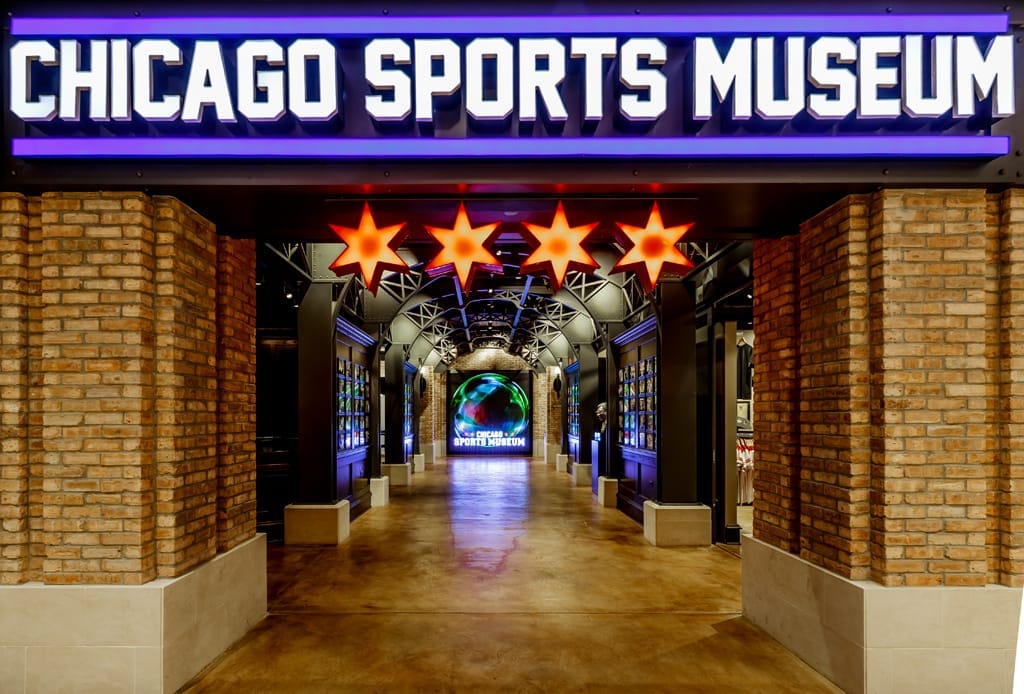
What the Chicago Sports Museum Actually Is
The Chicago Sports Museum is a 23,000-square-foot sports memorabilia and interactive exhibit space occupying the entire seventh floor of Water Tower Place, one of the Magnificent Mile's best-known vertical malls. It opened in 2014, created by the Harry Caray's Restaurant Group under CEO Grant DePorter, and shares its floor with Harry Caray's 7th Inning Stretch restaurant. That connection is more than logistical: dining guests receive free museum admission with a qualifying minimum restaurant purchase, making it an easy tack-on to a meal.
The museum covers every major professional Chicago sports franchise, with the Cubs, Bears, Bulls, Blackhawks, and White Sox all represented. But it skews heavily toward baseball and basketball history, reflecting both the city's emotional investment in the North Side Cubs and the enduring global legacy of the 1990s Bulls dynasty. The centerpiece collection is the largest display of 2016 Chicago Cubs World Series memorabilia in the city, a serious draw for Cubs fans who remember exactly where they were when Kris Bryant fielded the final out.
💡 Local tip
Check the museum's online calendar before visiting. The space occasionally closes for private events, and the website lists blackout dates. A quick check saves a wasted trip up to Level 7.
Getting There: Navigating Water Tower Place
The address is 835 North Michigan Avenue, but the museum entrance is not visible from street level. You enter Water Tower Place through the main Michigan Avenue doors, cross the atrium, and take an elevator to the seventh floor. First-time visitors occasionally wander the lower retail floors looking for signage, so go directly to the elevators on arrival. The ride up gives you a useful sense of the building's scale before you step into the exhibit space.
By CTA, the most direct option is the Red Line to the Chicago station, roughly a six-minute walk east to Michigan Avenue and then south. The Grand Red Line station is also walkable at about ten minutes. For a broader look at how the CTA connects to the rest of the city, the Red Line corridor covers most major tourist destinations without the need for a car.
If you're driving, the Water Tower Place parking garage entrance is on Chestnut Street. The garage is fully digital, using QR code and card entry rather than a ticket booth. Validated parking rates with a restaurant purchase are typically discounted for several hours, which is a reasonable deal for the Magnificent Mile. Daytime rates without validation will cost more.
Tickets & tours
Hand-picked options from our booking partner. Prices are indicative; availability and final rates are confirmed when you complete your booking.
Go City | Chicago All-Inclusive Pass
From 127 €Instant confirmationFree cancellationiFLY Chicago Lincoln Park indoor skydiving experience
From 126 €Instant confirmationFree cancellationiFLY Chicago Rosemont indoor skydiving tickets
From 117 €Instant confirmationFree cancellationChicago lakefront neighbourhood bike tour
From 18 €Instant confirmationFree cancellation
Inside the Exhibits: What You'll Actually See
The layout is organized by sport and era rather than strictly chronologically, which makes it easy to move between sections based on your interests. Glass cases hold game-worn jerseys, championship rings, signed equipment, and personal effects from athletes across decades. Labels are informative without being academic, pitched at a general audience rather than a sports historian.
The 2016 Cubs World Series section is the most visually striking part of the museum. The collection includes items from the series itself as well as artifacts from the broader cultural moment around it, a century of near-misses and the weight of expectations that made Game 7 in Cleveland one of the most-watched baseball games in decades. If you were anywhere near Wrigleyville that night, this section will pull you back immediately.
The Bulls section covers the championship years from 1991 through 1998, with jerseys, trophies, and photographs. The exhibit does not attempt to replicate what you'd find at the United Center, where the statues and retired numbers create their own atmosphere, but it provides a concentrated collection of objects from that dynasty that is hard to see anywhere else.
Interactive elements are scattered throughout the floor. There are simulation stations where visitors can test a swing or a shot, which skew toward younger visitors but keep the space lively rather than purely static. The noise level rises noticeably when school groups or families with children arrive, typically in the late-morning to early-afternoon window.
Timing Your Visit: How the Experience Changes by Hour
Weekday mornings from 11 am until about 12:30 pm are the quietest window. At that hour, the floor feels spacious and the exhibit cases are easy to approach without waiting. The light inside is warm and consistent, controlled rather than natural, which means photography quality doesn't change much by time of day, but the background crowds in your shots definitely will.
Friday and Saturday afternoons are the busiest periods. The museum stays open until 8 pm on those nights, and the crowd tends to shift toward adults in the late afternoon and evening as families thin out. If you plan to combine the museum with dinner at Harry Caray's on the same floor, an early-evening arrival works well: visit the exhibits first, then move to the restaurant for the free-admission perk.
ℹ️ Good to know
Hours: Mon–Thu 11 am–7 pm, Fri–Sat 11 am–8 pm, Sun 12 pm–6 pm (subject to change and occasional early closure for private events; check the official site before visiting). Guests of Harry Caray's 7th Inning Stretch receive free museum admission with a minimum food purchase — confirm the current minimum at the host stand.
Cultural and Historical Context
Chicago's relationship with its sports teams is intense enough to function as civic identity. The Cubs' 108-year World Series drought, the Bears' storied NFL history, the Bulls' back-to-back three-peats, the Blackhawks' three Stanley Cups since 2010, and the White Sox's 2005 World Series win are not just sports records — they are reference points in how Chicagoans talk about themselves and their city. The Chicago History Museum covers the broader sweep of the city's past, but the Sports Museum distills the specific emotional currency of fandom into a single accessible space.
The Magnificent Mile location is deliberate. Water Tower Place sits in one of Chicago's highest-traffic tourist corridors, meaning the museum reaches visitors who might not seek it out specifically but discover it while exploring North Michigan Avenue. That context shapes the collection: it is curated for accessibility and emotional resonance rather than deep archival scholarship. Think of it as a best-of collection rather than a comprehensive archive.
Photography, Accessibility, and Practical Details
The interior lighting is exhibition-quality, warm and even, which makes for clean photographs of display cases without harsh glare. Wide-angle lenses work well for the larger installation pieces. Photography appears to be permitted throughout the general exhibit areas, though you should avoid using flash near fragile paper documents or photographs.
The venue is fully accessible. Water Tower Place has elevator access to Level 7, and the museum floor itself is step-free. A coat check may be available in the complex, which matters in Chicago winters when navigating exhibit cases with a heavy coat gets cumbersome quickly. If you're visiting in January or February, plan to check your outerwear before walking the floor.
The admission price sits at the lower end of Chicago attraction pricing. At $10 for adults, it compares favorably to the city's major institutions and makes a reasonable addition to a Magnificent Mile afternoon rather than a destination visit in its own right. For context on how it fits into a broader trip budget, the Chicago on a budget guide covers free and low-cost options across the city.
⚠️ What to skip
Who might not enjoy this: visitors with no connection to Chicago sports will find the collection less engaging than a general sports or history museum would be. The exhibits assume familiarity with the teams and their stories. Non-fans are better served by the Art Institute, the Field Museum, or the Chicago History Museum.
Insider Tips
- If you're planning to eat at Harry Caray's 7th Inning Stretch anyway, ask about the free museum admission offer before you order — it's tied to a minimum food purchase and confirmed at the host stand, not automatically applied.
- The 2016 Cubs World Series collection is most effectively explored if you read the case labels in sequence. The items are arranged to tell the story of that postseason, and jumping around loses some of the narrative thread.
- Weekday mornings in the off-season (November through March) see the thinnest crowds. You'll have the interactive stations largely to yourself and can take your time at the display cases without navigating around tour groups.
- The Water Tower Place garage validation deal after 5 pm is one of the better parking values on the Magnificent Mile. If you're combining the museum with dinner, arriving by 5 pm and validating at the restaurant brings the parking cost down significantly.
- The museum sits on the same floor as Harry Caray's restaurant, which means the smell of stadium-style food drifts through the space. It's atmospheric for some visitors and distracting for others — worth knowing before you arrive.
Who Is Chicago Sports Museum For?
- Chicago sports fans, especially Cubs and Bulls followers looking for championship-era memorabilia
- Families with children ages 7 and up who will engage with both the artifacts and the interactive stations
- Rainy or cold days on the Magnificent Mile when an indoor activity is needed without a major time or budget commitment
- Visitors combining a meal at Harry Caray's with a free or discounted museum visit
- Anyone on a half-day itinerary in the Near North Side looking for a one to two hour cultural stop
Nearby Attractions
Other things to see while in Magnificent Mile & Streeterville:
- 360 CHICAGO Observation Deck
Perched on the 94th floor of 875 North Michigan Avenue, 360 CHICAGO delivers panoramic views stretching across the city grid, Lake Michigan, and on clear days, four states. With the TILT ride, interactive displays, and a full bar, it offers more than just a lookout.
- American Writers Museum
Tucked on the second floor of 180 N. Michigan Avenue, the American Writers Museum makes a persuasive case that literature shaped the United States as much as any battlefield or boardroom. It's compact, thoughtfully curated, and rewards visitors who slow down.
- Centennial Wheel
Standing nearly 196 feet above the Lake Michigan shoreline, the Centennial Wheel at Navy Pier offers enclosed, climate-controlled gondola rides with some of the most expansive views of Chicago's skyline. Opened in 2016 to mark Navy Pier's 100th anniversary, it replaced a beloved predecessor and quickly became one of the city's most recognizable structures.
- Chicago Children's Museum
Perched inside Navy Pier on the lakefront, Chicago Children's Museum has been sparking curiosity in kids since 1982. With hands-on exhibits built for children under 10, it rewards an unhurried half-day visit. Here is exactly what to expect, when to go, and how to make the most of your time.