United Center: Chicago's Premier Sports and Entertainment Arena
The United Center is one of the largest indoor arenas in North America and home to both the Chicago Bulls and Chicago Blackhawks. Whether you're attending an NBA playoff game, an NHL matchup, or a major concert, this West Side venue delivers a full-scale spectacle that rewards planning with a far better experience.
Quick Facts
- Location
- 1901 West Madison Street, Chicago, IL 60612 (Near West Side, adjacent to West Loop)
- Getting There
- CTA Blue Line to Illinois Medical District; buses #19, #20, and #50 stop within a few blocks
- Time Needed
- 3–4 hours for a full game or concert; add 30–45 min for pre-game crowd arrival
- Cost
- Ticket prices vary by event and seat; sold in USD via official team and venue ticketing platforms
- Best for
- Sports fans, concert-goers, families with older kids, solo travelers looking for a classic Chicago night out
- Official website
- www.unitedcenter.com
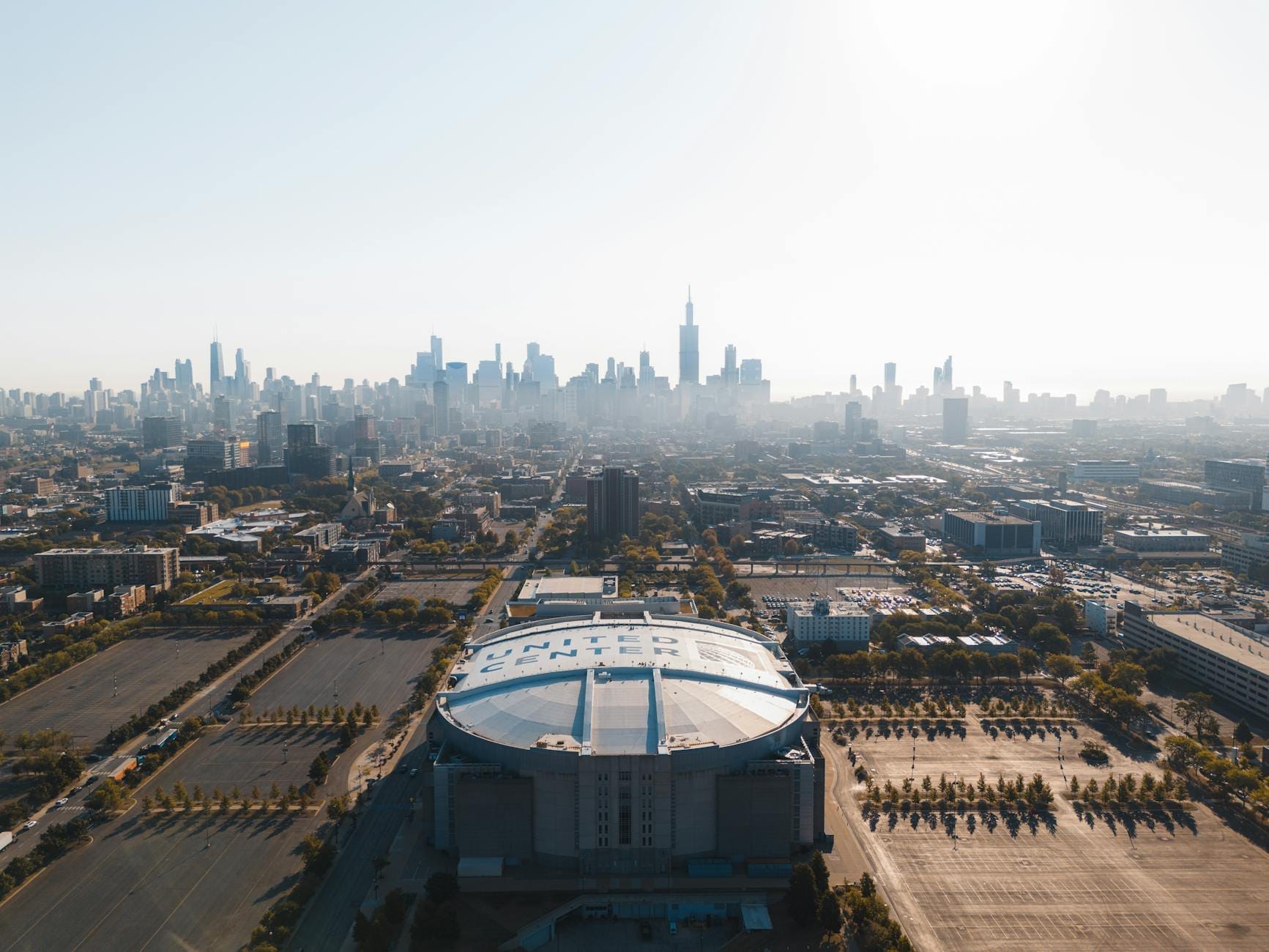
What the United Center Actually Is
The United Center is Chicago's primary indoor arena, located on West Madison Street on the city's Near West Side. Opened on August 18, 1994, it has been the home of the Chicago Bulls (NBA) and the Chicago Blackhawks (NHL) for every season since. With seating capacity reaching 19,717 for hockey, 20,917 for basketball, and up to 23,500 configured for concerts, it is one of the largest arenas in North America by seating capacity. Since opening, the venue has hosted more than 200 events per year and welcomed over 40 million total guests.
Construction began in April 1992, and the arena was built jointly by Bulls owner Jerry Reinsdorf and Blackhawks owner Bill Wirtz to replace the beloved but aging Chicago Stadium, which stood just to the west. The United Center was financed without direct public tax subsidies, a distinction worth noting for an arena of its scale. The building's design reflects the industrial character of its West Side location: a broad, low-slung exterior clad in brick and concrete, utilitarian from the outside, operationally smooth on the inside.
ℹ️ Good to know
The United Center does not have fixed daily visiting hours. It operates on an event schedule. Parking lots open 2.5 hours before event time; gates typically open 1–2 hours before tip-off or puck drop. Check the official schedule at unitedcenter.com before you go.
The Experience Before You Even Get Inside
On game nights, the stretch of Madison Street approaching the arena transforms dramatically in the two hours before tip-off. What is ordinarily a quiet West Side commercial corridor becomes a corridor of parked shuttle buses, jersey-clad pedestrians, and the smell of grilled sausage and street-cart food drifting from nearby vendors. The energy is unmistakably concentrated: this is not a district that builds organically; it pulses specifically because of what is about to happen inside.
Outside the atrium entrance on the east side of the arena stands the Michael Jordan statue, officially titled 'The Spirit.' Cast in bronze and depicting Jordan mid-flight toward the basket, it is a pilgrimage point for visitors even on non-event days. On game nights, fans photograph themselves in front of it, kids are lifted for photos, and the area crackles with pre-game ritual. On quiet weekday afternoons, the statue sits inside the east atrium, which gives you a much cleaner photograph and a slightly melancholy sense of how dependent this block is on the calendar.
There is also a statue of Blackhawks legends Bobby Hull and Stan Mikita near the north entrance, a nod to the Blackhawks' heritage that resonates more with hockey fans who know their history. Both statues are free to view at any time.
Tickets & tours
Hand-picked options from our booking partner. Prices are indicative; availability and final rates are confirmed when you complete your booking.
Chicago city center walking audio tour
From 5 €Instant confirmationArchitecture cruise on the Chicago River from Michigan Ave
From 39 €Instant confirmationFree cancellationGo City | Chicago All-Inclusive Pass
From 127 €Instant confirmationFree cancellationiFLY Chicago Lincoln Park indoor skydiving experience
From 126 €Instant confirmationFree cancellation
Inside the Arena: Layout, Sightlines, and Atmosphere
Once inside, the United Center shows its age in some concourse finishes but delivers on sightlines. The seating bowl is steeply raked, which means even upper-level seats maintain a reasonable sight angle to the action. For basketball, the lower bowl wraps tightly around the court. For hockey, the ice feels close from nearly anywhere in the building. For concerts, floor configurations vary; check the event-specific seating map before purchasing.
The concourses on game nights carry the baseline sound of a large crowd managing itself: sneakers on concrete, the tinny broadcast audio from monitors, vendors calling out from food stations. The food options have expanded well beyond traditional arena fare, with Chicago-specific choices including Italian beef sandwiches and deep-dish pizza slices available at concession stands. Prices are arena-standard, meaning expensive by most measures, so eating before arrival is the budget-conscious move.
For playoff games or rivalry matchups, the atmosphere inside the United Center shifts noticeably. The sound level during Bulls introductions or Blackhawks goal horns is genuinely loud, the kind of loud that vibrates in your chest. Regular-season games on weeknights can feel more subdued, particularly mid-season when both franchises are rebuilding. Manage expectations accordingly: the building can be electric or merely pleasant depending on the stakes of the night.
Getting There: Transit, Rideshare, and Parking
The most straightforward public transit approach is the CTA Blue Line to the Illinois Medical District stop. From the station, it is a walk of several blocks north along Damen Avenue to West Madison Street, then west to the arena. The walk takes roughly 10–15 minutes on a flat, grid-street route. Bus options are more direct for some: the #19 United Center Express runs specifically on event nights, and the #20 Madison bus runs along the arena's front door. If you are arriving from the Loop or the West Loop, the #20 is often the simplest choice.
For rideshare, the designated Uber Zone is at the corner of Madison Street and Wood Street (Lot E). This is the only designated pickup and drop-off area, so do not arrange pickup from a random side street unless you want to spend time rerouting. The area around the arena after large events can see significant traffic delays, so if you are catching a rideshare home after a sold-out concert, expect to wait. Walking a few blocks east toward the West Loop before requesting your ride can significantly cut wait times.
Parking lots adjacent to the arena are plentiful and open 2.5 hours before events. Pre-purchasing parking through the official site is recommended for sold-out events, as lots fill quickly. Post-game exits from the lots can be slow. Many regular attendees leave the arena 5–10 minutes before the final buzzer specifically to beat the parking exit queue.
💡 Local tip
If you are arriving by CTA on a cold night, the walk from the Illinois Medical District Blue Line stop is fully exposed. Dress for it in winter. Chicago temperatures in January regularly drop below -10°C (14°F), and that 15-minute walk into a pre-game wind will be a significant part of your evening.
Historical and Cultural Weight
The United Center sits on ground that carries significant Chicago sports history. The previous arena nearby, Chicago Stadium (demolished in 1995 after the United Center opened), was known for some of the loudest crowd noise in North American sports. Opened in 1929, Chicago Stadium hosted the Blackhawks for decades and the Bulls from their founding in 1966 until 1994 before falling to the wrecking ball. For older Bulls fans, the transition to the United Center coincided precisely with the dynasty years: Michael Jordan and the Bulls won six NBA championships between 1991 and 1998, with the last three titles celebrated here. That history is embedded in the culture of attending a game, referenced in announcements, visible in the retired jersey banners hanging from the rafters, and impossible to ignore if you have any familiarity with Chicago's sports legacy.
The Blackhawks' banners tell their own story: six Stanley Cup championships (1934, 1938, 1961, 2010, 2013, and 2015). Looking up at the rafters during a game, you see a concentration of championship hardware that is rare in any sport. For visitors with no existing team loyalty, the history displayed overhead gives meaningful context to what would otherwise be just another athletic contest.
The surrounding neighborhood, the Near West Side, has historically been a working-class area with significant economic challenges. The arena's presence has brought concentrated commercial activity on event nights without dramatically transforming the broader neighborhood's character, a dynamic that has been debated in Chicago civic conversations for decades. There are no major restaurant districts or entertainment clusters immediately adjacent to the arena the way there are around Wrigley Field in Lakeview. The block-by-block transition from the arena to surrounding streets is abrupt.
Concerts and Non-Sports Events
The United Center is one of Chicago's primary large-venue concert spaces, hosting major touring acts that require arena-scale capacity. With up to 23,500 seats available for concerts, it sits in the tier of venues that attract artists doing nationwide stadium-level tours. The acoustic experience for music varies significantly based on configuration and the nature of the production. Unlike purpose-built concert halls such as Chicago Symphony Center, the United Center is optimized for sight lines, not sound. Modern touring productions compensate with elaborate speaker arrays, but the audio experience differs from a dedicated music venue.
For large-scale productions where spectacle is central, the arena works well. Floor standing configurations for concerts change the entire feel of the space, transforming the bowl into a more immersive environment. Check whether your event is a reserved-seat or general-admission floor setup before deciding where to buy.
Who Should Think Twice
Travelers with limited time in Chicago and no particular interest in sports or arena concerts should prioritize other experiences. The United Center is not a sightseeing attraction in the conventional sense: outside of event nights, the exterior plaza and statues are the only publicly accessible elements. There are no public tours of the facility listed as a standard offering on the official site.
Visitors who prefer more intimate live music venues will find better options elsewhere in Chicago's entertainment landscape. For those focused on Chicago's architectural legacy, the arena does not rank alongside the city's landmark structures, and a Chicago architecture river cruise or a walk through the Loop will be a more rewarding use of time. Similarly, families with very young children will find the noise, crowd density, and late finish times of most events challenging.
Insider Tips
- For a first-time visit, buy tickets in the lower bowl corners rather than straight behind the goals or baskets. Corner seats give you diagonal sightlines that show the full width of the court or ice, and they are almost always priced lower than center-court or center-ice seats while offering a superior overall view.
- The #19 United Center Express bus runs only on event nights and connects directly to the Ogilvie Transportation Center in the West Loop. If you are coming from the Metra or the central business district, this bus is faster than it looks on the map and avoids the parking chaos entirely.
- Concession lines peak immediately after the game starts and again at halftime or intermission. If you want food or drinks without a long wait, arrive at the arena when doors open and buy before the event starts.
- The Michael Jordan statue on the east plaza is best photographed in morning or midday light on non-event days. On game nights, the plaza is crowded and the lighting is harsh from venue signage. If you want a clean architectural or statue shot, visit at an off-peak time.
- Rideshare surge pricing immediately after large events can be significant. Walking four to six blocks east toward Halsted Street or the West Loop before opening your app will generally put you outside the immediate surge zone and result in a faster pickup.
Who Is United Center For?
- NBA and NHL fans who want to see a game in one of North America's storied arenas
- Concert-goers attending major touring productions that require large-capacity venues
- Families with sports-minded older children (ages 8 and up handle the environment well)
- Solo travelers looking for a complete, self-contained evening with predictable timing
- Chicago sports history enthusiasts interested in the Bulls and Blackhawks championship legacy
Nearby Attractions
Other things to see while in West Loop & Fulton Market:
- Fulton Market Dining District
Once the beating heart of Chicago's meatpacking industry, the Fulton Market District has become the city's most talked-about stretch of restaurants, bars, and design hotels. The old cold-storage buildings and loading docks are still there — they just serve as backdrops for tasting menus and natural wine bars now.