Cattedrale di Santa Maria, Cagliari: A Complete Visitor's Guide
Rising above the Castello quarter on Piazza Palazzo, the Cattedrale di Santa Maria e Santa Cecilia is Cagliari's most important religious monument. First documented in the mid‑13th century and remodelled across several centuries, it layers Pisan Romanesque, Gothic, Baroque, and Neo-Romanesque styles into a single compelling structure. Entry is free, and the interior rewards anyone willing to look closely.
Quick Facts
- Location
- Piazza Palazzo, Castello district, Cagliari
- Getting There
- Walk up through Castello, or take the public elevator from Viale Regina Elena to the Bastione area, then follow Via Canelles to Piazza Palazzo
- Time Needed
- 45 minutes to 1.5 hours, depending on interest in the crypt and side chapels
- Cost
- Free entry to the cathedral; separate fees may apply for the tower or guided visits (verify on site)
- Best for
- Architecture enthusiasts, history buffs, travellers seeking a quiet morning stop in Castello
- Official website
- http://www.duomodicagliari.it
What You're Actually Looking At
The Cattedrale di Santa Maria e Santa Cecilia, better known as the Duomo di Cagliari, sits at the northern edge of Piazza Palazzo in the fortified Castello quarter. From the square, the facade is impossible to miss: a layered composition in light-coloured stone that signals centuries of reworking. The current Neo-Romanesque facade was completed in the 1930s, designed to reference the cathedral's Pisan origins while covering later additions. It is orderly, even a little austere from the outside, but that restraint is deceptive.
The building measures approximately 35 metres long, 34 metres wide, and 32 metres high. These are not particularly dramatic numbers, but the cathedral fills its hilltop site with real authority, flanked on one side by the Palazzo Regio and looking out over a square that functions as the civic heart of the old town. The bell tower alongside the cathedral is original Pisan construction, dating to the 13th century, and it remains the most architecturally authentic part of the exterior.
💡 Local tip
Dress code applies: shoulders and knees must be covered to enter. A scarf or light layer in your bag saves you from being turned away at the door, especially during summer when most visitors are dressed for the heat.
A Brief History of a Building That Never Stopped Changing
The cathedral's first documented records date to 1254–1255, when the Pisans controlled the Castello district and were actively building their presence in Cagliari. It became the seat of the archdiocese after the episcopal centre transferred from the nearby settlement of Santa Igia. The original structure was Pisan Romanesque in style, a clean and rational approach to ecclesiastical architecture that the Pisans exported across Sardinia during their period of influence.
Over the following centuries, the building accumulated additions that reflect each era's priorities. Gothic interventions, a significant Baroque refurbishment, and eventually the 20th-century Neo-Romanesque facade all left marks. This pattern of layered modification is common in Sardinian religious architecture, and the cathedral at Cagliari is among the most prominent examples. For more context on the island's other historically significant churches, see the Basilica di San Gavino in Porto Torres, which preserves a more intact early medieval Romanesque form.
One historically significant detail: a monumental pulpit originally carved for the Cathedral of Pisa by sculptor Guglielmo between 1157 and 1162 was later dismantled and partially reassigned. Sections of that sculptural work were gifted to Cagliari and are now incorporated into the cathedral's interior. This is an unusual piece of art provenance that most visitors walk past without realising its significance.
Tickets & tours
Hand-picked options from our booking partner. Prices are indicative; availability and final rates are confirmed when you complete your booking.
Maxi Dinghy Tour in Orosei Gulf from Santa Maria Navarrese
From 95 €Instant confirmationFree cancellationTrekking Excursion in Colle of Sant'Elia from Cagliari
From 60 €Instant confirmationFree cancellationGulf of Cagliari kayak tour
From 72 €Instant confirmationFree cancellationCagliari Sunset Boat Tour With Prosecco, Focaccia and Swimming
From 75 €Instant confirmationFree cancellation
Inside the Cathedral: What to Look For
Stepping through the entrance, the shift from the bright Cagliari sunlight to the interior takes a moment to adjust to. The nave is wide and well-proportioned, with side chapels running along both flanks. The overall atmosphere is Baroque in tone, the result of 17th and 18th century remodelling that introduced the kind of decorative intensity typical of that period: gilded altars, painted ceilings, and a visual density that rewards slow observation rather than a quick pass-through.
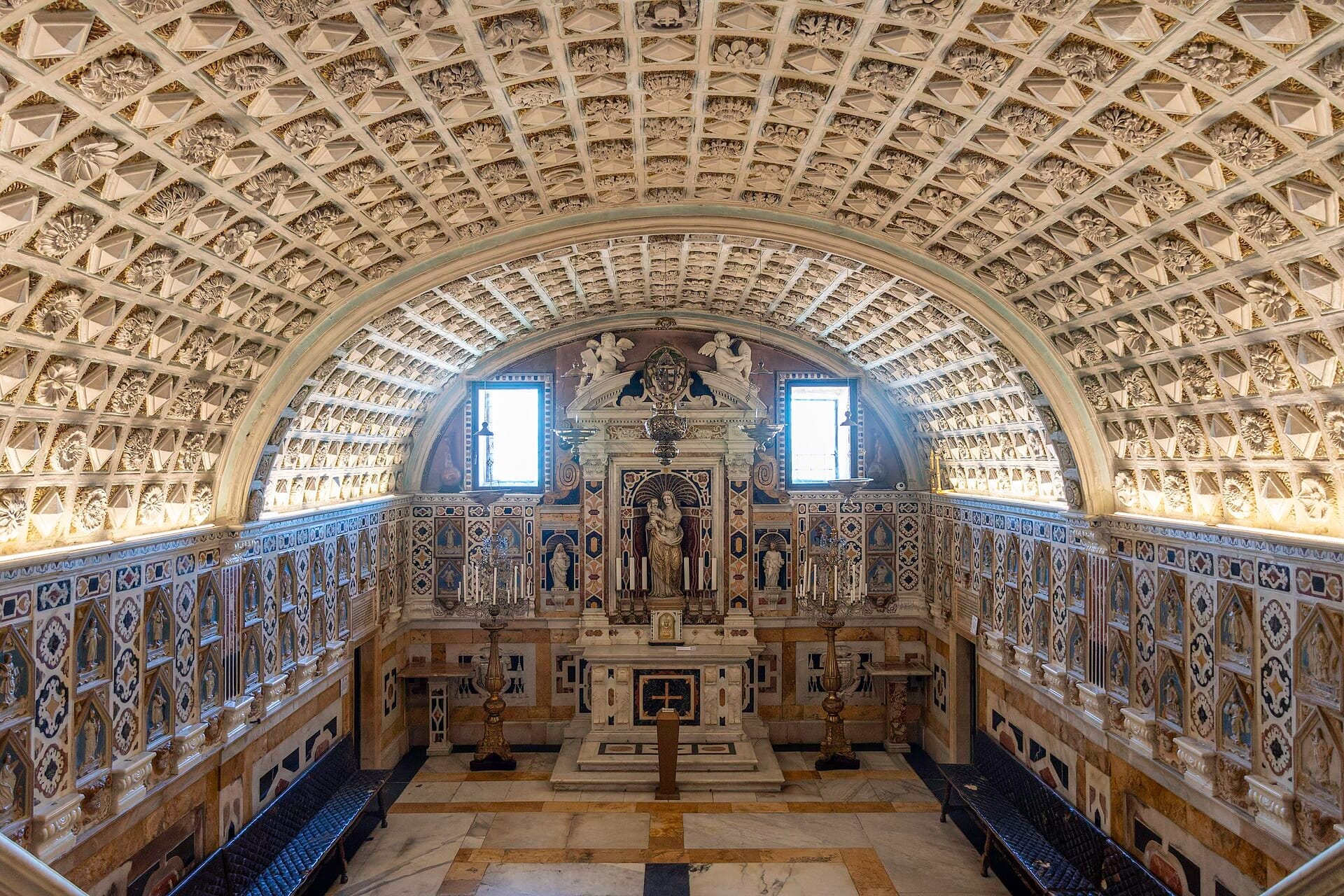
The crypt below the main altar is the most remarkable space in the building. It holds the remains (reliquaries and niches) of around 179 martyrs and members of the island's nobility, many associated with the Aragonese and Savoy periods that shaped Sardinia across several centuries. The crypt is reached by stairs flanking the presbytery and is included in the general visit. The air down here is noticeably cooler, and the scale of the funerary collection is striking, though it is not always clearly signed in English.
Look also at the two large marble ambos (pulpits) flanking the nave entrance. These incorporate the Pisan sculptural material mentioned above, making them objects of genuine art historical interest. The polychrome marble work at the main altar and the painted barrel vault overhead are also worth pausing at, particularly in the morning light when natural illumination enters from the side windows at a low angle and picks out the textures in the stone.
ℹ️ Good to know
The cathedral is an active place of worship. Masses are held regularly, and during services the nave is closed to tourist visits. Check the schedule before planning a long visit, particularly on Sunday mornings and feast days.
The Castello Setting: How It Shapes the Visit
The Cattedrale di Santa Maria does not stand in isolation. It sits inside the Castello district, the medieval fortified quarter that crowns the hill above the rest of Cagliari. The streets around the cathedral are narrow, paved in stone, and relatively quiet compared to the commercial areas lower down. Arriving on foot through the lanes of Castello is part of what makes the visit feel worthwhile: the cathedral emerges at the end of a short sequence of enclosed streets, and the piazza opens up in front of it with an effect that a flat urban approach would not produce.
The Palazzo Regio (Royal Palace) stands immediately adjacent, and the former Palazzo di Città is also nearby. The spatial relationship between the cathedral, the palace, and the square is a fairly direct expression of the way civic and religious authority were organized in medieval and early modern Sardinia. If you are approaching from below, the public elevator from Viale Regina Elena brings you to the Bastione di Santa Caterina area, which reduces the uphill walking considerably.
Visitors planning a longer morning in this part of the city often combine the cathedral with the Bastione di Saint Remy, located at the southern edge of Castello with panoramic views over the city and the lagoon. The two sites together make a logical pairing and require no more than a half morning.
When to Visit and How the Experience Changes
Weekday mornings between 09:00 and 12:00 are consistently the quietest period. The light inside the cathedral is at its most useful during morning hours, and the piazza outside sees minimal foot traffic on weekday mornings compared to late afternoon or weekend visits. Arrive before 11:00 if you want the nave to yourself.
In high summer (July and August), Cagliari's heat can make the midday hours uncomfortable in the streets around Castello. The cathedral's stone walls and the relative shade of the interior make it a practical refuge during the hottest part of the day, but be aware that the midday closure (typically 14:00 on weekdays) limits afternoon access. Visiting in late afternoon, when the cathedral reopens around 16:00 to 16:30, works well for photography as the angled light on the facade becomes warmer.
Reported opening hours are: weekdays 09:00 to 20:00, Sundays and public holidays 08:00 to 13:00 and 16:00 to 20:30. These hours are subject to change around religious feast days and liturgical events, so checking the official site or arriving with some flexibility is advisable. Cagliari's calendar includes a number of significant festivals, and the cathedral is a focal point for several of them — the Sardinia festivals and events guide gives useful context on major dates.
Practical Information
Entry to the cathedral itself is free. There may be a separate fee for visiting the bell tower or joining a guided tour, but no standardised tariff is consistently published online. Verify current arrangements on arrival or via the official website at duomodicagliari.it.
Photography is generally permitted inside without flash. The crypt's lower lighting means a steady hand or higher ISO setting helps. The interior is not enormous, so a wide-angle lens (or standard phone camera) captures the nave effectively. Avoid trying to photograph during Mass.
Accessibility: the Castello district sits on a steep hill, and the approach streets involve gradients and uneven stone paving. The public elevator from Viale Regina Elena significantly reduces the climb and is the most practical option for visitors with limited mobility. Inside the cathedral, the nave is level; the crypt requires descending stairs and there is no published information about step-free alternatives. Visitors needing specific accessibility information should contact the cathedral parish directly in advance.
⚠️ What to skip
The cathedral closes in the middle of the day. A trip made between roughly 14:00 and 16:00 on a weekday will find locked doors. Plan accordingly, particularly if you are working around a tight schedule or cruise port arrival time.
Is It Worth Your Time?
For most visitors with a genuine interest in architecture, religious history, or Sardinian heritage, yes. The cathedral is not Italy's most spectacular, and the exterior does not prepare you well for the interior's complexity. But the crypt alone, with its layered funerary history of Sardinian royalty, is the kind of thing you would not find easily elsewhere, and the Pisan sculptural fragments embedded in the ambos are quietly significant objects.
Those who might not find it rewarding: visitors primarily interested in Sardinia's natural landscapes and beaches, or anyone who has already spent significant time in Italian cathedral cities and finds the format familiar. Cagliari has other draws for those visitors, including the Museo Archeologico Nazionale and the coastal strip at Spiaggia del Poetto, which offer a very different kind of experience. The cathedral is best paired with a broader walk through Castello rather than treated as a standalone destination requiring a special trip.
Insider Tips
- The bell tower (campanile) is the oldest surviving Pisan element of the building. Stand back from the piazza to compare its stone texture and proportions against the 20th-century facade directly beside it: the contrast in construction era is visible to the eye once you know to look for it.
- If the nave is occupied by a Mass or ceremony, the side chapels along the aisles are often still accessible. These smaller spaces contain individual altarpieces and devotional objects that are easy to overlook when walking straight through the centre.
- The crypt descends on both sides of the altar. Many visitors go down one staircase, glance briefly, and come back up the same way. Take both sets of stairs and move slowly around the full perimeter: the variety and density of the tombs and funerary inscriptions rewards the extra few minutes.
- The piazza in front of the cathedral offers a view directly over the rooftops of the lower city toward the sea. In the morning, before tour groups arrive from cruise ships, this vantage point is calm and the light is clear. It costs nothing and takes no planning.
- The public elevator on Viale Regina Elena is free to use and dramatically cuts the uphill walk into Castello. If you are visiting the cathedral as part of a wider Castello morning, ride up and walk back down through the district's lanes.
Who Is Cattedrale di Santa Maria (Cagliari) For?
- Architecture and art history enthusiasts who want to trace the building's Pisan, Baroque, and Neo-Romanesque layers
- Travellers interested in Sardinian political and dynastic history, particularly those curious about the Aragonese and Savoy periods
- Visitors combining the cathedral with a broader walk through the Castello district and its surrounding monuments
- Those seeking a cool, quiet interior during Cagliari's hot summer midday hours (within opening times)
- Photography-focused visitors looking for strong contrasts between medieval stonework, gilded Baroque altars, and views from the adjacent piazza
Nearby Attractions
Other things to see while in Cagliari:
- Anfiteatro Romano di Cagliari
The Roman Amphitheatre of Cagliari is the most significant Roman monument in Sardinia, partially carved into the limestone hillside of Colle di Buoncammino. With a capacity estimated at 10,000 spectators, it dates to the late 1st or early 2nd century AD. Ongoing restoration limits what you can explore, but the scale of the structure and its setting repay the modest entrance fee.
- Bastione di Saint Remy
Standing at the southern edge of the Castello district, the Bastione di Saint Remy is a monumental Belle Époque terrace that offers some of the most commanding views in Cagliari. Free to enter and, as a public terrace, generally accessible at all hours, it rewards visitors who time their ascent right — especially at dusk, when the city lights begin to compete with the last colour in the sky.
- Castello District
Perched about 100 metres above sea level on a fortified limestone hill, the Quartiere Castello is the oldest and most historically layered part of Sardinia's capital. Enclosed by 13th-century Pisan walls, it holds the city's cathedral, major museums, and some of the best rooftop views in the Mediterranean. Entry is free, and the streets can be walked at any hour.
- Laguna di Santa Gilla
The Laguna di Santa Gilla is a major coastal wetland complex immediately west of Cagliari, protected under the Ramsar Convention and the EU Natura 2000 network. It hosts thousands of flamingos alongside dozens of other bird species, and carries layers of Phoenician, Carthaginian, and medieval history beneath its still, reflective surface. Entry to the natural area is free, and even a short stop along the SS 195 road can be surprisingly rewarding.