Spiaggia del Poetto: Cagliari's 8-Kilometre City Beach
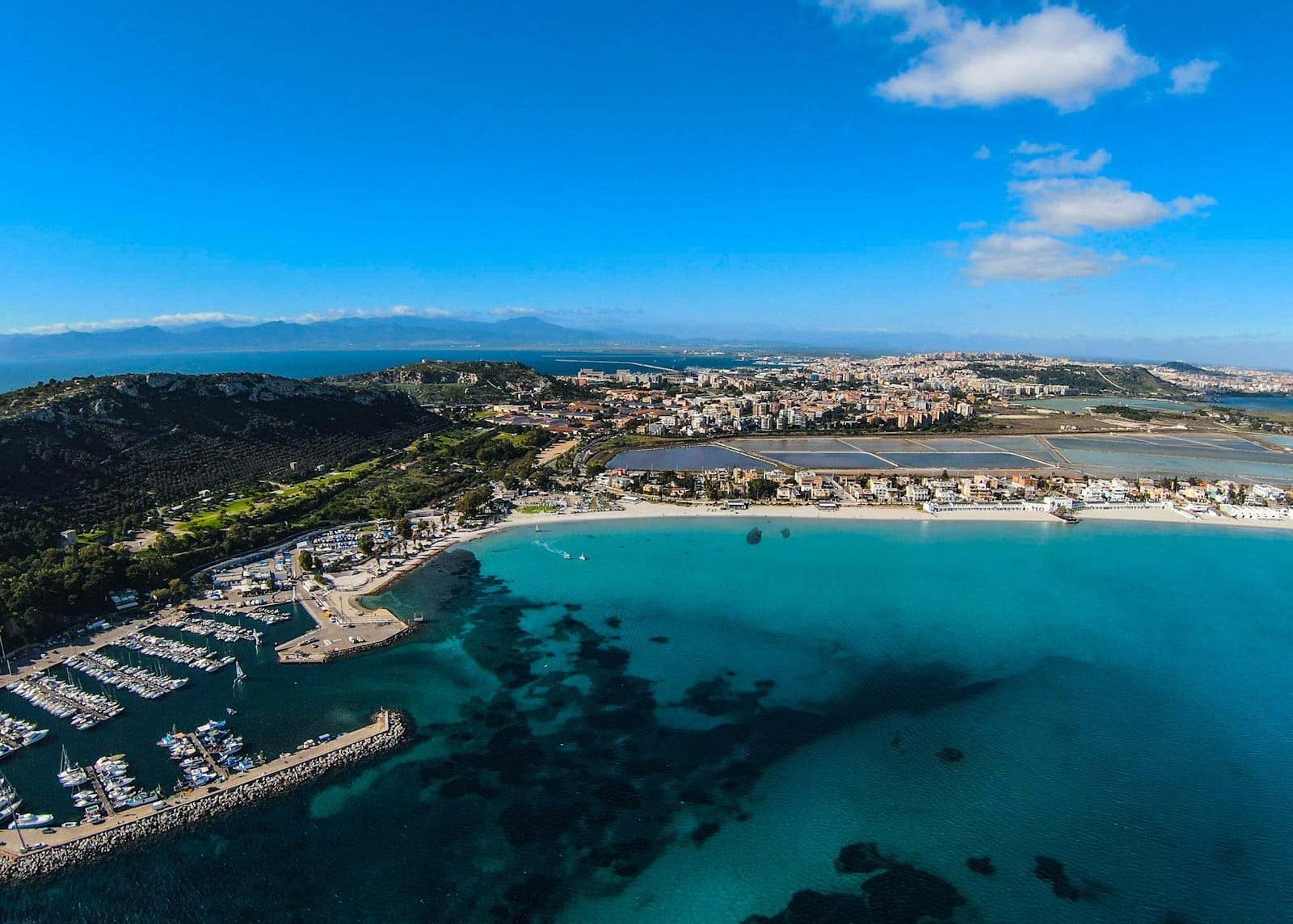
Spiaggia del Poetto is Cagliari's sweeping urban beach, stretching roughly 8 kilometres along the Gulf of Angels from the Sella del Diavolo promontory to Margine Rosso. Free to access and reachable by public transport, it draws everyone from early-morning swimmers to weekend volleyball players and evening strollers, making it one of the most local beach experiences in the Mediterranean.
Quick Facts
- Location
- Lungomare Poetto – Viale Poetto, Cagliari e Quartu Sant'Elena, Sardinia
- Getting There
- CTM city buses from Cagliari centre via Viale Diaz; check CTM Cagliari for current line numbers
- Time Needed
- 2–5 hours for a beach day; 45–60 min for a promenade walk
- Cost
- Free public access; sunbeds and umbrellas charged by private lidos (prices vary by operator)
- Best for
- Swimmers, joggers, families, and anyone wanting a genuine Cagliari local experience
What Poetto Actually Is
Spiaggia del Poetto is not a resort beach designed for tourists. It is the city beach of Cagliari, used daily by residents in a way that few urban beaches in Europe can match. Stretching approximately 8 kilometres along the Gulf of Angels (Golfo degli Angeli), it runs from the porticciolo of Marina Piccola at the base of the dramatic Sella del Diavolo headland in the west all the way to Margine Rosso on the boundary with Quartu Sant'Elena. Its nickname, "Spiaggia dei Centomila" (beach of a hundred thousand), gives you a sense of the scale and local attachment.
The sand is a fine, pale gold — wide enough in most stretches that even on a busy August Saturday you can find space. The water in the Gulf of Angels is comparatively shallow near the shore, which makes it good for children and relaxed swimming, though the depth increases gradually as you wade further out. What makes Poetto distinctive is not a single spectacular feature but the cumulative effect of that long promenade, the backdrop of salt lagoon and hills, and the unmistakable sense of being somewhere that belongs to the people who live here.
ℹ️ Good to know
Access to the public beach is free at all times. There are no gates or ticketed entry. The beach clubs (lidos) that line the promenade charge separately for sunbeds and umbrellas, but you can always spread a towel on the free public sand.
The Beach at Different Times of Day
Early mornings at Poetto have a particular quality worth knowing about. From around 6:30 a.m. through mid-morning, the beach belongs to joggers, cyclists on the lungomare path, and older residents doing their habitual swim. The light is low and soft, the water often flat, and the Sella del Diavolo headland catches the early sun in a way that turns the limestone cliffs copper. The smell of salt and seagrass is strongest at this hour, before the sunscreen and grilled food of midday take over.
By late morning in summer the beach fills steadily. Families arrive with coolers, teenagers in groups, and the lidos open their full service. Midday in July and August is hot — temperatures regularly reach 30–31 °C in Cagliari, and the sand radiates extra heat — so the lidos with shade structures do brisk business. The water, however, stays reliably refreshing through the peak season.
Late afternoon is perhaps the most enjoyable hour to arrive if you are not committed to a full beach day. From around 5 p.m. the crowds thin, the sun drops toward the hills behind the city, and the promenade becomes a proper passeggiata: people walking slowly, children on bikes, and the bar kiosks selling cold drinks and granita. Sunset from the western end of Poetto, near the Sella del Diavolo, is worth planning around.
💡 Local tip
For photography, the western end of the beach near the Sella del Diavolo promontory gives you both the headland silhouette and the open sea in the same frame. Arrive 30–40 minutes before sunset.
Tickets & tours
Hand-picked options from our booking partner. Prices are indicative; availability and final rates are confirmed when you complete your booking.
Guided Tasting of Sardinian Food and Drink Delicacies
From 48 €Instant confirmationFree cancellationSanta Teresa di Gallura hiking tour of Valle della Luna
From 30 €Instant confirmationFree cancellationCala Goloritze, Mariolu, Gabbiani, Biriala, Grotta del Fico boat tour
From 69 €Instant confirmationFree cancellationCagliari small-group boat escape to Sella del Diavolo with swim stops
From 0 €Instant confirmationFree cancellation
The Promenade, the Lidos, and the Salt Lagoon
Viale Poetto, the road running parallel to the beach, is flanked on the inland side by the Stagno di Molentargius, part of the Molentargius-Saline Regional Park, a protected wetland reserve and flamingo habitat that sits immediately behind the beachfront. The contrast is extraordinary: you face the sea on one side and a shallow pink-tinged lagoon on the other, where greater flamingos feed in groups throughout much of the year. The lagoon is part of the Parco Naturale Molentargius-Saline, a protected area that buffers the beach from urban development and gives Poetto an ecological dimension most city beaches lack.
If you want to explore the wetland side in more depth, the Parco Molentargius-Saline has walking paths and birdwatching circuits that are best done in the morning when flamingos are most active near the shore.
Along the beachfront itself, a long row of stabilimenti balneari (private beach clubs) operates from roughly late May through September. Each has its numbered rows of sunbeds and parasols, a bar, often a restaurant or snack kitchen, showers, and changing facilities. Prices for a sunbed-and-umbrella set vary by operator and are not standardized — expect to pay more toward the western (city-side) end, which is considered more central and fashionable, and less toward Quartu Sant'Elena in the east. Between the lidos, stretches of free public beach remain accessible throughout.
Historical Context and What Changed the Sand
Poetto has been Cagliari's bathing beach for well over a century, and the seafront infrastructure reflects that layered history. In the early 2000s, a controversial dredging project to deepen the port channel altered sediment patterns and the beach suffered significant erosion, causing the pale natural sand to be partially replaced with imported coarser sand. Local residents and environmentalists discussed this change at length, and it remains a point of reference when talking to Cagliarians about their beach's recent history. The sand today is serviceable but not identical to historical photographs of the pre-intervention Poetto.
The Sella del Diavolo headland that anchors the western end of the beach is itself a significant landmark, rising above the Marina Piccola harbor and offering one of the best elevated viewpoints over the Gulf of Angels. It forms a natural full stop at the end of the bay. For context on Cagliari's broader geography and urban character, the Cagliari area guide covers how the city relates to its coastal and lagoon environments.
Getting There and Getting Around the Beach
From Cagliari city centre, Poetto is easily reached by following Viale Diaz southeast and then Viale Poetto along the seafront. By public transport, CTM city buses connect the centre with the promenade — check current line numbers and schedules on the CTM Cagliari website before you travel, as routing can change seasonally. The journey from the main station area takes roughly 20–30 minutes by bus depending on traffic.
Parking along Viale Poetto is available but fills quickly on summer weekends and public holidays. Arriving by bus on peak days is more practical than driving. Cycling is another option: the promenade has a dedicated cycle path that runs much of the length of the beach, and the flat terrain makes it manageable even for occasional cyclists.
The beach itself has no single entry point — you can walk down to the sand at dozens of points along the lungomare. The western section near Marina Piccola is closest to central Cagliari and tends to be busier. The eastern stretches toward Margine Rosso are quieter and favored by those wanting more space, though they are further from public transport stops.
⚠️ What to skip
July and August weekend afternoons bring very high numbers of visitors. If you arrive after 11 a.m. on a Saturday in high season without a reservation at a lido, finding an umbrella at a private establishment is unlikely. Plan to arrive early or bring your own equipment for the free public sections.
Swimming, Sports, and What to Bring
Swimming at Poetto is generally safe and comfortable from late May through October, with the warmest sea temperatures in July and August. The seabed is sandy and the entry is gentle, with no significant rocks or abrupt drop-offs in the main bathing areas. Flag systems at lido stations indicate current conditions; pay attention to these, as occasional wind from the south can generate stronger currents along certain stretches.
Volleyball courts, football pitches on the sand, and table tennis areas appear at various points along the promenade, used heavily by local youth. Water sports rentals including paddleboards and kayaks operate from some beach clubs during summer. The flat, calm water of the inner gulf makes it suitable for beginners.
Bring water and sunscreen regardless of the season — the promenade offers little shade outside the lido structures, and even in May and September the Sardinian sun is direct. For a broader look at how Cagliari fits into a wider Sardinian itinerary, the day trips from Cagliari guide outlines what you can reach within a short drive.
What Poetto Is Not
Poetto is not a picture-perfect, postcard beach. The sand is not the finest white powder you will find elsewhere in Sardinia, and the visual environment is urban: parked cars, lido infrastructure, and a long straight road. Travelers who have come expecting the turquoise coves of the Golfo di Orosei or the wild dunes of the southwest will be disappointed if that is their benchmark.
What Poetto offers is authenticity and scale: a real city beach where the population of a regional capital actually spends its summer. If you want dramatic coastal scenery in isolation, beaches like Spiaggia di Chia to the southwest or Cala Luna on the eastern coast will serve you better. Poetto is the right choice when you want to understand how Cagliari lives, not just how it looks in photographs.
Accessibility information for visitors with reduced mobility is not fully standardized across the beach. Some lidos have step-free access and adapted facilities, but this varies by operator. Contact individual establishments directly before arriving if this is a requirement.
Insider Tips
- The kiosks at the eastern end of the promenade, toward Quartu Sant'Elena, charge noticeably less for drinks and snacks than the more central lidos near Marina Piccola — useful on a long beach day.
- Flamingos from the Molentargius lagoon can sometimes be spotted wading just behind the beach road in early morning. The best view is from the inland side of Viale Poetto, looking toward the wetland.
- In September, after the main Italian summer holiday ends (around Ferragosto, 15 August), Poetto drops to a fraction of its peak crowds while the sea remains warm and the weather stays settled. This is arguably the most comfortable month to visit.
- The stretch of free public sand immediately west of each lido boundary tends to be cleaner and less crowded than the middle sections of free beach, because most people gravitate toward the center of each open space.
- If you are driving, the parking area near Marina Piccola at the western end fills fastest. Parking further east along the lungomare adds a short walk but is consistently easier to find on busy days.
Who Is Spiaggia del Poetto For?
- Visitors who want to experience Cagliari as residents do, not as a tourist enclave
- Families with young children who need shallow, sandy-bottomed water and nearby facilities
- Early risers and joggers looking for a long, flat seafront route with sea views
- Birdwatchers who want to combine a beach stop with flamingo sightings at the adjacent lagoon
- Travelers with limited time who cannot reach more remote beaches but still want a swim
Nearby Attractions
Other things to see while in Cagliari:
- Anfiteatro Romano di Cagliari
The Roman Amphitheatre of Cagliari is the most significant Roman monument in Sardinia, partially carved into the limestone hillside of Colle di Buoncammino. With a capacity estimated at 10,000 spectators, it dates to the late 1st or early 2nd century AD. Ongoing restoration limits what you can explore, but the scale of the structure and its setting repay the modest entrance fee.
- Bastione di Saint Remy
Standing at the southern edge of the Castello district, the Bastione di Saint Remy is a monumental Belle Époque terrace that offers some of the most commanding views in Cagliari. Free to enter and, as a public terrace, generally accessible at all hours, it rewards visitors who time their ascent right — especially at dusk, when the city lights begin to compete with the last colour in the sky.
- Castello District
Perched about 100 metres above sea level on a fortified limestone hill, the Quartiere Castello is the oldest and most historically layered part of Sardinia's capital. Enclosed by 13th-century Pisan walls, it holds the city's cathedral, major museums, and some of the best rooftop views in the Mediterranean. Entry is free, and the streets can be walked at any hour.
- Cattedrale di Santa Maria (Cagliari)
Rising above the Castello quarter on Piazza Palazzo, the Cattedrale di Santa Maria e Santa Cecilia is Cagliari's most important religious monument. First documented in the mid‑13th century and remodelled across several centuries, it layers Pisan Romanesque, Gothic, Baroque, and Neo-Romanesque styles into a single compelling structure. Entry is free, and the interior rewards anyone willing to look closely.