Flora und Botanischer Garten Köln: Cologne's Finest Free Garden
Opened in 1864 to a design by Peter Joseph Lenné, the Flora und Botanischer Garten is Cologne's most refined public garden. Eleven and a half hectares of landscaped parkland, tropical greenhouses, and more than 10,000 plant species await — and admission is free every day of the year.
Quick Facts
- Location
- Amsterdamer Straße 34, 50735 Köln (Riehl district in Nippes borough)
- Getting There
- Stadtbahn line 18 or Bus 140 to Zoo/Flora
- Time Needed
- 1.5 to 3 hours depending on season and greenhouse interest
- Cost
- Free — garden and regular greenhouse visits have no entrance fee
- Best for
- Families, slow walkers, plant enthusiasts, picnics, photography
- Official website
- botanischergarten-koeln.de
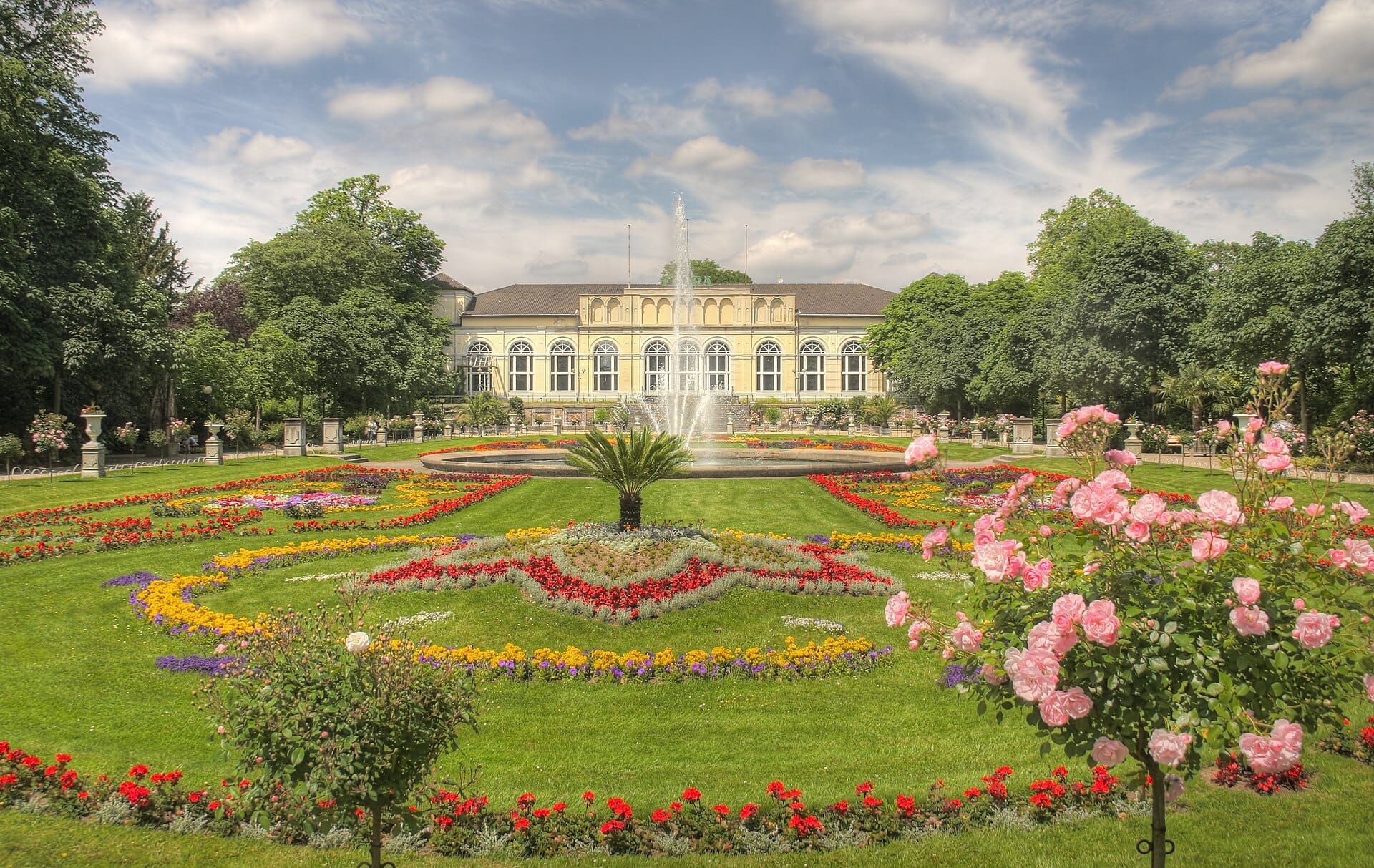
What Is the Flora Botanical Garden?
The Flora und Botanischer Garten Köln is a combined ornamental park and scientific botanical garden in the northern part of central Cologne. It covers 11.5 hectares and cultivates between 10,000 and 12,000 plant species across open beds, themed sections, and a set of climate-controlled greenhouses. Entry costs nothing, the gates are open daily in normal conditions, and the tram stops practically at the entrance. For a city with a reputation built on Roman ruins and Gothic stone, the Flora offers something entirely different: space, quiet, and green.
The garden sits adjacent to Cologne Zoo, and the two attractions share a tram stop (Zoo/Flora on line 18). Many visitors combine both in a single outing, though the Flora rewards a standalone visit too — especially for anyone not traveling with children.
💡 Local tip
Arrive before 10:00 on a weekend morning in May or June and you'll have the rose beds and formal allées largely to yourself. By 11:30 the paths fill with families and local walkers, and the atmosphere shifts entirely.
History and Design: A Lenné Garden in a Modern City
The Flora opened in 1864, designed by Peter Joseph Lenné, the Prussian court garden director who also shaped the Sanssouci park complex in Potsdam. His hand is still visible in the sweeping lawn axes, the asymmetric pond arrangements, and the way the paths reveal partial views before opening onto a full scene. The ornamental Flora section, with its curved flowerbeds and nineteenth-century iron-and-glass pavilion aesthetic, reflects the landscape ideals of the Wilhelmine bourgeoisie: nature made orderly, beautiful, and legible.
A botanical teaching garden was added in 1914, shifting part of the site's function toward science and taxonomy. Today that distinction is still felt on the ground: the western Flora section reads as a decorative park for strolling, while the botanical garden to the east is laid out more systematically, with plant families grouped for comparison and labeled with Latin binomials. It is not a sterile research facility — the planting is dense and lush — but the intent is clearly educational alongside the aesthetic.
The garden sustained significant damage during the Second World War, like much of Cologne, but was rebuilt and has been continuously maintained as a municipal institution by the City of Cologne (Stadt Köln). The greenhouse complex has been updated over the decades and now houses dedicated Tropical and Desert Houses, plus additional climate-controlled spaces for subtropical species.
Tickets & tours
Live prices and dates from our booking partner. If you book, we may earn a commission at no extra cost to you.
Cologne Zoo tickets with aquarium
From 30 €Instant confirmationFree cancellationCologne haunted places and ghost stories: interactive city game
From 8 €Instant confirmationFree cancellationFood Tour Cologne Sudstadt
From 44 €Instant confirmationFree cancellationCologne brewery tour including 3 Kolsch beer
From 28 €Instant confirmation
The Greenhouses: Three Climates Under Glass
The greenhouse section opens daily at 10:00 and closes at 18:00 during the April–September season, and 16:00 in the October–March season. These are not decorative conservatories with a few potted palms — they are serious growing environments with measurable humidity differentials between rooms. Step from the Cologne street into the Tropical House and within ten seconds you feel the warm, wet air settle on your skin. The scent is organic and dense: decomposing leaf matter, wet soil, something faintly sweet from flowers you cannot immediately identify.
The Desert House works the opposite way: dry, warm, with the particular mineral smell of arid substrates and the visual shock of succulent forms growing at scale. Cacti and euphorbias reach heights that feel implausible indoors. The Subtropics House sits somewhere between the two in atmosphere, featuring Mediterranean, South African, and Canary Islands species with an almost garden-center familiarity but at a far higher level of botanical diversity.
In winter, the greenhouses become the main draw. When the outdoor beds are dormant and the light is flat and grey, stepping into 25 degrees of tropical warmth is a genuine sensory relief. Mid-December visits before the Christmas market crowds take over the rest of the city are quietly excellent here.
ℹ️ Good to know
Greenhouse hours: daily 10:00–18:00 (April–September), 10:00–16:00 (October–March). Garden gates open daily from 08:00; closing time varies by season from 21:00 (April–September) to dusk (October–March). A loudspeaker announcement precedes closing.
The Outdoor Garden: How It Changes Through the Year
The outdoor sections follow a clear seasonal logic that rewards repeat visits. Spring is the most photogenic period: tulip and narcissus beds in March and April give way to the rose collection in late May and June, when the formal beds produce a density of color and fragrance that draws visitors specifically for that display. The scent along the main rose axis on a still June morning is strong enough to catch you mid-stride.
Summer afternoons bring a different atmosphere: shade becomes the priority, and the large mature trees — limes, planes, and chestnuts throughout the park — make the garden genuinely cool relative to the surrounding streets. Families spread out on the grass. The pond areas attract both children and photographers chasing reflections.
Autumn strips back the color but adds textural interest: the botanical garden's systematic plant beds show structure more clearly once foliage thins, and the late-afternoon light in October is unusually soft and golden. Winter is the least visited season outdoors, but the skeleton of Lenné's design becomes most apparent without summer growth obscuring it.
If you want to understand how Cologne's climate shapes what can grow in western Germany, the outdoor botanical section is genuinely instructive. For broader context on when to time your trip, the best time to visit Cologne guide covers seasonal trade-offs across the city's major attractions.
Photography, Accessibility, and Getting There
The Flora is one of the more photogenic free attractions in Cologne without requiring telephoto lenses or early-morning light chasing. The formal beds, the nineteenth-century ornamental architecture of the central pavilion area, and the greenhouse interior all work well with standard camera setups. The rose section in June produces reliable close-up material. For wider landscape shots, the best angles are from the slight elevation near the central path axes, looking back toward the pavilion in morning light.
Accessibility is generally good: the main paths are paved and flat enough for wheelchairs and pushchairs, though some secondary paths through the botanical garden section have an uneven gravel surface. The Zoo/Flora tram stop (line 18 and bus 140) is close to the main entrance on Amsterdamer Straße 34. The Kinderkrankenhaus stop on line 16 provides a second access point from a different direction. No parking pressure applies if you arrive by public transport, which is the practical choice given the residential streets around the garden.
⚠️ What to skip
The garden closes in response to storm warnings when falling branches pose a risk. If Cologne is under a weather alert on your planned visit day, check the City of Cologne's parks information before heading out.
Combining the Flora with Nearby Attractions
The natural pairing is Cologne Zoo, which shares the tram stop and sits immediately adjacent. A morning at the Flora followed by the Zoo in the afternoon is a full family day without requiring a car or complex logistics. Note that the Zoo charges admission, so factor that into your budget.
Further afield but reachable by tram, the Rheinpark on the right bank of the Rhine offers a larger expanse of open green space along the river. It lacks the botanical depth of the Flora but suits longer walks and better Rhine views. If your interest leans more toward Cologne's green spaces generally, the Stadtwald to the west of the city center covers a far larger forested area for those wanting a longer outdoor experience.
Visitors coming from the city center by tram pass through the Cologne Cathedral area and can combine a short stop at the cathedral before or after. The journey from the Cathedral area to Zoo/Flora on line 18 takes under fifteen minutes.
Who Should Skip the Flora
If you are in Cologne for one day and prioritizing the city's historic and cultural core, the Flora requires a tram ride north and will consume time that might be better spent on the Altstadt, the Cathedral, or the museum strip along the Rhine. It is not a dramatic spectacle — there are no fountains with light shows, no Instagram-optimized installations, and the greenhouses, while genuinely interesting, are modest in scale compared to major botanical institutions like Kew or the Berlin Botanic Garden.
Visitors who find formal gardens and plant taxonomy tedious will also feel the hour or two slipping slowly. The Flora rewards a quiet, observational mindset. If you are moving fast through Cologne and checking sites off a list, there are higher-priority stops elsewhere in the city.
For a broader view of how the Flora fits into a Cologne itinerary, the 2 days in Cologne guide places it in context alongside the city's major museums and riverside attractions.
Insider Tips
- The rose beds peak in late May to mid-June. If you are flexible on timing, this is the single best window for the outdoor Flora section — the fragrance along the main rose axis is noticeable from several meters away.
- The Tropical House greenhouse is a practical refuge on cold or rainy days between November and February. The warmth and humidity are genuine, and the space is rarely crowded outside school holiday periods.
- The loudspeaker closing announcement is easy to miss if you are deep in the botanical garden section. Set a reminder for fifteen minutes before the seasonal closing time so you are not rushed out.
- The botanical garden's systematic plant beds are labeled with Latin names and habitat information. If you photograph the labels alongside the plants, you leave with a free, reasonably detailed reference for what you saw.
- The tram line 18 stop Zoo/Flora also serves the adjacent Cologne Zoo entrance. If you arrive early and plan to visit both, buy your Zoo ticket at the gate when it opens at 09:00 before peak queues form, then spend the first hour in the Flora while the Zoo fills up.
Who Is Flora Botanical Garden (Flora und Botanischer Garten) For?
- Families with young children wanting a free outdoor activity near the Zoo
- Plant enthusiasts and gardeners interested in botanical diversity and greenhouse growing
- Picnickers and slow walkers looking for green space close to central Cologne
- Photographers seeking formal garden compositions and greenhouse macro subjects
- Visitors in winter wanting a warm, sensory escape from grey city streets
Nearby Attractions
Combine your visit with:
- Aachener Weiher
A 4-hectare artificial pond created in 1920, Aachener Weiher is where Cologne residents go to decompress. Surrounded by lawns, cycle paths, and a long-running beer garden, it offers a genuine slice of local life without an entrance fee or a tourist queue in sight.
- Kölsche Riviera (Cologne Rhine Beaches)
The Kölsche Riviera is Cologne's answer to summer beach culture: a stretch of sandy riverbank bays along the Rhine in the southern Rodenkirchen district, free to access and beloved by locals looking to sunbathe, picnic, and watch the river traffic roll by. No sea, no surf, but a genuinely relaxed atmosphere that reveals a quieter, less touristy side of the city.
- RheinEnergieStadion (FC Köln)
Home to 1. FC Köln and one of Germany's most storied football venues, the RheinEnergieStadion seats up to 50,000 fans and hosted both the 2006 FIFA World Cup and UEFA Euro 2024. Whether you're catching a Bundesliga match or joining a stadium tour, this is where Cologne's football identity comes into sharp focus.
- Cologne Zoo (Kölner Zoo)
Founded in 1860, Cologne Zoo is the third-oldest zoo in Germany, set across 20 hectares in the Riehl district. Open every day of the year, it draws families, school groups, and animal lovers with a wide range of species and well-maintained grounds. Here is what to expect, when to go, and how to make the most of your time.
Planning a trip? Discover personalized activities with the Nomado app.