Aachener Weiher: Cologne's Favourite Urban Retreat
A 4-hectare artificial pond created in 1920, Aachener Weiher is where Cologne residents go to decompress. Surrounded by lawns, cycle paths, and a long-running beer garden, it offers a genuine slice of local life without an entrance fee or a tourist queue in sight.
Quick Facts
- Location
- Aachener Straße, 50674 Köln (Neustadt-Süd / Innerer Grüngürtel)
- Getting There
- Stadtbahn Lines 1 and 7 to Universitätsstraße, then approx. 450 m walk
- Time Needed
- 45 minutes to 2 hours depending on pace
- Cost
- Free (beer garden priced separately)
- Best for
- Picnics, cycling, people-watching, relaxed afternoons
What Is Aachener Weiher?
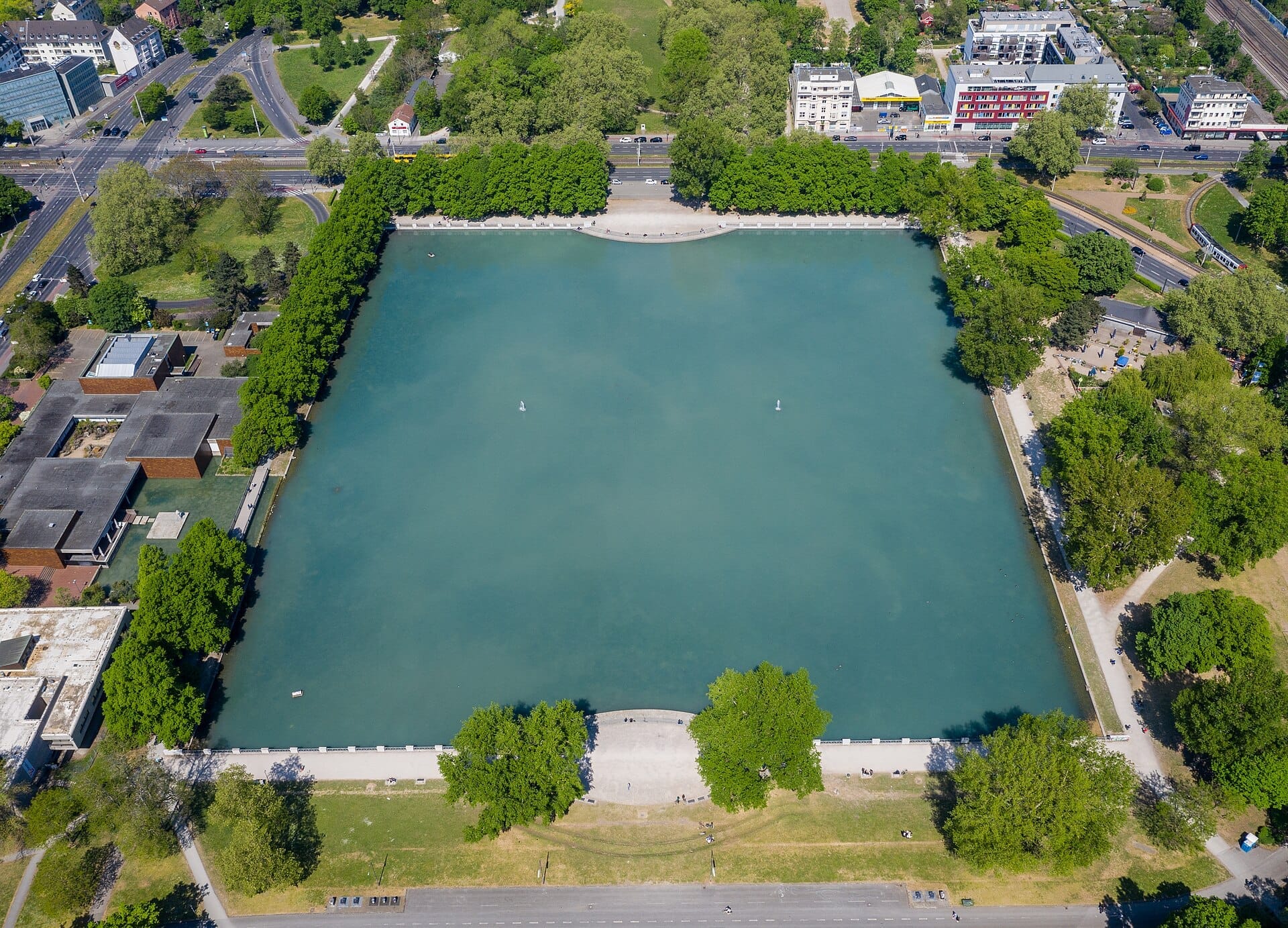
Aachener Weiher is a public park built around an artificial pond in Cologne's Inner Green Belt in the Neustadt-Süd district. The pond covers roughly 40,000 square metres (about 4 hectares), sits at a maximum depth of just 1.4 metres, and the surrounding green space extends beyond the water’s edge. There are no ticket barriers, no guided tour schedules, and no opening times to memorise. It is simply open, all day, every day.
Despite that low-key status, Aachener Weiher is genuinely loved by Cologne locals in a way that few urban green spaces manage. On a warm weekday afternoon the lawns fill steadily with university students, families pushing prams, and cyclists pausing mid-route. On a Saturday in June it becomes one of the city's most sociable outdoor spaces, with blankets spread edge to edge and the faint smell of sunscreen drifting across the water.
ℹ️ Good to know
Swimming in the pond is not permitted. The water is artificial and shallow, designed for visual amenity and wildlife, not bathing. The nearest public swimming option is elsewhere in the city.
A Brief History: Adenauer's Pond
The pond was created between 1923 and 1927, during the tenure of Konrad Adenauer as Mayor of Cologne. Adenauer, who would later serve as West Germany's first Chancellor, oversaw a significant expansion of Cologne's public green spaces in the early 1920s. Aachener Weiher was part of that civic greening programme, designed to provide accessible outdoor space for a rapidly growing urban population.
The artificial nature of the pond is easy to forget once you are standing beside it. The banks are planted with mature trees, and the surface of the water reflects both foliage and sky in a way that gives the place a settled, almost timeless quality. It looks as though it has always been there, which is arguably the highest compliment a piece of urban landscape design can receive.
The park sits within the broader Neustadt-Süd area, a primarily residential inner-city district close to the University of Cologne. That academic proximity shapes the atmosphere considerably. For more context on how Cologne's neighbourhoods differ from one another, the where to stay in Cologne guide breaks down the character of each district.
Tickets & tours
Live prices and dates from our booking partner. If you book, we may earn a commission at no extra cost to you.
Cologne haunted places and ghost stories: interactive city game
From 8 €Instant confirmationFree cancellationFood Tour Cologne Sudstadt
From 44 €Instant confirmationFree cancellationCologne brewery tour including 3 Kolsch beer
From 28 €Instant confirmation2-hour afternoon cruise in Cologne at Christmastime
From 25 €Instant confirmationFree cancellation
How the Experience Changes Through the Day
Early mornings at Aachener Weiher are quiet enough that you can hear the ducks. A thin mist sometimes sits on the water in cooler months, and the only regular sounds are birdsong and the occasional cyclist clicking through gears on the surrounding path. Dog walkers are out in force between 7 and 9am, and the lawns are still damp with dew. If you want to think clearly or simply start the day gently, this is a good hour to arrive.
Midday brings a different crowd. The path around the pond gets busier with joggers and cyclists, the beer garden opens, and groups spread out on the grass with takeaway food from nearby shops on Aachener Straße. The atmosphere is relaxed rather than rowdy. Conversations drift across the water, children throw bread to the birds despite the signs asking them not to, and the overall effect is of a city that knows how to take a proper lunch break.
Summer evenings are arguably the best time to visit. The light goes golden late, especially from late May through August when sunset comes well after 9pm. The lawns stay occupied until dusk, the beer garden is at its most lively, and the reflections on the water take on a warmth that photographs well without any special effort. Autumn evenings have their own appeal: the foliage around the pond turns rust and amber, and the crowds thin to a more peaceful level.
💡 Local tip
Arrive between 6 and 8pm on a summer weekday for the best balance of atmosphere and space. Weekends in good weather fill the lawns quickly by mid-morning, and finding a comfortable spot becomes harder after noon.
The Beer Garden and What to Eat Nearby
The beer garden at Aachener Weiher is one of its main draws and has been a fixture of the park for many years. It sits directly at the waterside and offers views across the pond from shaded tables. Expect cold Kölsch beer served in the traditional 0.2-litre Stange glasses, standard German beer garden food, and a clientele that skews local rather than tourist. Prices are in line with Cologne's general beer garden market rather than Old Town tourist rates.
If you want to eat before or after your visit, Aachener Straße itself has a solid range of cafes and bakeries within a short walk of the park entrance. For a deeper understanding of what and where to eat across the city, the Cologne food guide covers the essentials including Kölsch beer culture and traditional dishes.
Getting There and Getting Around
The most straightforward public transport route is Stadtbahn Line 1, which stops at Universitätsstraße. From the stop it is approximately 450 metres on foot to the pond, passing through residential streets before the green of the park comes into view. The walk is flat, easy, and takes under ten minutes at a comfortable pace.
Cycling is a practical and popular way to reach the park, and once there the path encircling the pond is well-suited to a slow loop on two wheels. Cologne's cycling infrastructure connects this area to the city centre and to Stadtwald, the large municipal forest immediately to the west. Combining Aachener Weiher with a longer ride into Stadtwald makes for a rewarding half-day if the weather cooperates.
For a full overview of how to move around Cologne by tram, bus, and rail, the Cologne transport guide has current route and ticketing information.
💡 Local tip
If you are visiting Cologne Zoo or the Botanical Garden, both are reachable from this area without returning to the city centre. A short tram or cycle ride connects the pond to those attractions, making a combined half-day route easy to plan.
Photography, Wildlife, and Seasonal Notes
The pond supports a visible population of ducks, geese, and other water birds year-round. In spring, young ducklings are a reliable draw for families with children, and the reedy margins of the water provide nesting cover that becomes more visible once autumn strips the surrounding vegetation. Moorhens are regularly spotted picking along the bank.
For photography, the most interesting light falls in the early morning and in the hour before sunset. The mature trees around the southern bank frame the water effectively, and on still days the reflections are sharp enough to make compositional choices straightforward. In winter, when the surrounding trees are bare, the pond takes on a more austere character. Frost on the grass and mist on the water make for atmospheric images that look nothing like the summer version of the place.
Winter visits are worth considering if you are in Cologne for the Christmas market season. The park is deserted compared with summer, the cold is usually manageable rather than extreme, and the contrast with the crowded Altstadt makes it feel like a different city entirely. Wrap up properly: the open expanse of water creates its own chill even when the air temperature is only a few degrees below comfortable.
To understand what Cologne's weather patterns actually mean for outdoor plans across different months, the best time to visit Cologne guide gives a practical seasonal breakdown.
Is It Worth Your Time?
Aachener Weiher is not a spectacle. There is no dramatic architecture, no entry fee justifying a thorough inspection, and no single photograph that captures why people keep coming back. Its value is contextual. Spending an hour beside the water gives a far clearer sense of how Cologne residents actually use their city than any amount of time in the tourist-facing Altstadt.
Travellers with only one or two days in Cologne and a list of major sights to cover will probably give this a pass, and that is a reasonable decision. But for anyone staying three or more days, for families who need a low-pressure outdoor option, or for people who simply find parks more restorative than museums, this is one of the more genuinely pleasant hours Cologne offers.
If you are building a broader itinerary, the free things to do in Cologne guide lists parks, churches, and riverside walks that cost nothing but deliver genuine experiences.
Insider Tips
- The beer garden fills fast on the first genuinely warm weekend of spring, often in late April or early May. Arriving before noon on those days is the difference between a lakeside table and a scramble for the last bench.
- The path around the pond is shared between pedestrians and cyclists, and the cycling traffic can move quickly. Walk on the inner edge near the water and stay alert if you have small children.
- Bring your own food and a blanket if you want to eat cheaply. The lawns are large enough to find space even on busy afternoons, and there is no restriction on picnicking. Supermarkets and bakeries on Aachener Straße are five minutes from the park entrance.
- The northwest corner of the pond tends to be quieter than the beer garden side. If you want calm rather than company, that is the end to head for.
- Combine the visit with Stadtwald to the west. The forest begins almost immediately beyond the park and offers shaded paths that extend the walk by as much as you like, without any additional planning required.
Who Is Aachener Weiher For?
- Families with young children looking for free outdoor space with room to run
- Visitors staying three or more days who want to experience Cologne beyond its tourist landmarks
- Cyclists looking for a pleasant stopping point on a longer route through western Cologne
- Anyone who wants a quiet morning or a golden-hour evening beside water without crowds
- Budget travellers who want a full afternoon outdoors at zero cost
Nearby Attractions
Combine your visit with:
- Flora Botanical Garden (Flora und Botanischer Garten)
Opened in 1864 to a design by Peter Joseph Lenné, the Flora und Botanischer Garten is Cologne's most refined public garden. Eleven and a half hectares of landscaped parkland, tropical greenhouses, and more than 10,000 plant species await — and admission is free every day of the year.
- Kölsche Riviera (Cologne Rhine Beaches)
The Kölsche Riviera is Cologne's answer to summer beach culture: a stretch of sandy riverbank bays along the Rhine in the southern Rodenkirchen district, free to access and beloved by locals looking to sunbathe, picnic, and watch the river traffic roll by. No sea, no surf, but a genuinely relaxed atmosphere that reveals a quieter, less touristy side of the city.
- RheinEnergieStadion (FC Köln)
Home to 1. FC Köln and one of Germany's most storied football venues, the RheinEnergieStadion seats up to 50,000 fans and hosted both the 2006 FIFA World Cup and UEFA Euro 2024. Whether you're catching a Bundesliga match or joining a stadium tour, this is where Cologne's football identity comes into sharp focus.
- Cologne Zoo (Kölner Zoo)
Founded in 1860, Cologne Zoo is the third-oldest zoo in Germany, set across 20 hectares in the Riehl district. Open every day of the year, it draws families, school groups, and animal lovers with a wide range of species and well-maintained grounds. Here is what to expect, when to go, and how to make the most of your time.
Planning a trip? Discover personalized activities with the Nomado app.