Kölsche Riviera: Cologne's Rhine Beaches Explained
The Kölsche Riviera is Cologne's answer to summer beach culture: a stretch of sandy riverbank bays along the Rhine in the southern Rodenkirchen district, free to access and beloved by locals looking to sunbathe, picnic, and watch the river traffic roll by. No sea, no surf, but a genuinely relaxed atmosphere that reveals a quieter, less touristy side of the city.
Quick Facts
- Location
- Uferstraße, 50996 Köln-Rodenkirchen (stretch of Rhine bank extending south from Rodenkirchener Brücke)
- Getting There
- Tram/bus stop "Rodenkirchen", then approx. 1.4 km walk via Friedrich-Ebert-Straße and Barbarastraße to the Rhine
- Time Needed
- 1.5 to 3 hours for a relaxed visit; longer if you bring a picnic
- Cost
- Free – no admission fee, no tickets required
- Best for
- Summer afternoons, family outings, cycling along the Rhine, low-key picnics
What Is the Kölsche Riviera?
The Kölsche Riviera is not a manicured resort or a themed attraction. It is the informal name given to a series of small sandy bays and natural floodplain sections along the western bank of the Rhine in Cologne's Rodenkirchen district, beginning for some at Heinrich-Lübke-Ufer and for others roughly south of the Rodenkirchener Brücke, the first Autobahn bridge to cross the Rhine. Beyond it, the riverbank opens up into a looser, greener landscape where the city begins to feel genuinely distant.
The name itself is half-joke, half-civic pride. Cologne sits about 700 kilometres from the nearest sea coast. Calling its riverside patches the Riviera is the kind of dry local humour that Kölners, known for their warm irreverence, are good at. But once you sit on the gravel and sand with the Rhine sliding past and a cold Kölsch in hand, the joke stops mattering.
⚠️ What to skip
Swimming in the Rhine at the Kölsche Riviera is officially prohibited due to strong currents and river traffic. This is not a swim beach. Come to sunbathe, walk, cycle, or picnic — not to get in the water.
The Feel of the Place: Morning, Afternoon, and Evening
In the early morning, the Kölsche Riviera belongs to joggers and dog walkers. The light at this hour is flat and grey-blue, the Rhine smells faintly of river clay and diesel from passing cargo barges, and the only sounds are footsteps on gravel and the low hum of water. It is a good time to appreciate the scale of the river: the Rhine here is wide, fast-moving, and industrial in a way that surprises first-time visitors who expect something more picturesque.
By mid-afternoon on a warm summer day, the atmosphere shifts completely. Locals arrive with folding chairs, portable speakers, beach towels, and cooler bags. Children run along the narrow sandy strips. Cyclists stop and lean their bikes against trees. The air smells of sunscreen and grass warming in the sun. There is a looseness to the crowd that you do not find in Cologne's more central parks: people linger here because there is nothing to do except relax, which turns out to be the whole point.
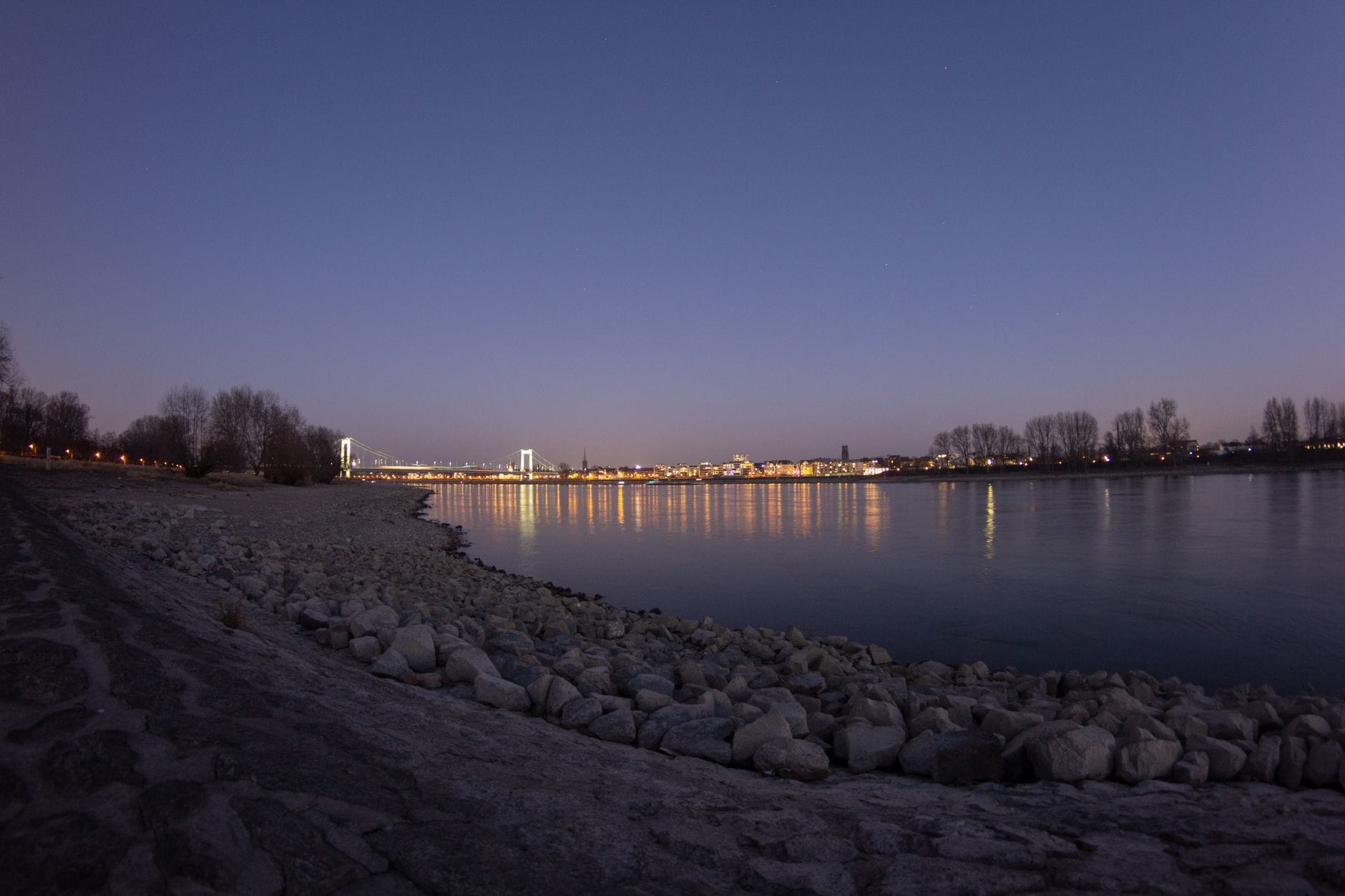
Evenings in summer are arguably the best time to visit. As the sun drops toward the west, the Rhine surface catches the light in long orange streaks, and the cargo ships passing in silhouette look almost painterly. Groups gather with wine and food. It is quiet enough to have a conversation but never empty. If you time it right, you can watch the sun set over the river from a gravel bank with almost no other tourists around.
💡 Local tip
Weekday afternoons in June and July offer the best balance: warm enough to enjoy the riverbank, but without the weekend crowds that can make the narrow sandy strips feel tight.
Tickets & tours
Live prices and dates from our booking partner. If you book, we may earn a commission at no extra cost to you.
Cologne haunted places and ghost stories: interactive city game
From 8 €Instant confirmationFree cancellationFood Tour Cologne Sudstadt
From 44 €Instant confirmationFree cancellationCologne brewery tour including 3 Kolsch beer
From 28 €Instant confirmation2-hour afternoon cruise in Cologne at Christmastime
From 25 €Instant confirmationFree cancellation
How to Get There and What to Expect on Arrival
The Rodenkirchen district sits in the southern part of Cologne, accessible by tram and several bus lines. From the Rodenkirchen stop, the walk to the riverbank is about 1.4 kilometres along Friedrich-Ebert-Straße heading east, then south through a short residential stretch via Barbarastraße. The walk takes around 18 minutes and passes through a quiet, well-kept neighbourhood that feels nothing like the tourist centre.
Many visitors combine the Kölsche Riviera with a cycling trip along the Rhine. Cologne has a well-developed network of riverside cycling paths, and the route from the city centre down to Rodenkirchen is largely flat and straightforward. You can rent bikes at multiple points in the city centre and follow the left bank south. For a broader picture of what the Rhine offers in and around the city, the Rhine River cruise guide covers the waterway from a different angle.
The terrain at the Kölsche Riviera is uneven: the natural floodplain character of the riverbank means you will encounter gravel, patches of sand, exposed roots, and grass rather than paved promenades. Wear flat, closed shoes if you plan to walk along the bank. Flip-flops work on the sandy sections but get uncomfortable on gravel. Wheelchair users and pushchair-pushers should be aware that access to the actual riverbank requires navigating unpaved ground; the path along the road above the bank is more accessible.
Parking is available near the riverbank for visitors arriving by car, though spaces fill quickly on hot summer weekends. There are no ticket machines or barriers — the area is simply public land.
Historical and Geographic Context
The Rodenkirchener Brücke, the suspension bridge visible from the northern end of the Kölsche Riviera, was the first Autobahn (motorway) bridge across the Rhine. This piece of infrastructure history sits above a stretch of riverbank that has always been used informally by locals, long before anyone thought to give it a name. The 'Riviera' branding is relatively recent, introduced through Cologne's official tourism channels to make the area more legible to visitors.
Rodenkirchen itself is one of Cologne's southernmost districts, administratively separate in character from the dense inner city. The Rhine in this section is wider and less hemmed in by development than it is near the Hohenzollern Bridge and the Altstadt, and the floodplain topography creates the natural bays that give the Kölsche Riviera its distinctive texture. When the Rhine runs high in spring, some of these sandy sections disappear entirely under water, which is worth knowing if you are visiting between March and May.
ℹ️ Good to know
The Rhine flood calendar varies year to year. In high-water periods, parts of the bank may be inaccessible or muddy. Summer and early autumn (June to September) are the most reliably accessible months.
Photography and Practical Tips
For photography, the most interesting light on the Rhine occurs in the two hours before sunset. From the sandy bays, you can frame long views south along the river with no urban infrastructure in the immediate foreground, which is relatively rare in a city of one million people. Bring a wide-angle lens or use your phone's panorama mode: the river is wide enough that a standard focal length crops the view awkwardly.
There are no food stalls or kiosks within the Kölsche Riviera itself. The nearest cafes and shops are in the Rodenkirchen village centre, about 10 minutes' walk back from the river. Bring your own food and drinks. A cool bag is worth the effort on summer days. Bins are available at intervals but can overflow on busy weekends, so packing out your waste is considerate and sometimes necessary.
If you want to understand where the Kölsche Riviera fits within Cologne's wider landscape of outdoor spaces, it is worth comparing it with the more formal green areas near the city centre. Rheinpark on the right bank of the Rhine in Deutz, for example, offers a very different atmosphere: manicured lawns, a cable car crossing, and significantly more facilities. The Kölsche Riviera is the rougher, quieter alternative for those who prefer nature over infrastructure.
Who This Is For, and Who Should Skip It
The Kölsche Riviera works best for travellers who are already spending several days in Cologne and want one afternoon that does not involve queuing for anything. It is genuinely a local experience in the sense that most people you encounter will be Cologne residents, not tourists. That is either appealing or irrelevant depending on what you are looking for.
For families with children, it offers space to run around and a river to watch without safety fences or admission fees. It pairs naturally with a visit to the nearby Cologne Zoo, which is further north on the same bank, making a full day-trip out of Cologne's southern and riverside offer a reasonable option.
Travellers on a short city break of one or two days should weigh the journey time against the payoff. The Kölsche Riviera is not a destination that competes with the Cathedral or the chocolate museum for historic or cultural content. It is an outdoor space that happens to be on a major river in a major city. If your itinerary is already full, skip it. If you have a warm afternoon with nothing scheduled, it earns its place.
Budget-conscious visitors will appreciate that the Kölsche Riviera costs nothing to visit, making it a natural part of any free things to do in Cologne itinerary. The only money you are likely to spend is on food and transport to get there.
Visitors with limited mobility should note the uneven terrain and plan accordingly. The paved riverside road above the bank is accessible, but the sandy bays themselves require navigating natural ground. This is not a barrier to enjoying the views, but it limits how close you can get to the water's edge in some sections.
Insider Tips
- Arrive by bicycle from the city centre rather than by tram: the cycle path from Altstadt along the left Rhine bank is flat, scenic, and takes about 30 minutes, letting you experience the river gradually shift from urban to suburban as you head south.
- The sandy bays vary in character along the stretch: some sections are wider and more sheltered, others are narrow and exposed to the wind off the water. Walk south from the bridge access point before settling, rather than stopping at the first spot you find.
- The Rhine water level affects how much beach is visible. In late August and September, water levels are typically lower, exposing more sandy and gravel shore than in early summer. Check the Rhine water gauge (Pegelstand Köln) online before visiting in spring.
- Rodenkirchen village has several good local cafes and bakeries a short walk from the riverbank. Stock up there before heading down to the water, as there are no food or drink facilities at the Kölsche Riviera itself.
- If you visit on a Sunday, the Rodenkirchen area has a noticeably quieter, residential pace that contrasts sharply with the tourist-heavy centre. Combining a morning in Rodenkirchen with an afternoon at the Riviera is a useful way to see a part of Cologne most visitors never reach.
Who Is Kölsche Riviera (Cologne Rhine Beaches) For?
- Locals and visitors who want a summer afternoon outdoors without tourist infrastructure
- Cyclists exploring Cologne's Rhine cycle path network
- Families looking for free, open space near the river
- Photographers seeking wide Rhine views with natural foreground
- Travellers extending a stay in Cologne beyond the standard cathedral-and-museums circuit
Nearby Attractions
Combine your visit with:
- Aachener Weiher
A 4-hectare artificial pond created in 1920, Aachener Weiher is where Cologne residents go to decompress. Surrounded by lawns, cycle paths, and a long-running beer garden, it offers a genuine slice of local life without an entrance fee or a tourist queue in sight.
- Flora Botanical Garden (Flora und Botanischer Garten)
Opened in 1864 to a design by Peter Joseph Lenné, the Flora und Botanischer Garten is Cologne's most refined public garden. Eleven and a half hectares of landscaped parkland, tropical greenhouses, and more than 10,000 plant species await — and admission is free every day of the year.
- RheinEnergieStadion (FC Köln)
Home to 1. FC Köln and one of Germany's most storied football venues, the RheinEnergieStadion seats up to 50,000 fans and hosted both the 2006 FIFA World Cup and UEFA Euro 2024. Whether you're catching a Bundesliga match or joining a stadium tour, this is where Cologne's football identity comes into sharp focus.
- Cologne Zoo (Kölner Zoo)
Founded in 1860, Cologne Zoo is the third-oldest zoo in Germany, set across 20 hectares in the Riehl district. Open every day of the year, it draws families, school groups, and animal lovers with a wide range of species and well-maintained grounds. Here is what to expect, when to go, and how to make the most of your time.
Planning a trip? Discover personalized activities with the Nomado app.