Blue Lagoon, Comino: The Full Picture Before You Go
The Blue Lagoon sits between the tiny island of Comino and the uninhabited Cominotto islet, offering some of the clearest, most photographed water in the entire Mediterranean. It earns the hype on a calm morning — but summer afternoons can bring hundreds of day-trippers. Knowing when to go, how to get there, and what to realistically expect makes all the difference.
Quick Facts
- Location
- Between Comino Island and Cominotto islet, Maltese archipelago
- Getting There
- Ferry from Cirkewwa (15-20 min, €10-15 round-trip); day cruises from Sliema also available
- Time Needed
- Half day minimum; full day if combining with a walk around Comino
- Cost
- Free entry; ferry €10-15 round-trip. Pre-booking advised for peak ferries
- Best for
- Swimmers, snorkelers, photographers, and anyone who wants Malta's clearest water
What the Blue Lagoon Actually Is
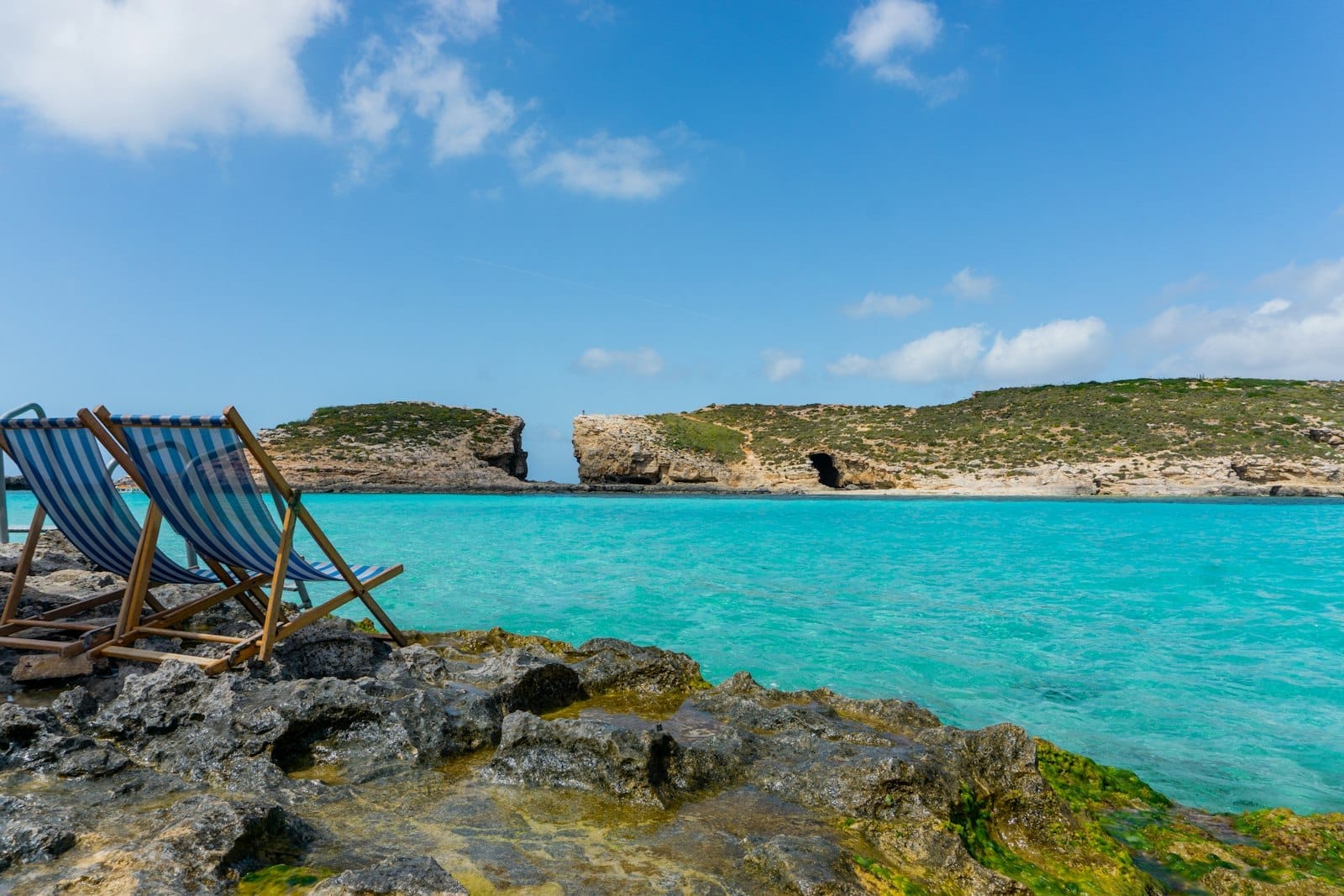
The Blue Lagoon — known in Maltese as Bejn il-Kmiemen, meaning 'between the Cominos' — is a sheltered natural pool formed in the narrow channel between Comino Island and the uninhabited islet of Cominotto. Comino itself covers just 3 square kilometres and has no permanent roads, no cars, and only one hotel complex. The lagoon is essentially a sea inlet with an unusually shallow sandy floor and water so clear that on a calm day you can watch your own shadow on the seabed from a boat.
The colour is the thing. The water shifts from pale aquamarine near the shore to a deep electric turquoise further out, with the exact shade changing depending on the angle of the sun, the time of day, and the cloud cover. Photographs circulating online — nearly always taken in mid-morning before the crowds arrive — do not exaggerate the colour. What they do omit is the context: this is not a secluded cove. In peak summer (July and August), the lagoon can hold dozens of charter boats moored side by side, with jet skis, inflatable tubes, and hundreds of swimmers in the water at once.
ℹ️ Good to know
Pre-booking may be required for peak season visits to Comino; check with ferry operators like ferrytocomino.com or visitmalta.com before your travel date, especially in summer.
Getting There: Ferries, Cruises, and What to Know
Comino is accessible only by boat. The most straightforward route is the regular passenger ferry from Cirkewwa on Malta's northern tip, or from Mgarr Harbour on Gozo. The crossing takes 15 to 20 minutes and costs approximately €10-15 for a round-trip ticket. Ferries run roughly every 30 minutes during the peak season, with reduced frequency outside summer. There is no street address — you board a boat and the lagoon is your destination.
Day cruises departing from Sliema and other Malta ports are a popular alternative, often including the Blue Lagoon as part of a longer coastal circuit. These typically cost more than the ferry but include the convenience of a dedicated pickup point. If you're basing yourself in the north of Malta, the Cirkewwa ferry is cheaper and more direct. For context on moving around the islands, the getting around Malta guide covers all the main inter-island transport options in detail.
⚠️ What to skip
Entry to the water involves scrambling over rocks from boat landings or the shore. Wear water shoes or sandals with grip — flip-flops are inadequate on wet limestone.
Tickets & tours
Hand-picked options from our booking partner. Prices are indicative; availability and final rates are confirmed when you complete your booking.
Roundtrip ferry to Comino Blue Lagoon with Gozo option from Marfa
From 15 €Instant confirmationFree cancellationBlue Lagoon and Comino snorkeling cruise
From 30 €Instant confirmationFree cancellationRoundtrip ferry to Comino Blue Lagoon with Gozo option from Cirkewwa
From 15 €Instant confirmationFree cancellationJet ski safari tour in Northern Island with Blue Lagoon
From 200 €Instant confirmationFree cancellation
How the Lagoon Changes Through the Day
The earliest boats arrive around 9am. For the first hour or so, the lagoon is relatively quiet — the water is undisturbed, the light is soft and low-angled from the east, and the colour contrast between the turquoise shallows and the dark blue Mediterranean beyond the channel is at its most dramatic. This is when the photographs happen. Snorkelling is genuinely good at this point: the visibility is measured in metres, not centimetres, and you can spot sea urchins, small fish, and starfish on the rocky margins.
By mid-morning the ferries are running at full capacity and by noon the lagoon is completely transformed. Charter boats moor two and three deep along the rocky sides. The surface becomes choppy from motorised traffic and the hum of engines replaces the quiet that made the early morning special. The water itself remains clear — this is a tidal channel, not a closed pool — but the sensory experience is quite different. Afternoon heat means the sun beats down directly, making it genuinely hot on the rocky foreshore, where there is almost no shade.
Shoulder season (April to early June and September to October) offers a noticeably calmer version of the same place. The water temperature in September remains warm from months of summer heat, crowds thin considerably after the school-holiday period ends, and the light takes on the golden quality typical of Mediterranean autumn afternoons. This is arguably the best time to visit if you have flexibility.
Swimming, Snorkelling, and the Water Itself
The lagoon floor transitions from sand in the central channel to exposed limestone rock at the edges. Water depth in the main swimming area is shallow enough for confident non-swimmers to stand, but drops off fairly quickly toward the open sea. The sandy bottom makes entry easy in the centre, but most boats land you on rocky outcrops where footing is uneven. Lifeguards are present during the summer season and flag systems indicate swimming conditions — follow them.
Snorkelling around the rocky margins on the Cominotto side rewards patient visitors with small reef fish, sea urchins, and the occasional octopus tucked into crevices. For serious underwater exploration beyond the lagoon itself, Malta's diving scene is world-class, with sites like the Blue Hole at Dwejra on Gozo within reach of a day trip.
Jellyfish are occasionally present, particularly from late summer into autumn. This is worth checking locally before your trip if you plan to swim, as conditions vary year to year. The water temperature typically ranges from around 18-19°C in April to 27°C in August, remaining above 22°C well into October.
Historical and Ecological Context
Comino is not simply a backdrop for a beach. The island was used as a quarantine station during outbreaks of plague in the 16th and 17th centuries and was later fortified by the Knights of St John, the Catholic military order that ruled Malta from 1530 to 1798. A watchtower built in 1618 under the Hospitaller fortification programme still stands on Comino's southern shore and is visible from the lagoon. It's one of several such towers built to warn of Ottoman naval incursions, part of a coastal defence network that survives across the Maltese islands.
The island today has no permanent civilian population to speak of and remains largely undeveloped. This is what preserves the water quality. There are no drainage systems, no agriculture, and minimal infrastructure. Walking Comino's interior trails away from the lagoon reveals scrubby Mediterranean garrigue — thyme, wild rosemary, and carob — with a silence that contrasts sharply with the noise of the lagoon. For travellers interested in the broader history of Malta's fortifications and the Knights who built them, the Knights of Malta history guide provides essential context.
Photography Tips and Honest Expectations
The colour of the water photographs best in the two hours after sunrise and the two hours before sunset, when the light is angled and warm. Midday sun, while bright, creates a flatter, slightly washed-out tone in wide shots. A polarising filter — or the polarise function in phone editing — dramatically reduces surface glare and lets the sandy bottom show through. The best vantage points are from the rocky rise on the Cominotto side, which gives an elevated view over the channel. Getting there requires a short scramble and some balance.
Be honest with yourself: if your expectation is a deserted tropical cove, July and August will disappoint. If you time it right — arriving on the first ferry, on a weekday, in June or September — the Blue Lagoon delivers on its reputation. The water is genuinely extraordinary, the limestone scenery is dramatic, and the sense of being on a tiny Mediterranean island with almost no infrastructure is real, even if briefly interrupted by a hundred other people who had the same idea.
💡 Local tip
Take the first ferry of the day from Cirkewwa. Arriving before 9:30am gives you up to two hours before boat traffic builds significantly. Bring your own food and water — provisions on the island are limited and expensive during peak season.
Practical Details and Accessibility
There is no formal entrance gate, ticket booth, or timed entry slot at the lagoon itself — you arrive by boat and the water is free. What you pay for is the transport: the ferry from Cirkewwa or Mgarr costs approximately €10-15 for a round-trip. Day-cruise prices vary by operator and typically include additional stops along the Maltese coastline. Pre-booking a visit through the official Blue Lagoon website is required, so plan ahead rather than assuming you can turn up.
Wheelchair access is not available. The terrain is rocky limestone with no ramps or adapted facilities, and boat-to-shore transfers require physical agility. Visitors with limited mobility should consider this a significant barrier. The rocky foreshore also makes the lagoon unsuitable for pushchairs or prams. Families with young children can enjoy it, but the sharp-edged limestone around the water requires close supervision.
If the Blue Lagoon feels too crowded for your taste, Comino has a secondary bay — Santa Marija Bay — on the island's northern coast, which is calmer and less visited. It's a short walk inland from the lagoon. Alternatively, Crystal Lagoon on Comino is a smaller, less-frequented inlet that often escapes the main crowds entirely.
Who Should Reconsider This Visit
Travellers expecting a quiet, private beach experience in July or August will likely find the Blue Lagoon overwhelming. The crowd density at peak hours is comparable to a busy urban lido. Those with limited mobility face genuine access barriers. Visitors who sunburn easily should note that shade on the rocky foreshore is essentially nonexistent, and the midday sun in summer is intense. If you are trying to fit too many things into a short Malta trip, it's worth noting that the ferry crossing, queuing time, and travel back can consume most of a day. The Malta 3-day itinerary has practical advice on whether Comino is the right priority for your specific schedule.
Insider Tips
- Book the first ferry of the day from Cirkewwa. Getting to the lagoon before 9:30am means you have at least 90 minutes of genuine calm before the boat traffic builds. The colour of the water at this hour, with morning light skimming low across it, is significantly better than midday.
- Bring your own packed lunch, sunscreen, and at least two litres of water per person. The on-site food and drink options are limited and priced for captive audiences. There is almost no shade on the rocky foreshore, so a hat and a UV-protective shirt matter more than you'd expect.
- Walk over to the Cominotto side of the channel for the best elevated photography angle. It takes about 10 minutes from the main landing point and most visitors don't bother. The view back over the lagoon from the rocky rise shows the full colour gradient of the water.
- Consider visiting in September rather than July. Water temperature is still around 25°C, crowds are noticeably thinner after the European school holidays end, and the afternoon light has a warmth that summer's harsh midday sun lacks.
- Pre-book your ferry through operators like ferrytocomino.com before arriving in Malta. Peak season ferries can sell out, so plan ahead.
Who Is Blue Lagoon For?
- Swimmers and snorkellers who want the clearest sea water in the Maltese archipelago
- Photographers looking for the turquoise Mediterranean colour that Malta is known for
- Families with older children comfortable on rocky terrain and in open water
- Day-trippers from Malta or Gozo combining the lagoon with a walk around Comino's interior
- Couples visiting in shoulder season (April-June or September-October) who want a quieter version of this iconic spot
Nearby Attractions
Other things to see while in Comino:
- Crystal Lagoon
Crystal Lagoon sits on the west side of Comino island, offering some of the clearest water in the Maltese archipelago. With a 30-metre boulder tunnel, sea caves, and depths ideal for snorkelling and diving, it draws far fewer visitors than its famous neighbour — but reaching it requires planning.
- Santa Marija Bay
Santa Marija Bay is the largest beach on Comino, offering shallow turquoise water, natural tamarisk shade, and a 17th-century chapel above the shore. Less visited than the Blue Lagoon, it rewards those willing to walk or arrive by boat with a more spacious, calmer alternative on this tiny car-free island.