Crystal Lagoon, Comino: The Quieter Alternative Worth Seeking Out
Crystal Lagoon sits on the west side of Comino island, offering some of the clearest water in the Maltese archipelago. With a 30-metre boulder tunnel, sea caves, and depths ideal for snorkelling and diving, it draws far fewer visitors than its famous neighbour — but reaching it requires planning.
Quick Facts
- Location
- West coast of Comino island, Malta archipelago
- Getting There
- Boat charter or rental from nearby bays; or ferry to Blue Lagoon + 20-min walk south
- Time Needed
- 2–4 hours (longer if diving or kayaking)
- Cost
- Free entry; boat hire or tour cost extra
- Best for
- Snorkelling, cliff diving, underwater photography, escaping crowds
What Is Crystal Lagoon and Why It Matters
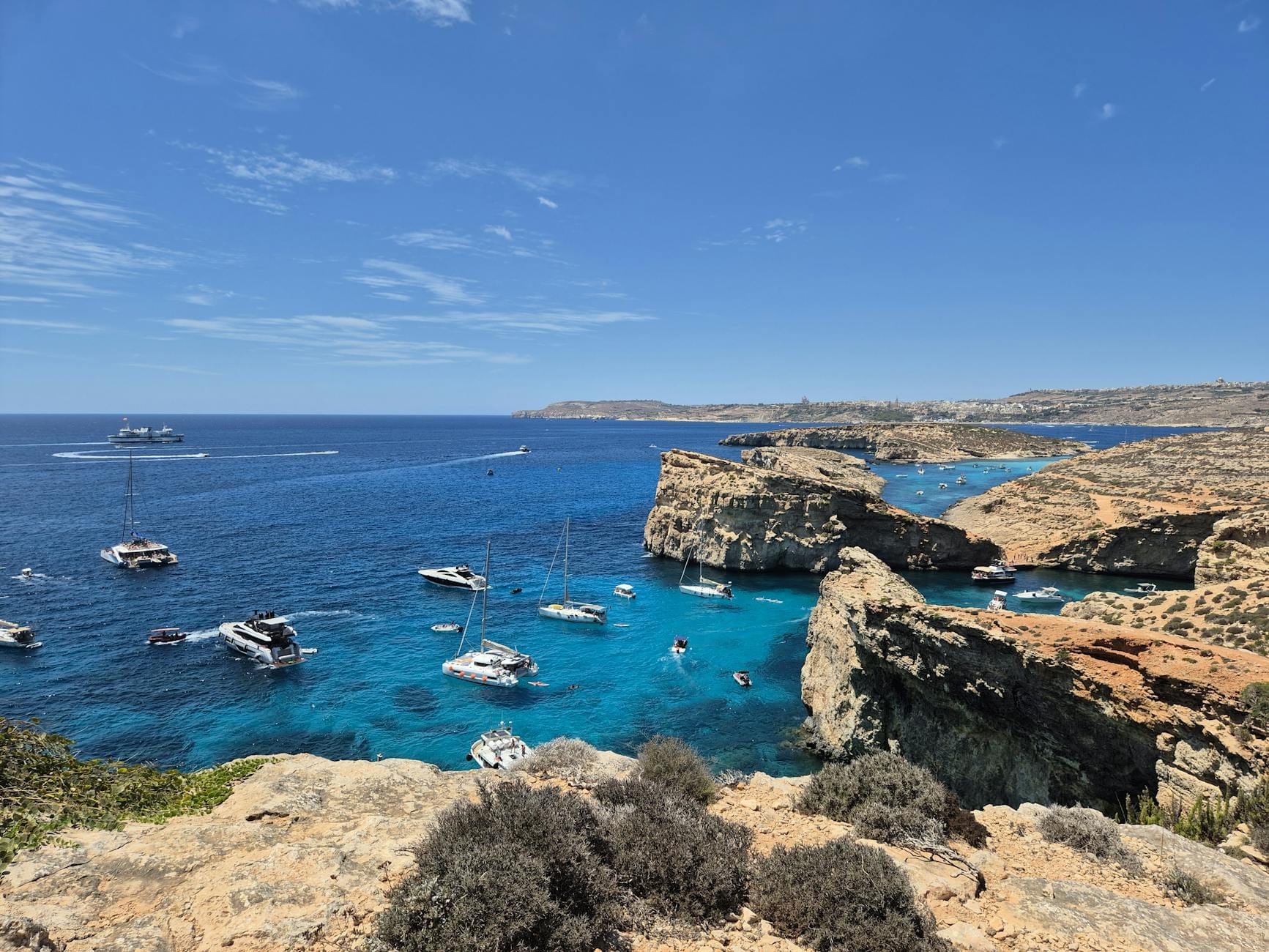
Crystal Lagoon is a sheltered natural inlet on the western side of Comino, the smallest inhabited island in the Maltese archipelago at just 3.5 square kilometres. While most visitors to Comino pour off ferries toward the Blue Lagoon, Crystal Lagoon sits a 20-minute walk to the south, receiving a fraction of the foot traffic despite offering water that rivals — and on some days surpasses — its famous neighbour in clarity.
The lagoon is defined by limestone cliffs, a near-complete ring of rocky shoreline, and water that shifts between pale aquamarine and deep cobalt depending on the light and time of day. There is no sandy beach at the main lagoon itself (the exception is a small hidden strip inside Lovers Cave), which partly explains why it stays quieter. What it lacks in soft landings it more than compensates for with underwater terrain: a 30-metre boulder-covered tunnel running from around 5 metres depth down to 8 metres, multiple sea caves, and swim-throughs that reward anyone willing to get in the water.
ℹ️ Good to know
Crystal Lagoon has no facilities: no toilets, no kiosks, no shade structures. Bring all food, water, and sun protection. In July and August, temperatures on Comino regularly exceed 32°C.
How the Experience Changes Through the Day
Early morning is the best time to be here, without question. Before 9am, the water has a glassy stillness that makes the underwater rock formations visible from the surface as if through a window. The light enters the lagoon at a low angle, catching the limestone walls and turning the shallows a luminous green-blue. On a calm day, the silence is near-total except for water lapping against rock and the occasional seabird.
By late morning, day-charter boats begin arriving and anchoring in the lagoon, and the atmosphere shifts. Snorkellers enter the water, the surface gets choppy from dinghy tenders, and visibility around the tunnel entrance drops slightly from disturbance. Midday in peak summer (July–August) sees the highest concentration of boats and swimmers. This is still an enjoyable visit compared to the packed conditions at the Blue Lagoon, but the early-morning solitude is gone.
Afternoon visits — from around 3pm onward — are worth reconsidering in a different light. Day-trippers start heading back to Malta, the lagoon quietens again, and the sun's angle shifts to illuminate the cave interiors more directly. If you can arrange to stay on a boat anchored overnight, or arrive on an afternoon charter, the late-day light produces some of the best photography opportunities of any time.
💡 Local tip
Aim to arrive by 8:30am if you're coming by private boat, or take the first available ferry to Blue Lagoon and walk south immediately. The difference between an 8am and 10:30am arrival in summer is significant.
Tickets & tours
Hand-picked options from our booking partner. Prices are indicative; availability and final rates are confirmed when you complete your booking.
Roundtrip ferry to Comino Blue Lagoon with Gozo option from Marfa
From 15 €Instant confirmationFree cancellationBlue Lagoon and Comino snorkeling cruise
From 30 €Instant confirmationFree cancellationRoundtrip ferry to Comino Blue Lagoon with Gozo option from Cirkewwa
From 15 €Instant confirmationFree cancellationJet ski safari tour in Northern Island with Blue Lagoon
From 200 €Instant confirmationFree cancellation
The Underwater World: Tunnel, Caves, and Swim-Throughs
The centrepiece is the 30-metre tunnel running beneath a collapsed section of the cliff. At its shallowest the roof sits at around 5 metres depth; at the far end it drops to 8 metres. The tunnel is boulder-covered rather than smooth, which means a torch or dive light is useful even in daylight — the gaps between boulders create dramatic shafts of filtered light, but the interior is dark enough that detail disappears without a light source.
The lagoon's main basin sits at 5–6 metres depth, which puts it squarely in the range of confident snorkellers with freediving ability. For scuba divers it is a shallow, relaxed dive rather than a technically challenging one. The walls host sponges, sea urchins, and small wrasse, and it is not uncommon to spot octopus tucked into rock crevices. The water temperature in summer reaches around 27–28°C; in spring and autumn it sits closer to 18–20°C.
For context on the wider underwater terrain around Comino, the island is part of a Marine Protected Area. The sea conditions around it can vary significantly, which is also covered in the Malta diving guide. Experienced divers who visit Crystal Lagoon often combine it with sites around the nearby Santa Marija Caves or the more exposed spots off the island's north coast.
How to Get to Crystal Lagoon
There is no direct ferry service to Crystal Lagoon. The most practical approach is to hire a private boat or join a guided boat trip from Malta or Gozo that includes Crystal Lagoon as a stop. Charter operators in Gozo and Sliema regularly offer half-day and full-day tours that combine Crystal Lagoon, the Blue Lagoon, and the Santa Marija Caves.
The walking route from the Blue Lagoon ferry jetty takes roughly 20 minutes over rocky terrain. There is no maintained path for most of this walk. It is manageable for fit walkers in sturdy footwear, but the surface is uneven limestone and there are sections where you are navigating near cliff edges. Flip-flops are not suitable. Kayaking from Gozo in spring or autumn (when conditions are calmer) is a genuinely good option for those comfortable on open water.
For the broader context of moving around Malta's islands, the getting around Malta guide covers ferry schedules, boat charter options, and transport between islands in detail.
⚠️ What to skip
Do not attempt the cliff walk from Blue Lagoon in wet conditions. The limestone becomes extremely slippery when wet, and the terrain offers no railings or safety infrastructure.
Crystal Lagoon vs Blue Lagoon: An Honest Comparison
Visitors who arrive expecting Crystal Lagoon to be a secret, empty version of the Blue Lagoon will need to recalibrate slightly. It is quieter, particularly at the edges of the day, but in July and August there are still boats anchored here and swimmers in the water. The main structural difference is that Crystal Lagoon rewards people who get in the water. The underwater terrain here is objectively more interesting than the Blue Lagoon, which is primarily a swimming and sunbathing destination.
The Blue Lagoon on Comino has the sandier entry points and the infrastructure (parasols, food boats, shuttle ferry) that Crystal Lagoon lacks entirely. If you are travelling with young children or anyone who wants a comfortable beach day rather than an adventure, the Blue Lagoon is the pragmatic choice. Crystal Lagoon suits people who are comfortable in open water and can manage rocky entry and exit points.
Practical Notes: What to Bring and What to Know
Pack as if you are going somewhere with zero services, because you are. Water (more than you think — 2 litres per person minimum in summer), sun cream, a hat, and shoes you can walk on uneven rock in. Snorkelling gear is worth bringing if you have it, as there is little point hiring it onshore and carrying it on a ferry when private charter boats often include it. Waterproof bags for phones and valuables are strongly recommended given the boat-based access.
Photography from boats and from the water itself produces the best results. The colour contrast between the limestone cliffs and the turquoise water is highest in the two hours after sunrise and the hour before sunset. An underwater camera or housing will capture the tunnel and cave interiors, though flash or a torch is needed beyond the entry points. Drone use in Malta is regulated and requires prior authorisation from the Malta Aviation Authority; do not fly without clearance.
Accessibility is limited by the nature of the site. There is no wheelchair access, and the rocky terrain and water-based entry make this unsuitable for anyone with significant mobility restrictions. The shallow lagoon depth is forgiving for less-experienced swimmers, but the open-water sections between boats and the tunnel require confident swimming ability. Children should be supervised closely at all times given the lack of lifeguard presence.
Comino itself offers very little beyond its natural features. For a broader picture of what the island offers and how to plan a visit, the Comino island guide covers everything from logistics to seasonal conditions.
Seasonal Considerations and Who Should Think Twice
Spring (April–May) and early autumn (September–October) are the most balanced times to visit. Water temperatures are comfortable for extended swimming, the Mediterranean is generally calm, and boat charter costs tend to be lower than peak summer. The colours of the lagoon are at their richest in these months when the low-angle sun hits the water at a sharper angle than in midsummer.
Winter visits are technically possible — the lagoon is accessible year-round in good weather — but the Maltese winter brings regular westerly swell and occasional storms that make Comino's western coast rough and occasionally dangerous. Many charter operators reduce or suspend services to Crystal Lagoon between November and March. If a winter visit is your only option, check conditions carefully and go with an experienced operator.
Travellers who want a relaxed, low-effort beach day should consider some of Malta's more accessible beaches instead. The best beaches in Malta guide covers options with facilities, sandy entry points, and easier access across both islands.
If the idea of rocky coastline, no shade, no facilities, and boat-dependent access sounds unappealing, Crystal Lagoon is not the right choice. It genuinely rewards the physically active and the water-confident traveller. For anyone else, the effort-to-payoff ratio may not work out.
Insider Tips
- Arrange a boat charter that anchors at Crystal Lagoon first, before heading to the Blue Lagoon. By the time most ferry day-trippers arrive at the Blue Lagoon, you will already be done with Crystal Lagoon and have the best of both in a single morning.
- Bring an underwater torch even if you are only snorkelling. The 30-metre tunnel loses most of its natural light beyond the first few metres, and a torch transforms what you can see in the boulder gaps.
- Spring kayak trips from Gozo's west coast to Crystal Lagoon (run by a handful of specialist operators) are worth seeking out. The paddle takes roughly 45 minutes from Mgarr ix-Xini and the approach by water gives a perspective of the cliffs impossible from any boat.
- The small sandy area inside Lovers Cave is the only place at Crystal Lagoon to lay a towel on something other than rock. It is only accessible by swimming into the cave from inside the lagoon. Arrive early to have it to yourself.
- Check wind direction before booking. A southwesterly or westerly wind makes the lagoon uncomfortable and can make boat entry and exit from the water genuinely difficult. The site faces west, so wind from that direction builds surface chop quickly.
Who Is Crystal Lagoon For?
- Snorkellers and freedivers who want interesting underwater terrain without heavy crowds
- Scuba divers looking for a relaxed, shallow dive in exceptional visibility
- Photographers chasing the combination of limestone cliffs and turquoise water at golden hour
- Active travellers who are comfortable with no facilities and rocky terrain
- Day-trippers on private charters who want to combine Crystal Lagoon and the Blue Lagoon in a single trip
Nearby Attractions
Other things to see while in Comino:
- Blue Lagoon
The Blue Lagoon sits between the tiny island of Comino and the uninhabited Cominotto islet, offering some of the clearest, most photographed water in the entire Mediterranean. It earns the hype on a calm morning — but summer afternoons can bring hundreds of day-trippers. Knowing when to go, how to get there, and what to realistically expect makes all the difference.
- Santa Marija Bay
Santa Marija Bay is the largest beach on Comino, offering shallow turquoise water, natural tamarisk shade, and a 17th-century chapel above the shore. Less visited than the Blue Lagoon, it rewards those willing to walk or arrive by boat with a more spacious, calmer alternative on this tiny car-free island.