Al Thumama Stadium: Doha's Gahfiya-Inspired World Cup Venue
Al Thumama Stadium is one of Qatar's most architecturally distinctive sports venues, its circular silhouette modeled on the traditional Arab gahfiya cap. Built for the FIFA World Cup 2022 and located about 13 km south of central Doha, it continues to host major football tournaments and serves as a striking example of how Qatar embedded cultural identity into its World Cup infrastructure.
Quick Facts
- Location
- Block 331, Al Thumama District, Doha, Qatar (approx. 13 km south of central Doha)
- Getting There
- Doha Metro Red Line to Free Zone Station, then stadium shuttle on event days
- Time Needed
- 2–3 hours for a match or event; exterior visit under 30 minutes
- Cost
- Entry by event ticket only; prices vary by competition and seat category
- Best for
- Football fans, architecture enthusiasts, World Cup heritage seekers
- Official website
- www.qfa.qa/en/stadium-venue/al-thumama-stadium
What Al Thumama Stadium Actually Is
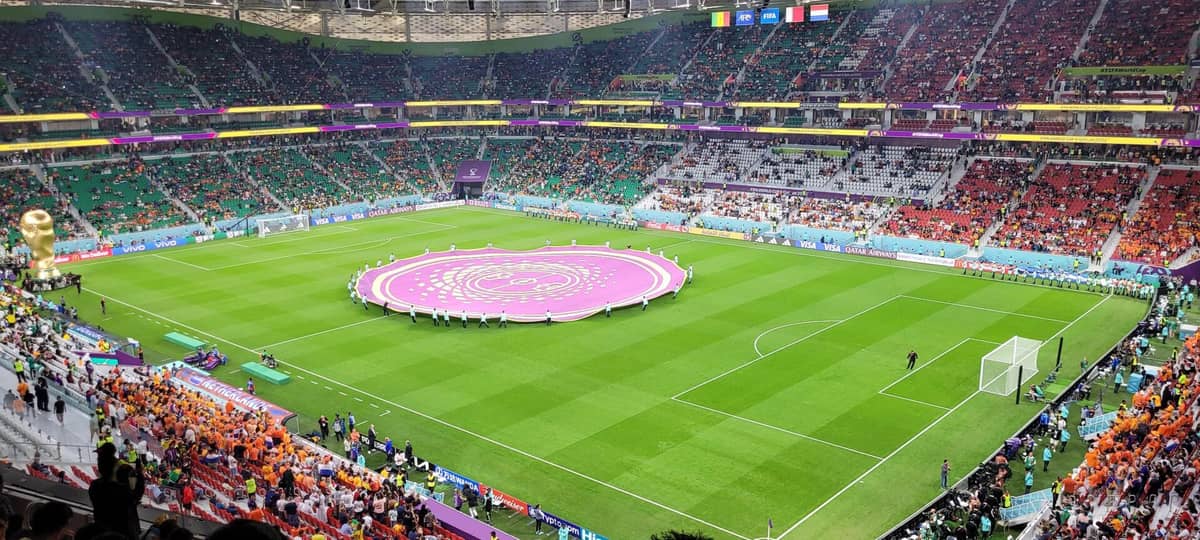
Al Thumama Stadium is a 40,000-seat football arena in the Al Thumama district of Doha, Qatar, commissioned specifically for the FIFA World Cup 2022. It is not a general-purpose entertainment venue or a daily tourist attraction with open-door access. The stadium operates on an event-by-event basis: when there is no match or organized tour, the gates are closed. That distinction matters a lot when planning a visit.
What draws visitors even on quiet days is the exterior. The building's form is unmistakably derived from the gahfiya, the woven skull cap worn by men across the Arab world and often worn beneath the keffiyeh. The stadium's circular roof, layered geometric latticework, and tiered facade replicate the cap's stitched pattern at monumental scale. Standing in the parking lot on a calm afternoon, the effect is genuinely arresting: a structure that looks as if it was carved rather than constructed.
ℹ️ Good to know
Al Thumama Stadium does not have fixed daily public visiting hours. Access is limited to event days and any officially scheduled stadium tours. Check the Qatar Football Association or Visit Qatar websites for current match and tour schedules before making the trip.
The Architecture: A Gahfiya at Urban Scale
The stadium was designed by Ibrahim M. Jaidah, a Qatari architect whose practice Arab Engineering Bureau is based in Doha. Jaidah drew directly from the gahfiya's visual vocabulary: the concentric rings of geometric weave stitching, the rounded crown, and the subtle elevation of the rim. Translated into concrete, steel, and perforated cladding panels, the result is a building that reads as clearly cultural rather than merely decorative.
The outer skin features layered screens with repeating geometric cutouts that filter light in a way that shifts across the day. In the early morning, when the sun is low and casting long shadows across the facade's relief, the pattern pops with the sharpest three-dimensional definition. By midday in Qatar's intense sunlight, the cladding flattens somewhat. Late afternoon and evening, particularly when the stadium is lit for a match, the lantern-like quality of the structure becomes apparent: light pushes through the perforations and the building glows.
Compared to the other seven World Cup venues, Al Thumama occupies the middle ground architecturally. It lacks the raw industrial drama of Stadium 974, which was built entirely from shipping containers and repurposed steel, and it does not carry the historical weight of Khalifa International Stadium. What it has is coherence: the concept is clear, the execution disciplined, and the cultural reference legible even to visitors unfamiliar with Gulf dress traditions.
Attending a Match: What the Experience Is Like
On event days, the area around Al Thumama transforms from a quiet outer-Doha suburb into a structured crowd-movement operation. Stadium shuttles run from Free Zone Metro Station on the Red Line, and the combination of metro plus shuttle is the most reliable option on match days when road traffic around the stadium compounds. Allow extra time: the shuttle connection and the walk from the drop-off point to the entrance gates together take roughly 40 to 50 minutes.
Inside, the bowl is compact by international standards. With about 40,000 seats arranged in steeply raked tiers, sightlines are good from most positions and the atmosphere concentrates well. The circular footprint means there are no awkward corner sections and no seat feels particularly remote from the pitch. Acoustics carry crowd noise inward and upward rather than letting it dissipate, which means a passionate crowd at a regional tournament can be genuinely loud.
Qatar's climate governs everything about the in-stadium experience. The venue was built with a cooling system that manages internal temperature during matches, a necessity given that ambient temperatures even in the cooler months can reach the high 20s Celsius. Evening kickoffs are the standard for outdoor comfort. If you attend a daytime event during the shoulder months of October or April, expect heat even with the cooling active, and bring water.
💡 Local tip
For match days, take the Doha Metro Red Line to Free Zone Station rather than driving. Parking near the stadium on event days is limited, permit-dependent, and the road network south of central Doha moves slowly when large crowds are dispersing.
Visiting Outside Events: The Exterior and Surroundings
If you arrive on a non-event day hoping to walk in, you will not get beyond the outer perimeter. That said, the stadium grounds and approach areas are worth a brief stop for anyone interested in architecture or in documenting Doha's World Cup legacy. The exterior can be photographed from the surrounding roads and plaza areas without restriction.
The approach from the main road gives a full frontal view of the gahfiya profile. Early morning light before 9 AM in the November to March window produces the best conditions for photography: directional light, moderate temperature, and almost no other people present. The abstract geometry of the facade interacts well with a wide lens; telephoto shots isolating individual facade sections reveal the intricacy of the layered screen pattern.
If you are building a day around stadium architecture in Doha, Al Thumama pairs logically with a trip to Lusail Iconic Stadium in the north of the city, which hosted the World Cup Final, and with the nearby Al Janoub Stadium in Al Wakra, designed by Zaha Hadid Architects. Together the three venues represent three very different architectural approaches to the same brief.
Getting There and Getting Around
Al Thumama Stadium sits in the southern arc of Doha's urban area, roughly 12 km south of central Doha along the Doha Express Highway. The Doha Metro Red Line is the primary public transit connection. Board at any central station, ride to Free Zone Station, and on event days follow the signage to the shuttle bus zone. The shuttle covers the gap between the metro stop and the stadium; confirm the shuttle schedule through the event organizer or Visit Qatar's event-specific transport guidance, as it is not a permanent daily service.
Taxis and ride-hailing services using Karwa or app-based platforms can drop directly to Block 331 in the Al Thumama District. On non-event days this is the most straightforward option. On match days, expect longer wait times for a return ride as demand spikes post-match. Having a backup plan, such as walking to a main road and catching the metro from a nearby bus connection, is worth considering.
The stadium is built to accessible standards, with wheelchair access, accessible restrooms, and accessible parking available during events. Accessible parking spaces require a valid permit during major tournaments and operate on a first-come, first-served basis. Visitors who need assistance should contact the event organizer directly in advance to confirm arrangements, as these vary by competition.
Practical Realities and Honest Limitations
Al Thumama Stadium is worth your time under specific conditions: when there is a match or event scheduled, or when you are making a deliberate circuit of Doha's World Cup architecture. It is not worth a dedicated trip on a day with no event if you are tight on time. Unlike the Museum of Islamic Art or Souq Waqif, it does not function as a self-guided attraction with permanent exhibits or daily access.
Visitors primarily interested in Doha's culture, history, or waterfront experience will get more from their time at the Museum of Islamic Art or National Museum of Qatar. Football fans and design-focused travelers are the natural audience for Al Thumama. Those who attended World Cup 2022 matches here will find it a worthwhile return for the memory; first-time visitors without a match ticket should weigh the 12 km trip against what else is on their itinerary.
For a fuller picture of what to do around Doha during the cooler months, the Doha World Cup stadiums guide covers all eight venues with practical logistics for visiting multiple sites in a single day.
⚠️ What to skip
Doha's summer heat (June to September) makes any outdoor stadium visit uncomfortable and potentially unsafe. The stadium's cooling system only operates during events. Plan any visit for the November to March window for tolerable outdoor temperatures.
Insider Tips
- For architectural photography, arrive on a non-event weekday morning between November and February. The low winter sun from the east catches the facade's layered screen pattern at an angle that makes the geometric relief pop. You will have the approach plaza to yourself.
- If you are attending a match, check whether your event ticket includes free Doha Metro travel. During major tournaments in Qatar, organizers have historically bundled transit access with match tickets. Confirm this with the specific event before buying a separate metro fare.
- The gahfiya design reference is most visually obvious from a distance and from above. If you can access an elevated road or overpass approach on the south side before the stadium comes fully into view, you get a read of the full crown profile that is closer to the architect's original concept sketch.
- Accessible parking spaces near the stadium are allocated on a first-come, first-served basis during events and require a valid permit. Visitors with mobility needs should arrive significantly earlier than the general crowd and contact the event organizer in advance to confirm the access protocol for that specific competition.
- Al Thumama is located in a quiet residential and light-industrial district. Unlike the Corniche or Souq Waqif areas, there are no cafes or restaurants within easy walking distance of the stadium on non-event days. Bring water and anything you need for a self-sufficient exterior visit.
Who Is Al Thumama Stadium For?
- Football fans attending Qatar Stars League, AFC, or FIFA matches held at the venue
- Architecture and design enthusiasts exploring Doha's World Cup stadium circuit
- Travelers revisiting Qatar after attending World Cup 2022 and wanting to see the venues again
- Photographers interested in geometric Islamic design applied at architectural scale
- Families with children attending an evening match in the November to March cool season
Nearby Attractions
Combine your visit with:
- Al Hazm Mall
Al Hazm Mall is not a typical shopping centre. Built in a classical European-inspired style with colonnaded stone arcades and soaring ceilings, this northern Doha landmark houses luxury boutiques, acclaimed restaurants, and art installations in a setting that feels more like a Milanese galleria than a Gulf mall. Entry is free, the architecture alone justifies the visit, and the restaurant scene is among the strongest in the city.
- Al Safliya Island
A small, uninhabited sand island off the Doha coast, Al Safliya Island draws visitors with clear Gulf waters, a quiet beach, and easy half-day boat access from The Pearl-Qatar or the Corniche. There are no facilities on the island, so what you bring is what you have.
- Al Shahaniya Camel Racetrack
Al Shahaniya Camel Racetrack is Qatar's principal venue for camel racing, a sport central to the country's Bedouin heritage. Located about 40–60 minutes west of central Doha along the Dukhan Highway, the track draws local families, Qatari enthusiasts, and curious visitors during its October-to-April season. Entry to regular race days is free.
- Al Thakira Mangroves
About 64 km north of Doha, the Al Thakira Mangroves protect one of Qatar's largest and most ecologically significant coastal habitats. Whether you paddle through the channels at sunset or simply walk the shoreline at low tide, this protected reserve offers a rare contrast to the capital's urban skyline.