Khalifa International Stadium: Doha's Iconic Football Venue
Khalifa International Stadium is Qatar's oldest and most storied football arena, transformed by a landmark renovation into a state-of-the-art 45,000-seat venue. Whether you're catching a Qatar Stars League match, joining a guided stadium tour, or simply exploring the Aspire Zone precinct, this is where Doha's sporting history is written.
Quick Facts
- Location
- Al Waab Street, Al Rayyan/Doha, Qatar (Aspire Zone precinct)
- Getting There
- Doha Metro Gold Line, Sport City station (short walk to stadium); Al Aziziyah station mainly for Villaggio Mall with a longer walk or feeder connection
- Time Needed
- 1.5 to 2.5 hours for a guided tour; 3 to 4 hours for a match day
- Cost
- Recent combined QOSM & Khalifa Stadium tour example: 30 QAR adults (non-resident), 15 QAR residents/students; current tour fees and museum admission vary and should be checked in advance. Match tickets vary by event.
- Best for
- Football fans, architecture enthusiasts, World Cup heritage seekers, families
What Khalifa International Stadium Actually Is
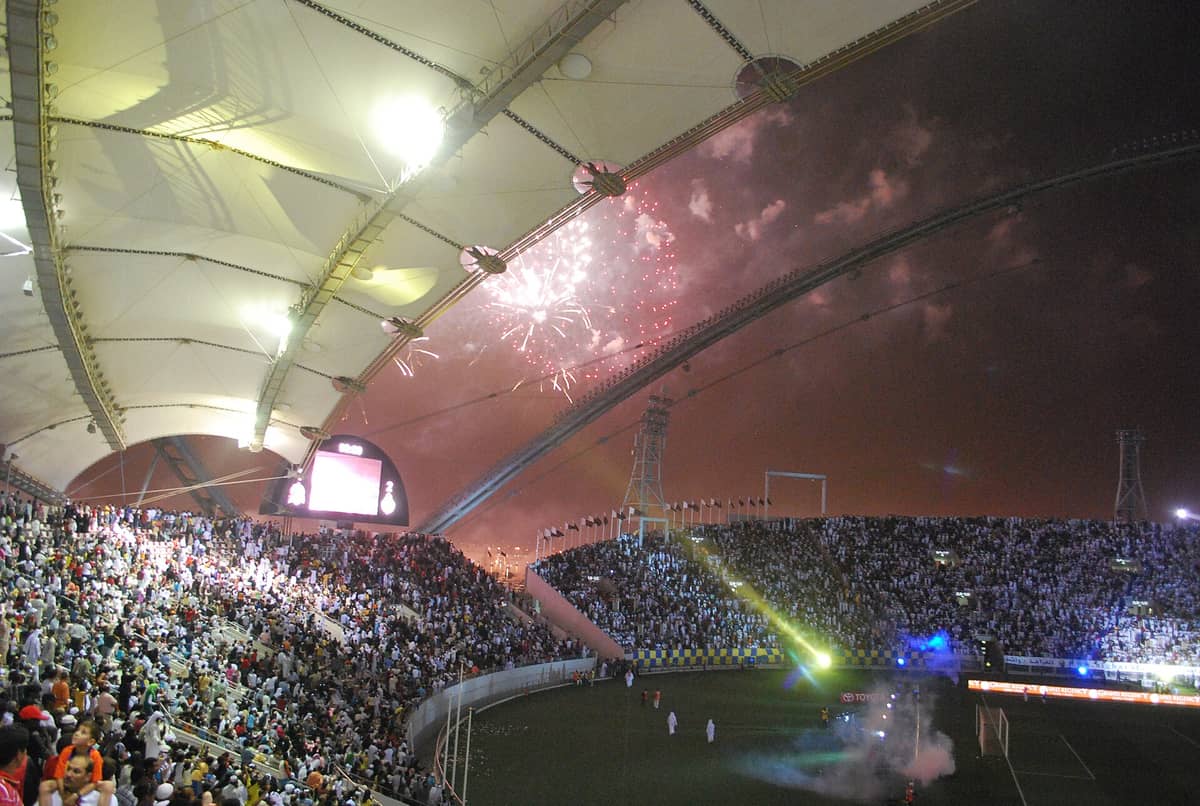
Khalifa International Stadium is Qatar's oldest operating international football ground, a venue that predates the country's transformation into a global sports destination by several decades. Originally opened in the 1970s, it has hosted everything from Gulf Cup finals to the 2006 Asian Games, but its profile changed permanently when it became one of the eight stadiums for the 2022 FIFA World Cup. The renovation that preceded the tournament, carried out from 2014 to 2017, was not cosmetic: the stadium was essentially rebuilt around its historic skeleton, gaining a new roof, an innovative cooling system, expanded seating to approximately 45,857 capacity, and a dramatically reshaped exterior silhouette defined by two arching steel catenary roof curves.
The stadium sits within the Aspire Zone, a dedicated sports city on Doha's western fringe that also contains Aspire Park, Aspire Tower, and the 321 Qatar Olympic Sports Museum. For visitors exploring this part of Doha, Khalifa is the centrepiece of a self-contained precinct that rewards an unhurried half-day rather than a rushed hour.
💡 Local tip
Stadium tours are not available every day and must be pre-booked. The combined QOSM (Qatar Olympic & Sports Museum) and Khalifa Stadium tour is the most structured way to visit outside of match days. Check current schedules before arriving.
The Architecture: Why This Stadium Looks the Way It Does
The first thing visitors notice from Al Waab Street is the roof. Two great steel arches rise above the bowl and curve toward each other without quite meeting, creating a gap that channels airflow and frames the open sky above the pitch. The design is not purely aesthetic: Qatar's Supreme Committee for Delivery and Legacy mandated a district cooling system that pipes chilled air under the seats and through vents at pitch level, keeping temperatures inside the bowl around 18 to 20 degrees Celsius even during summer matches. This was a world-first application at stadium scale, and the engineering remains one of the most discussed elements on guided tours.
The exterior cladding uses a textured white and grey palette that reflects rather than absorbs heat, and at night the stadium is illuminated with a wash of white light that makes it visible from Aspire Tower and from the elevated highway approach. The renovation preserved the overall oval bowl geometry from the original structure while adding two tiers of new seating and fully enclosed concourses. Walking the concourse at midday, you feel the difference immediately: the shade and cooling infrastructure make the experience genuinely comfortable in a way that open-air Gulf venues often are not.
Visiting on a Tour: What to Expect
Outside of match days, the primary way to experience Khalifa International Stadium is through a pre-booked guided tour, typically offered in conjunction with the adjacent Qatar Olympic and Sports Museum. Tour slots have run from 09:00 to 11:30 in published schedules, though availability and timing vary by season, so confirming directly with the venue before planning your day is essential.
The tour route generally takes visitors through the players' tunnel, pitchside, the VIP areas, and select spectator zones. The tunnel walk is the moment most visitors find unexpectedly affecting: the contrast between the narrow, slightly clinical corridor and the sudden release into the enormous green-and-white bowl creates a genuine sense of scale. For context on the sporting heritage displayed inside, the 321 Qatar Olympic Sports Museum immediately adjacent to the stadium provides the deeper narrative arc of Qatar's athletic history, and the two attractions are best experienced together.
Tour pricing for a special combined QOSM and stadium event in June 2025 was 30 QAR for adult non-residents, 15 QAR for adult residents, 25 QAR for student non-residents, and 15 QAR for student residents. These figures are event and period specific and should be verified before visiting.
ℹ️ Good to know
The stadium has no standard walk-in admission. Entry outside of events or pre-booked tours is not guaranteed. Arriving without a reservation on a non-match day will likely result in access being refused at the perimeter.
Match Days: Atmosphere and Practicalities
The Qatar Stars League regularly uses Khalifa as a host venue, which means the stadium sees weeknight and weekend fixtures across the domestic season, typically running from August or September to May. The atmosphere at QSL matches is a specific kind of subdued intensity: crowds are rarely enormous for mid-table fixtures, but derby matches and title-run clashes draw passionate support, particularly from fan groups arranged in the lower tiers who use drums and coordinated chants throughout the 90 minutes.
For international visitors, the stadium experience during a domestic match is more interesting sociologically than atmospherically. You will be seated among Qatari families, South Asian and Southeast Asian expatriate workers who follow Qatari clubs closely, and a small number of football tourists. The mix is genuinely different from European football crowds and worth experiencing on those terms rather than expecting a Premier League atmosphere.
Match ticket prices vary by competition, seat category, and opponent, with no fixed public rate. Tickets are sold through official club and league channels. If you are planning a broader sports-focused itinerary, the Doha World Cup stadiums guide covers all eight venues and helps prioritise which to visit based on your time and interests.
Best Time to Visit and How Weather Affects the Experience
Doha's climate divides stadium visits into two very different experiences. Between November and March, daytime temperatures in the low to mid-20s Celsius make the outdoor walk from the metro station to the stadium gates genuinely pleasant. The stadium's internal cooling system means the bowl itself is comfortable regardless, but the approach across the Aspire Zone plaza, which is exposed and offers little shade, is noticeably easier in the cooler months.
Between June and September, ambient temperatures regularly exceed 40 degrees Celsius outside, and the plaza approach can feel punishing within minutes. The cooling system does what it promises once you are inside the bowl, but the journey to and from the stadium in summer requires planning. Wear light, breathable clothing, carry water, and take the metro rather than walking long distances from parking areas.
For a broader picture of when to time your Doha visit, the best time to visit Doha guide covers seasonal trade-offs across all attraction types.
⚠️ What to skip
Summer visits (June to September) are feasible for match-day events given the stadium cooling system, but outdoor areas of Aspire Zone are genuinely uncomfortable in direct midday heat. Schedule any walking around the precinct for early morning or after sunset.
Getting There: Metro, Taxi, and Driving
The most straightforward public transport option is the Doha Metro Gold Line to Al Aziziyah station, which places you within walking distance of the stadium. The Doha Metro is modern, air-conditioned, and fully wheelchair accessible at all stations, making it the most reliable option for match days when road access around the Aspire Zone can become congested. Mowasalat public buses also serve the broader Aspire Zone area, with routes stopping near major landmarks such as Aspire Park and Villaggio Mall, though bus schedules are less frequent than the metro and may not stop directly at the stadium.
By car, the stadium is accessible via Al Waab Street and the Doha Expressway. Dedicated parking areas surround the venue, and accessible parking spaces are available for spectators with appropriate permits on match days, allocated on a first-come basis. Karwa taxis and app-based ride-hailing services operate in Doha and offer convenient drop-off to the stadium gates, which many visitors prefer for avoiding parking queues on busy event nights.
Photography Tips and Accessibility
The best exterior photographs of Khalifa International Stadium are taken from the far end of the Aspire Zone plaza, where the full arc of both roof curves is visible in a single frame. At dusk, when the stadium lights come on against a still-warm sky, the white cladding takes on a soft amber tone that is absent in midday images. During tours, pitchside photography is generally permitted, and the low angle from the player tunnel exit produces a dramatic upward view of the bowl that is more interesting than any wide shot from the upper tiers.
Accessibility at the stadium is comprehensive. All match-day gates include accessible entry lanes, priority security screening, and level access throughout the seating areas. Extra-wide lanes are in place for wheelchair users, and accessible seating is distributed across multiple zones rather than concentrated in a single section. The metro route to Sport City station on the Gold Line is barrier-free from platform to street level.
Who This Attraction Is Not For
Visitors with no interest in football or sports architecture will find limited reason to come here outside of a major tournament. The Aspire Zone precinct is pleasant to walk through, and Aspire Park is a decent green space, but the stadium itself is primarily an event venue rather than a cultural attraction in the museum sense. If your priority is Doha's arts, history, or design scene, the Museum of Islamic Art or the National Museum of Qatar will deliver more per hour of your time. Similarly, travellers hoping for a spontaneous walk-in experience will be frustrated by the tour booking requirement.
Insider Tips
- Book the combined QOSM and Khalifa Stadium tour in advance, not just for cost reasons but because slots fill quickly on weekends and during school holidays. Weekday morning slots are almost always easier to secure.
- If you are visiting Aspire Zone on foot, the best approach from Al Aziziyah metro station takes you past Aspire Tower before reaching the stadium, giving you a natural orientation point and a useful landmark for photography.
- For the cleanest exterior photos without crowds or construction vehicles in frame, arrive at the stadium before 08:00 on a non-match weekday morning. The plaza is empty and the low morning light comes from the east, catching the white cladding well.
- Qatar Stars League matches at Khalifa are significantly cheaper and easier to attend than international fixtures. Check the QSL official schedule, as midweek fixtures often have good availability with minimal queuing.
- The stadium's internal cooling system means you can dress comfortably for indoor temperatures inside the bowl, but the walk across Aspire Zone plaza from the metro in summer genuinely requires sun protection, water, and light clothing. Do not underestimate the ambient heat between the station and the gates.
Who Is Khalifa International Stadium For?
- Football fans wanting to experience a 2022 World Cup venue with genuine historical depth
- Architecture and engineering enthusiasts interested in large-scale stadium cooling systems and structural design
- Families combining a stadium tour with time in Aspire Park on the same day
- Sports heritage travellers working through all of Doha's major World Cup stadiums
- Photographers looking for dramatic stadium architecture shots at golden hour
Nearby Attractions
Other things to see while in Aspire Zone (Doha Sports City):
- 3-2-1 Qatar Olympic and Sports Museum
Housed within Khalifa International Stadium in Doha's Aspire Zone, the 3-2-1 Qatar Olympic and Sports Museum is the first museum in the Middle East dedicated to the full breadth of Olympic and sports heritage. It covers everything from ancient athletic traditions to modern-day record breakers, with interactive galleries that work for curious adults and energetic kids alike.
- Aspire Park
Aspire Park is one of the largest public parks in Doha, set within the Aspire Zone sports complex in Al Rayyan. Free to enter and open 24 hours a day, it offers walking trails, lakeside lawns, and a rare patch of green space in a city better known for malls and skyscrapers.
- Aspire Tower (The Torch Doha)
Standing 300 metres tall in the heart of Aspire Zone, Aspire Tower, known locally as The Torch Doha, was built as the centrepiece of the 2006 Asian Games and now operates as a luxury hotel. This guide covers what you can actually access as a visitor, how the experience changes by time of day, and practical tips for making the most of the area.
- Villaggio Mall
Villaggio Mall on Al Waab Street brings an improbable slice of Venice to the desert heart of Doha, complete with an indoor canal, gondola rides, an ice rink, and a theme park under one roof. It is far more than a conventional mall, and understanding what it actually offers helps you decide whether it deserves a spot on your itinerary.