3-2-1 Qatar Olympic and Sports Museum: What to Know Before You Visit
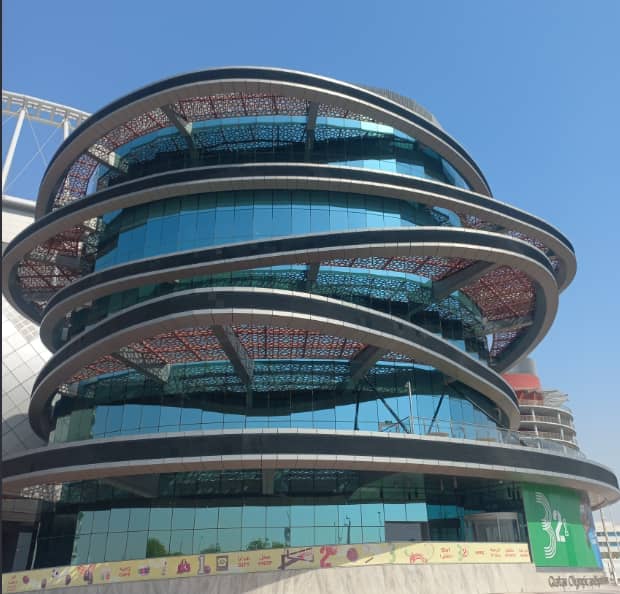
Housed within Khalifa International Stadium in Doha's Aspire Zone, the 3-2-1 Qatar Olympic and Sports Museum is the first museum in the Middle East dedicated to the full breadth of Olympic and sports heritage. It covers everything from ancient athletic traditions to modern-day record breakers, with interactive galleries that work for curious adults and energetic kids alike.
Quick Facts
- Location
- Khalifa International Stadium, Al Waab Street, Aspire Zone, Doha
- Getting There
- Doha Metro Gold Line – Sport City Station (short walk within Aspire Zone)
- Time Needed
- 2–3 hours for a thorough visit; 90 minutes if you move quickly
- Cost
- Free for residents/citizens (valid QID); QAR 50 for non-resident adults 16+; QAR 25 for non-resident students (valid student ID); children under 16 free
- Best for
- Sports fans, families with older children, history enthusiasts, World Cup visitors
- Official website
- 321qosm.org.qa/en
What Is the 3-2-1 Qatar Olympic and Sports Museum?
The 3-2-1 Qatar Olympic and Sports Museum is one of the most ambitious sports heritage institutions in the world, and one of a handful of major museums of its kind affiliated with the International Olympic Committee. It sits inside the recently renovated Khalifa International Stadium in Doha's Aspire Zone, a district purpose-built around athletics and elite sport. The name itself is a reference to the countdown before competition begins: 3, 2, 1.
Presented by Qatar Museums, the institution frames sport not just as entertainment but as a thread running through human civilisation. The galleries span ancient athletic rituals, the birth of the modern Olympic movement, and the sweeping diversity of sports practiced across different cultures. It is a serious intellectual project, not a trophy cabinet.
For visitors planning time in this part of the city, the museum pairs naturally with a walk through Aspire Zone, which includes Aspire Park and the striking silhouette of Aspire Tower rising above the stadium complex.
ℹ️ Good to know
The museum is closed on Tuesdays. On Sunday, Monday, Wednesday and Saturday it opens from 9:00am to 7:00pm. Thursday is the only day with extended evening hours, closing at 9:00pm instead of 7:00pm. Friday opening is delayed until 1:30pm to accommodate midday prayers, with closing at 7:00pm.
The Galleries: What You Actually See
The museum is organised across multiple floors, moving from the origins of human competition through to the technological present. The lower galleries address sports history at a civilisational scale: ancient Greek athletics, indigenous games from across the world, and the slow emergence of codified sport in the 19th century. The display cases here are dense with artifacts, replica objects, and documentary material.
Upper floors focus more tightly on the Olympic Games themselves, with dedicated sections on iconic athletes, landmark moments, and the evolution of the Olympic movement. Medals, torches, uniforms, and equipment from different eras are displayed with enough context to make them meaningful rather than just decorative. The curators have avoided the trap of turning the space into a single country's hall of fame: this is genuinely international material.
Interactive zones are distributed throughout. These include simulators and motion-capture exhibits where visitors can test their reaction times or measure the force of an athletic movement. The interactive sections tend to attract children and teenagers, which means the more contemplative archival galleries stay quieter. If you have a strong interest in history and documentation, go where the kids are not.
Visitors who also want to engage with Qatar's own sporting infrastructure might consider a visit to the Khalifa International Stadium itself, which hosted matches during the 2022 FIFA World Cup and is one of the oldest and most storied venues in Gulf football history.
The Setting: Khalifa International Stadium and Aspire Zone
Khalifa International Stadium was originally built in 1976 and substantially rebuilt ahead of hosting matches for the FIFA World Cup Qatar 2022. The museum occupies integrated space within this structure, so the architecture you pass through is part of the experience: exposed concrete, dramatic interior heights, and the unmistakable smell of cool air conditioning against the Gulf heat outside. The stadium bowl itself is not part of the museum visit, but its presence gives the whole complex weight.
The broader Aspire Zone surrounds the stadium with manicured sports fields, running tracks, and a small lake. In the cooler months between November and March, when Doha temperatures settle into the low-to-mid twenties, visitors walk between attractions comfortably. In summer, the outdoor stretches between the metro station and the museum entrance feel very different: surface temperatures on the pavement routinely exceed 45°C, and the walk that takes five minutes in January takes real effort in July. Plan accordingly.
⚠️ What to skip
In summer (May through September), midday outdoor temperatures in Doha regularly exceed 40°C. The museum itself is heavily air-conditioned, but the walk from Sport City Metro Station to the entrance crosses open ground. Carry water and avoid the midday sun if visiting in peak heat months.
Best Time to Visit and Crowd Patterns
Weekday mornings from Sunday through Wednesday tend to be the quietest. School groups arrive occasionally in the late morning, but the museum is large enough that they rarely create bottlenecks. Thursday evenings, when the museum stays open until 9:00pm, attract a different crowd: families and young people after work and school, which gives the space a livelier atmosphere without becoming congested.
Friday is the most variable day. The 1:30pm opening means foot traffic compresses into a shorter window, and Friday afternoons can feel noticeably busier than weekday equivalents. If your schedule is flexible, a Tuesday alternative is not possible since the museum is closed that day, but any other weekday morning between 9:00am and noon is reliably calm.
Climate-wise, the ideal months for a broader Doha trip fall between November and March. For more on timing a visit to the city, the best time to visit Doha guide covers seasonal temperatures, events, and what to expect at different times of year.
Getting There: Transport and Access
The easiest public transport option is the Doha Metro Gold Line to Sport City Station. From there, the museum is a short walk within the Aspire Zone complex to Khalifa International Stadium, with the museum entrance integrated into the stadium structure. The metro is air-conditioned, reliable, and far less stressful than navigating traffic around the Aspire Zone by car during peak hours.
Karwa taxis and ride-hailing apps operate throughout Doha and can drop you directly at the stadium entrance. If you are driving, parking is available around the Aspire Zone but the layout of the complex can be initially confusing; aim for the Khalifa International Stadium car parks rather than general Aspire Zone lots, which sit further from the museum entrance.
The museum is described as wheelchair accessible, with elevators and ramps connecting all floors, as well as accessible parking bays and restrooms. Families with pushchairs should have no difficulty navigating between galleries.
Photography, Practical Details, and What to Bring
Photography is generally permitted in the public gallery areas, though flash photography and tripods are typically restricted in artifact-heavy sections. The museum's interior lighting is calibrated for display rather than photography, so smartphone cameras perform adequately but the images tend toward the moody and low-contrast. The most photogenic single spot in the complex is the exterior view of Khalifa International Stadium's distinctive roof structure, best captured in the late afternoon when the sun drops low enough to create long shadows across the facade.
There is a museum shop near the exit stocking sports-themed gifts, books, and Qatar Olympics memorabilia. A cafe operates within the complex, though hours and menu can vary. Bring a light layer if you are sensitive to air conditioning: the galleries are kept at a genuinely cool temperature, which is welcome in summer but can feel cold during a long visit.
If photography is a priority during your time in Doha, the Doha photography guide covers the city's most compelling visual locations and the practical details of shooting in strong desert light.
Is It Worth Your Time? An Honest Assessment
For sports enthusiasts and anyone curious about how athletics has shaped human culture across millennia, the 3-2-1 Qatar Olympic and Sports Museum is a genuinely rewarding two to three hours. The collection is international in scope, the curation is thoughtful, and the interactive elements prevent the experience from becoming purely passive.
That said, visitors with no particular interest in sport or Olympic history may find the experience intellectually dry. The museum does not attempt to be a broad cultural attraction: it is focused, specific, and serious about its subject. If your Doha itinerary is limited to two or three days and your interests lean toward Islamic art, architecture, or traditional markets, you will find more to engage with at the Museum of Islamic Art or Souq Waqif before returning to this one.
For a broader overview of Doha's museum landscape, the best museums in Doha guide lays out the full range of options across the city, from the iconic Museum of Islamic Art to the more contemporary Mathaf: Arab Museum of Modern Art.
Insider Tips
- Thursday evening is the only session where the museum stays open until 9:00pm. It attracts a local crowd rather than tourists, and the atmosphere is notably more relaxed than weekend afternoons.
- The Sport City Metro Station exit closest to the stadium is signposted clearly, but in summer the walk across open ground between the station and the entrance is hotter than it looks on a map. Allow extra time and carry water.
- Residents and citizens of Qatar enter free with a valid QID under Qatar Museums’ current ticket policy. If you are visiting on a long-term visa or work permit, confirm with Qatar Museums whether your ID classifies you as a resident before paying the non-resident rate.
- The museum's quietest period is a weekday morning between 9:30am and 11:30am, before school group visits and the midday rush. This is when the archival and artifact galleries are most accessible for unhurried reading.
- If you plan to visit Aspire Park or walk around the lake after the museum, do it in the cooler months or after sunset in summer. The outdoor grounds are pleasant but exposed, and the contrast between the cool museum interior and the outdoor heat can be physically jarring.
Who Is 3-2-1 Qatar Olympic and Sports Museum For?
- Sports fans who want historical depth rather than just trophy displays
- Families with children aged 8 and above who can engage with interactive exhibits
- World Cup visitors and football tourists interested in the broader Olympic and sports context
- History enthusiasts with an interest in how athletics has shaped global culture
- Visitors with a half-day to fill in the Aspire Zone area alongside Aspire Park
Nearby Attractions
Other things to see while in Aspire Zone (Doha Sports City):
- Aspire Park
Aspire Park is one of the largest public parks in Doha, set within the Aspire Zone sports complex in Al Rayyan. Free to enter and open 24 hours a day, it offers walking trails, lakeside lawns, and a rare patch of green space in a city better known for malls and skyscrapers.
- Aspire Tower (The Torch Doha)
Standing 300 metres tall in the heart of Aspire Zone, Aspire Tower, known locally as The Torch Doha, was built as the centrepiece of the 2006 Asian Games and now operates as a luxury hotel. This guide covers what you can actually access as a visitor, how the experience changes by time of day, and practical tips for making the most of the area.
- Khalifa International Stadium
Khalifa International Stadium is Qatar's oldest and most storied football arena, transformed by a landmark renovation into a state-of-the-art 45,000-seat venue. Whether you're catching a Qatar Stars League match, joining a guided stadium tour, or simply exploring the Aspire Zone precinct, this is where Doha's sporting history is written.
- Villaggio Mall
Villaggio Mall on Al Waab Street brings an improbable slice of Venice to the desert heart of Doha, complete with an indoor canal, gondola rides, an ice rink, and a theme park under one roof. It is far more than a conventional mall, and understanding what it actually offers helps you decide whether it deserves a spot on your itinerary.