Zoo Negara: Malaysia's National Zoo, Honestly Reviewed
Zoo Negara is Malaysia's national zoo, home to over 5,000 animals across 110 acres of secondary rainforest in northern Kuala Lumpur. It's a serious commitment of time and energy, rewarding visitors who come early and plan their route.
Quick Facts
- Location
- Hulu Kelang, Ampang, Selangor (northern edge of Kuala Lumpur)
- Getting There
- Wangsa Maju MRT station, then taxi/Grab (10–15 min). No direct bus service from city centre.
- Time Needed
- 3–5 hours minimum; full day for families with young children
- Cost
- Adult: RM88. Child (3-11 years): RM60. Malaysian rates lower. Tram ride sold separately.
- Best for
- Families, wildlife enthusiasts, first-time KL visitors seeking a half-day natural break
- Official website
- www.zoonegara.my
What Zoo Negara Actually Is
Zoo Negara, officially known as the National Zoo of Malaysia, opened in 1963 and occupies roughly 110 acres of sloping, secondary rainforest terrain about 13 kilometres northeast of Kuala Lumpur city centre. It is not a boutique wildlife sanctuary or a modern zoological experience designed around immersive enclosures. It is a sprawling, established zoo built over decades, with areas that have been upgraded and areas that show their age.
The collection is genuinely large: over 5,000 animals representing more than 400 species, with particular depth in Southeast Asian wildlife. Malayan tigers, sun bears, pygmy elephants, tapirs, orangutans, and proboscis monkeys are among the regional species that are difficult to observe anywhere else at close range. For visitors interested in Malaysian biodiversity specifically, this is one of the most comprehensive collections in the country.
ℹ️ Good to know
Zoo Negara is open daily from 9:00 AM to 5:00 PM (last entry 4:00 PM). Animal feeding times vary by species and are listed at the main entrance each morning. Arrive by 9:30 AM to catch early feeding sessions.
The Experience Hour by Hour
The first hour after opening is the most rewarding. Animals are most active in the morning cool, before the equatorial heat builds. Keepers are doing their rounds, which means animals are often near the front of enclosures waiting for food. The zoo is also quiet at this hour: paths are clear, photos are easier, and there is no competition for the shade benches.
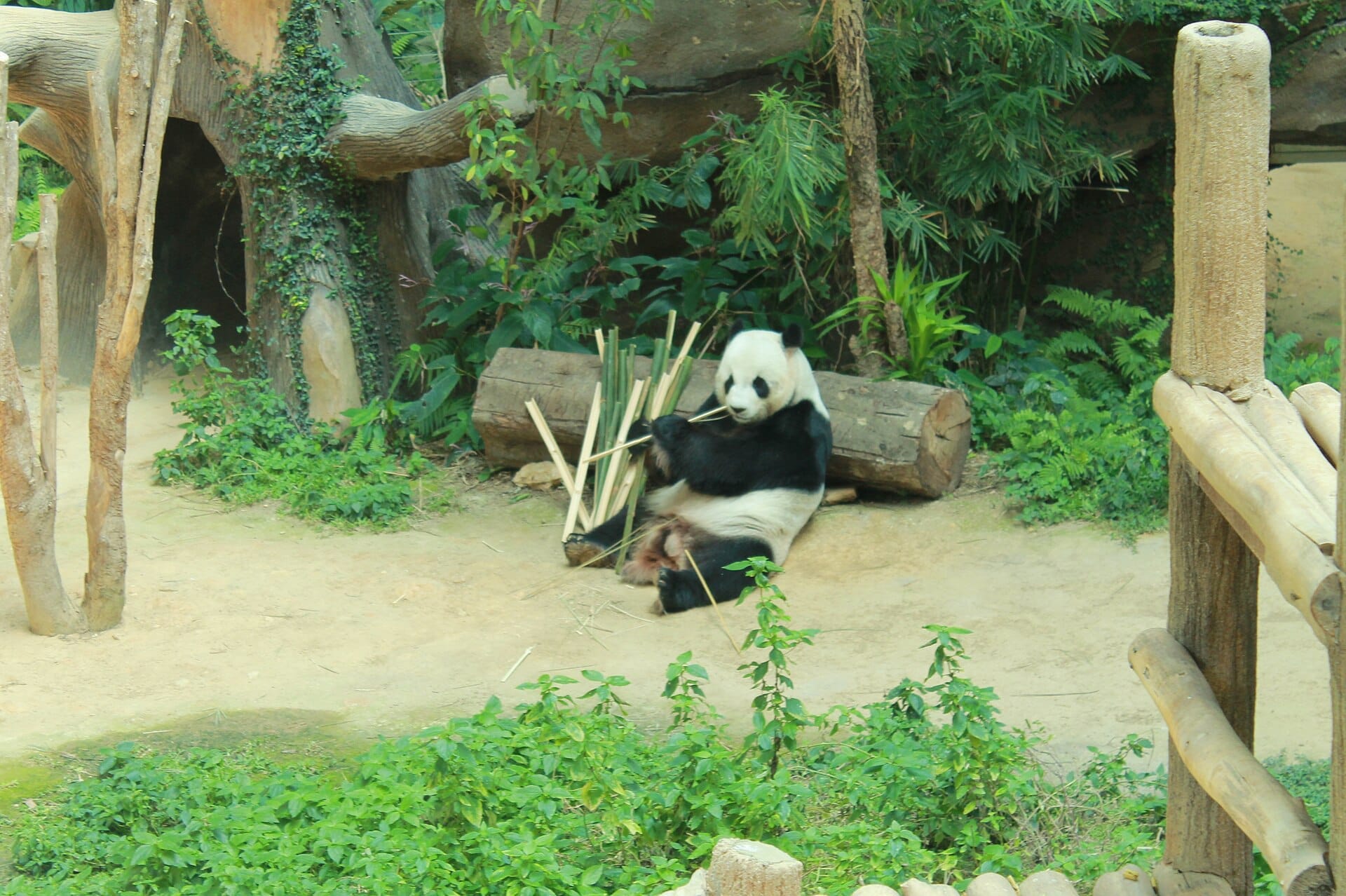
By 11:00 AM, school groups and weekend families arrive in force. The reptile house and the Great Ape Centre become crowded. If you plan to visit the Panda Forest (home to Giant Pandas Xing Xing and Liang Liang, a loan from China), arrive before noon. The panda enclosure has timed viewing, and the queue grows long by midday.
Between noon and 2:00 PM, many animals retreat into shade or indoor sections, and the paths turn hot. This is when most visitors take a break. The zoo has a food court near the central plaza. The food is functional rather than special: basic Malaysian rice dishes, fried snacks, and bottled drinks. Bringing your own water is strongly recommended.
💡 Local tip
Bring at least 1.5 litres of water per person. The food court sells drinks, but queues are long at peak times and shade on the paths is inconsistent. A hat and sunscreen are not optional in the midday heat.
Afternoon sessions after 3:00 PM bring some animal activity back, particularly in the elephant and primate sections. The light is also better for photography at this angle. If you are visiting without children and can control your timing, arriving at 9:00 AM and leaving by 1:00 PM covers the best of the zoo before exhaustion sets in.
Tickets & tours
Hand-picked options from our booking partner. Prices are indicative; availability and final rates are confirmed when you complete your booking.
Private Taman Negara day trip from Kuala Lumpur with lunch
From 85 €Instant confirmationFree cancellationTaman Negara jungle tour
From 182 €Instant confirmationFree cancellationPetronas Twin Towers and Kuala Lumpur Tower observation deck tickets
From 34 €Kuala Lumpur city and Batu Caves tour
From 41 €Instant confirmationFree cancellation
Key Animal Exhibits and What to Prioritise
The Malayan Tiger exhibit should be your first stop after the main gate. Tigers are most alert in the early morning, and this is one of only a few places in Malaysia where you can observe Malayan tigers, a critically endangered subspecies with fewer than 150 individuals estimated to remain in the wild. The enclosure is not small, and sightings depend on where the animals choose to position themselves, but morning visits consistently produce better views.
The Great Ape Centre houses orangutans and is one of the zoo's stronger exhibits. The enclosures have climbing structures and enrichment activities, and the orangutans are visibly engaged with their environment. The proboscis monkey enclosure, a species endemic to Borneo and rarely seen in captivity outside Southeast Asia, is worth finding on the map even though it requires some walking.
Panda Forest is a separate ticketed experience (additional fee applies on top of general admission). The pandas are on loan from China under a conservation agreement. Viewing is through a glass partition; the interior is kept cool for the animals, which means the brief viewing window actually provides some welcome relief from the heat. It is a short experience, roughly 10 minutes, but for most visitors it is the highlight.
The Aquarium section and the Bird Aviary are often overlooked but useful mid-day refuges when outdoor paths are hottest. The aviary houses hornbills and other regional bird species in a walk-through format. The reptile house includes reticulated pythons, king cobras, and Malayan gharials, all presented in a somewhat dated but functional indoor setting.
Getting There and Navigating the Site
Zoo Negara sits in Hulu Kelang, outside the walkable area of the city. The most practical route is to take the Kelana Jaya LRT line to Wangsa Maju station, then book a Grab ride for the remaining 10–15 minutes. The trip costs around RM8–12 one way by Grab. There is no convenient direct bus service from the city centre, which is worth knowing if you are relying on public transit. If you are coming from KLCC or Bukit Bintang, budget around 20–30 minutes total travel time.
Once inside, the zoo is large enough that orientation matters. Collect the map at the entrance gate and identify the three or four exhibits you most want to see before you start walking. The terrain is gently hilly, which becomes noticeable after two hours on foot. A tram service loops around the main circuit, sold separately at a modest fee, and is worth considering for families with small children or anyone who wants to do an initial survey loop before walking specific sections.
⚠️ What to skip
Footwear matters more than most people expect. Paths are paved but uneven in sections, and the slope accumulates over a long visit. Sandals are manageable for adults; closed shoes are better. Pram and wheelchair access is possible on main paths but limited in some older enclosure areas.
Photography and Practical Observations
The quality of your photographs depends heavily on timing and enclosure design. Some enclosures at Zoo Negara still use glass partitions or wire mesh that interferes with camera focus, particularly in older sections. The Malayan tiger habitat and the ape centre offer more open sight lines. A zoom lens (or long focal length on a smartphone) makes a noticeable difference. Flash photography is prohibited in most indoor sections and near the pandas.
Morning light (before 10:30 AM) is directionally useful for the enclosures along the eastern path. Overcast days, which are common during the wet season (October to March), diffuse the harsh tropical light and actually produce cleaner animal photographs than bright sunny days where shadow contrast is extreme.
For context on the best season to plan a visit, the best time to visit Kuala Lumpur guide covers the rainy season patterns in detail. Zoo Negara remains open in light rain, and a poncho is more useful than an umbrella given you need both hands free.
Honest Assessment: Who Gets the Most From Zoo Negara
Zoo Negara is best suited to families with children aged 4 and up, wildlife enthusiasts specifically interested in Southeast Asian species, and visitors who want a half-day away from the urban core of Kuala Lumpur. For families making their first trip to Malaysia, the concentration of regional species, tigers, sun bears, tapirs, orangutans, all in one location provides genuine educational value and the kind of close-range wildlife access that would otherwise require trips to multiple national parks.
For travellers focused on city experiences, architecture, or food, the effort of getting to Zoo Negara and the time it requires may not align with a short itinerary. The things to do in Kuala Lumpur guide provides a broader framework for deciding how Zoo Negara fits into a multi-day plan.
Solo travellers and couples without a particular interest in wildlife often find the experience less compelling than the time investment suggests. The zoo is also not an appropriate recommendation for visitors with limited mobility: while the main paths are accessible, the full site requires sustained walking on uneven terrain.
If your primary interest is wildlife in a more natural setting, KL Bird Park in the Lake Gardens offers a more immersive walk-through experience with better enclosure design, and it is closer to the city centre. The KL Butterfly Park nearby is smaller but consistently well-maintained.
Conservation Context
Zoo Negara operates under the Malaysian Zoological Society and participates in several regional conservation programs, including captive breeding programs for Malayan tigers and sun bears. The zoo's role in public education about Malaysian biodiversity is taken seriously at an institutional level, and signage throughout the grounds provides species-level information on habitat, status, and threats. This context makes the visit meaningfully different from purely entertainment-focused animal parks.
The pandas warrant specific mention here. Giant Panda diplomacy with Malaysia began in 2014, and Xing Xing and Liang Liang have since had cubs at Zoo Negara, a notable conservation outcome. The cub born in 2021 attracted significant public attention and reinforced the zoo's international profile. Panda breeding outside of China is rare, and Zoo Negara's record on this is a legitimate point of distinction.
Insider Tips
- The zoo's tram does a full loop and is the best way to orient yourself on arrival before deciding which sections to walk. Buy the tram ticket at the booth near the main gate before you enter the exhibit areas.
- Feeding schedules for high-interest animals like the tigers and orangutans are posted on a board near the entrance each morning. Photograph this board immediately so you have the day's timing on your phone.
- Panda Forest tickets are sold separately and can sell out on weekends and public holidays. Check availability online before arrival or purchase immediately upon entering the zoo.
- The eastern perimeter path along the primate section is significantly less crowded than the central route, even at peak times. If you want unobstructed views of the gibbons and proboscis monkeys, approach from that side.
- The zoo has a small gift shop near the exit that sells a narrow range of wildlife-themed items. If you want to pick up something for children, this is the place, but the selection is limited and prices reflect the captive audience.
Who Is Zoo Negara For?
- Families with children aged 4 and above who want close-range access to Southeast Asian wildlife
- Wildlife enthusiasts focused on species endemic to Malaysia and Borneo
- First-time visitors to Kuala Lumpur wanting a half-day break from urban sightseeing
- School groups and educational visits with a specific curriculum focus on biodiversity
- Anyone specifically interested in seeing giant pandas without travelling to China
Nearby Attractions
Combine your visit with:
- Batu Caves
Batu Caves is a series of ancient limestone caverns set inside a 400-million-year-old hill, crowned by a 43-metre golden statue of Lord Murugan and reached by 272 rainbow-coloured steps. It is the most significant Hindu shrine outside India and one of Southeast Asia's most photographed natural landmarks. Whether you come for the temple rituals, the cave ecology, or simply the spectacle, the site rewards visitors who time their arrival carefully.
- Istana Budaya
Istana Budaya is Malaysia's premier performing arts venue, staging everything from grand theatrical productions to classical concerts and traditional dance. Beyond the performances, the building itself is a striking piece of contemporary Malaysian architecture worth seeing up close.
- Kepong Metropolitan Park
Kepong Metropolitan Park is one of Kuala Lumpur's largest and least-touristed green spaces, built around a large lake with forest-edged trails, cycling paths, and open lawns. It draws locals for morning jogs and weekend picnics rather than international visitors, which makes it genuinely worth exploring.
- Little India (Brickfields)
Brickfields is Kuala Lumpur's officially designated Little India, a compact neighbourhood packed with Tamil temples, textile traders, flower-garland sellers, and some of the city's best South Indian vegetarian cooking. It rewards slow walking and curious noses more than any checklist approach.