Whampoa Military Academy Memorial Site: Guangzhou's Revolutionary Landmark
The Whampoa Military Academy Memorial Site on Changzhou Island preserves the buildings where China's most consequential military officers were trained in the 1920s. Free to enter and open six days a week, it rewards visitors with well-preserved Republican-era architecture, detailed exhibition halls, and an unusual island setting that keeps crowds thin even on weekends.
Quick Facts
- Location
- No. 170 Junzhou Road, Changzhou Island, Huangpu District, Guangzhou
- Getting There
- Bus 430 to Whampoa Military Academy Terminal; or Bus 430 with a ferry transfer from Yuzhu Pier
- Time Needed
- 1.5 to 2.5 hours
- Cost
- Free admission
- Best for
- History enthusiasts, architecture fans, quiet half-day excursions
- Official website
- www.hpma.cn/Home
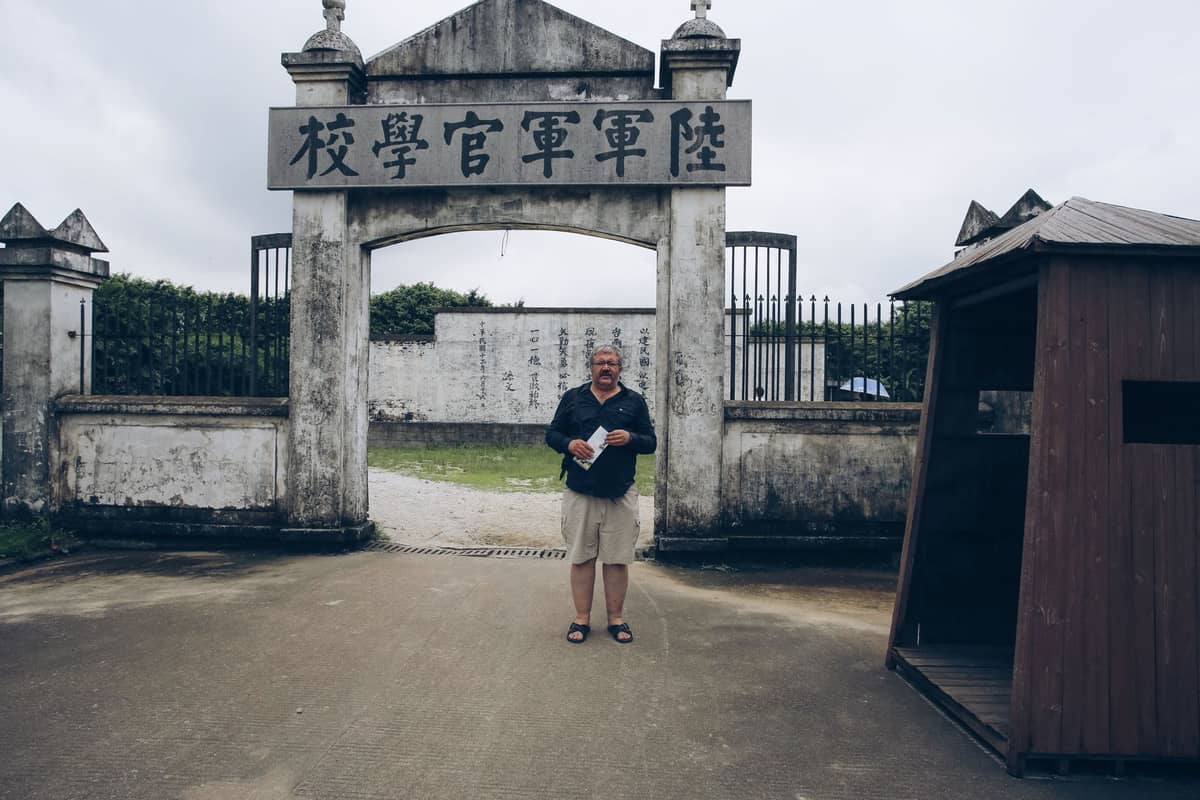
Why the Whampoa Military Academy Still Matters
Founded on June 16, 1924, the Whampoa Military Academy — formally the Chinese Nationalist Party Army Officer Academy — trained the generation of commanders who shaped modern China. Graduates from Whampoa went on to lead armies on both sides of the Chinese Civil War, fought Japanese forces during the Second Sino-Japanese War, and occupied senior positions in the governments of both the People's Republic and Taiwan for decades. For a single institution to have produced officers on such opposing sides of history is extraordinary, and the site reflects that complexity honestly rather than flattening it into simple patriotic narrative.
The memorial hall (黄埔军校旧址纪念馆) was formally established in June 1984. Its most recent milestone was the reopening of the main site on June 16, marking the 100th anniversary of the academy's founding. The exhibits have been updated to reflect this history with greater depth, making this one of the better-curated revolutionary-era sites in Guangdong Province.
ℹ️ Good to know
The site is closed on Mondays. Opening hours are 09:00–17:00, Tuesday through Sunday. Admission is free, but bring identification as free entry sites in China occasionally require ID registration at the gate.
Getting to Changzhou Island
Reaching the memorial site takes a little planning, and that effort is itself part of the experience. Changzhou Island sits in the Pearl River east of the city center, and accessing it involves either a bus ride directly to the academy terminal or a combination of metro and ferry. Neither route is complicated, but both take longer than most central Guangzhou attractions.
The most direct option is Bus 430 to the 黄埔军校总站 (Whampoa Military Academy Terminal), from which the gate is a short walk. Alternatively, a bus-to-ferry route via Yuzhu Pier also works. The ferry crossing, if you take that option, adds a layer of context: you approach the island by water, much as cadets originally would have. For a broader sense of how to move around the city efficiently, see the getting around Guangzhou guide covers metro lines, buses, and ferry connections in useful detail.
Plan about 30 to 45 minutes for travel from the city center, depending on your starting point and which route you choose. The island is quiet by Guangzhou standards, and the roads near the academy are lined with old trees that make the walk from the bus stop pleasant rather than inconvenient.
The Architecture and Physical Layout
The main building is a two-story white structure in the hybrid Sino-Western style common to institutional architecture of the Republican period (1912 to 1949). The facade is symmetrical, with columns framing the central entrance and a horizontal parapet above bearing the original academy name in characters. The proportions are formal without being grandiose — this was built to train officers, not to impress foreign dignitaries.
Inside, the rooms are arranged around a central courtyard. Classrooms, dormitories, and administrative offices have been restored to approximate their original appearance, with period furniture, maps, and personal effects placed to suggest occupation rather than vacancy. The textures here are worth paying attention to: worn wooden floorboards, thick plaster walls that hold the cool air even in warm weather, and iron window latches that still work with satisfying resistance.
The grounds extend beyond the main building to include a memorial garden, several subsidiary exhibition halls, and monuments to graduates from specific graduating classes. The layout rewards slow exploration rather than a quick circuit. For travelers interested in how this architecture fits into the broader pattern of Guangzhou's Republican-era buildings, the Guangzhou architecture guide provides useful comparative context.
What the Exhibitions Actually Show
The main exhibition hall tracks the academy's history across its six Guangzhou cohorts (1924 to 1930) and later phases. Displays cover the political circumstances of the academy's founding — the alliance between the Nationalist Party and the Communist Party of China that made it possible — the curriculum, the battles graduates participated in, and the eventual split between the two parties. The English labeling is present but inconsistent in quality, so visitors without Chinese reading ability will benefit from either a guided tour or some background reading before arriving.
What the exhibitions do unusually well is acknowledging the divergence of alumni. Rather than presenting a single triumphant narrative, the displays note graduates on both sides of major conflicts, including figures who later held senior roles in the Republic of China military. This even-handedness is not universal in mainland Chinese memorial sites, and it makes the Whampoa site more intellectually interesting than the average revolutionary museum.
One room is dedicated to Sun Yat-sen's role in establishing the academy, with photographs, correspondence, and biographical information. Another covers Chiang Kai-shek's tenure as the first commandant. A separate section addresses the role of Soviet advisors, whose involvement in the early academy is documented with photographs and organizational charts that most Western visitors will find genuinely surprising.
💡 Local tip
If you have limited reading ability in Chinese, download a translation app before you arrive. The exhibit labels are detailed and the English versions, where present, omit significant content. Spending five minutes photographing and translating a panel will reveal details that a quick walk-through completely misses.
How the Experience Changes Through the Day
Morning visits, particularly between 9:00 and 11:00, are the quietest. The light comes in low from the east, catching the pale facade of the main building and the inscription above the entrance clearly. At this hour the courtyard is often empty and the sounds are mostly birds from the trees surrounding the grounds. Weekdays are consistently quieter than weekends, when school and tour groups sometimes arrive in organized cohorts.
By midday the site can feel warm, especially in summer. The interior rooms provide shade and stay noticeably cooler than the open grounds, so reversing the typical order — starting with the outdoor monuments and finishing in the exhibition halls — keeps you comfortable. In the afternoon, light from the west gives the main building a warmer tone and makes for better photographs of the facade than the flat midday sun allows.
The surrounding island has a calm, semi-rural character that persists throughout the day. There are small food stalls and simple restaurants near the bus terminal and along the road approaching the site. None of them are remarkable, but they are adequate for a simple lunch before or after your visit. Bringing water is sensible given that the nearest convenience store is not immediately adjacent to the gate.
Practical Considerations Before You Go
Comfortable walking shoes are sufficient — the grounds are paved and the terrain is flat. There are no significant physical barriers to entry at the ground level, though the site's official accessibility provisions for visitors with mobility limitations are not documented in publicly available sources, so those with specific access needs should contact the memorial hall directly before visiting.
Photography is permitted throughout the site. The main building facade, the entrance inscription, and the courtyard interior are the strongest photographic subjects. A wide-angle lens or smartphone in standard mode handles the courtyard adequately; the interior rooms are dim and benefit from steady hands or a surface to brace against, since flash photography can feel intrusive in the quieter display rooms.
The Whampoa Military Academy fits naturally into a broader Huangpu-area day that might also include the nearby Huangpu Ancient Port, which documents the maritime trade history of this stretch of the Pearl River. The contrast between the two sites — one focused on military and political history, the other on commercial history — makes for a rounded and manageable half-day in the eastern part of the city. For context on the Pearl River's role in connecting these sites, the Pearl River guide is worth reading before your trip.
⚠️ What to skip
The site is closed every Monday. Arriving on a Monday is the most common practical mistake visitors make. Double-check your visit day before making the trip from central Guangzhou, given the travel time involved.
Who Should Skip This Attraction
Visitors with little interest in Chinese Republican-era history or military history will find limited appeal here. The site is not a spectacle — there are no dramatic reconstructions, interactive elements aimed at casual visitors, or the kind of visual scale that makes a place compelling regardless of prior knowledge. Children under around twelve are likely to find the exhibition format slow. Travelers on a tight schedule who need to prioritize will get more sensory variety from other Guangzhou attractions.
Those visiting Guangzhou primarily for food, shopping, or urban energy should allocate their time accordingly. The complete guide to things to do in Guangzhou provides a comparative view of the city's range of attractions so you can make that call clearly.
Insider Tips
- The 100th anniversary renovation updated the signage and layout significantly. Older travel accounts describing the exhibitions as sparse or poorly labeled may no longer be accurate — the current version is noticeably more detailed.
- Bus 430 is the most reliable single-vehicle option from the city center. The ferry approach from University City North is more scenic but adds time and a transfer, so it works best if you enjoy the journey as part of the experience rather than just getting there.
- The memorial garden at the rear of the complex, which contains graduates' monuments and memorial tablets, is often overlooked by visitors who spend all their time in the main hall. It provides quieter, more reflective space and is worth the additional fifteen minutes.
- The official English-language version of the website (https://www.hpma.cn/enhp) provides background on the academy's history that is helpful to read before arriving, so you can move through the exhibitions with context rather than building it from scratch on-site.
- Late afternoon light on the main facade between 15:00 and 16:30 is noticeably warmer and better for photography than morning light. If the building's exterior is a priority, arrive early to see the exhibitions and plan your exterior photos for before you leave.
Who Is Whampoa Military Academy Memorial Site For?
- History enthusiasts with an interest in Republican-era China or the Chinese Civil War period
- Architecture travelers interested in early twentieth-century Sino-Western institutional buildings
- Visitors who want a substantive half-day excursion away from central Guangzhou without a long-distance day trip
- Educators or students studying modern Chinese political and military history
- Travelers combining the site with the nearby Huangpu Ancient Port for a full eastern Guangzhou day
Nearby Attractions
Combine your visit with:
- Kaiping Diaolou and Villages
Kaiping Diaolou and Villages is a UNESCO World Heritage Site in Jiangmen, Guangdong, featuring hundreds of multi-storey fortified towers that fuse Cantonese village traditions with Chinese and Western architectural styles. Spread across four distinct village clusters, the site is one of the most architecturally distinctive day-trip destinations reachable from Guangzhou.
- Nansha Tianhou Palace
Nansha Tianhou Palace is one of the largest Mazu temples in the Pearl River Delta, spread across the southeastern slope of Dajiao Mountain in Guangzhou's southernmost district. Covering roughly 18 hectares of terraced courtyards, incense halls, and forested hillside, it draws both devoted worshippers and curious travellers looking for a different side of Guangzhou.
- Nansha Wetland Park
Nansha Wetland Park protects about 10,000 mu of tidal flats, mangrove forest, and reed beds at the southern tip of Guangzhou, where the Pearl River meets the sea. It is the largest coastal mangrove wetland in the city, best known as a staging ground for migratory birds and as a rare place to slow down inside one of China's most energetic metropolises.