Wat Jed Yod: Chiang Mai's Serene Seven-Spired Temple
Wat Jed Yod is a 15th-century temple complex northwest of Chiang Mai’s Old City, famous for its unusual seven-spired chedi inspired by the Mahabodhi Temple in India. It sees far fewer visitors than nearby temples, making it one of the more contemplative stops in the city.
Quick Facts
- Location
- Super Highway (Highway 11), northwest of the Old City, Chiang Mai
- Getting There
- Songthaew (red truck taxi) or tuk-tuk from the Old City; roughly 10–15 minutes from Tha Phae Gate by road, depending on traffic
- Time Needed
- 45 minutes to 1.5 hours
- Cost
- Free entry (donations welcome)
- Best for
- History lovers, architecture buffs, travelers wanting a quiet temple without the crowds
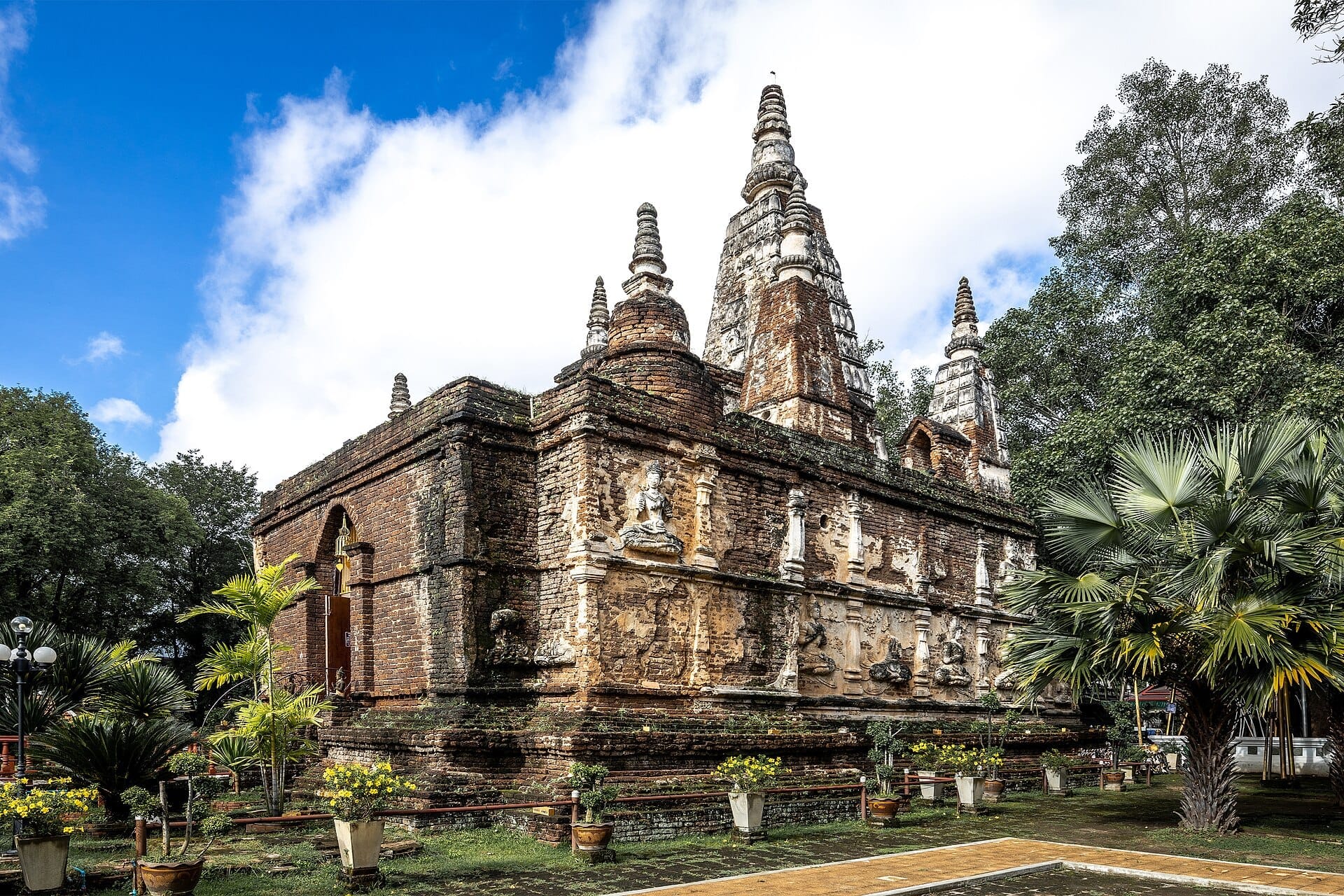
What Is Wat Jed Yod?
Wat Jed Yod, whose name translates literally as 'Temple of the Seven Spires,' is one of the most architecturally distinctive religious sites in northern Thailand. Built around 1455 during the reign of King Tilokarat of the Lanna Kingdom, the temple is believed to have been constructed to commemorate the 2,000th anniversary of the Buddha's enlightenment and later hosted the Eighth World Buddhist Council in 1477. That historical weight gives the complex a gravity that many newer temples simply cannot replicate.
The temple sits just outside the northwestern corner of the Old City moat, a short distance from the Chiang Mai city walls and moat. Despite this central location, it sees a fraction of the foot traffic that flows through better-known sites like Wat Phra Singh or Wat Chedi Luang. If you've spent a morning temple-hopping through the Old City and are starting to feel the fatigue of tour groups and entrance queues, Wat Jed Yod offers a genuine exhale.
The Seven-Spired Chedi: Architecture Worth Studying
The centrepiece of the complex is the remarkable rectangular chedi crowned with seven stubby spires, a form modelled directly on the Mahabodhi Temple in Bodh Gaya, India, where the Buddha attained enlightenment. The architectural borrowing was intentional and deeply symbolic: King Tilokarat wanted to anchor Lanna Buddhism within the broader pan-Asian Buddhist tradition. The result is a structure unlike almost anything else in Thailand, where most chedis follow the tapered conical form common throughout the country.
Running along the upper exterior walls of the main chedi are weathered stucco relief figures, believed to depict celestial beings or devas. These reliefs are partially eroded after more than five centuries of monsoon seasons, but their survival is striking. Up close, you can trace the outline of robes and gestures in the mottled grey-white plaster. Bring your glasses or binoculars if you want to study the detail properly.
The temple grounds also contain a large old Bodhi tree, whose aerial roots and broad canopy create a natural shelter that feels almost as old as the temple itself. Several smaller chedis and a viharn (assembly hall) complete the complex. The viharn houses Buddha images in the Lanna style, and the interior is typically dim and cool, a sharp contrast to the sharp sunlight outside.
💡 Local tip
Visit between 7am and 9am for the best light on the stucco reliefs and to watch resident monks during morning chores. The warm, low-angle light catches the texture of the eroded carvings far better than midday sun.
Tickets & tours
Live prices and dates from our booking partner. If you book, we may earn a commission at no extra cost to you.
Doi Inthanon National Park small group guided tour
From 34 €Instant confirmationFree cancellationHalf-day tour to admire elephants and enjoy Thai nature
From 48 €Instant confirmationFree cancellationChiang Mai - Chiang Dao Cave and 5 Hill Tribe villages
From 42 €Instant confirmationFree cancellationArt in Paradise Chiang Mai 3D Art Museum entrance tickets
From 8 €Instant confirmationFree cancellation
How the Temple Feels at Different Times of Day
Early morning is the quietest window. The air still carries a hint of cool from the night, frangipani and incense drift across the courtyard from small offering stations, and the only sounds are birds in the Bodhi tree and the occasional distant hum of traffic on the Super Highway. A few local worshippers may be present, but the space feels largely yours.
By late morning, small tour groups occasionally arrive, usually as part of a broader temple circuit. Even then, 'crowded' at Wat Jed Yod means perhaps a dozen other visitors, not the camera-jostling queues you might encounter at more famous sites. Midday heat between roughly 11am and 2pm makes the open courtyard uncomfortable from March through May, when temperatures regularly exceed 36°C. If you visit during this window, the shaded viharn interior is worth lingering in.
Late afternoon, from around 4pm onward, brings softer light and a second wave of calm. The chedi glows a warmer amber, the reliefs cast subtle shadows, and the monks may be returning from activities. This is also a productive time for photography without harsh shadows flattening the architectural detail.
Historical and Cultural Context
Wat Jed Yod was central to Lanna's political and religious ambitions in the mid-15th century. The Eighth World Buddhist Council, held here in 1477, gathered monks to review and reaffirm the Pali Canon, the scriptural foundation of Theravada Buddhism. This makes the temple not just a local landmark but a site of genuine significance in Buddhist history. For deeper context on Chiang Mai's temple landscape, the Chiang Mai temples guide covers the full arc of Lanna religious architecture across the city.
The Lanna Kingdom, centred in Chiang Mai, maintained a distinct cultural and artistic identity separate from the kingdoms of central Thailand. Its architecture drew freely from Burmese, Shan, and Indian influences, which explains why Wat Jed Yod looks so different from the gleaming gold-tipped temples typically associated with Thai Buddhism. The muted, aged surfaces here are not neglect but heritage.
Practical Walkthrough: What to Expect on Arrival
The main entrance faces the road. There is no ticket booth and no entrance fee, though a donation box sits near the main sanctuary, and the grounds are generally open daily from about 6am to 6pm. Visitors are expected to remove footwear before entering any covered structure, and modest dress applies: shoulders and knees covered. The grounds are compact enough to explore fully in under an hour at a relaxed pace.
The main chedi is the first and most important structure to approach. Walk slowly around its perimeter to examine the stucco reliefs from multiple angles. The western face tends to catch better morning light; the eastern face is more sheltered and its carvings slightly more intact. The viharn is to the side of the main chedi and is usually open during daylight hours, though this can vary based on temple activities.
⚠️ What to skip
The temple sits directly adjacent to the busy Super Highway ring road. The noise is audible from the courtyard and can break the sense of quiet, particularly during peak traffic hours (7am-9am and 5pm-7pm). This is one practical reason why midday, despite the heat, has a certain calm.
Wat Jed Yod is most commonly visited alongside other sites on the northern edge of the Old City. The Chiang Mai National Museum is directly adjacent, sharing essentially the same block, and visiting both in the same session takes little extra time. The museum's collection of Lanna artefacts provides excellent background for understanding what you've just seen at the temple.
Photography and Accessibility Notes
Wat Jed Yod is one of the better temple photography subjects in Chiang Mai for architectural detail work, precisely because it is not over-photographed and the stucco reliefs offer texture that flat gold surfaces do not. A wide-angle lens captures the full chedi form; a short telephoto or macro lens brings out the individual deva figures in the friezes. Avoid flash inside the viharn out of respect.
The grounds are largely flat and accessible for visitors with limited mobility. There are no significant steps to reach the main chedi. For context on planning a broader day around photography in the city, the Chiang Mai photography guide includes timing recommendations for several temple sites.
Travelers looking for a highly polished, fully restored temple experience may find Wat Jed Yod underwhelming. The aesthetic here is weathered and subdued, not the gold-and-mirror grandeur of Wat Phra Singh or the dramatic scale of Wat Chedi Luang. If your interest is in intact historical architecture with visible age, this is one of Chiang Mai's strongest offerings. If you're looking for a photogenic 'golden temple' moment, look elsewhere.
Insider Tips
- The Chiang Mai National Museum is literally next door. Combine both in a single morning session: visit the temple first for context, then the museum for the Lanna artefacts that explain what you saw.
- The Bodhi tree near the back of the grounds offers the best natural shade. If you need to wait out the midday heat before moving on, this is the spot to sit quietly for 15-20 minutes.
- The eastern face of the main chedi has slightly more intact stucco reliefs; the western face catches better morning light for photography. Position yourself on the western side with morning light behind you for the clearest view of the deva figures.
- Wat Jed Yod is rarely included in organised temple tours, which is partly why it stays quiet. If you're renting a bicycle, it's an easy addition to a self-guided loop around the Old City moat.
- Dress code enforcement here is relaxed compared to major tourist temples, but that's no reason to ignore it. Carrying a lightweight sarong or scarf in your bag solves the problem instantly at any temple in the city.
Who Is Wat Jed Yod (Seven Spires Temple) For?
- Architecture and history enthusiasts who want to understand Lanna Buddhist culture beyond surface-level temple visits
- Photographers seeking textured, aged subjects rather than polished gold facades
- Travelers building a self-guided Old City walking loop who want a quieter counterpoint to the main temple circuit
- Buddhist travellers with an interest in the history of the Theravada canon and the Eighth World Council
- Anyone who finds the major tourist temples overwhelming and wants a more contemplative experience
Nearby Attractions
Other things to see while in Old City (Chiang Mai Old Town):
- Chang Phuak Night Market (North Gate Food Market)
Chang Phuak Night Market, known to locals as the North Gate Food Market, is a compact open-air street food gathering outside Chiang Mai's ancient city walls. Night after night, it draws a faithful crowd of students, office workers, and savvy travelers in search of authentic northern Thai cooking at prices that haven't caught up with the tourist economy.
- Chiang Mai City Arts and Cultural Centre
Housed in a beautifully restored colonial-era building on the edge of the Old City's Three Kings Monument plaza, the Chiang Mai City Arts and Cultural Centre offers one of the most accessible and well-curated introductions to Lanna history and northern Thai culture. It rewards both first-time visitors and those who want genuine context before exploring the city's temples and neighborhoods.
- Chiang Mai City Walls and Moat
The rectangular moat and surviving brick walls of Chiang Mai's Old City are the physical outline of a 700-year-old Lanna capital. Free to explore at any hour, they offer one of the most atmospheric walks in northern Thailand, framing temples, corner bastions, and four ceremonial gates.
- Chiang Mai National Museum
The Chiang Mai National Museum offers one of the clearest introductions to northern Thailand's Lanna Kingdom, covering 700 years of history through royal artifacts, Buddhist sculpture, ceramics, and ethnographic collections. It's calm, well-organized, and genuinely undervisited compared to the temples nearby.
Planning a trip? Discover personalized activities with the Nomado app.