Volcán de Lodo El Totumo: The Mud Volcano Day Trip from Cartagena
About 55 km north of Cartagena, a 15-meter cone rises from flat Caribbean lowlands and invites visitors to float in warm, mineral-rich mud. Volcán de Lodo El Totumo is genuinely unusual, but knowing what to expect before you go makes all the difference.
Quick Facts
- Location
- Santa Catalina municipality, Bolívar Department — approx. 55 km (34 miles) northeast of Cartagena de Indias
- Getting There
- Organized day tour (most common), private taxi, or rental car via the Vía al Mar toward Barranquilla. Public bus service to the site is limited.
- Time Needed
- 1–2 hours at the site; allow a full day if joining an organized tour from Cartagena
- Cost
- Entrance approx. 20,000–25,000 COP (≈US$5–6). Massage, photos, or lagoon rinse assistance each around 5,000–10,000 COP extra. Organized day tours from Cartagena typically US$35–65 per person including transport.
- Best for
- Curious travelers, families with older children, anyone wanting an offbeat natural experience near Cartagena
What Exactly Is El Totumo?
Volcán de Lodo El Totumo is an active mud volcano standing roughly 15 meters (50 feet) tall in the flat coastal lowlands northeast of Cartagena, in the municipality of Santa Catalina, Bolívar. Unlike the fire-and-lava volcanoes most people picture, a mud volcano is a geological vent where underground gases push warm, mineral-saturated mud upward through the earth's surface. The result is a small, cone-shaped hill with a crater full of thick grey mud that stays at a comfortable body temperature year-round.
Local lore suggests the mud column reaches 2,300 meters below ground, though that figure is unverified and repeated more as myth than measured science. What is certain is that the mud is dense enough to make you nearly unsinkable — most visitors find themselves bobbing in the crater with almost no effort, which is disorienting at first and entertaining quickly. The crater itself is surprisingly small, fitting roughly 10 to 15 people at a time, which is part of what makes timing your visit important.
ℹ️ Good to know
El Totumo is generally open daily with visiting hours commonly running from around 08:00 to 17:00, with last entry often around 16:30. These hours are consistent across tour operators but there is no official site website to confirm them — verify with your tour operator before departing Cartagena.
The Arrival: Approaching the Volcano
The drive from Cartagena takes about an hour along the Vía al Mar (Paralela al Mar), a coastal highway that runs northeast toward Barranquilla. As you leave the city behind, the landscape shifts from urban sprawl to a flat belt of scrubland and salt flats bordering the Caribbean. The road is in reasonable condition but can be slow in parts, especially if you hit a bus convoy or road construction.
The volcano announces itself from a distance as a smooth brown cone rising improbably from the surrounding flatness. Up close, the cone is steeper than it looks from the road. A wooden staircase winds up the outside to the rim, and from there a short ladder descends into the mud. The staircase is sturdy but narrow and uneven underfoot, and the ground around the base becomes slick when wet. Flip-flops or sandals you don't mind getting muddy are the right footwear for the approach.
⚠️ What to skip
El Totumo is not accessible for wheelchair users or visitors with significant mobility limitations. The staircase is steep and uneven, and descending into the crater requires using a ladder. Several tour operators also advise against the experience for pregnant women. If mobility is a concern, skip the crater and enjoy the grounds from below.
Tickets & tours
Hand-picked options from our booking partner. Prices are indicative; availability and final rates are confirmed when you complete your booking.
Totumo Volcano and lunch at a VIP hotel from Cartagena
From 34 €Instant confirmationFree cancellationCity tour of Cartagena with entry to San Felipe castle
From 25 €Instant confirmationFree cancellationSan Andres Islands pontoon tour through the inner bay
From 26 €Instant confirmationFree cancellationGlass-bottom boat tour to San Andres aquarium and mangroves
From 21 €Instant confirmationFree cancellation
Inside the Crater: What the Experience Actually Feels Like
The moment you step off the ladder into the crater is the moment the experience either clicks or doesn't. The mud is warm — not hot — and it has the consistency of very thick, cold cream. Your body floats almost immediately, which means keeping your footing is counterintuitive. Most first-timers spend a few seconds looking slightly panicked before they relax into it.
Local attendants stand in the mud with you and will, for an additional 10,000 COP, give you what is loosely called a massage. In practice, this involves them rotating your body, kneading your limbs, and pulling you through the mud. It is more vigorous than spa-like, and the theatrics of it are part of the entertainment. Whether you want it or not, they will often begin without being asked — it is worth deciding in advance if you want to pay for it, and politely declining if not.
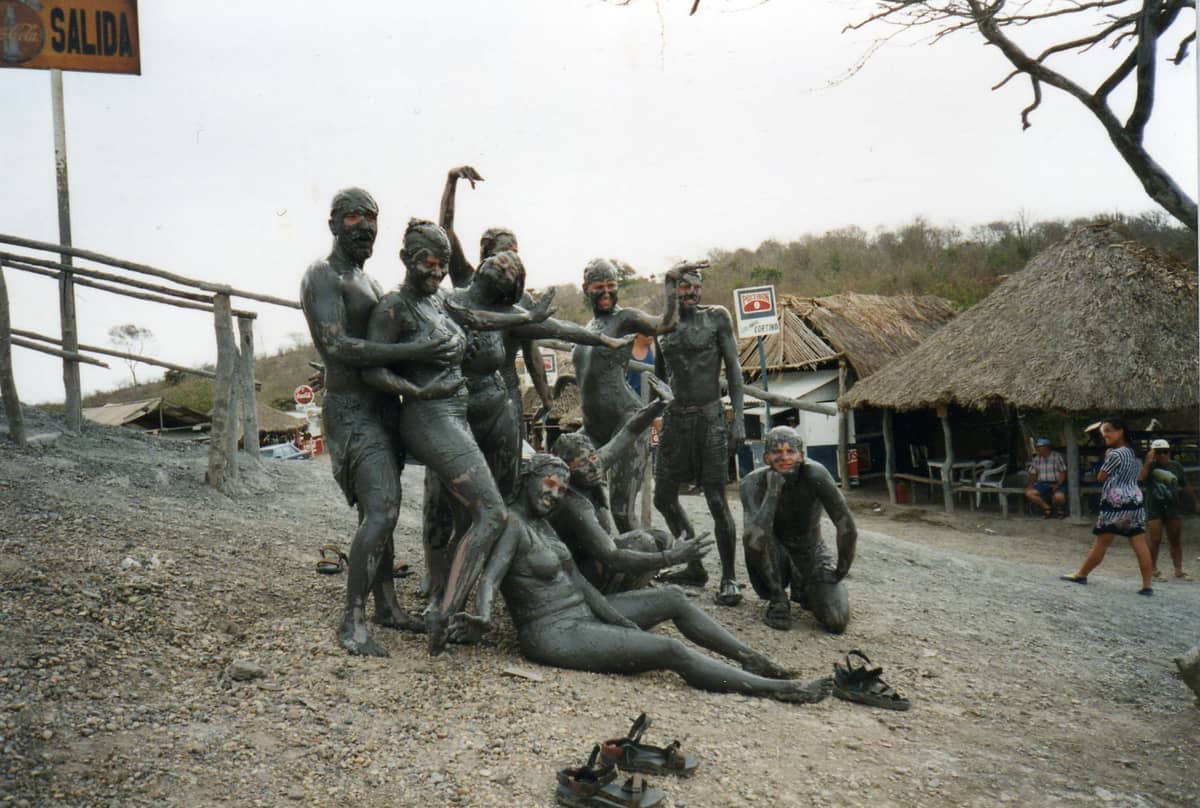
The mud itself does not smell strongly, which surprises most visitors who expect something sulfurous. There is a faint mineral earthiness to it, nothing offensive. It coats your skin thoroughly — expect to be completely grey from the chest down by the time you climb back out. The crater holds around 10 to 15 people, so on busy weekend mornings the tight quarters are real. Midweek mornings before 10:00 are considerably quieter.
After the Mud: The Lagoon Wash and the Vendors
After climbing back out, visitors walk down to a shallow freshwater lagoon at the base of the volcano where local women help rinse off the mud for around 10,000 COP; there are no proper shower facilities on-site beyond this basic rinse. The rinse is thorough but basic: you stand waist-deep in the lagoon while someone pours water over you and scrubs the mud off your back and hair. Bring a change of clothes in a plastic bag, because your swimwear will stay stained a faint grey regardless.
Once cleaned off, the area around the base has a cluster of small food stalls and vendor stands selling cold drinks, snacks, and souvenirs. The atmosphere at this point is relaxed and sociable. Prices are reasonable for tourist-adjacent standards. If you came on an organized tour, your guide will typically signal when it is time to board and head back to Cartagena.
💡 Local tip
Bring small bills in Colombian pesos for the crater attendants, the rinse service, and any food you buy on-site. Card payments are not available. Also bring a dry bag or a sealed plastic bag for your phone and valuables — there is no secure storage at the site.
When to Go and How to Get There
Timing matters more than many guides admit. Weekend mornings between 09:00 and 12:00 see the heaviest crowds, when organized tour groups from Cartagena and Barranquilla converge simultaneously. The crater is small enough that waiting times to get in can stretch to 30–40 minutes on a busy Saturday. Arriving before 09:30 on a weekday, or joining a tour that departs at or before 08:00, gives you a meaningfully better experience with fewer people jostling for space in a hole the size of a large hot tub.
The most straightforward approach from Cartagena is an organized day tour, which costs roughly US$35–65 per person including transport and entrance. These can be booked through most hotels in the historic center or through tour agencies in Getsemaní. Independent travelers with more flexibility can hire a taxi for the round trip — negotiate the total fare including waiting time before you leave Cartagena. Driving yourself is straightforward if you have a rental car; the route follows the main coastal highway and El Totumo is signposted from the road.
Weather affects the experience, but not in the way you might expect. The dry season from December to April means less mud on the access path and a shorter, more comfortable drive. During the rainy season (May to November), the surrounding ground can become quite slippery around the cone's base, and the drive out on the Vía al Mar occasionally encounters flooded sections. The mud inside the crater itself is unaffected by rainfall.
El Totumo is a natural fit as part of a broader day trip from Cartagena — many visitors combine it with a beach stop or a Caribbean lunch along the coast. Some organized tours bundle the mud volcano with time at a nearby beach club, which is a logical pairing since you are already cleaned up and on the coast.
What It Is — and What It Isn't
El Totumo is genuinely odd and genuinely worth seeing if you approach it with realistic expectations. It is not a serene spa experience. The crater is small, the attendants are persistent, and the surrounding site is modest at best. The whole time at the volcano itself rarely exceeds 45 minutes. But the floating sensation in warm mud, the absurdity of being coated head-to-toe in grey mineral paste an hour from a UNESCO-listed colonial city, and the easy sociability of the rinse lagoon afterward add up to something memorable.
Travelers who come expecting a polished eco-attraction will feel underwhelmed. Travelers who come expecting a slightly chaotic, entirely Colombian roadside curiosity will leave with a good story. If you are already planning things to do in Cartagena, El Totumo sits comfortably in the category of worthwhile half-day excursions rather than essential sightseeing.
Who should skip it: travelers with mobility issues, those who are uncomfortable in small enclosed spaces shared with strangers, or anyone on a very short trip who needs to prioritize the city's own considerable attractions. The two hours of round-trip driving is not worth it if you only have one day in Cartagena.
Photography and Practical Notes
Getting good photos inside the crater requires either a waterproof camera or handing your phone to someone staying outside the crater. Mud and smartphones do not coexist well, and drops happen frequently in the slippery conditions. Several tour operators work with local photographers who will take pictures of you in the mud for a fee — if that appeals to you, confirm pricing before you hand over your camera.
Wear a swimsuit you do not mind staining. A light cover-up for the drive back is useful since the post-rinse lagoon wash is thorough but not perfect. Sunscreen applied before entering the mud will mostly wash off, so reapply after the lagoon rinse. The site sits in open, flat terrain with minimal shade, so sun protection matters particularly in the peak dry-season months — for more on Cartagena's climate, the best time to visit Cartagena guide covers the seasonal picture in detail.
Insider Tips
- Arrive before 09:30 on a weekday to avoid queuing at the crater. Weekend midday visits can mean 30-plus minutes of waiting in direct sun for a crater that fits around a dozen people.
- Negotiate the taxi fare for the full round trip including waiting time before leaving Cartagena — settling this in advance avoids a difficult conversation when you are mud-covered and ready to go home.
- Bring 10,000 COP notes specifically for the crater attendants and the lagoon rinse women. Tipping fairly keeps the experience pleasant; carrying exact change avoids the awkward 'no change' situation.
- Pack your phone, wallet, and any non-waterproof items inside a sealed zip-lock bag before approaching the cone. There is no secure storage at the site and the ground around the base is slippery.
- The lagoon rinse gets most of the mud off but not all of it — a proper shower back at your hotel finishes the job. Don't plan a nice dinner immediately after this excursion unless your hotel is close.
Who Is Volcán de Lodo El Totumo For?
- Travelers wanting a natural, offbeat experience beyond Cartagena's colonial center
- Families with older children and teenagers who will find the floating mud crater entertaining
- Visitors on a 3-plus day itinerary who have time for a half-day excursion outside the city
- Anyone curious about Colombia's geological oddities and unusual landscapes
- Groups or couples looking for something lighthearted and easy to combine with a coastal lunch
Nearby Attractions
Combine your visit with:
- Mercado de Bazurto
Mercado de Bazurto is where Cartagena actually shops for food. Far from the polished streets of the Walled City, this enormous working market is a sensory overload of fresh fish, tropical fruit, and cumbia drifting from open-air stalls. It rewards curious visitors who come prepared.
- Casa Museo Rafael Núñez
The Casa Museo Rafael Núñez preserves the lakeside El Cabrero home of Rafael Núñez Moledo, Colombia's most consequential 19th-century statesman. Free to enter and a short walk from the Old City, it offers a rare, unhurried look at the private life of the man who wrote the 1886 constitution and penned the national anthem.
- Castillo de San Felipe de Barajas
Perched on Cerro San Lázaro just east of Cartagena's walled city, the Castillo de San Felipe de Barajas is the largest Spanish colonial military fortress ever built in the Americas. Its tunnels, ramparts, and sweeping Caribbean views reward visitors who come prepared and arrive early.
- Convento de Santa Cruz de la Popa
Rising roughly 150 meters above sea level in Cartagena de Indias, the Convento de Santa Cruz de la Popa sits on the city’s highest natural point and one of its oldest religious sites. Visitors climb to a 17th-century Augustinian monastery for panoramic views, colonial architecture, and a surprisingly serene escape from the heat of the streets below.