Usina del Arte: La Boca's Industrial Cultural Centre
Housed in a former electric power plant on the edge of the Riachuelo, Usina del Arte is one of Buenos Aires's most architecturally striking cultural venues. Entry is generally free, programming covers classical music to contemporary art, and the building itself rewards a visit even when nothing is on.
Quick Facts
- Location
- Agustín R. Caffarena 1, corner of Av. Pedro de Mendoza, La Boca, Buenos Aires
- Getting There
- No direct Subte stop; take city buses serving La Boca, or a taxi/remise from San Telmo (approx. 10 min)
- Time Needed
- 1.5–3 hours depending on programming
- Cost
- General entry free; some ticketed events may apply — verify near visit date
- Best for
- Architecture lovers, classical music fans, free cultural experiences, weekend afternoons
- Official website
- buenosaires.gob.ar/gcaba_historico/cultura/usina-del-arte
What Usina del Arte Actually Is
Usina del Arte is a multidisciplinary cultural centre occupying the shell of the Don Pedro de Mendoza Power Plant, a turn-of-the-century electricity station in La Boca. The city government restored and repurposed the building, reopening it as a public cultural space. Today it hosts orchestral concerts, chamber music performances, contemporary art exhibitions, and community events across its main concert hall, smaller exhibition rooms, and open courtyard areas.
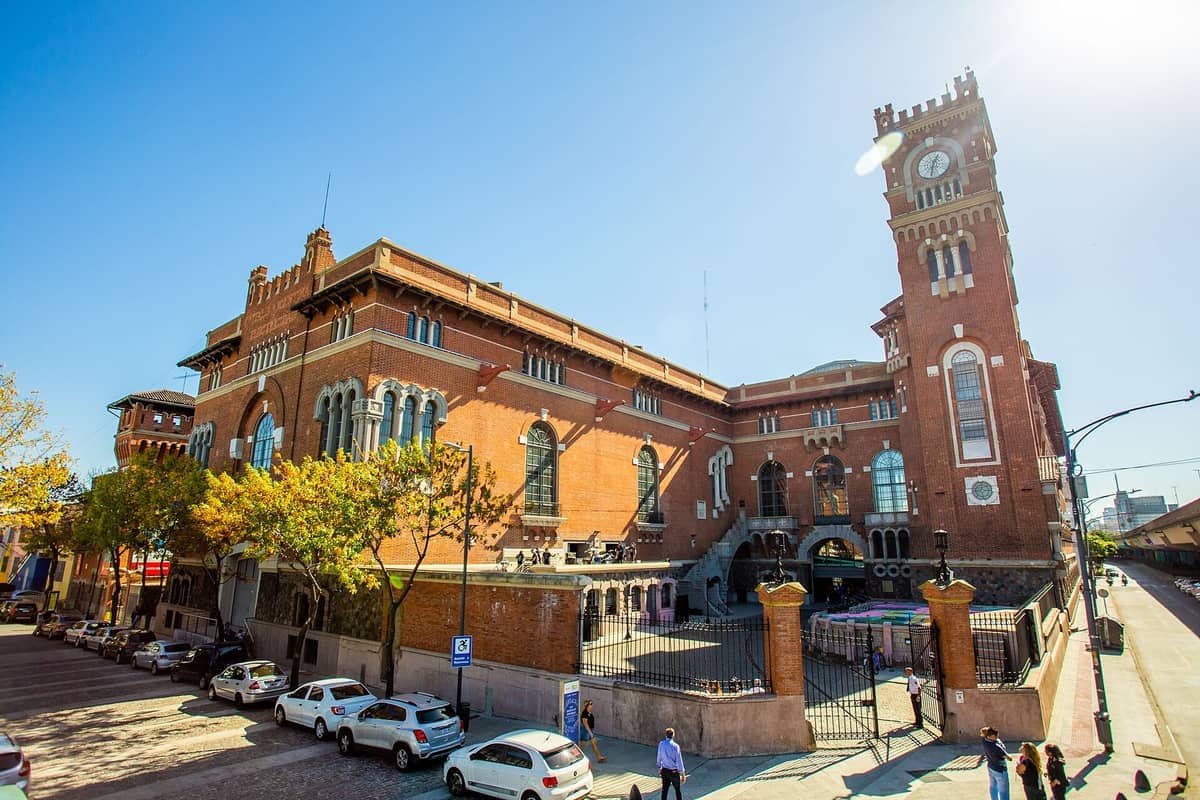
The scale surprises first-time visitors. This is not a boutique gallery crammed into a repurposed shopfront. The main hall has the proportions of a serious concert venue: high vaulted ceilings, exposed brick, original industrial ironwork overhead, and acoustics calibrated for live orchestral performance. The building's footprint along Avenida Pedro de Mendoza is imposing, particularly from the riverside side where the full industrial silhouette — chimney stacks, ornate brick facades, arched windows — reads as something between a Catalan modernist church and a Victorian railway terminus.
💡 Local tip
Check the official Buenos Aires cultural calendar before visiting. Some of the best events at Usina del Arte are free but require advance ticket reservation — showing up without one can mean missing the main concert even if entry to the building is open.
The Building: Architecture Worth the Trip Alone
Built in the early twentieth century as the Don Pedro de Mendoza Power Plant, the structure was an exercise in ornamental industrial architecture at a time when Buenos Aires was expanding rapidly and needed centralized electricity infrastructure. The exterior is faced in red brick with decorative terracotta detailing, corner towers that read almost like a fortified palace, and a rhythm of large arched windows along the nave of the main hall. It is listed as an architectural heritage site by the city.
Inside, the conversion has been handled with restraint. The original turbine hall became the main concert auditorium without erasing the industrial skeleton. Overhead trusses and steel beams remain visible. The spatial volume is enormous — sound travels differently here than in a conventional box theatre, and audiences seated in the upper tiers have sightlines across the whole nave. Secondary spaces, including smaller gallery rooms, have a more finished museum quality while still referencing the raw fabric of the original building.
If Buenos Aires architecture interests you beyond this single building, the broader Buenos Aires architecture guide covers the city's eclecticism from the Palacio Barolo to the art deco towers of the Microcentro.
Tickets & tours
Live prices and dates from our booking partner. If you book, we may earn a commission at no extra cost to you.
Tigre delta trip and visit to Puerto de Frutos
From 54 €Instant confirmationFree cancellationPrivate Buenos Aires city tour with Tigre Delta ride
From 89 €Instant confirmationFree cancellationCarlos Gardel Tango Show tickets with optional dinner
From 66 €Instant confirmationFree cancellationCarlos Gardel Tango Show VIP with transfer and optional dinner
From 88 €Instant confirmationFree cancellation
Programming: What You Might Actually See
The programming at Usina del Arte leans toward classical and orchestral music as its flagship offering, with the Buenos Aires Philharmonic and various chamber ensembles performing regularly. But the schedule is genuinely broad. Weekend afternoons often see free family-oriented concerts, jazz sets, and folk performances in the courtyard or secondary halls. Exhibition spaces rotate through photography, fine art, and design shows, typically organized around Argentine artists or themes with relevance to La Boca's industrial and immigrant history.
Programming quality is consistently high for a free or low-cost public venue. The city government funds the operation, which means the barrier to experiencing it is unusually low for what can genuinely be a world-class musical performance in a spectacular room. That said, what is on any given day varies enormously. A Tuesday afternoon visit might find you wandering near-empty gallery rooms with a single medium-sized exhibition. A Saturday evening with an orchestral concert will fill the main hall with a mixed local crowd: families, older music lovers, students, and a handful of tourists who discovered it by chance.
How the Experience Changes by Time of Day
Weekday daytime visits are quiet. The building opens around midday Tuesday through Friday (hours subject to change and event scheduling — verify before visiting), and the early afternoon draws school groups, architecture enthusiasts, and the occasional guided tour. The light through those arched windows falls across the brick in long bars, the floor reflects the vaulted ceiling, and you can walk the main hall without any crowd pressure. This is when the architecture speaks loudest.
Weekend afternoons shift the energy. Families arrive from around noon onward, often combining Usina del Arte with a walk along the Riachuelo waterfront. The courtyard fills with children, and free workshops or informal performances sometimes run without prior announcement. By early evening on concert days, the atmosphere changes again: the main hall warms up with arriving audience members, the acoustics fill with pre-concert chatter, and the lighting shifts to theatrical. The exterior, particularly the illuminated chimney stacks reflected in the water nearby, takes on a different character entirely at night.
ℹ️ Good to know
Opening hours as of recent listings: Tuesday–Friday approximately 12:00–18:00, Saturday–Sunday approximately 12:00–20:00, closed Monday. These hours can extend or shift around special events and public holidays. Check current schedules directly with the venue before visiting.
Getting Here and Navigating La Boca
Usina del Arte sits at the corner of Agustín R. Caffarena and Avenida Pedro de Mendoza, close to the southern bank of the Riachuelo. There is no Subte station directly serving La Boca. The practical options are city buses (colectivos) running along the main La Boca corridors, a taxi or remise from San Telmo, or on foot from the Caminito area if you are already in the neighborhood.
La Boca carries a mixed reputation for street safety, particularly in blocks away from the main tourist corridors. The streets immediately surrounding Usina del Arte are generally fine during opening hours and concert evenings, with local residents, cultural visitors, and venue staff present. Walking alone after dark from distant parts of the neighborhood is not recommended. The simplest approach: arrive by taxi, attend your event, and take a taxi back if you are leaving after 20:00. Read current safety guidance before your trip and stay aware of your surroundings.
For a broader picture of navigating the city safely, the Buenos Aires safety guide covers practical neighborhood-by-neighborhood advice.
Usina del Arte pairs naturally with the rest of La Boca on the same visit. The Caminito pedestrian street, the Quinquela Martín museum, and the PROA contemporary art foundation are all within walking distance and round out a half-day itinerary in the neighborhood.
Photography, Accessibility, and Practical Details
Photography is generally permitted in the public areas and galleries; during concerts and performances, photography rules depend on the specific event. The exterior is one of the more photographable industrial facades in Buenos Aires: shoot from across Avenida Pedro de Mendoza with the full width of the building in frame, or from the waterfront angle where the chimney stacks are visible against the sky. Morning light from the east hits the facade well on clear days, but since the building opens at noon, the early golden hour is for exteriors only.
Accessibility within the main public areas is generally manageable. The city designates it as a public cultural space suitable for families and children, and the main floor is level. That said, visitors with specific mobility requirements should contact the venue directly before attending, as detailed step-free access information across all spaces is not fully specified in public-facing materials.
Dress code is informal for exhibitions and daytime visits. Evening concerts at the main hall attract a mixed crowd: some audience members come in smart casual attire, others arrive in jeans directly from elsewhere in the city. There is no enforced dress requirement, but a bit of effort fits the occasion when the orchestra is playing.
⚠️ What to skip
La Boca has no Subte connection. If you are relying solely on public transport and are unfamiliar with Buenos Aires bus routes, plan your return journey before arriving — particularly for evening events when colectivo stops can be harder to navigate in the dark.
Is It Worth Your Time?
Usina del Arte earns its place on a Buenos Aires itinerary, but the value of a visit depends heavily on what is on when you arrive. The building alone justifies a look, especially for anyone interested in industrial architecture or adaptive reuse. Add a free orchestral concert in that hall and it becomes one of the most memorable two hours available in the city at no cost.
Visitors who arrive without checking the schedule and find no major event running will still get the architectural experience and likely a small exhibition, but they may feel the trip to La Boca was more effort than the result warranted. The practical approach is to plan around a specific event rather than treating it purely as a drop-in attraction.
If your Buenos Aires time is limited and you are weighing options, the 3-day Buenos Aires itinerary can help you slot Usina del Arte in alongside the neighborhood's other key stops.
Travelers interested in Buenos Aires's broader music and performance scene should also consider Teatro Colón, the city's world-renowned opera house, which operates on an entirely different scale and budget but represents the other end of the city's extraordinary classical music infrastructure.
Insider Tips
- The city's official cultural agenda (agendalacultural.gob.ar) lists upcoming Usina del Arte events with reservation links. Bookmark it before your trip and check it 48 hours before you plan to visit — the best free concerts fill their online reservations quickly.
- The courtyard between the main building and the waterfront wall is often overlooked. On weekend afternoons it fills with local families and occasional informal performances, and the view back toward the industrial facade from there is one of the better photographs you will take in La Boca.
- If you are visiting La Boca primarily for Caminito, consider walking the 15–20 minutes to Usina del Arte afterward rather than heading straight back. The route along Avenida Pedro de Mendoza follows the Riachuelo waterfront and gives a genuinely different perspective on the neighborhood beyond the tourist corridor.
- Evening concert audiences tend to arrive 20–30 minutes early to browse the building and secondary gallery spaces. Arriving at the last minute means missing that part of the experience — the interior architectural details are worth the extra time.
- Weather affects comfort significantly in summer. The main concert hall has climate control, but the courtyard and exterior waiting areas can be very hot and humid from December through February. Spring (September to November) and autumn (March to May) are the most comfortable seasons for an outdoor element to your visit.
Who Is Usina del Arte For?
- Architecture and industrial heritage enthusiasts who appreciate adaptive reuse projects
- Classical music lovers looking for world-class performance at no cost
- Travelers combining a cultural half-day in La Boca with Caminito and the Quinquela Martín museum
- Families with children on weekends, when free programming and open spaces make it particularly accessible
- Budget-conscious visitors seeking a high-quality cultural experience without admission fees
Nearby Attractions
Other things to see while in La Boca:
- Caminito
Caminito is a 150-metre pedestrian alley in La Boca where corrugated iron tenements, painted in clashing primary colours, line a street that doubles as an open-air museum. Entry is free, the atmosphere is theatrical, and the history behind it runs deeper than the photo opportunity suggests.
- Estadio Alberto J. Armando (La Bombonera)
La Bombonera is the home ground of Club Atlético Boca Juniors, one of Argentina's most storied football clubs. Located in the working-class neighborhood of La Boca, the stadium is as much a cultural institution as a sports venue, drawing tens of thousands of visitors every year who come not just for matches but for the architecture, the museum, and the atmosphere that has made it iconic.
- Fundación PROA
Fundación PROA is a contemporary art center at Av. Pedro de Mendoza 1929, steps from Caminito in La Boca. Spread across three floors with four exhibition halls, a multimedia auditorium, a bookshop, and a rooftop restaurant overlooking the Riachuelo, it presents rotating modern and contemporary art shows of genuine international caliber. Entry is free every Wednesday.
- Museo de la Pasión Boquense
Attached to the legendary La Bombonera stadium in La Boca, the Museo de la Pasión Boquense (Boca Juniors Museum) traces over a century of the club's history through trophies, jerseys, and an immersive circular gallery. Whether you follow football or not, the museum offers a genuine window into Argentine popular culture and the intense identity of one of the world's most recognized clubs.
Planning a trip? Discover personalized activities with the Nomado app.