Tokyo Disney Resort: What to Know Before You Go
Tokyo Disney Resort brings together two full theme parks, Tokyo Disneyland and Tokyo DisneySea, on a purpose-built site in Urayasu, Chiba, just 15 minutes from central Tokyo by train. This guide covers how to get there, what each park offers, when to go, and what the experience actually feels like across a full day.
Quick Facts
- Location
- 1-1 Maihama, Urayasu-shi, Chiba 279-0031 (greater Tokyo area)
- Getting There
- Maihama Station via JR Keiyo Line (approx. 15 min from Tokyo Station). Disney Resort Line monorail connects parks and hotels.
- Time Needed
- 1 full day per park minimum; 2 days recommended to cover both
- Cost
- 1-Day Passport: from ¥7,900 (adult), ¥6,600 (junior), ¥4,700 (child); prices vary by date. Children 3 and under free.
- Best for
- Families, Disney fans, couples, anyone who wants a high-production theme park experience in Japan
- Official website
- www.tokyodisneyresort.jp/en/index.html
Two Parks, One Resort: Understanding the Layout
Tokyo Disney Resort is not a single theme park. It is a self-contained resort complex comprising two separate parks, Tokyo Disneyland and Tokyo DisneySea, along with on-site hotels, the Ikspiari shopping complex, and the Disney Resort Line, a monorail loop that connects everything. The parks sit side by side in Urayasu, Chiba, a city that technically borders Tokyo to the east. For most visitors arriving by train, the distinction barely registers: Maihama Station deposits you directly at the resort entrance, and the whole operation feels seamlessly urban despite sitting on what was reclaimed industrial coastline.
Tokyo Disneyland, the older of the two parks, opened on April 15, 1983, making it the first Disney park outside the United States. Tokyo DisneySea followed on September 4, 2001, and has since developed a reputation as the more architecturally ambitious of the pair, organized around a Mediterranean harbor theme with seven distinct port-style areas radiating outward. Each park requires its own admission ticket. If you are planning two days, one park per day is the standard approach, though many visitors find DisneySea the more compelling adult destination if they can only choose one.
ℹ️ Good to know
Tickets must be purchased in advance through the Tokyo Disney Resort Online Reservations & Tickets site or the official app. Walk-up ticket sales at the gate are not guaranteed, and sold-out dates are common during school holidays and weekends. Admission is date-specific, so buy early.
Getting There: Easier Than You Might Expect
From Tokyo Station, take the JR Keiyo Line directly to Maihama Station. The ride takes roughly 15 minutes, and the trains run frequently throughout the day. Tokyo Disneyland is visible from the station exit; you can walk to the main gate in under five minutes. For Tokyo DisneySea, the Resort Line monorail from Maihama Station loops to the DisneySea entrance in about eight minutes. A one-way monorail ticket costs a small additional fee, or you can purchase a day pass if you plan to ride multiple times.
For visitors staying in the Shibuya or Shinjuku areas, the Keiyo Line requires a transfer at Tokyo Station. Factor in roughly 30 to 40 minutes total travel time from these areas. Taxis from central Tokyo are possible but considerably more expensive and subject to traffic, making the train the practical choice for almost everyone. JR IC cards (Suica or Pasmo) work on all relevant lines.
Tickets & tours
Hand-picked options from our booking partner. Prices are indicative; availability and final rates are confirmed when you complete your booking.
Tour to Mt. Fuji Area, Oshino Hakkai and Kawaguchi Lake from Tokyo
From 57 €Instant confirmationFree cancellationNikko UNESCO Shrine and Nature View 1-Day Tour from Tokyo
From 78 €Instant confirmationFree cancellationYanaka: historical walking tour in Tokyo's old town
From 40 €Instant confirmationFree cancellationMeiji Shrine, Imperial Palace, Asakusa and Tokyo Skytree Entry
From 34 €Instant confirmationFree cancellation
Tokyo Disneyland: The Classic Park
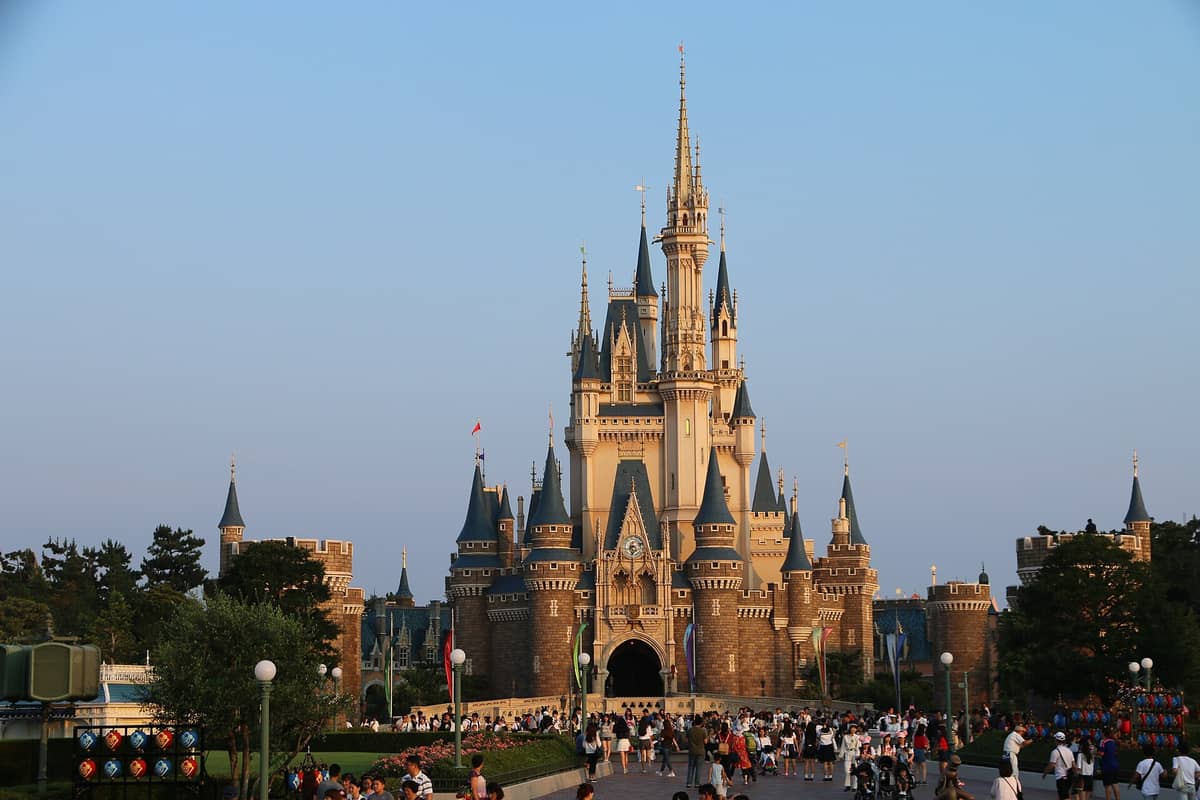
Tokyo Disneyland follows the familiar castle-centered layout of other Disney parks worldwide, with Cinderella Castle at the heart of the park and seven themed lands arranged around it: World Bazaar (the Japanese equivalent of Main Street, covered by a glass canopy that matters enormously on rainy days), Adventureland, Westernland, Critter Country, Fantasyland, Toontown, and Tomorrowland. The park is immaculately maintained, and the operational precision of the Japanese staff, known as Cast Members, is a genuine differentiator compared to Disney parks in other countries. Queues move efficiently, cleaning crews are constantly at work, and the attention to costume and character accuracy is exceptional.
The park draws enormous crowds on weekends and during school holidays in July, August, and around New Year's. On peak days, wait times for popular attractions can exceed 90 minutes. The least congested periods are weekday mornings in late January through mid-February and in November, outside of holiday windows. If you arrive at opening time and head directly to the highest-demand attractions first, you can cover significantly more ground before mid-morning crowds build. By noon, central areas around Fantasyland and Tomorrowland feel noticeably compressed.
The park closes at varying times depending on the date, typically between 9:00 p.m. and 10:00 p.m. on standard operating days. Check the official Park Operation Calendar before your visit, as hours shift considerably by season and day of the week. Evening hours bring a different atmosphere: the castle illumination and parades are a deliberate design choice to distribute visitor time across the full day, and the cooler air after sunset makes late stays genuinely pleasant in summer.
Tokyo DisneySea: The More Distinctive Park
DisneySea is widely considered one of the most architecturally realized theme parks in the world, and that reputation holds up on arrival. The Mediterranean Harbor at the park entrance is built around a convincing replica of a Venetian-style waterfront, complete with a volcano, the Mount Prometheus centerpiece, that produces periodic bursts of fire and smoke. Seven themed ports, American Waterfront, Port Discovery, Lost River Delta, Arabian Coast, Mermaid Lagoon, Mysterious Island, and Mediterranean Harbor, each have distinct visual identities maintained down to material textures and signage typography.
DisneySea skews toward adult and teen visitors. There is less Winnie-the-Pooh and more Jules Verne. The park's signature attractions include Journey to the Center of the Earth (a volcanic rock coaster), Indiana Jones Adventure, Tower of Terror, and 20,000 Leagues Under the Sea. In 2024, a new area called Fantasy Springs opened, introducing new lands themed to Frozen, Rapunzel's Kingdom, and Peter Pan's Never Land, significantly expanding the park's footprint and extending dwell time considerably.
Food options at DisneySea are a legitimate reason to visit beyond the rides. The park has multiple table-service restaurants, quick-service counters with genuinely park-specific menus, and themed popcorn flavors that change by area. Eating inside the park is expensive compared to Tokyo dining generally, but the quality and theming are above average for an amusement park setting. Alcohol is also served at DisneySea, unlike Disneyland, a detail relevant for adult visitors.
💡 Local tip
DisneySea's Mediterranean Harbor is best experienced at night. The light reflections on the water, the fire effects from Mount Prometheus, and the reduced crowd density after the evening show make the 7:00 p.m. to close window the most photogenic time in the park.
Tickets, Pricing, and What to Know Before You Buy
Admission uses a dynamic pricing model. A standard 1-Day Passport for one park currently starts from ¥7,900 for adults (18 and over), ¥6,600 for juniors (12 to 17), and ¥4,700 for children (4 to 11). Children aged 3 and under enter free. The upper end of the adult price scale reaches ¥10,900 on peak-demand dates. Multi-day and special tickets are also available, with some adult options exceeding ¥13,000. All prices are date-specific, and cheaper tickets correspond to lower-demand days, typically weekdays in off-peak months.
The resort does not guarantee gate sales. Purchasing through the official Tokyo Disney Resort Online Reservations site or the app before your visit is strongly recommended, and practically essential on any weekend or public holiday. Disney hotel guests receive some advantages around ticket access and booking windows, which is worth factoring in if you are considering an on-site stay.
⚠️ What to skip
Ticket prices are subject to change. Verify current rates and availability on the official Tokyo Disney Resort website before your visit. The resort has adjusted pricing tiers multiple times in recent years, and dynamic pricing means the same date can cost different amounts depending on when you check.
Crowds, Seasonality, and When to Visit
Tokyo Disney Resort draws tens of millions of visitors per year and consistently ranks among the most-visited theme park destinations globally. Crowd levels are genuinely significant, and they follow predictable patterns. The busiest periods are school holidays: late July through August, the Obon period in mid-August, the New Year's holiday window from late December through early January, Golden Week in late April and early May, and most weekend days year-round. During these periods, arriving at park opening and using the app's wait-time tracking feature is essential if you want to cover more than a handful of major attractions.
For lower crowds and pleasant weather, January through mid-February on weekdays is the most consistently manageable period, though winter temperatures in the Tokyo area can reach around 2 to 10°C, so dress in layers. Late October and November offer comfortable autumn temperatures and relatively thinner crowds on weekdays, with the bonus of seasonal Halloween and Christmas decorations extending the visual interest of both parks. If you are planning around cherry blossom season in late March to early April, note that the parks will be significantly busier than usual. For broader Tokyo timing context, see the guide on the best time to visit Tokyo.
Practical Details for a Full Day Visit
Both parks open at 9:00 a.m. on most standard operating days, though this varies by date. Arriving 30 to 45 minutes before official opening time allows you to clear the entry process and position yourself near a high-priority attraction before the first crowds enter. The first 90 minutes after opening are the most efficient window for covering major rides.
Wear comfortable shoes without exception. A full day at either park involves several kilometers of walking on paved surfaces, and DisneySea in particular requires navigating between areas with uneven theming terrain. In summer, temperatures in the Tokyo area frequently exceed 30°C with high humidity; carry water, use sunscreen, and take advantage of indoor attractions and air-conditioned restaurants during the hottest midday hours. In winter, the outdoor areas and parades can feel cold; layering is practical.
Accessibility services are available across both parks, including wheelchair-accessible routes and support from Cast Members. Detailed information on accessible facilities and attraction conditions is documented in the official Park Guide on the resort website. The Disney Resort Line monorail is wheelchair accessible. For broader context on navigating Tokyo's transport systems, the guide on getting around Tokyo covers IC card setup and transit basics that apply on the way to Maihama as well.
Photography is permitted throughout both parks for personal use. The Mediterranean Harbor and Fantasy Springs areas of DisneySea are the most frequently photographed, and both reward early morning visits when crowds thin enough to compose a clean frame. Mount Prometheus at dusk, with fire effects firing against a darkening sky, is one of the more dramatic photo opportunities available at any theme park in Japan.
Who This Resort Is Not For
Visitors with no interest in theme parks or Disney IP will find little to hold their attention here beyond the architecture of DisneySea, which is genuinely impressive in its own right. If your preference leans toward cultural depth, traditional craftsmanship, or historical context, Tokyo offers Senso-ji Temple in Asakusa, the Tokyo National Museum, and many other attractions that would likely be a better use of your day. The resort is also a significant financial commitment relative to most Tokyo attractions, and the experience is almost entirely commercial in character.
Solo travelers who are not Disney enthusiasts may find the crowd density and family-oriented pacing less rewarding than the resort's reputation suggests. The parks are designed for groups and deliver best when experienced with companions. Budget travelers should also note that food and merchandise pricing inside the parks is substantially higher than street-level Tokyo equivalents, and it is difficult to leave without spending well beyond the entry ticket.
Insider Tips
- The official Tokyo Disney Resort app shows real-time wait times for every attraction in both parks. Check it before committing to a queue, especially during the 11:00 a.m. to 3:00 p.m. peak window when line lengths spike across the board.
- DisneySea's themed popcorn buckets are a genuine resort-specific souvenir and vary by park area. The buckets sell out, particularly on weekends. If you want one, check stock early in the day rather than assuming they will be available at close.
- The Resort Line monorail normally requires a separate ticket or IC card fare when traveling between DisneySea and Disneyland, even on a two-park day. Confirm any special ticket or campaign that might cover this before boarding so you don’t assume it is automatically included.
- On days when Tokyo Disneyland is busier, DisneySea tends to be slightly less crowded, and vice versa. If you have flexibility in choosing which park to visit on which day, check the resort's crowd calendar and opt for the less-trafficked park on higher-demand dates.
- Many of DisneySea's table-service restaurants can be booked in advance through the official app. Securing a lunch reservation at Magellan's or Oceano before your visit saves significant queue time and guarantees a sit-down meal during the midday rush.
Who Is Tokyo Disney Resort For?
- Families with children of all ages who want a full-day structured activity with guaranteed entertainment
- Disney fans who want to compare the Japanese parks with their US or European counterparts, particularly DisneySea which has no direct equivalent elsewhere
- Couples looking for a high-production day out that combines rides, food, and evening shows in a single venue
- Visitors spending a week or more in Tokyo who want at least one day of purpose-built theme park experience
- Autumn and winter visitors who can take advantage of Tokyo DisneySea's seasonal Halloween and Christmas event decorations
Nearby Attractions
Combine your visit with:
- Akasaka Palace (State Guest House)
The State Guest House, Akasaka Palace is Japan's principal diplomatic residence and one of the few Western-style palaces in Asia open to the public. Built in neo-baroque style for the Crown Prince in the early 20th century, it now receives heads of state and, on select days, ordinary visitors. The combination of ornate gilded interiors, formal French gardens, and a Japanese-style annex makes it one of the most architecturally unusual stops in Tokyo.
- Edo-Tokyo Open Air Architectural Museum
Spread across the grounds of Koganei Park, the Edo-Tokyo Open-Air Architectural Museum rescues and reassembles more than 30 historic structures spanning the Edo period through the early 20th century. From a dismantled farmhouse to a reconstruction of a Showa-era Tokyo streetscape, it is one of the most thoughtful and undervisited cultural sites in the metropolitan area.
- Enoshima
A small island off the Shonan coast of Kanagawa Prefecture, Enoshima packs a surprising amount into a short walk: a three-part Shinto shrine, ancient sea caves, a hilltop botanical garden, a lighthouse observation tower, and seafood stalls lining a stone-paved shopping street. It works as a half-day excursion or a full day if you combine it with nearby Kamakura.
- Gotokuji Temple
Gotokuji Temple in Setagaya is a working Soto Zen Buddhist temple that happens to be one of the claimed birthplaces of the maneki-neko, Japan's iconic beckoning cat. Hundreds of white ceramic cats line the shelves of a dedicated shrine, creating one of Tokyo's most quietly striking visual spectacles. Entry is free, crowds are manageable, and the surrounding grounds offer genuine calm.