Toei Kyoto Studio Park (Uzumasa Eigamura): Inside Kyoto's Living Film Set
Toei Kyoto Studio Park, known in Japanese as Uzumasa Eigamura, is a functioning period-drama film studio that doubles as a theme park. Walking its Edo-era streets, you might share the path with a costumed samurai heading to an actual shoot. It's unlike any other attraction in Kyoto.
Quick Facts
- Location
- 10 Uzumasa Higashihachiokacho, Ukyo-ku, Kyoto 616-8586
- Getting There
- Uzumasa-Koryuji Station (Keifuku Arashiyama Line), short walk to park entrance
- Time Needed
- 2.5 to 4 hours for a comfortable full visit
- Cost
- Standard admission (approx.): ¥2,800 adults, ¥1,600 children (3–12); under 3 free. Occasional seasonal evening events may have different pricing. Verify current tickets and any special nighttime offerings before visiting.
- Best for
- Families, Japan pop-culture fans, anyone curious about jidaigeki (period drama) film production
- Official website
- global.toei-eigamura.com
What Toei Kyoto Studio Park Actually Is
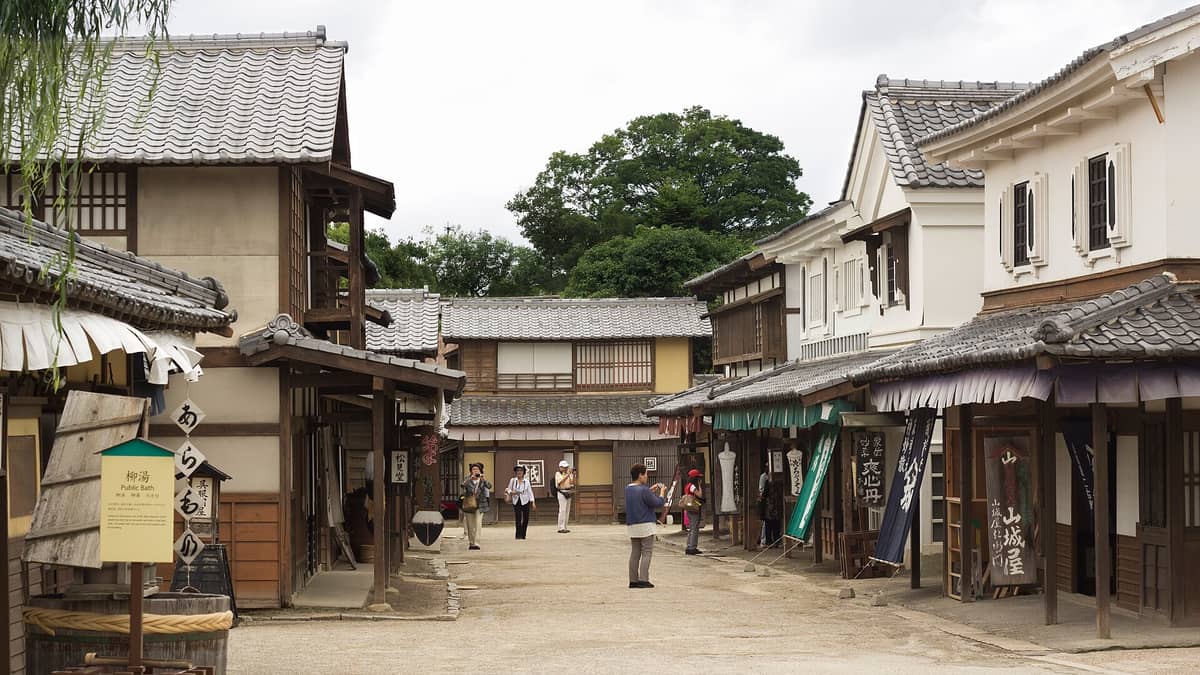
Most tourist attractions in Kyoto are preserved from the past. Toei Kyoto Studio Park, officially called 東映太秦映画村 (Tōei Uzumasa Eigamura), is still being made. It occupies part of the Toei Company's working Kyoto film studio in the Uzumasa district, where jidaigeki, or Japanese period dramas, have been produced since the postwar era. The "village" portion that visitors enter is a meticulously constructed replica of Edo-period Japan: wooden townhouses, a replica Nihonbashi bridge, police boxes, samurai residences, and back-alley sets that have served as backdrops for some of Japan's most iconic television and film productions.
The key distinction from a typical theme park is that this is functional infrastructure. On any given weekday morning, you may walk past lighting rigs, spot a director's monitor around a corner, or watch a costumed actor waiting for a scene reset. That texture of genuine industry is what makes the park interesting beyond the cosplay and live shows on offer. The attraction has undergone periodic updates in recent years, so returning visitors may find changes in layout and programming.
ℹ️ Good to know
Hours vary by season. The park generally operates from around 9:00 to 17:00, with occasional extended hours on specific dates and last admission typically 60 minutes before closing. Evening events, when held, may require special tickets. Always confirm current hours on the official site before you travel, as schedules change.
Walking the Edo-Era Sets: What You'll See
The central area of the park is a reconstructed Edo townscape designed to be photographed from street level. Narrow lanes are flanked by merchant buildings with darkened wood facades, paper lanterns, and fabric shop curtains (noren) that flutter even without wind. The textures feel genuinely aged because many of the structures have served as real shooting locations for decades: the grain in the wood, the worn stone at thresholds, and the scale of doorways are calibrated for camera work, not just foot traffic.
Beyond the main street, zones shift in character. There are interior sets visitors can step into, including a period magistrate's office and a recreation of an Edo-era prison, both of which provide strong visual reference for anyone familiar with classic chanbara sword-fighting dramas. Costumed staff and performers circulate throughout the day, and scheduled live shows feature sword-fight choreography with explanations in Japanese. Timetables for performances are posted at the entrance and in the park map; these fill up quickly for prime mid-afternoon slots.
Costume rental is available on-site, letting visitors dress as samurai, ninja, or Edo townspeople before walking the sets. This is a genuinely fun option for children and adults alike, and the costumes are detailed enough to look convincing in photographs. If this is a priority, arrive early as availability diminishes by midday. For context on the broader kimono and costume rental culture across Kyoto, theKyoto kimono rental guide covers what to expect across the city.
Tickets & tours
Hand-picked options from our booking partner. Prices are indicative; availability and final rates are confirmed when you complete your booking.
Kyoto Coast, Amanohashidate and Ine Bay 1-Day Trip from Osaka or Kyoto
From 46 €Instant confirmationFree cancellationKyoto Sanzen-in, Arashiyama and Bamboo Grove Full Day Tour
From 47 €Instant confirmationFree cancellationKyoto Arashiyama insider walking tour
From 66 €Instant confirmationFree cancellationMatcha green tea tour in Kyoto's Uji Market
From 130 €Instant confirmationFree cancellation
How the Experience Changes Through the Day
Arriving close to the 10:00 opening gives you the best chance of catching the sets with low crowd density. Morning light enters the lanes at a low angle that emphasizes the depth of the facades, and there is a genuine calm before the first live shows begin. This is also when active filming is most likely to be underway in adjacent studio areas, and the background noise of production, generators humming, crew calling out positions, occasionally drifts over the walls.
By early afternoon, school groups and families with young children make the park noticeably busier. The main lane can become congested around live performance areas during this window, roughly 12:00 to 15:00. If you plan to attend the sword-fight shows, check the schedule board on arrival and position yourself for an early-afternoon slot before the 14:00 to 15:00 peak.
The Nighttime events, when scheduled, can offer a genuinely different atmosphere. Lantern lighting activates across the sets as dusk falls, and the wooden facades read very differently under warm artificial light than they do in daylight. Crowds typically thin compared with the afternoon peak. For photography, the 17:30 to 18:30 window during seasons with earlier sunsets produces a mix of ambient and artificial light that suits the period setting particularly well. Check current event times and prices if you are planning an evening visit or combining it with an Arashiyama afternoon.
Historical and Cultural Context: Why Uzumasa Matters
Uzumasa's identity as a film district predates the studio park itself. The Toei Kyoto Studio has been producing jidaigeki since the mid-20th century, and the surrounding Uzumasa neighborhood developed around the industry in a way that made it sometimes called the "Hollywood of Japan" in popular media. The studio's location in Kyoto was deliberate: the city's historical architecture, preserved streetscapes, and access to traditional crafts made it the natural base for period production.
Jidaigeki as a genre carries significant cultural weight in Japan. The samurai dramas produced here are not simply entertainment; they encode particular values around honor, duty, and social order that have shaped popular Japanese self-perception for generations. Walking the sets with that context makes the park feel less like a reproduction and more like a working archive. The magistrate's office set, for instance, is not decorative: the proportions, the placement of the raised dais, and the arrangement of the room are drawn from historical administrative architecture and reinforced by decades of production use.
Uzumasa also sits within easy reach of several of Kyoto's most significant temples and cultural sites. The area northwest of the city center includesNinna-ji and Ryoan-ji, both accessible within a short taxi or bus ride, making it practical to combine the studio park with genuine Heian and medieval heritage in a single day.
Getting There and Practical Navigation
The most straightforward route to the park is via Uzumasa-Koryuji Station on the Keifuku Arashiyama Line (also called the Randen), a charming single-track tram that runs from Shijo-Omiya in central Kyoto. The ride takes around 15 minutes and offers its own atmospheric quality, passing through narrow residential streets before depositing you close to the park entrance. From Uzumasa-Koryuji Station, the walk to the gate is short and well-signposted.
Alternatively, JR Hanazono Station on the Sagano Line places you within a 10 to 15 minute walk. City Bus routes also connect the area to central Kyoto, though bus travel in Kyoto is subject to significant traffic congestion during peak tourist seasons. If you are traveling from the Arashiyama area earlier in the day, the Keifuku Arashiyama Line connects directly, making this a natural second stop after a morning at the bamboo grove.
For those planning a full day in western Kyoto that includes both the studio park and Arashiyama's main draws,the Arashiyama area guidecovers the neighborhood layout and key attractions in detail.
💡 Local tip
If you plan to use the Keifuku (Randen) tram, purchase an all-day Randen pass at Shijo-Omiya Station. It covers unlimited rides on the line and is useful if you are continuing to Arashiyama after the park.
Accessibility and What to Bring
The main outdoor streets of the park are generally flat and navigable by wheelchair, and most of the open-air performance areas are accessible at ground level. However, parts of the older set areas have steps, uneven surfaces, and narrow passages that are not step-free. The post-2026 renovation may have improved some of these conditions, but it is worth contacting the park directly before visiting if step-free access is a firm requirement.
Wear comfortable shoes; the combination of stone lanes, wooden walkways, and period-appropriate set surfaces can be uneven underfoot. In summer, Kyoto's basin geography traps heat and humidity: temperatures in the outdoor sets can feel significantly higher than ambient readings suggest, often above 33°C in July and August. Bring water, sunscreen, and a small fan. In winter, evening visits under the lanterns are atmospheric but cold, sometimes dropping to near 0°C at night, so layer appropriately for the Nighttime ticket option.
Photography Tips and Honest Limitations
The sets photograph well precisely because they were built to be filmed. Low angles that cut out the sky or modern structures behind the facades produce images that look convincingly historical. The main lane's depth and perspective work best in early morning light or at dusk under lantern illumination. During the middle of the day, harsh overhead light flattens the facades and the presence of large numbers of visitors in modern clothing disrupts period compositions. If photography is the primary goal, the Nighttime ticket offers the more controllable visual environment.
It is important to be direct about the park's limitations for certain travelers. The attraction is predominantly Japanese-language: live shows, performance commentary, and most interior exhibit labeling are in Japanese without consistent English translation. The sets and performances are intelligible in visual terms, but nuances of jidaigeki drama will largely be inaccessible without prior familiarity. Visitors who do not have existing interest in samurai cinema or Japanese pop culture history may find the experience surfaces quickly after the first hour of exploring the sets.
⚠️ What to skip
Most live performances and in-park commentary are in Japanese. The visual spectacle of sword-fight choreography is engaging regardless of language, but deeper engagement with the park's cultural content is significantly enhanced by familiarity with jidaigeki (period drama) conventions.
Insider Tips
- Arrive at or just after the 10:00 opening on a weekday to find the sets nearly empty and to maximize your chances of seeing active filming activity in adjacent studio areas. Weekend and school-holiday crowds arrive quickly after 11:00.
- Evening visits during special night events are genuinely worth considering as a standalone visit rather than an add-on. The park looks and feels completely different under lantern and ambient lighting, and these evenings pair well with a morning spent at Arashiyama or Ryoan-ji.
- Check the live performance schedule board at the entrance immediately on arrival. Shows fill their standing areas quickly, and the sword-fight choreography is one of the park's strongest offerings. Picking your preferred time slot at the start avoids disappointment.
- Costume rental transforms the visit, particularly for children and for photography. The selection is genuinely detailed. Book or queue early, especially on weekends, as popular costumes (particularly the better ninja and samurai sets) go quickly.
- The park is in the Uzumasa district, which also contains Koryuji Temple, one of Kyoto's oldest Buddhist temples and home to the Miroku Bosatsu statue considered a national treasure. It is within about a 5–10 minute walk and worth a short detour before or after your studio park visit.
Who Is Toei Kyoto Studio Park (Uzumasa Eigamura) For?
- Families with children aged 5 to 14 who want an active, visual, hands-on experience beyond temple-visiting
- Japan pop-culture enthusiasts with a background in samurai films or jidaigeki television dramas
- Photography-focused travelers looking for period-aesthetic settings without the crowds of central Kyoto's heritage streets
- Evening visitors looking for a distinctive lantern-lit atmosphere using the Nighttime ticket
- Travelers on a western Kyoto day combining Arashiyama in the morning with an afternoon or evening at the studio park
Nearby Attractions
Combine your visit with:
- Byodo-in Temple
Byodo-in Temple in Uji City is one of Japan's most photographed and historically significant Buddhist sites. Built in 1053, its Phoenix Hall appears on the 10-yen coin and draws visitors for its garden, gilded interior, and hilltop museum. A day trip from Kyoto that genuinely rewards the effort.
- Jingo-ji Temple (Takao)
Jingo-ji Temple rises from the forested slopes of Mount Takao in Kyoto's northwest corner, a 20-minute uphill walk from the nearest bus stop and a world away from the city's busiest temple districts. The site rewards the effort with ancient Buddhist halls, one of the finest autumn foliage settings in the Kansai region, and the curious ritual of hurling clay discs off a cliff into the Kiyotaki River gorge below.
- Kamigamo Shrine
Kamigamo Shrine, formally known as Kamo Wakeikazuchi Jinja, is one of Kyoto's oldest Shinto shrines and part of the UNESCO World Heritage Site 'Historic Monuments of Ancient Kyoto.' Set in the quiet northern reaches of the city, its wide gravel forecourt, twin sand cones, and cedar-forested riverbank create an atmosphere that feels genuinely removed from the tourist circuit.
- Katsura Imperial Villa
Katsura Imperial Villa is a 17th-century detached imperial palace in western Kyoto, considered the pinnacle of Japanese garden design and shoin-style architecture. Access is by guided tour only, with strict booking requirements — but for those who plan ahead, it is one of the most quietly extraordinary places in Japan.