Todoroki Valley: Tokyo's Only Natural Ravine
Tucked into a residential corner of Setagaya, Todoroki Valley is a roughly 1-kilometer gorge carved by the Yazawa River through the Musashino Plateau. It's free to enter, open year-round, and genuinely unlike anything else inside Tokyo's 23 special wards.
Quick Facts
- Location
- 1-22 Todoroki, Setagaya City, Tokyo 158-0082
- Getting There
- Todoroki Station (Tokyu Oimachi Line), 3-min walk to entrance
- Time Needed
- 1.5–2.5 hours for the full valley and Japanese garden
- Cost
- Free (no admission fee)
- Best for
- Nature walks, quiet escapes, photography, off-the-beaten-path Tokyo
What Makes Todoroki Valley Worth Your Time
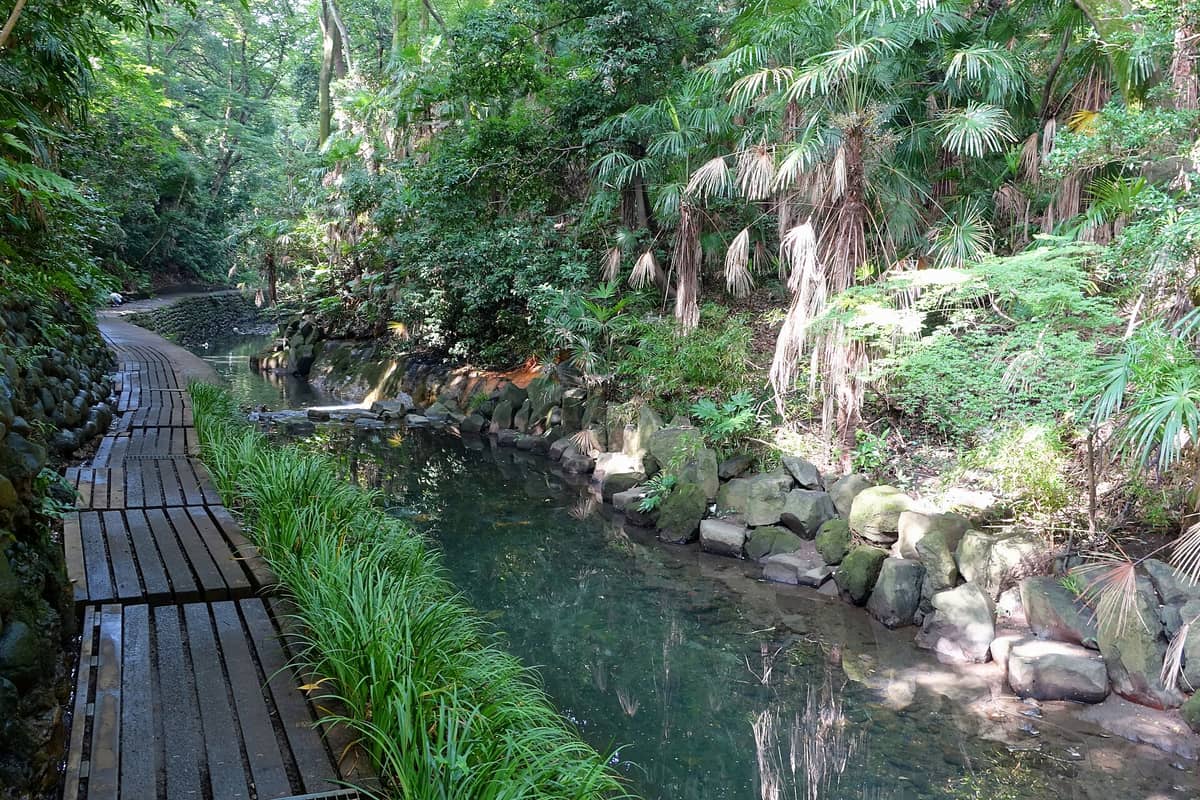
Todoroki Valley (等々力渓谷公園) is, by most measures, Tokyo's most improbable green space. Not because of its size or grandeur, but because of what it shouldn't be: a genuine, forested river gorge sitting inside one of the world's densest urban areas. The Yazawa River spent a very long time cutting into the soft volcanic sediment of the Musashino Plateau, and the result is a narrow ravine that drops the surrounding city noise to near silence within a few dozen steps of the entrance.
The valley stretches roughly one kilometer and is recognized as the only natural valley located entirely within Tokyo's 23 special wards. That's not a marketing claim — it reflects the geology and land-use history of a city that has otherwise built over or channeled nearly every natural waterway it once had. Walking it feels like finding a gap in the city's logic.
💡 Local tip
Todoroki Station is on the Tokyu Oimachi Line. From Shibuya, take the Tokyu Toyoko Line to Jiyugaoka, then transfer to the Oimachi Line — the whole journey takes around 20 minutes. The valley entrance is a 3-minute walk from the station exit.
Descending Into the Valley: The First Few Minutes
The entrance is at Golf Bridge (ゴルフ橋), where a staircase descends from street level into the gorge. The transition is almost theatrical. One moment you're on an ordinary residential street in Setagaya; the next you're surrounded by dense tree cover, the smell of damp earth and moss, and the sound of the Yazawa River moving over stones below. The air temperature drops noticeably, especially in summer.
The path at the base of the stairs runs alongside the river on a narrow dirt-and-stone trail. Ferns crowd the lower banks. The walls of the gorge rise on both sides, reinforced in some sections but visibly natural in others, with tree roots weaving through the exposed rock face. It doesn't feel manicured. It feels contained but wild.
The stairs at the entrance are the main accessibility limitation of this park. The path at valley floor level involves some uneven terrain and can be slippery after rain. Visitors using wheelchairs or strollers will find the valley difficult to navigate.
⚠️ What to skip
After heavy rain, the lower path can become muddy and sections may be slippery. Wear shoes with grip, particularly in the rainy season (June to mid-July) or after typhoon-related rainfall in September. The park can also close portions of the trail for tree trimming and maintenance — check current conditions before visiting.
Tickets & tours
Hand-picked options from our booking partner. Prices are indicative; availability and final rates are confirmed when you complete your booking.
Tsukiji Fish Market Walking Food Tour
From 40 €Instant confirmationFree cancellationMt.Fuji,Owakudani, Hakone Cruise & Ropeway, Oshino Hakkai 1-Day Trip
From 54 €Instant confirmationFree cancellationTour to Mt. Fuji Area, Oshino Hakkai and Kawaguchi Lake from Tokyo
From 57 €Instant confirmationFree cancellationNikko UNESCO Shrine and Nature View 1-Day Tour from Tokyo
From 78 €Instant confirmationFree cancellation
What You'll Find Along the Trail
The full one-kilometer path runs from the Golf Bridge entrance to Todoroki Fudo, a small temple complex set back against the gorge wall. Several elements break up the walk and give it structure beyond just the scenery.
About midway through, a small waterfall feeds into the river alongside natural spring outflows in the gorge wall. The springs seep through the rock face and collect in shallow pools at the base — cool, clear water that has been here long before the surrounding city. Near this point, incense from the Fudo temple sometimes drifts through the valley depending on wind direction, mixing with the smell of the forest floor.
Todoroki Fudo (等々力不動尊) is a Buddhist temple with a history extending back several centuries. It sits at the far end of the valley on a raised platform above the river, accessible by stone steps. The temple is associated with the Shingon sect and has been a site of religious practice tied to the surrounding landscape for generations. If you're planning a wider exploration of Tokyo's spiritual sites, the guide to Tokyo's best temples and shrines provides useful context for what to look for and how temple etiquette works.
At the far end of the trail, beyond the temple, there is a small Japanese-style garden maintained by the city of Setagaya. It's compact — a few stone lanterns, a pond, and manicured plantings — but it provides a quiet resting point at the end of the walk. The garden is open 09:00–17:00 (March through October) and 09:00–16:30 (November through February), with a closure from December 29 through January 3. Entry to the garden is also free.
How the Valley Changes With the Seasons
Spring is the most visited season. Cherry blossoms appear along the upper edges of the gorge in late March and early April, and when petals fall into the river, the effect is worth the extra crowd. The forest floor also comes alive with new growth at this time of year, and the light through young leaves is noticeably soft.
Summer is underrated here. While the rest of Tokyo bakes, the valley floor stays meaningfully cooler under its canopy. It's a practical destination during August heat, not just a scenic one. Autumn brings leaf color to the upper trail edges — nothing as dramatic as dedicated maple spots like Rikugien Garden or Koishikawa Korakuen Garden, but pleasant enough to extend the walk. For autumn color planning across Tokyo, the autumn Tokyo guide covers the peak timing and best spots.
Winter is the quietest. Fewer tourists, bare branches, and low winter light that reaches deeper into the gorge than in leafier months. The Japanese garden feels more spare and composed in February than at any other time of year.
Best Time of Day to Visit
Weekday mornings, particularly between 8:00 and 11:00, are when the valley is genuinely close to empty. Local residents walk dogs and commuters cut through occasionally, but the trail can feel private. The low morning light filters through the canopy at a low angle and hits the river surface in a way that makes the water seem to glow.
Weekend afternoons are the busiest, especially during cherry blossom season. The path is narrow enough that crowds noticeably change the atmosphere. If you're visiting on a weekend, arrive before 10:00 or aim for late afternoon when families tend to leave. The park technically has no closing time for the valley itself, so late-afternoon visits in summer are feasible and uncrowded.
💡 Local tip
For photography, the best light hits the river and gorge walls in the morning. The tree canopy is dense enough that harsh midday light is mostly filtered out, but early arrivals get the clearest reflections on the water.
Practical Details for Your Visit
There are public toilets inside the valley and a small free parking area near Todoroki Fudo for those arriving by car (though the train is far more convenient). No food or drink vendors operate inside the valley itself, so bring water — especially in summer.
After the walk, the residential streets above the valley in the Todoroki neighborhood have a handful of small cafes and a traditional teahouse just above the temple exit. It's a quieter, more local version of the kind of post-walk coffee experience you'd find near busier parks. If you're building a half-day itinerary around southwestern Tokyo, the Inokashira Park area in Kichijoji is reachable in under 30 minutes by rail and pairs well as a second destination.
Todoroki Valley is free to enter and requires no advance booking. It's a useful addition to any itinerary focused on free things to do in Tokyo, and because it sits off the main tourist circuit, it gives a different perspective on how the city actually lives and breathes.
Who This Place Is For — and Who Might Skip It
Todoroki Valley works best for visitors who've already seen the main sights and want something that feels genuinely different from urban Tokyo. It's also well-suited to nature-minded travelers, photographers looking for non-standard compositions, and anyone needing a few hours away from the sensory overload of central districts.
It's not the right choice for visitors with very limited time in Tokyo who are weighing it against major cultural or historical attractions. The valley is scenic and peaceful, but it's not historically significant at the scale of Senso-ji or the Imperial Palace gardens. It also requires a specific trip out to Setagaya — it's not on the way to much else. Visitors who are primarily interested in shopping, food, or nightlife won't find much here to hold their attention beyond the walk itself.
Insider Tips
- Exit the valley via the staircase near Todoroki Fudo rather than backtracking. It brings you up to street level near a traditional teahouse where you can sit outside with matcha and a view of the gorge rim — a genuinely good way to end the walk.
- The valley path can be walked in either direction. Starting from the Fudo temple end (accessible from the Todoroki Station exit via a slightly different route) means you begin at the quieter, more forested section before reaching the main entrance crowds.
- The spring outflows mid-valley stay cool year-round. In summer, sitting near them for a few minutes is noticeably refreshing — locals on lunch breaks sometimes stop here.
- The valley is a convenient break from nearby residential neighborhoods and a place to plan your next move without burning much mobile data, but don't rely on free Wi-Fi being available throughout the park.
- If you visit during golden hour on a clear autumn day, the upper edges of the gorge catch warm light while the valley floor stays in shade — the contrast in a single photograph is striking and unusual.
Who Is Todoroki Valley For?
- Visitors seeking a genuine natural break from central Tokyo's density
- Photographers looking for forest and river compositions rarely seen in urban Japan guides
- Budget-conscious travelers: the valley, temple, and garden are all completely free
- Repeat Tokyo visitors who feel they've covered the major sights and want something local
- Hot-weather visitors in July and August who need a cooler outdoor option without leaving the city
Nearby Attractions
Combine your visit with:
- Akasaka Palace (State Guest House)
The State Guest House, Akasaka Palace is Japan's principal diplomatic residence and one of the few Western-style palaces in Asia open to the public. Built in neo-baroque style for the Crown Prince in the early 20th century, it now receives heads of state and, on select days, ordinary visitors. The combination of ornate gilded interiors, formal French gardens, and a Japanese-style annex makes it one of the most architecturally unusual stops in Tokyo.
- Edo-Tokyo Open Air Architectural Museum
Spread across the grounds of Koganei Park, the Edo-Tokyo Open-Air Architectural Museum rescues and reassembles more than 30 historic structures spanning the Edo period through the early 20th century. From a dismantled farmhouse to a reconstruction of a Showa-era Tokyo streetscape, it is one of the most thoughtful and undervisited cultural sites in the metropolitan area.
- Enoshima
A small island off the Shonan coast of Kanagawa Prefecture, Enoshima packs a surprising amount into a short walk: a three-part Shinto shrine, ancient sea caves, a hilltop botanical garden, a lighthouse observation tower, and seafood stalls lining a stone-paved shopping street. It works as a half-day excursion or a full day if you combine it with nearby Kamakura.
- Gotokuji Temple
Gotokuji Temple in Setagaya is a working Soto Zen Buddhist temple that happens to be one of the claimed birthplaces of the maneki-neko, Japan's iconic beckoning cat. Hundreds of white ceramic cats line the shelves of a dedicated shrine, creating one of Tokyo's most quietly striking visual spectacles. Entry is free, crowds are manageable, and the surrounding grounds offer genuine calm.