Inokashira Park: Tokyo's Most Rewarding Green Escape
Spread across 38 hectares in Kichijoji, Inokashira Park is one of Tokyo's oldest and most beloved green spaces. Free to enter, open around the clock, and anchored by a serene pond, it rewards visitors year-round with seasonal scenery, street musicians, rowing boats, and a compact zoo opened in 1942.
Quick Facts
- Location
- 1-18-31 Gotenyama, Musashino City, Tokyo 180-0005
- Getting There
- Kichijoji Station (JR Chuo Line), 5 min walk; Inokashira-Koen Station (Keio Inokashira Line), 1 min walk
- Time Needed
- 1.5 to 3 hours (add an hour if visiting the zoo)
- Cost
- Park: free. Zoo: adults ¥400, junior high students ¥150, seniors (65+) ¥200, elementary age and under free
- Best for
- Families, solo walkers, cherry blossom season, photographers, and anyone needing a break from central Tokyo
- Official website
- www.tokyo-park.or.jp/park/inokashira/index.html
What Inokashira Park Actually Is
Inokashira Park (井の頭恩賜公園, Inokashira Onshi Koen) opened in 1917, making it one of the first suburban parks in the Tokyo region. It celebrated its centenary in 2017, and the grounds have changed remarkably little in character despite a century of surrounding urban growth. The park sits on the edge of Kichijoji, one of the neighborhoods Tokyoites consistently vote among their favorite places to live, and the two are deeply linked in local identity.
The centerpiece is Inokashira Pond, a natural reservoir that once supplied water to Edo-period Tokyo. Today, swan-shaped pedal boats and flat-bottomed rowboats share the water with wild ducks, cormorants, and the occasional heron standing motionless in the shallows. The pond is surrounded by broad paths and mature zelkova and cherry trees whose canopy closes overhead in spring, creating the kind of tunnel effect that draws thousands of visitors each year.
Beyond the pond, the park extends into quieter woodland sections, a children's play area, the Inokashira Nature and Culture Park (the zoo), and a separate annex housing the Ghibli Museum. You don't need to visit the zoo or museum to get value from the park itself. Many people simply walk the perimeter path, sit on a bench with a coffee from the surrounding shotengai (shopping street), and watch the city slow down around them.
ℹ️ Good to know
The park grounds are open 24 hours a day, every day of the year, with no admission fee. The zoo operates separately with its own hours and ticket prices.
How the Park Changes Through the Day
Early morning, before 8am, Inokashira belongs to locals. Elderly residents do their morning exercises near the pond's edge, joggers loop the perimeter path at a steady pace, and the water sits flat and still, sometimes carrying a thin mist in autumn and winter. The smell at this hour is damp earth and pine, and the main sounds are bird calls and the occasional squeak of a bicycle.
By mid-morning on weekends, the character shifts noticeably. Craft vendors and street artists set up along the main approach path from Kichijoji Station. On busy Saturdays, you'll pass musicians with amplifiers, painters displaying canvases, and stalls selling handmade jewelry and ceramics. The atmosphere is relaxed rather than commercial: most vendors are there because they enjoy it. Families arrive with pushchairs, couples rent rowboats, and the park fills to its comfortable limit without ever feeling genuinely crowded.
Weekday afternoons are the sweet spot for anyone who dislikes crowds. School groups sometimes visit the zoo, but the park paths are largely free. Late afternoon light hits the pond surface in a way that makes photography straightforward even on an ordinary camera. As evening falls, the park empties and the lit-up Benzaiten shrine on its small island in the pond takes on a completely different quality.
💡 Local tip
If you want the pond to yourself, come on a weekday morning between 7am and 9am. If you enjoy the street artist atmosphere, Sunday between 10am and 2pm is the most active window.
Tickets & tours
Hand-picked options from our booking partner. Prices are indicative; availability and final rates are confirmed when you complete your booking.
Tsukiji Fish Market Walking Food Tour
From 40 €Instant confirmationFree cancellationMt.Fuji,Owakudani, Hakone Cruise & Ropeway, Oshino Hakkai 1-Day Trip
From 54 €Instant confirmationFree cancellationTour to Mt. Fuji Area, Oshino Hakkai and Kawaguchi Lake from Tokyo
From 57 €Instant confirmationFree cancellationNikko UNESCO Shrine and Nature View 1-Day Tour from Tokyo
From 78 €Instant confirmationFree cancellation
Seasonal Highlights: When to Come and What to Expect
Spring cherry blossom season is when Inokashira Park becomes genuinely exceptional. The pond is flanked by around 500 cherry trees, and when they peak in late March to early April, the blossoms fall into the water and drift in slow circles. It's one of Tokyo's most photographed hanami spots, and for good reason. That said, expect significant crowds on weekend evenings during peak bloom. If you're planning a spring visit to Tokyo, the spring timing guide covers how to judge bloom windows and when to arrive.
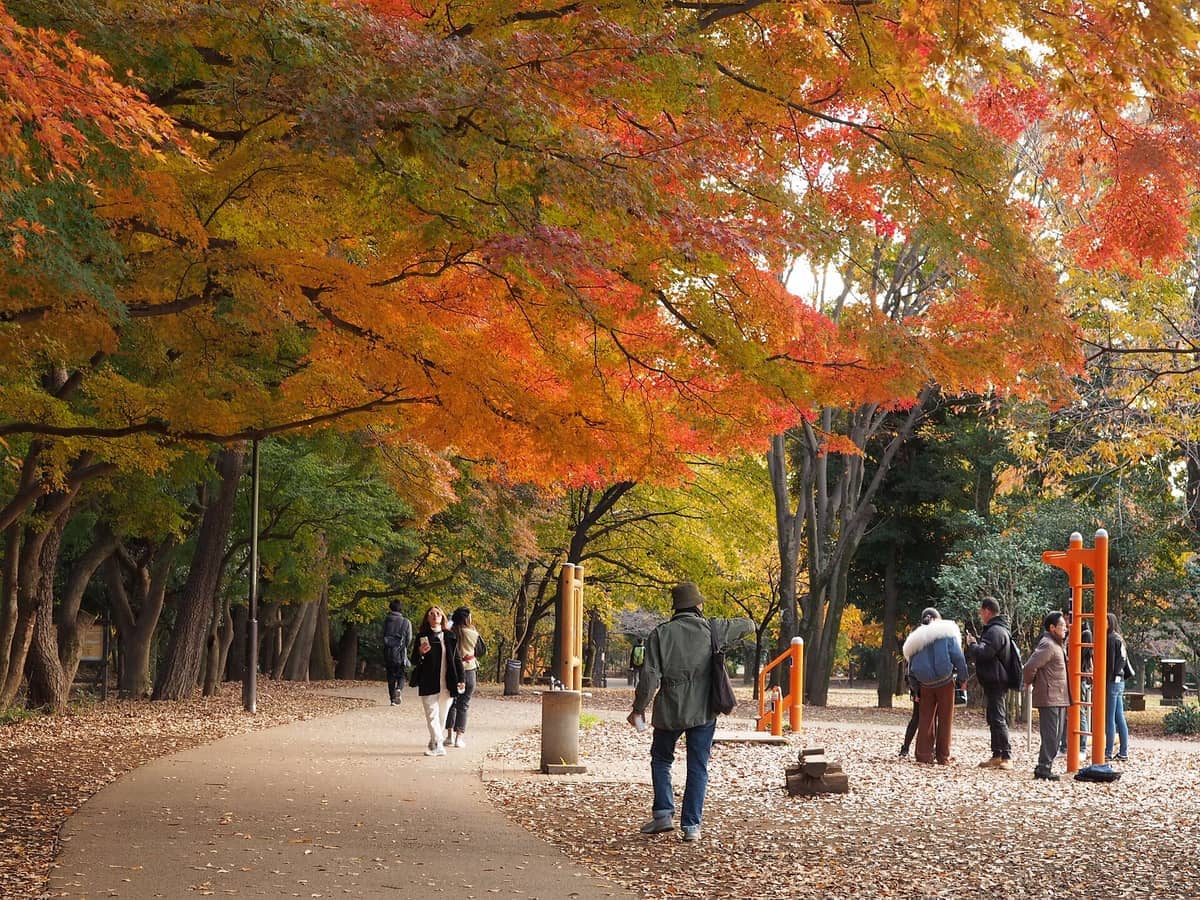
Autumn (late October through mid-November) is arguably the better season for visiting without the crowds. The zelkova and ginkgo trees turn copper and gold, the light is cool and clear, and the pond reflects color that changes week to week. Temperatures sit comfortably in the low-to-mid teens Celsius, and the park doesn't attract the same volume of visitors as it does during sakura season.
Summer means shade and greenery, but the heat and humidity of July and August make extended walks uncomfortable. The park stays pleasant in the early morning. Winter strips the trees back to bare branches but reveals the park's structure and skyline views that disappear in warmer months, and it remains a workable destination on mild winter days.
⚠️ What to skip
During cherry blossom peak weekends, the main pond path can become very congested. Rowboat rentals sell out early, and finding a bench facing the water requires patience. Arrive before 9am or after 5pm for a calmer experience.
The Zoo and the Ghibli Museum: Worth Adding?
The Inokashira Nature and Culture Park, which manages the zoo, opened in 1942 and occupies a section of the park's western end. It's compact rather than comprehensive: the collection includes squirrel monkeys, Japanese wild boar, small mammals, birds, and a well-regarded aquarium section. At ¥400 for adults, it's one of Tokyo's better-value zoo experiences. The zoo is open from 09:30, with last admission at 16:00, and is closed on Mondays. If Monday falls on a public holiday, the closure shifts to the following day. It's also closed around New Year (approximately December 29 to January 1). The Tokyo with kids guide has more on family-friendly options across the city.
The Ghibli Museum sits just outside the park's southwest corner. It is not part of the park and requires a separately purchased timed-entry ticket, which must be booked in advance through official channels. Many visitors combine both in a single day, using the park as a relaxed starting point before or after their timed museum slot. Be aware that tickets often sell out weeks ahead, particularly in spring and autumn.
Getting There and Getting Around Inside
The most common approach is from Kichijoji Station on the JR Chuo Line, a roughly five-minute walk south from the station's Park Exit. The route takes you through a stretch of Kichijoji's covered shopping arcade, past cafes and bakeries: it's worth slowing down here if you want to pick up food before entering the park.
If you're arriving on the Keio Inokashira Line, Inokashira-Koen Station puts you at the park's eastern entrance in about one minute on foot. This is the less visited end of the park and gives a quieter first impression than the main approach from Kichijoji Station.
Inside, the park is straightforward to navigate without a map. The main pond path is about 1.5 kilometers around and takes roughly 20 to 25 minutes at a gentle pace. Paved paths run throughout, and the terrain is largely flat with gentle slopes in the wooded sections. The park has wheelchair-accessible entrances and parking facilities, and the central paths are paved and manageable for pushchairs and mobility aids. For specific accessibility questions, the Inokashira Park Information Center can provide current guidance.
What Sits Around the Park
Kichijoji, the neighborhood surrounding Inokashira Park, consistently ranks among the most desirable areas in Tokyo for residents. The commercial streets north of the park offer a dense concentration of independent cafes, record shops, vintage clothing stores, and small restaurants serving everything from soba to Thai food. It's a useful contrast to the park itself: nature followed by neighborhood. The Kichijoji area guide covers the full range of eating and shopping options within walking distance.
If you're building a full day's itinerary around this part of western Tokyo, the Edo-Tokyo Open Air Architectural Museum in nearby Koganei Park is worth combining with an Inokashira visit. It's about 15 minutes by bus and a very different kind of attraction: reconstructed Edo and Meiji-era buildings spread across a large open site. Together, the two make a coherent day focused on history and open space.
Photography and Practical Details
The pond is the main photographic subject, and morning light from the east works best for shots looking west across the water. The Benzaiten shrine island creates a focal point for wide compositions. In cherry blossom season, a position near the water's edge on the north side of the pond gives the most complete view of blossoms reflected in the water. Later in the day, once the sky flattens, the contrast drops significantly.
There are no strict rules about photography in the park, but etiquette matters during busy periods: boat renters are trying to enjoy their time on the water and not necessarily looking to appear in a stranger's frame. Common sense applies.
For practical logistics: there are coin lockers at Kichijoji Station if you want to leave a bag before walking the park. Several cafes immediately surrounding the park have outdoor seating. Public toilets are available at multiple points within the park. There is no reliable food concession inside the park itself, so bringing something or buying from the shotengai beforehand is the better option.
Insider Tips
- Rowboat and swan boat rentals at the pond are popular on weekends. If you want one without waiting, aim to queue at the rental station right when it opens. Rentals typically run on a timed basis and sell out on busy spring days before noon.
- The path from Inokashira-Koen Station (Keio Line) enters the park at its quieter eastern end, near a section of the park that most visitors from Kichijoji Station never reach. If you want fewer people and more birdsong, start here.
- The Benzaiten shrine on the small island in the pond is dedicated to the goddess of water and is associated with a local legend: couples who row a boat on the pond together are said to be cursed by the goddess. Whether or not you take this seriously, it's a piece of park folklore worth knowing before you rent that rowboat.
- Street performers and craft vendors set up along the main path on weekends, but the quality and variety is highest on Sunday afternoons. Some of Tokyo's more talented buskers treat this stretch as a regular stage.
- The park's wooded northern section, away from the pond, gets very little foot traffic even during busy days. It's a useful escape if the main paths feel overwhelming.
Who Is Inokashira Park For?
- Families with young children combining the park walk with the compact and affordable zoo
- Visitors in spring wanting one of Tokyo's most celebrated cherry blossom experiences
- Anyone planning a Ghibli Museum visit who wants to spend the surrounding hours productively
- Photographers looking for seasonal landscapes within easy reach of central Tokyo
- Travelers who want to experience everyday Tokyo neighborhood life rather than tourist infrastructure
Nearby Attractions
Other things to see while in Kichijoji:
- Ghibli Museum
The Ghibli Museum in Mitaka is one of Tokyo's most sought-after ticketed experiences, a meticulously designed space that blurs the line between architecture and animation. Tickets require advance booking and sell out fast. Here is everything you need to plan a smooth, rewarding visit.