Textile Museum of Canada: A World Collection Woven Into Downtown Toronto
The Textile Museum of Canada houses one of North America's most significant collections of historic and contemporary textiles, spanning more than 200 countries and regions and 4,500 years of human craft. Small in footprint but genuinely surprising in depth, it sits one block from St Patrick subway station in the heart of downtown Toronto.
Quick Facts
- Location
- 55 Centre Avenue, Downtown Toronto (one block east of University Avenue, south of Dundas St W)
- Getting There
- St Patrick Station, Line 1 (Yonge–University–Spadina), 1-block walk; Dundas 505 streetcar also stops nearby
- Time Needed
- 1.5 to 2.5 hours for the full visit; focused visitors may finish in under 90 minutes
- Cost
- Adults $15 CAD | Seniors $13 | Students & Youth (6–18) $8 | Children 5 & under free | Members free
- Best for
- Art and design lovers, textile professionals, cultural history enthusiasts, and curious travellers who want substance over spectacle
- Official website
- textilemuseum.ca
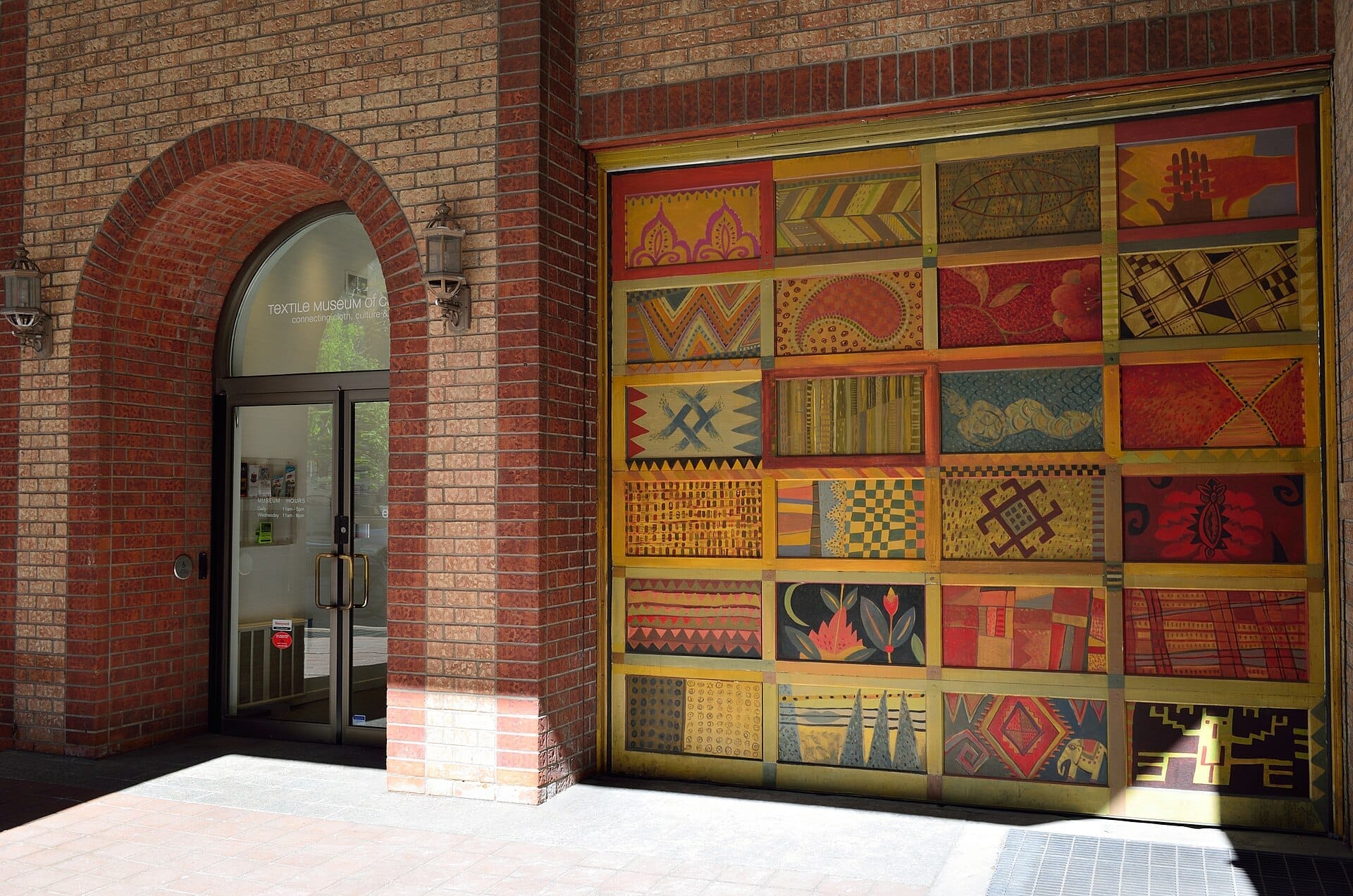
What the Textile Museum of Canada Actually Is
The Textile Museum of Canada is a specialized public museum dedicated to the collection, preservation, and display of textiles and related objects from across human history. Incorporated in 1975, it holds a permanent collection of more than 13,000 pieces drawn from over 200 countries and regions and regions, ranging from pre-Columbian Andean weavings to contemporary fibre art made in the last decade. That range is the core of what makes this place interesting: fabric is one of the oldest and most universal forms of human expression, and a museum that takes it seriously can tell stories that a general history or art museum rarely does.
The building sits at 55 Centre Avenue, a quiet one-way street one block east of University Avenue in downtown Toronto, tucked between the sprawl of Nathan Phillips Square to the south and Chinatown to the northwest. It is not a grand civic institution with sweeping staircases. It is compact, focused, and deliberately unpretentious. That is worth knowing before you arrive: if you are expecting cathedral ceilings and gift shop queues, you will need to adjust your expectations. If you want genuine intellectual depth in a calm, unhurried environment, this is one of the more rewarding hours you can spend in the city.
ℹ️ Good to know
Open Wednesday through Sunday, 12:00 PM to 5:00 PM. Closed Monday and Tuesday. Verify hours on the official website before visiting, as holiday schedules may differ.
The Collection: What You Will Actually See
The permanent collection spans archaeological textiles, ceremonial and religious cloth, domestic weavings, trade fabrics, and works by contemporary artists who use fibre as their primary medium. Objects include intricately knotted kilims from Turkey and Iran, resist-dyed fabrics from West Africa, hand-painted bark cloth from the Pacific Islands, and embroidered garments from South and Southeast Asia. Many pieces are small-scale and require close looking, which the gallery layout encourages.
Rotating exhibitions typically occupy a significant portion of the gallery space. These shows often make conceptual connections across cultures and periods, placing a fragment of ancient Coptic linen beside a contemporary installation made with industrial thread. The curatorial approach tends toward thematic rather than chronological or geographic organization, which rewards visitors who are willing to read the wall text carefully.
Photography policies and specific exhibition content vary, so check the museum's current programme before planning around a specific show. What stays consistent is the quality and specificity of the permanent holdings, which are among the most significant in North America for textile history.
Tickets & tours
Live prices and dates from our booking partner. If you book, we may earn a commission at no extra cost to you.
When to Visit and How the Experience Changes
The museum opens at noon Wednesday through Sunday. Arriving at opening means you will likely have the galleries almost to yourself. Midday on weekdays is consistently quiet. Weekend afternoons, particularly Saturdays, see more visitors, though the space never feels crowded in the way that larger institutions can. The low ceilings and smaller rooms mean that even a modest number of visitors changes the acoustic texture of the space, so earlier in the day is preferable if you want room to linger.
The galleries are climate-controlled to protect fragile fibres, which makes the museum a genuinely comfortable retreat on both very hot summer afternoons and cold winter days. Toronto's winters can be harsh, with January temperatures regularly dropping below -5°C, and the walk from St Patrick station is short enough that the museum is accessible year-round without difficulty.
💡 Local tip
Midweek mornings (Wednesday or Thursday, arriving at noon when the museum opens) offer the most peaceful experience. Weekend afternoons attract more visitors and can feel slightly rushed near popular exhibition pieces.
Getting There: Transit, Parking, and the Walk
St Patrick station on TTC Line 1 (Yonge–University) is the closest subway stop, one-block walk east to Centre Avenue. This makes the museum extremely convenient from anywhere on the subway network, including Union Station and Bloor–Yonge. If you are coming from the east or west along Dundas Street, the 505 streetcar drops you at University Avenue westbound, from which it is a short walk south and then east on Centre Avenue.
There is no on-site parking. The museum's website lists several nearby commercial lots on Centre Avenue, University Avenue, Dundas Street West, and Queen Street West. Given the central location and straightforward transit access, driving is the least efficient option for most visitors.
The museum sits within easy walking distance of several other significant downtown institutions. The Art Gallery of Ontario is approximately a 10-minute walk west on Dundas, and the Royal Ontario Museum is accessible by taking Line 1 north two stops to Museum station. Planning a half-day route between these institutions is one of the more efficient ways to see a lot of Toronto's cultural infrastructure in a single outing.
Practical Walkthrough: What Happens When You Arrive
Entry is through the ground floor. Admission is paid at the desk: $15 for adults, $13 for seniors (65+), $8 for students with valid post-secondary ID, and $8 for youth between 6 and 18. Children five and under enter free. Members enter free at any time. The admission desk staff are typically knowledgeable about current exhibitions and can point you toward highlights if you ask.
The museum offers a manual wheelchair free of charge, available from the admission desk. If you require it, the museum recommends contacting them in advance at info@textilemuseum.ca to ensure availability. The building's access routes and elevator details are outlined on the museum's Accessing Our Space page on their website.
Gallery spaces are small and interconnected. There are no mandatory routes: you can move through the collection in any order. Exhibition labels are written at a level that assumes curiosity but not specialist knowledge, making the space accessible to visitors with no background in textile history. For those who do have that background, the depth of the collection notes and provenance information is satisfying.
Cultural and Historical Context: Why Textiles Matter
Textiles are among the oldest surviving human artefacts. Twisted fibres have been found at archaeological sites dating back tens of thousands of years, and woven cloth appears in the earliest complex societies on multiple continents. The Textile Museum of Canada's collection, which spans more than 4,500 years of production across more than 200 countries and regions, reflects the full sweep of that history: cloth as currency, as sacred object, as political statement, as status marker, and as daily necessity.
Canada's multicultural urban reality makes Toronto a particularly appropriate home for this kind of institution. The city's population includes communities from nearly every region represented in the museum's collection, which gives exhibitions an additional layer of relevance. A Punjabi weaving tradition displayed here is not an abstraction for a significant portion of the city's residents. That connection between collection and community is something the museum has increasingly worked into its programming.
For visitors interested in understanding Toronto through its cultural institutions, the Textile Museum connects naturally to a broader exploration of the city's relationship with global craft and design traditions. The Gardiner Museum nearby focuses on ceramics with a similarly international scope, and together the two offer a compelling afternoon for anyone interested in functional objects elevated to art form.
Who Should Skip This and Who Should Not
The Textile Museum is not for everyone, and it makes no attempt to be. If you are visiting Toronto for the first time and have one or two days, there are larger institutions with broader scope that may serve you better as an introduction to the city. The museum's scale and specialization mean it rewards visitors who arrive with some genuine interest in textile history, fibre arts, or material culture. Visitors expecting interactive technology, immersive environments, or large-scale spectacle will likely find it underwhelming.
Children can be brought, and the youth admission price is accessible, but the exhibits are primarily object-based and text-heavy. The museum occasionally runs family programming, which would change this calculus. Check the current events schedule before planning a family visit.
For the right visitor, especially those with an interest in global craft, fashion history, or ethnography, the Textile Museum of Canada is one of downtown Toronto's more distinctive and underattended institutions. It belongs on the same itinerary as the Bata Shoe Museum, another specialized collection a short walk north on Bloor Street that shares the same commitment to material culture and global scope.
Insider Tips
- Ask at the admission desk about any active conservation or study access programmes. The museum occasionally offers access to collection storage or behind-the-scenes sessions for researchers and serious enthusiasts.
- The museum's shop stocks a curated selection of publications on textile history, craft, and fibre arts that are difficult to find elsewhere in the city. Even if you are short on time, it is worth a five-minute browse.
- Lighting in some gallery areas is deliberately low to protect light-sensitive fibres. If you are photographing pieces for reference, a phone with a decent low-light mode is more useful than a dedicated camera with a flash you will not be permitted to use.
- Combine your visit with the Art Gallery of Ontario on the same afternoon. The AGO is about a 10-minute walk west on Dundas and keeps extended hours on certain evenings, allowing you to do both without rushing.
- The museum's free membership for locals is worth checking if you plan to visit more than once annually. Even a student membership at reduced price pays for itself quickly against the per-visit cost.
Who Is Textile Museum of Canada For?
- Art and design professionals, students, and researchers with a specific interest in textile history, ethnographic objects, or fibre-based contemporary art
- Culturally curious travellers who have already seen Toronto's major institutions and want something more specific and less crowded
- Visitors from communities whose textile traditions are represented in the collection, including South Asian, West African, Southeast Asian, and Indigenous heritage backgrounds
- Quiet afternoon seekers who want a genuinely calm, unhurried museum environment away from large tourist volumes
- Anyone building a multi-museum day in downtown Toronto's cultural corridor alongside the AGO, Gardiner Museum, or Bata Shoe Museum
Nearby Attractions
Other things to see while in Downtown Toronto:
- Allan Gardens Conservatory
Allan Gardens Conservatory is a free, year-round botanical conservatory at 160 Gerrard Street East in downtown Toronto. Housed in six glass display houses anchored by a 1910 Edwardian Palm House, it holds about 1,500 m² of tropical palms, cacti, orchids, and seasonal blooms. One of the oldest parks in Toronto, it remains one of the city's most underrated green spaces.
- Art Gallery of Ontario
The Art Gallery of Ontario is one of North America's largest art museums, housing over 90,000 works inside a landmark Frank Gehry-renovated building in downtown Toronto. From Indigenous Canadian art to European masters and contemporary photography, the AGO rewards focused visitors and casual explorers alike.
- Brookfield Place (Allen Lambert Galleria)
The Allen Lambert Galleria inside Brookfield Place is a free, publicly accessible arcade designed by architect Santiago Calatrava between 1987 and 1992. Its arching steel-and-glass canopy, rising between two of downtown Toronto's tallest towers, is one of the most impressive interior spaces in Canada.
- Campbell House Museum
Built in 1822 for Upper Canada's Chief Justice, Campbell House Museum is the oldest surviving residence from the original Town of York. Moved to its current downtown corner in 1972 and opened as a museum in 1974, it offers an intimate, unhurried window into early colonial Toronto — a sharp contrast to the glass towers surrounding it.
Planning a trip? Discover personalized activities with the Nomado app.