Te Uru Waitākere Contemporary Gallery: Auckland's Best Free Art Space You're Probably Not Visiting
Te Uru Waitākere Contemporary Gallery sits at the edge of the Waitākere Ranges in Titirangi, offering free entry, serious contemporary art, and a peaceful forest atmosphere that stands apart from central Auckland's busier cultural institutions. Open daily, it rewards the short journey west with rotating exhibitions across four gallery levels.
Quick Facts
- Location
- 420 Titirangi Road, Titirangi, Auckland
- Getting There
- Bus from New Lynn Transport Centre to Titirangi; nearest stop ~160 m from gallery at 402 Titirangi Road
- Time Needed
- 1–2 hours
- Cost
- Free entry
- Best for
- Contemporary art lovers, design fans, visitors combining with a Waitākere Ranges day out
- Official website
- teuru.org.nz
What Te Uru Actually Is
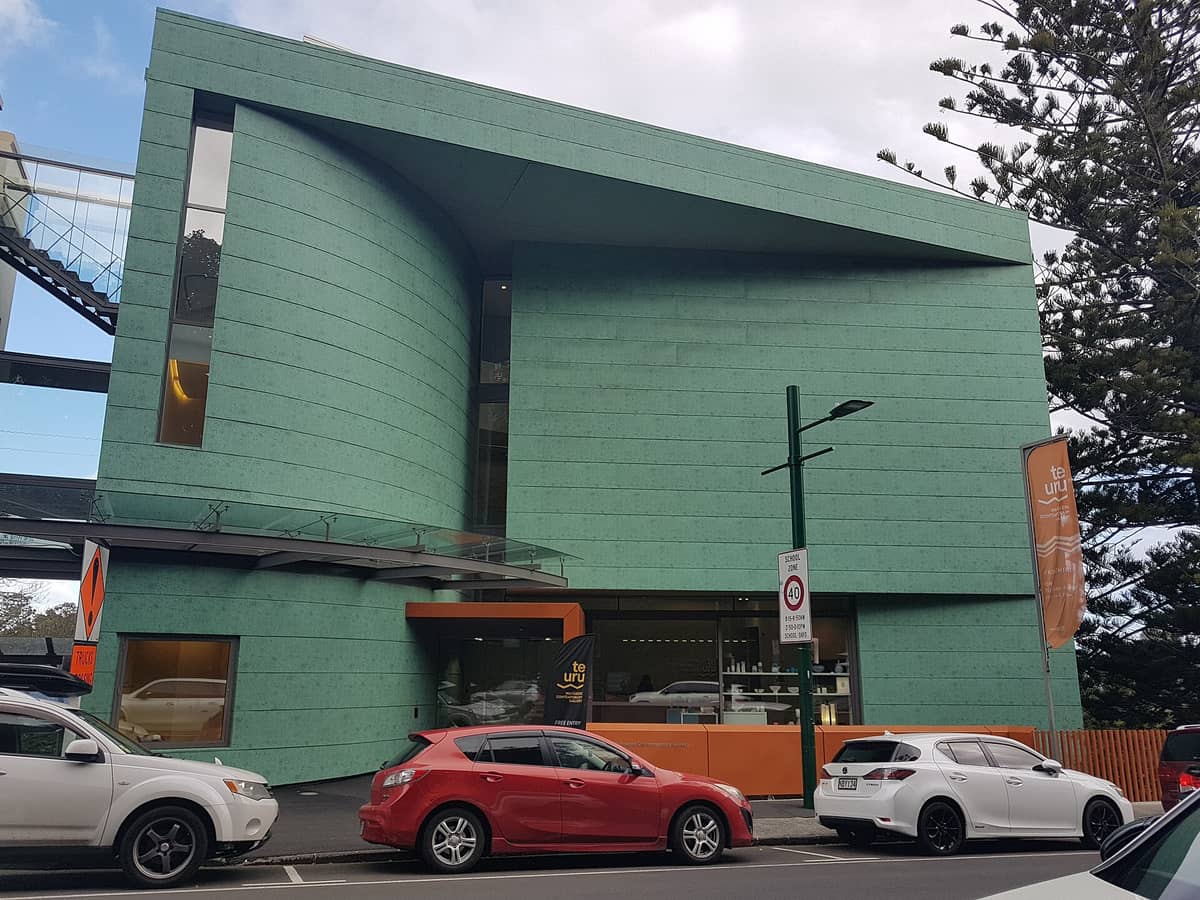
Te Uru Waitākere Contemporary Gallery is a purpose-built public art gallery in Titirangi, a village suburb on the western edge of Auckland where the suburban grid gives way to dense native bush. The gallery opened on 1 November 2014 and operates across four public levels, with a changing programme of contemporary New Zealand and international art. Entry is free, every day of the week.
It replaced an earlier community gallery that began in 1986, later operating from temporary premises during redevelopment, before the current building gave the institution the scale and credibility to present serious, ambitious exhibitions. The name, Te Uru, references the west wind in te reo Māori, which suits a gallery that sits where the city meets the forest of the Waitākere Ranges.
Most visitors to Auckland's art scene head straight to the Auckland Art Gallery Toi o Tāmaki in the CBD, which is the logical first stop for historical and international work. Te Uru fills a different role: it shows contemporary practice with a commitment to experimental and emerging work that the larger institution, by necessity, cannot always accommodate.
💡 Local tip
Check teuru.org.nz before visiting. Exhibitions rotate regularly, and the programme varies substantially between shows. Some installations require more time than others, and knowing what's on helps you plan your visit.
The Building and Setting
The gallery building is angular and deliberate, sitting at the intersection of Titirangi Road and South Titirangi Road in a way that makes it impossible to miss as you approach the village centre. From the street, it reads as a confident piece of civic architecture: clean lines, substantial glazing, and a scale that feels intentional without being overbearing for its surroundings.
Inside, the four levels are connected by a lift, making the full building accessible without stairs if needed. The gallery spaces themselves vary in character across the levels, which means different exhibitions suit different floors. Natural light enters through windows that frame views of the surrounding bush canopy, which changes throughout the day as sunlight shifts through the tree cover.
The Titirangi village setting is genuinely part of the experience. Outside the gallery, the surrounding streets have an arts-community atmosphere that reflects the suburb's long history as a place where painters, ceramicists, and writers settled from the mid-twentieth century onward. New Zealand artist Colin McCahon, one of the country's most significant painters, lived in Titirangi from 1953 to 1964, and that legacy is woven into the suburb's identity.
Tickets & tours
Live prices and dates from our booking partner. If you book, we may earn a commission at no extra cost to you.
Luggage Storage in Auckland
From 5 €Instant confirmationFree cancellationNew Zealand West Coast discovery tour
From 100 €Instant confirmationFree cancellation13,000ft skydiving experience in Auckland
From 195 €Instant confirmationFree cancellationDiscover Auckland City Tour
From 88 €Instant confirmationFree cancellation
Visiting: What to Expect Floor by Floor
The gallery is open daily from 10:00 am to 4:30 pm. There are no timed entry slots and no booking required. There are no timed entry slots and no booking required. You walk in, collect a programme guide if one is available at reception, and move through the building at your own pace.
Crowds at Te Uru are rarely a problem except during opening nights for new exhibitions or during the Auckland Festival of the Arts, when the gallery participates in wider citywide programming. On a standard weekday morning, you may have entire gallery levels to yourself. Weekend afternoons bring more visitors but nothing approaching the queues you would encounter at major metropolitan institutions.
The programme typically includes two to four concurrent exhibitions across the building, ranging from large-scale installation work to painting, sculpture, photography, and video. Te Uru has built a reputation for commissioning new work specifically for its spaces rather than simply touring existing shows, which means what you see here is often made for these rooms and shown nowhere else.
ℹ️ Good to know
Accessibility: The gallery is wheelchair accessible from Titirangi Road and throughout the building. A wheelchair can be borrowed from reception. Service dogs are welcome.
How the Experience Changes Through the Day
Morning visits between 10:00 am and noon tend to be the quietest. The light through the gallery's windows at this time of day is soft and diffuse, particularly on overcast mornings when the Waitākere bush takes on a deeper green. If you are visiting with the intention of properly engaging with individual works rather than moving quickly through, morning is the time to come.
By early afternoon, especially on weekends, Titirangi village picks up with people visiting the nearby cafes and the village green area. The gallery sees a corresponding increase in foot traffic from roughly 12:30 pm onward. This is not a problem for the gallery experience, but it changes the atmosphere from contemplative to more social.
Late afternoon light, particularly in summer, produces the most dramatic interior effects when it filters through the western-facing glazing. If you are visiting for photographic reasons, the last hour before closing in summer is worth timing carefully. In winter, the light drops earlier and the gallery feels cosier than it does on bright summer days, which suits certain types of installation work particularly well.
Getting There From Central Auckland
Titirangi is about 20 kilometres southwest of central Auckland, which sounds farther than it feels. By car, the route via State Highway 16 and then south through New Lynn takes around 30 minutes outside of peak traffic, longer during morning or afternoon commute times.
By public transport, take a train to New Lynn station By public transport, take a train to New Lynn station, then connect to a bus from New Lynn Transport Centre to Titirangi. The nearest bus stop to the gallery is at 402 Titirangi Road, approximately 160 metres from the entrance. Check Auckland Transport's journey planner at at.govt.nz for current timetables before you travel, as service frequencies vary., then connect to a bus from New Lynn Transport Centre to Titirangi. The nearest bus stop to the gallery is at 402 Titirangi Road, approximately 160 metres from the entrance. Check Auckland Transport's journey planner at at.govt.nz for current timetables before you travel, as service frequencies vary.
If you are planning a broader day out in the west, Te Uru fits naturally into a circuit that includes the Waitākere Ranges Regional Park and the black-sand beaches of the west coast. Titirangi sits at the gateway to the ranges, so combining the gallery with a walk into the bush or a drive to Piha or Karekare makes practical sense.
💡 Local tip
Parking is available both outside and behind the gallery. If using the rear car park, note that the route from that parking area to the entrance involves stairs. Use the front street-level entrance for step-free access.
Cultural Context: Why This Place Matters
Te Uru operates as a public institution serving the Waitākere community, but its programme is more ambitious than you would expect from a suburban gallery in a city of Auckland's size. It has presented work by established New Zealand artists alongside international practitioners, and its commissioning model means it contributes directly to the production of new art rather than simply circulating it.
The gallery's location in Titirangi is inseparable from the cultural history of New Zealand's west Auckland creative community. The Māori cultural significance of the Waitākere Ranges, known as Te Waitākere Ranges, adds further depth to what it means to make and exhibit art in this specific place. The gallery engages with this context through its programming rather than treating it as incidental.
For visitors from outside New Zealand, Te Uru offers one of the clearest windows into what contemporary New Zealand art actually looks like in 2026, which is not always obvious from the historical and colonial collections that dominate older institutions. The gallery's commitment to living artists and new work makes it informative about the current state of practice in this country.
Who This Is Not For
If you have one afternoon in Auckland and a list of ten things to do, Te Uru will probably not make the cut, and that is fine. The journey to Titirangi requires a deliberate decision rather than a five-minute detour. It also requires some comfort with contemporary art: visitors who prefer figurative painting, historical collections, or clear interpretive labels explaining what they are looking at may find the gallery's programming less accommodating than a more traditional museum.
For families with young children, the gallery is not unpleasant, but there is limited programming specifically aimed at children compared to what you would find at MOTAT or the Auckland Zoo. The quiet, contemplative nature of the gallery spaces means it works better with older children who have genuine interest in visual art.
Insider Tips
- The village of Titirangi has several good cafes within a short walk of the gallery. The area around the village green is worth exploring for 20 minutes before or after your visit, particularly if you arrived by car and have time to spend.
- Opening events for new exhibitions are listed on the gallery's website and are generally open to the public. These evenings give you a chance to hear artists speak about their work and to see the gallery in a social context that differs from regular opening hours.
- If you are driving from the city, going west on State Highway 16 rather than through the suburbs saves considerable time, especially on weekday mornings when surface roads through New Lynn can be slow.
- The gallery's programme guide, usually available at the front desk, contains more detailed exhibition notes than the wall texts. It is worth picking up before you go upstairs rather than after, as it changes how you read the work.
- Titirangi is the start of the Waitākere Ranges' road network. If you combine a gallery visit with a drive to Piha or Karekare, the total round trip from central Auckland makes for a full and varied day without requiring excessive driving.
Who Is Te Uru Waitākere Contemporary Gallery For?
- Contemporary art enthusiasts who want to see New Zealand art beyond the mainstream collections
- Visitors combining a cultural stop with a west coast beaches or Waitākere Ranges day trip
- Travellers on a tight budget who want a substantive cultural experience at no cost
- Architecture and design-minded visitors interested in purpose-built gallery spaces
- Anyone curious about how New Zealand's creative community engages with place, landscape, and indigenous context
Nearby Attractions
Combine your visit with:
- Auckland Botanic Gardens
Spread across 64 hectares in Manurewa, the Auckland Botanic Gardens offer free entry every day of the year, with themed garden collections, 10 hectares of native forest, and a visitor centre on site. It sits south of the city centre and rewards a longer visit than most people initially plan for.
- Auckland Zoo
Auckland Zoo has been part of the city's fabric since 1922, sitting in the Western Springs precinct with a collection that spans native New Zealand wildlife and international species. This guide covers everything from ticket prices and transit options to the best time of day to arrive and which exhibits deliver the most.
- Bastion Point (Takaparawhau)
Takaparawhau, known widely as Bastion Point, is a grassy headland in Ōrākei where Māori history, colonial conflict, and sweeping Waitematā Harbour views converge. It costs nothing to visit, carries centuries of significance, and rewards visitors who take time to understand what they are standing on.
- Bethells Beach (Te Henga)
Bethells Beach, officially Te Henga (Bethells Beach), is a raw, dramatic stretch of black-sand coastline about 45 minutes west of central Auckland. With rolling dunes, a freshwater lagoon, strong surf, and zero phone coverage, it delivers a genuine wilderness experience rare for a city of 1.6 million people.
Planning a trip? Discover personalized activities with the Nomado app.