Tallinn TV Tower: Estonia's Highest Viewpoint Explained
Standing 314 metres tall in the Pirita district, the Tallinn TV Tower is Estonia's tallest structure and its most dramatic viewpoint. The observation deck at 170 metres puts the Gulf of Finland, the Old Town skyline, and the surrounding forests into a single frame that no hilltop in the city can match.
Quick Facts
- Location
- Kloostrimetsa tee 58a, Pirita district, Tallinn (approx. 6 km northeast of city centre)
- Getting There
- Bus 34A or 38 from Viru Keskus to 'Teletorn' stop
- Time Needed
- 1.5 to 2.5 hours
- Cost
- Adults €18–19; concessions €13–14; family €36–37; evening ticket (from 17:00) €10. Verify current rates at teletorn.ee before visiting.
- Best for
- Panoramic city views, architecture enthusiasts, families, Soviet-era history
- Official website
- teletorn.ee/en
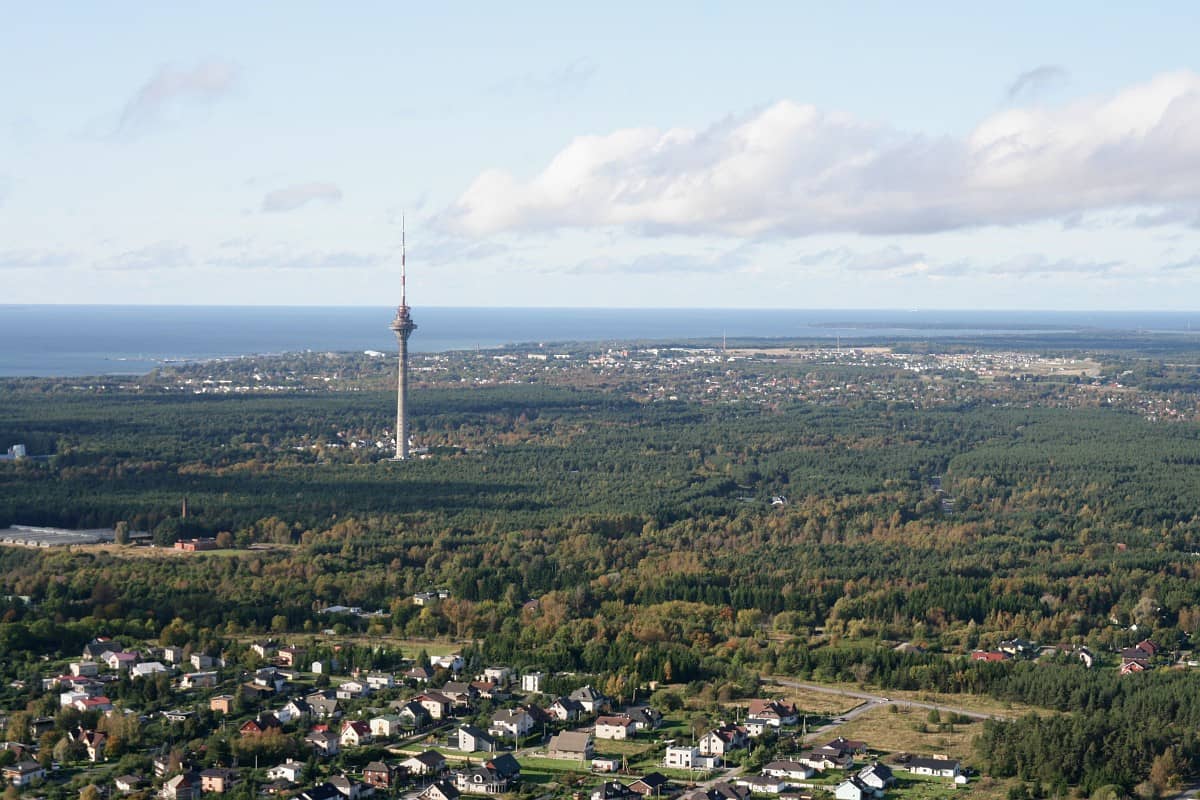
What the Tallinn TV Tower Actually Is
The Tallinn TV Tower (Estonian: Tallinna teletorn) is a 314-metre telecommunications tower completed in 1980, making it the tallest structure in Estonia and the highest freestanding TV tower in Northern Europe. It was built specifically to upgrade broadcasting infrastructure ahead of the sailing events of the 1980 Moscow Summer Olympics, which were held in Tallinn harbour. Construction started in 1975 and the tower was officially opened on 11 July 1980.
Today the tower operates as a public attraction with an observation deck at 170 metres, a restaurant, and a series of indoor exhibits. It sits in the Pirita district, surrounded by forest and roughly six kilometres northeast of the Old Town. That suburban location is the first thing to understand about planning a visit: this is not a walk from your hotel. It requires a deliberate trip, and the journey itself is part of the experience.
ℹ️ Good to know
Opening hours vary by season: 1 April to 30 September daily 10:00–19:00; 1 October to 31 March daily 10:00–18:00. Ticket sales close one hour before closing time. Always check teletorn.ee for updates before you travel.
The View: What You Actually See from 170 Metres
The observation deck at 170 metres is enclosed in glass with open-air sections on parts of the wraparound walkway. On a clear day, the panorama covers an extraordinary amount of ground: the red-roofed spires of Tallinn's Old Town to the southwest, the industrial port area, the open water of the Gulf of Finland stretching north toward Helsinki, the pine and birch forests of Pirita and Lasnamäe, and on exceptionally clear days, the Finnish coastline about 80 kilometres away.
What surprises many visitors is how much of Tallinn is green. From this height, the city looks far less urban than it does at street level. The Soviet-era housing blocks of Lasnamäe form one distinct band to the south, while the compact medieval core of the Old Town looks almost impossibly small. It gives you a useful mental map of the city that reshapes how you navigate for the rest of your trip.
For the best light, arrive in the late morning or early afternoon on a sunny day. The tower faces generally west toward the city, so morning light illuminates the Old Town skyline well. In summer, the evening ticket (available from 17:00 at a reduced price of approximately €10) is worth considering for long golden-hour light over the water. For context on other high points across the city, see the guide to Tallinn's best viewpoints — the TV Tower is the only option that gets you truly above the treeline and rooftops.
Tickets & tours
Hand-picked options from our booking partner. Prices are indicative; availability and final rates are confirmed when you complete your booking.
Self-guided Discovery Walk of Tallinn city contrasts beyond the medieval walls
From 26 €Instant confirmationFree cancellationTallinn's art and culture tour with a local
From 62 €Instant confirmationFree cancellationHistorical walking tour of Tallinn with a local
From 599 €Instant confirmationFree cancellationIntroductory walking tour of Tallinn with a local guide
From 109 €Instant confirmationFree cancellation
How the Experience Changes Through the Day
Weekday mornings between 10:00 and 12:00 are the quietest window. Tour groups tend to arrive around midday and fill the elevator lobby with brief but noticeable queues. Weekend afternoons in summer are the busiest period, with families and cruise-ship visitors making up much of the crowd. If you are sensitive to crowds in enclosed spaces, a weekday morning visit is worth the extra planning.
The tower has a restaurant on one of its upper levels, which serves food and drinks with views. It functions as a usable café during the day, not just a formal dining room, so you can stop for coffee and extend your time up top without feeling obligated to order a full meal. In summer, light persists until close to midnight in Tallinn, so the evening ticket offers a genuinely different atmosphere at the top: the city shifts to warm amber tones and the water surface picks up the light in a way that midday simply cannot replicate.
💡 Local tip
The evening ticket (from 17:00) costs somewhat less than the standard adult price. In summer months when sunset is late, this is objectively the best-value time to visit — and the observation deck is far less crowded than the midday peak.
Historical Context: Built for the Olympics, Defended by Civilians
The tower's origin story is straightforward: the Soviet authorities needed better broadcasting capacity for the 1980 Olympics sailing regatta in Tallinn, and a major telecommunications tower was the solution. Construction ran from 1975 to 1980, and the engineering approach followed the standard Soviet precast concrete shaft design used for broadcast towers across the USSR.
What makes the tower historically significant beyond its technical purpose is an event from August 1991. During the Soviet coup attempt against Mikhail Gorbachev, Soviet troops moved to seize the tower and cut off Estonian broadcasting. Estonian civilians formed a human chain around the base of the tower to block the takeover. The broadcasting signal remained on air, and within days Estonia's independence was internationally recognised. The tower became a symbol of the peaceful resistance that defined Estonia's break from Soviet rule — a story explored in more depth at the Vabamu Museum of Occupations and Freedom in the city centre.
That layered history — Olympic infrastructure, Soviet communications tool, site of civilian resistance — gives the tower more weight than a standard observation deck. If you have an interest in Estonia's path to independence, pairing this visit with the Soviet history sites in Tallinn adds real context to what you see.
Getting There and Practical Logistics
The tower is at Kloostrimetsa tee 58a in the Pirita district, approximately six kilometres northeast of Viru Keskus (the main bus and shopping hub in central Tallinn). Buses 34A and 38 run from Viru Keskus directly to the Teletorn stop at the base of the tower. Journey time is roughly 25 to 30 minutes depending on traffic. The stop is named after the tower itself, so it is easy to identify.
By taxi or ride-hailing app (Bolt operates widely in Tallinn), the journey from the Old Town takes around 15 minutes and costs a modest fare — a reasonable option if you are combining the tower with a visit to Pirita Beach or the Pirita Convent nearby and want to keep your schedule flexible.
The tower's elevator is modern and accessible. The observation deck is reachable without stairs from the entrance. For specific wheelchair access details or assistance, the tower's team can be reached at teletorn@teletorn.ee or +372 5911 9335. If you are using the Tallinn Card, check the current benefits list before buying tickets independently — card inclusions can change seasonally.
⚠️ What to skip
The tower is not within walking distance of the Old Town. Do not underestimate the transit time when building a day itinerary — allow at least 35 minutes each way by public bus, plus time at the attraction itself.
Photography, Weather, and What to Bring
The enclosed observation deck allows photography through clean glass panels, and the open-air sections give unobstructed shots if wind is manageable. Wide-angle lenses work well for the cityscape. A moderate telephoto (85–135mm equivalent) lets you isolate the Old Town spires against the sky. Polarising filters help cut glare off the water on sunny afternoons.
Weather matters significantly here. On overcast days the visibility can drop sharply, and a low cloud ceiling can reduce the panorama to a grey haze. Tallinn's climate is humid continental, meaning cloud cover is common for much of the year, particularly in autumn and winter. If you have flexibility in your schedule, check the forecast and choose your clearest day for this visit. A clear winter day with snow cover can actually produce a striking view, but those conditions are less predictable.
Dress in layers regardless of season. The observation deck's open sections are exposed to Baltic winds that feel considerably colder than ground level, even in summer. Comfortable shoes are fine — there is no significant walking involved once inside the tower.
Combining the Tower with the Pirita Area
The Pirita district rewards more than a single-attraction visit. Pirita Beach, one of Tallinn's most popular stretches of sand, is a short walk from the tower toward the sea. The ruined walls of Pirita Convent, a 15th-century Gothic structure partially destroyed in the Livonian War, stand along the river about 10 minutes on foot from the tower. The combination of the tower, convent, and beach makes for a solid half-day in Pirita without backtracking.
The area is also close to Kadriorg, the elegant park and palace district that houses the Kumu Art Museum. A full day combining Kadriorg, Pirita, and the TV Tower is one of the better ways to spend time away from the Old Town crowds — and it keeps you in a consistently greener, quieter part of the city.
Insider Tips
- The evening ticket (from 17:00, approximately €10) is available at roughly half the standard adult price. In summer, sunset is late and the light is exceptional — this is not a budget compromise, it is the better experience.
- Bus 34A tends to be less crowded than bus 38 in the late morning. Both stop directly at the tower, but 34A often has more seats if you are travelling with children or luggage.
- The restaurant level is open to ticket holders during the day. You do not need to order a full meal — ordering coffee or a drink is accepted, and it extends your time at height after the observation deck circuit.
- For the clearest views of Finland across the Gulf, position yourself on the north-facing section of the deck. On very clear days in winter, the Finnish coastline is visible at a distance of about 80 km.
- If you plan to visit multiple paid attractions, calculate whether the Tallinn Card covers the tower entry for your visit dates — the discount or inclusion can offset part of the card's cost on its own.
Who Is Tallinn TV Tower For?
- Travellers who want the broadest possible orientation view of Tallinn and the Gulf of Finland in a single stop
- Families with children who find the scale of the structure and the elevator ride genuinely exciting
- Architecture and engineering enthusiasts interested in late-Soviet telecommunications infrastructure
- History-minded visitors exploring Estonia's independence story and Soviet-era landmarks
- Photographers working on clear-day panoramic shots of Tallinn's contrasting urban layers
Nearby Attractions
Other things to see while in Pirita:
- Maarjamäe Palace
Maarjamäe Palace is a 19th-century Gothic Revival manor on Tallinn's northeastern coast that now houses the Estonian History Museum's flagship permanent exhibition. The building's ornate silhouette, the surrounding Soviet-era memorial complex, and the Gulf of Finland backdrop make it one of the most layered cultural sites in the country.
- Pirita Beach
Pirita Beach is Tallinn's largest and most popular beach, stretching 2.4 kilometres along the Gulf of Finland just 15 minutes from the city centre. Free to access year-round, it draws swimmers in summer, joggers in spring and autumn, and winter walkers who come for the frozen sea views. This guide covers what the experience is actually like, when to go, and how to get there.
- Pirita Convent
The roofless Gothic shell of Pirita Convent has stood on the banks of the Pirita River since the early 15th century, outlasting war, occupation, and centuries of Baltic winters. Open year-round and steps from the sea, it is one of the most atmospheric historical sites in the Tallinn region.
- Tallinn Botanic Garden
Set in the forested Kloostrimetsa area of Pirita, Tallinn Botanic Garden is a working botanical institution founded in 1961 (opened to the public in 1970) with a large outdoor landscape and greenhouse collections. It rewards slow exploration and is especially worthwhile in late spring and early summer when the flowering plants peak.