Sumiyoshi Taisha: Osaka's Ancient Grand Shrine Worth the Journey South
Sumiyoshi Taisha is one of Osaka's oldest and most important Shinto shrines, founded according to tradition in 211 CE and home to a rare pre-Buddhist architectural style. Free to enter and just 10 minutes from Namba by train, it offers a genuinely peaceful contrast to Osaka's commercial core.
Quick Facts
- Location
- 2-9-89 Sumiyoshi, Sumiyoshi-ku, Osaka 558-0045
- Getting There
- Sumiyoshi Taisha Station (Nankai Main Line, ~10 min from Namba); or Hankai Tram Sumiyoshitorii-mae Station
- Time Needed
- 45 minutes to 1.5 hours
- Cost
- Free entry to shrine precincts
- Best for
- History lovers, architecture enthusiasts, early-morning visitors, travelers seeking calm
- Official website
- www.sumiyoshitaisha.net/en
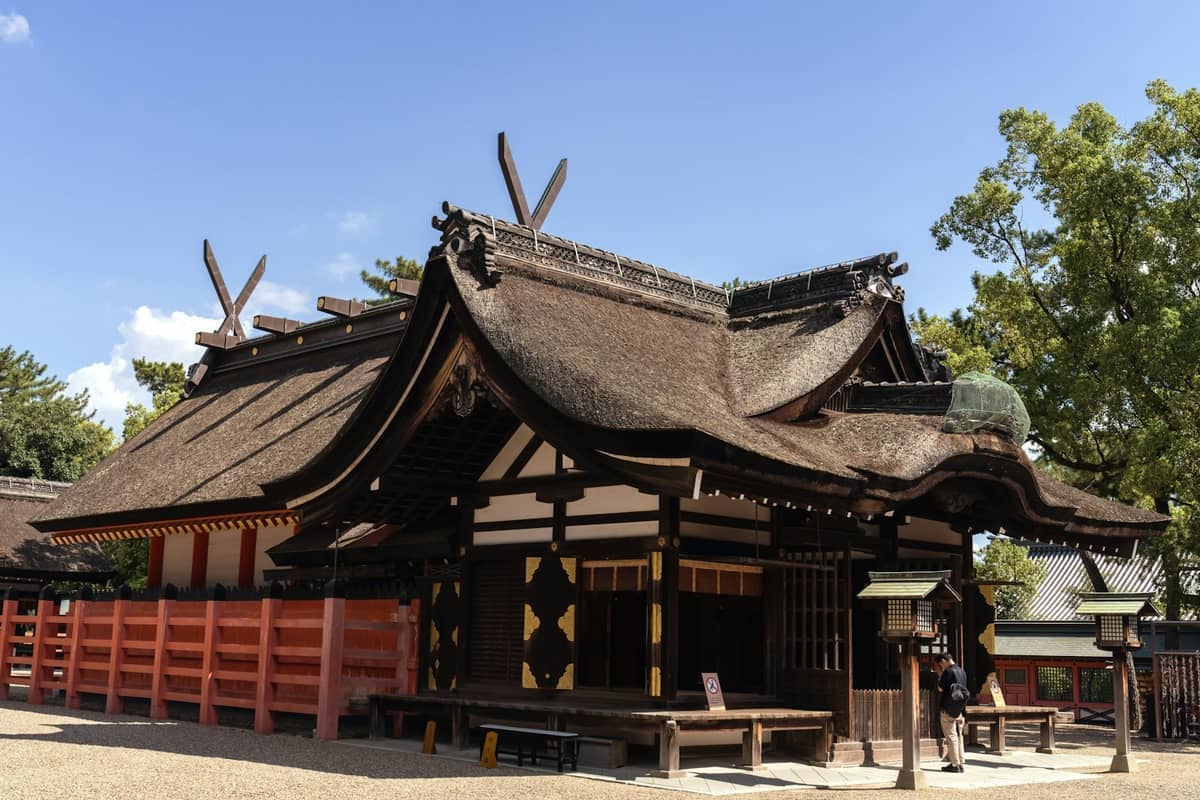
What Sumiyoshi Taisha Actually Is
Sumiyoshi Taisha is not simply an old shrine. It is the head shrine of approximately 2,300 Sumiyoshi-affiliated shrines across Japan, and it holds a foundational place in Shinto religious history. According to ancient chronicles, it was established in 211 CE during the reign of Empress Jingū, making its traditional founding date nearly two millennia old.
What distinguishes Sumiyoshi Taisha architecturally is its style, known as Sumiyoshi-zukuri. This form of shrine construction predates the introduction of Buddhism to Japan, which means it represents an indigenous Japanese aesthetic that developed without Chinese or Korean Buddhist influence. The four main halls, called the Honden, are designated National Treasures. They sit in a row rather than facing a single axis, an arrangement that is rare in Japan and strongly associated with this shrine.
For travelers working through Shitennoji Temple or the broader Tennoji area, Sumiyoshi Taisha is a logical extension further south. It offers a very different atmosphere: less urban, more ritualistic, and significantly less crowded than the major Kyoto shrines most visitors default to.
ℹ️ Good to know
Opening hours: April–September 06:00–17:00. October–March 06:30–17:00. Admission is free.
The Sorihashi Bridge: First Impressions and the Arc You Have to Cross
The most immediate landmark when entering from the main southern approach is the Sorihashi, a steep arched vermilion wooden bridge that curves sharply over a small pond. In early morning, when the light falls low across the water, the bridge casts a near-perfect reflection. Photographers position themselves along the pond's edge for this shot, and the composition is genuinely striking without any effort.
Crossing it requires care. The steps are narrow, the wooden boards are uneven, and the incline is steep enough that many visitors grip the central handrail. Elderly visitors often take the flat alternative path around the pond. Anyone with mobility concerns, or traveling with a stroller, should use the side route without hesitation. The bridge is atmospheric, but the shrine grounds beyond it are the real destination.
⚠️ What to skip
Accessibility note: The Sorihashi Bridge involves steep wooden steps. Most of the inner grounds use gravel paths and some additional steps. Full step-free access to all areas is limited. Flat alternative routes exist via side entrances.
Tickets & tours
Hand-picked options from our booking partner. Prices are indicative; availability and final rates are confirmed when you complete your booking.
Kobe: Mt. Rokko Night View, Kitano Ijinkan, Arima Onsen Full Day Tour
From 47 €Instant confirmationFree cancellationOsaka local food tour in Dotonbori and Shinsekai
From 51 €Instant confirmationFree cancellationGuided day tour from Osaka to Nara Park, Arashiyama and Fushimi Inari
From 59 €Instant confirmationFree cancellationShiga Day Trip with Miho Museum, Lake Biwa and Waterbird Shrine
From 70 €Instant confirmationFree cancellation
Inside the Precincts: How the Space Unfolds
Beyond the bridge, the grounds open into a wide gravel forecourt. The air carries the faint smell of incense and, depending on the season, cedar and pine from the old trees that line the inner paths. The four Honden halls are positioned slightly back from the open courtyard, painted in red-orange lacquer that contrasts with the surrounding greenery. They are not enormous structures, but their proportions are precise, and the detailing on the eaves rewards close attention.
Visitors proceed through the main torii gate and naturally flow toward the haiden, the offering hall where you can observe or participate in the act of worship: two bows, two claps, a moment of prayer, one bow. On weekday mornings, this is a quiet, almost private ritual. On weekends, particularly on the first day of each month (known as Tsuitachi Mairi), the shrine draws significantly larger crowds of devoted worshippers.
The grounds extend beyond the main halls into smaller sub-shrines, stone lanterns half-covered in moss, and wooded paths where the foot traffic thins almost entirely. Exploring these outer areas adds 20 to 30 minutes to a visit but shifts the experience from sightseeing to something quieter.
How the Atmosphere Changes Through the Day
The shrine opens at 06:00 in the warmer months, and arriving within the first hour means sharing the space mostly with local residents who come to pray before work. The gravel paths are raked clean. A priest in white robes may pass through the inner precincts. The sound is almost entirely birdsong and the crunch of your own footsteps.
By mid-morning, school groups and tour parties begin to arrive. By midday in spring and autumn, the main forecourt can feel genuinely crowded near the haiden. Midday in summer is uncomfortable: Osaka's humid subtropical climate means temperatures regularly exceed 30°C in July and August, and the open gravel areas offer little shade. If you visit in summer, go early or late afternoon.
Late afternoon, in the hour before the 16:00 outer gate closure, brings a second quieter window. The light comes in at a warmer angle, the tour groups have left, and the atmosphere settles again. This is a good time to sit on one of the stone benches near the pond and simply observe.
💡 Local tip
Best visit times: weekday mornings before 09:00, or late afternoon after 15:00. Avoid midday on weekends and the first of each month (Tsuitachi Mairi), when crowds are at their peak.
Historical and Cultural Context
Sumiyoshi Taisha's deities, collectively known as the Sumiyoshi Sanjin, are associated with the sea, safe passage, and the protection of those who travel by water. This is historically significant: Osaka's position as a port city and trading center gave these deities practical relevance for centuries of merchants, sailors, and diplomats. The shrine's connection to maritime culture is not incidental to its importance; it was central to why this location was chosen.
The shrine also has strong associations with poetry and is referenced in the Man'yoshu, Japan's oldest anthology of verse. Visitors with an interest in Japanese literary history will find this layer of significance worth knowing before they arrive. For broader context on Osaka's temple and shrine landscape, the guide to Osaka's best temples and shrines places Sumiyoshi Taisha within the wider religious geography of the city.
Getting There and Practical Notes
From Nankai Namba Station, take the Nankai Main Line local train toward Wakayama and alight at Sumiyoshi Taisha Station. The journey takes about 10 minutes. From the station, the main shrine gate is a short walk of about 3 minutes. The Hankai Tramway, one of Osaka's few remaining streetcar lines, also stops at Sumiyoshitorii-mae Station, which deposits you directly at the torii gate. Taking the tram, especially from Tennoji, is slower than the train but considerably more atmospheric.
If you're planning a day that combines Sumiyoshi Taisha with other southern Osaka sites, the Tennoji area is a practical hub. From there you can reach the shrine by tram and continue onward without backtracking to central Osaka.
Comfortable walking shoes are worth wearing. The inner grounds are predominantly gravel and stone, and the uneven surfaces of older pathways can catch you off guard in sandals. There are no lockers at the shrine, so travel light if you've come directly from your accommodation.
Photography at Sumiyoshi Taisha
The Sorihashi Bridge reflection shot is the most-reproduced image from this shrine, and for good reason. For the cleanest reflection, visit on a calm, still morning when there is no wind to disturb the pond surface. The main Honden halls can be photographed from the forecourt, though interior photography of certain areas may be restricted; follow posted signs.
The moss-covered stone lanterns along the secondary paths photograph well in any light. In autumn, the grounds take on a warm amber tone from the surrounding trees that frames the red lacquer halls particularly well. Cherry blossom season brings its own visual layer, though the shrine is not specifically famous for sakura in the way that dedicated parks are.
For those planning a broader photography day around Osaka, the best viewpoints in Osaka guide covers complementary locations across the city.
Is It Worth the Trip? An Honest Assessment
Sumiyoshi Taisha is not a spectacle. There is no towering pagoda, no sweeping hillside view, no neon sign or commercial energy. What it offers is something different: architectural authenticity, genuine religious activity, and space to think. The Sumiyoshi-zukuri style is not replicated elsewhere in Osaka, and the historical depth here surpasses most of what the city's more tourist-facing attractions provide.
That said, visitors expecting the grandeur of Kyoto's Fushimi Inari or Nara's Kasuga Taisha may find Sumiyoshi Taisha modest in scale. It is not a full-day destination on its own. Combined with the surrounding Sumiyoshi-ku neighborhood, a tram ride down from Tennoji, or a late-afternoon walk before dinner back in Namba, it fits well into a wider itinerary.
Travelers on a tight schedule might weigh it against other cultural priorities. If temples and shrines are high on your list, this one earns its place. If you're primarily in Osaka for food and nightlife, it may sit lower on the agenda. Either way, the full list of things to do in Osaka can help you calibrate how it fits your trip.
Insider Tips
- The first day of each month (Tsuitachi Mairi) draws large numbers of devoted worshippers, especially in the morning. If you want a quieter experience, avoid the 1st of the month. If you want to observe genuine religious practice at scale, it is exactly the right time to visit.
- The Hankai Tramway is one of Osaka's last remaining streetcar lines and runs directly to the shrine's torii gate. Taking it from Tennoji adds about 5 minutes over the train from Namba, but the ride itself through residential Osaka is worth experiencing once.
- There are smaller sub-shrines scattered throughout the outer precincts that most visitors skip entirely. Walking the full perimeter of the grounds, including the wooded rear sections, reveals stone lanterns, smaller deity halls, and a noticeably different atmosphere from the main forecourt.
- The shrine sells omamori (protective charms) and ema (wooden wishing plaques) at reasonable prices. Those related to sea travel and safe journeys are particularly associated with this shrine's historical role and make meaningful, compact souvenirs.
- If you visit in summer, the gravel forecourt reflects heat significantly. Wear light clothing, bring water, and plan to finish before 10:00 or arrive after 15:30 to avoid the worst of the afternoon heat.
Who Is Sumiyoshi Taisha For?
- Travelers with genuine interest in Shinto religious architecture and pre-Buddhist shrine design
- Early risers who want a quiet, contemplative start to the day away from Osaka's commercial center
- Photographers looking for strong compositions: the Sorihashi Bridge reflection, red lacquer halls, moss-covered lanterns
- History-focused visitors who want to move beyond Osaka's modern identity into its ancient role as a port and trading city
- Those pairing a day in southern Osaka with Tennoji or Shinsekai, for whom the shrine is a natural geographic extension
Nearby Attractions
Combine your visit with:
- Expo '70 Commemorative Park
Built on the grounds of the 1970 Japan World Exposition, Expo '70 Commemorative Park (万博記念公園) in Suita City is one of greater Osaka's largest open spaces. It combines parkland, a traditional Japanese garden, a museum dedicated to the original expo, and the striking Tower of the Sun — an icon of 20th-century Japanese design that still stops visitors in their tracks.
- Kema Sakuranomiya Park
Kema Sakuranomiya Park stretches for several kilometers along the Okawa River in central Osaka, lined with roughly 4,800 cherry trees that draw enormous crowds each spring. It is free to enter, open around the clock, and easily reached from multiple train lines. Outside of cherry blossom season, the park is a quiet, flat riverside corridor used primarily by joggers and cyclists.
- Minoh Falls
Minoh Falls (箕面大滝) sits inside Meiji-no-Mori Minoh Quasi-National Park, north of Osaka city. The trail from Hankyu Minoh Station follows a wooded river gorge for roughly 40 to 45 minutes before delivering you to the falls. Admission is free, and the park and falls area are open 24 hours with no staffed gate.
- Mint Museum Osaka (Japan Mint)
Tucked inside the grounds of Japan Mint's Osaka headquarters in Kita-ku, the Mint Museum offers a free, unhurried look at the full sweep of Japanese coinage history, from ancient cast coins to contemporary commemorative medals. It is one of Osaka's more quietly rewarding museums, and one of the few major attractions in the city that costs nothing to enter.