Sugar Beach Toronto: What to Expect at the Waterfront's Pink Umbrella Park
Sugar Beach is a free public park on Toronto's East Bayfront, opened in 2010 as part of a major waterfront revitalization effort. Known for its pink umbrellas, white sand, and views across Lake Ontario, it sits directly beside the working Redpath Sugar Factory — a contrast that makes it unlike any other urban beach in Canada.
Quick Facts
- Location
- 11 Dockside Dr, Toronto, ON M5A 0B6 — foot of Lower Jarvis Street, East Bayfront
- Getting There
- TTC streetcar (504 King) to Parliament St, then a short walk south; or Union Station via the Queens Quay waterfront path
- Time Needed
- 30 to 90 minutes
- Cost
- Free
- Best for
- Lakeside relaxation, waterfront walks, photography, families with young children
What Sugar Beach Actually Is
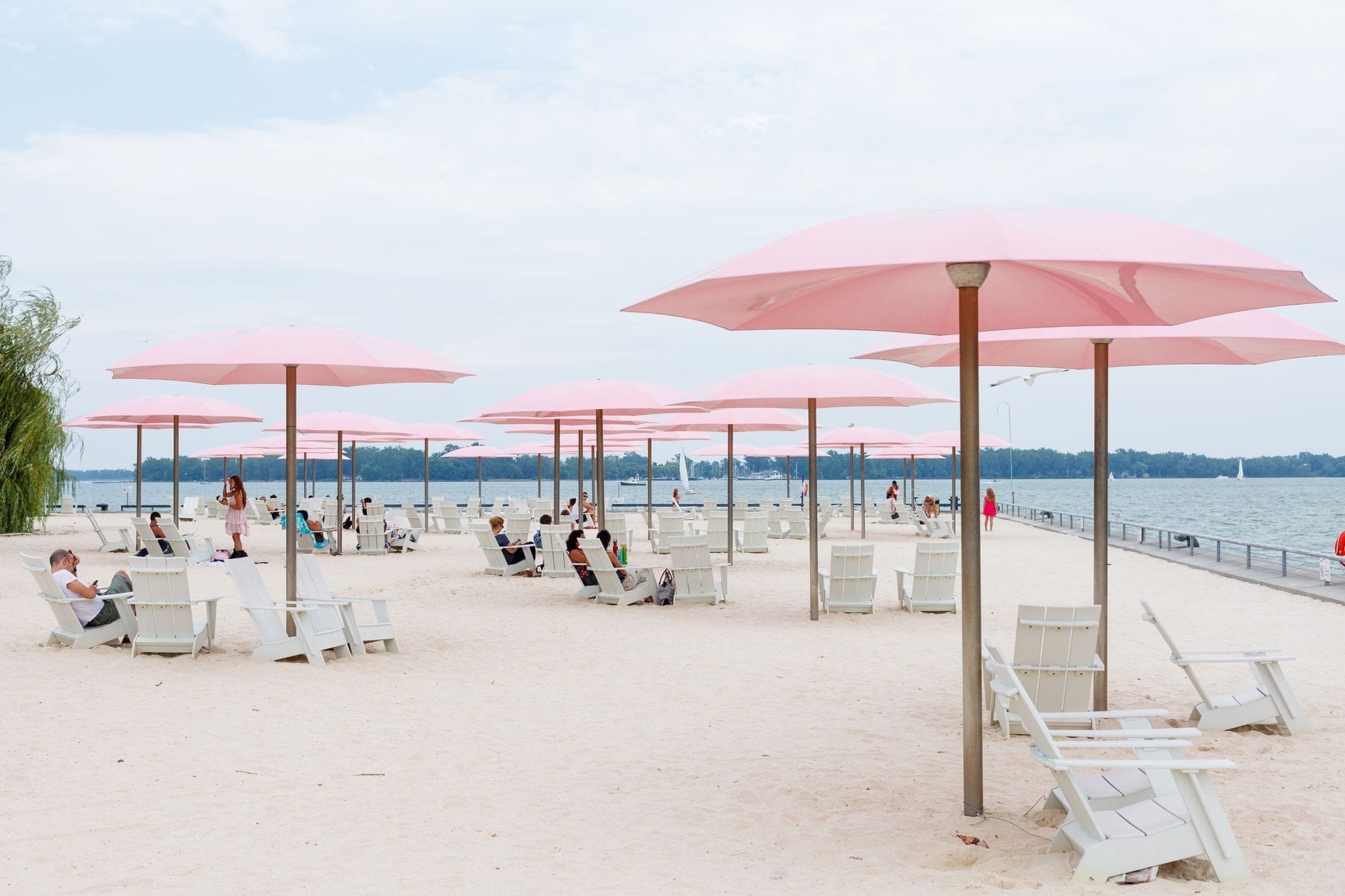
Sugar Beach is a public park and urban beach on Toronto's East Bayfront, occupying roughly 8,500 square metres of reclaimed industrial waterfront. It opened in 2010 as part of Waterfront Toronto's long-running effort to transform the city's lakefront from a tangle of expressways and surface parking lots into usable public space. The park is officially known as Canada's Sugar Beach in Waterfront Toronto materials, though the City of Toronto lists it simply as Sugar Beach Park.
The name is no accident. The park sits directly beside the Redpath Sugar Factory, one of the last remaining industrial operations on Toronto's central waterfront. On certain days, especially in warmer months, a faint sweetness drifts across the sand from the factory's operations. It is one of those sensory details that no photograph can prepare you for, and it gives the park a distinctly unusual character: fine white sand, pink granite rocks, candy-pink umbrellas, and the low industrial hum of a sugar refinery operating next door.
ℹ️ Good to know
Sugar Beach is a public park with no admission fee. There are no lifeguards on duty and swimming is not permitted. The sand and umbrellas are for lounging, not a swim beach in the traditional sense.
The Design: Why It Looks the Way It Does
The park was designed by the landscape architecture firm CLAUDE CORMIER + ASSOCIÉS, which also created the Berczy Park fountain near St. Lawrence Market. The design is deliberate and slightly theatrical. The pink umbrellas are fixed structures rather than rental furniture, made to evoke a resort atmosphere in the middle of a working city. Dozens of pink Muskoka chairs are arranged across the sand, giving the park a visually cohesive look that photographs extremely well.
The white sand was imported specifically for the project. It is finer and brighter than the typical grey-beige sand you find at most Toronto beaches, which reinforces the slightly surreal feeling of sitting on a tropical-styled beach with Lake Ontario stretching out in front of you and a refinery chimney in your peripheral vision. Pink granite boulders border sections of the park, doubling as informal seating and natural play structures for children.
The promenade and plaza are fully accessible, and a boardwalk section runs level with the sand to allow easier access to the beach area. The overall layout is flat and open, which makes it genuinely usable for people with mobility aids or strollers — a practical consideration that the design team clearly prioritized.
Tickets & tours
Live prices and dates from our booking partner. If you book, we may earn a commission at no extra cost to you.
Toronto Old Town: Dark Side Exploration Game and Tour
From 12 €Instant confirmationFree cancellationLEGOLAND Discovery Centre Toronto tickets
From 16 €Instant confirmationFree cancellationToronto 'Little Canada' entrance tickets
From 27 €Instant confirmationFree cancellationNiagara Falls evening tour with boat, dinner and Illumination Tower
From 77 €Instant confirmationFree cancellation
How the Experience Changes Through the Day
Early morning at Sugar Beach is quiet in a way that is easy to underestimate. The lake surface is often glassy before 8am, and the pink umbrellas cast long shadows across the sand. A handful of joggers pass through on the Martin Goodman Trail, which runs along the waterfront just behind the park, but the chairs are largely empty. This is the best time to take photographs without people in frame and to appreciate how deliberate the park's geometry feels without a crowd filling it.
Midday on a warm weekend brings a noticeable shift. Families with children arrive, the Muskoka chairs fill up, and the smell from the Redpath factory may become more pronounced as temperatures rise. The combination of screaming children, Lake Ontario breezes, and the faint industrial sweetness in the air is not unpleasant, but it is stimulating rather than peaceful. If you are looking for a quiet sit, a Wednesday morning in June beats a Saturday afternoon in August by a wide margin.
Late afternoon in summer is the park's most photogenic window. The sun drops toward the west and catches the pink umbrellas at an angle that turns them almost luminescent. The Redpath factory building and its smokestacks appear sharper against the evening light, and the contrast between the candy-coloured park design and the industrial backdrop becomes most visually striking around 6 to 7pm. Sunset itself is best viewed from the waterfront promenade rather than the sand, as you get an unobstructed sightline toward the lake.
💡 Local tip
Photography tip: Shoot from the water-facing edge of the sand during golden hour for the best combination of umbrella colours, lake reflections, and the Redpath factory silhouette in the background. A wide-angle lens captures the full umbrella canopy above the chairs.
The Waterfront Context: What Surrounds Sugar Beach
Sugar Beach sits within the broader East Bayfront district, a neighbourhood that was largely industrial until Waterfront Toronto began its redevelopment push in the early 2000s. Walking east along the waterfront path from the park, you reach Corktown Common in about 20 minutes, another Waterfront Toronto project that opened in 2013 and includes a splash pad, wetland, and event lawn. To the west, the path connects to Harbourfront Centre, Toronto's main waterfront cultural venue, and continues all the way to the Western Waterfront. The full Martin Goodman Trail runs along this stretch, making Sugar Beach an easy stop on a longer waterfront cycling or running route.
The surrounding East Bayfront neighbourhood has grown significantly since Sugar Beach opened. Residential towers now frame the park on its northern and eastern sides, and a small stretch of food and retail has developed along Queens Quay East. This is not a park surrounded by tourist infrastructure: the nearest sit-down restaurants and cafes are a short walk away, and there are no vendors or concessions inside the park itself. If you are planning a longer waterfront day, it is worth reading the Toronto waterfront guide to understand how Sugar Beach fits into the larger sequence of parks, attractions, and neighbourhoods along the lake.
What to Bring and Practical Logistics
There are no food vendors inside Sugar Beach. Bring water and snacks if you plan to stay more than an hour. Washroom facilities are available in the park. The Muskoka chairs are free to use on a first-come basis — they are not reserved and cannot be booked in advance.
The park has no designated parking lot directly on site. Street parking exists along Queens Quay East and on nearby side streets, but availability is limited and metered. Arriving by TTC is practical: the 504 King streetcar serves the area, and the walk south to the waterfront from Parliament Street takes roughly 10 minutes. Cyclists will find it straightforward, as the waterfront trail runs immediately adjacent to the park.
In winter, the park is open but the chairs are removed and the sand takes on a completely different character: grey-white under overcast skies, windswept, and largely empty. The view of Lake Ontario in winter is dramatic in its own right — ice formations can develop along the waterfront edge in January and February — but the experience is one for cold-weather walkers rather than casual visitors. Dress accordingly; the waterfront amplifies wind chill considerably compared to sheltered city streets.
⚠️ What to skip
Swimming is not permitted at Sugar Beach. The waterfront here is not a supervised swimming area, and the lake conditions along the urban waterfront can be unpredictable. For actual swimming, the Toronto Islands beaches are the closest option.
Honest Assessment: Who This Park Is For
Sugar Beach rewards visitors who treat it as a place to sit by the lake rather than a destination attraction. The pink umbrellas and Muskoka chairs make it genuinely comfortable and visually distinctive, and the lakefront setting is real: you are sitting at the edge of Lake Ontario, one of the Great Lakes, with open water stretching to the horizon. For travellers building a full day on the waterfront, it works well as a starting or ending point, especially when combined with the St. Lawrence Market nearby or a walk through the Distillery District, which is about 15 minutes on foot to the northeast.
Families with young children find the pink granite boulders and open sand genuinely useful as a play space. The flat, accessible layout means strollers and wheelchairs move through easily. The park is not fenced, which means some supervision is needed near the water edge, but it is a calm and manageable space for children under 10.
Visitors expecting a traditional beach experience — swimming, volleyball nets, food stands, the energy of a busy summer beach — will find Sugar Beach too quiet and too constrained. The park is small. You can walk its full perimeter in under five minutes. Its value is in the sitting, not the doing. Travellers with limited time in Toronto who are weighing this against the city's actual swimming beaches or major cultural institutions should know that Sugar Beach is a pleasant stop, not a half-day commitment.
If waterfront parks are a priority for your trip, the best parks in Toronto guide gives a broader comparison of what the city's green spaces offer, including options with more activities and greater scale.
Insider Tips
- The Muskoka chairs fill up fast on weekend afternoons in July and August. Arrive before 11am to claim a spot in the shade of the pink umbrellas. By noon on a sunny Saturday, the shaded chairs are consistently occupied.
- The faint sweet smell from the Redpath Sugar Factory is most noticeable when the wind blows from the north or northwest, pushing factory air across the park. It is not overwhelming, but first-time visitors often notice it and wonder what it is.
- For the cleanest photographs of the umbrellas and chairs without crowds, visit on a weekday morning in May or early September — warm enough for the chairs to be out, cool enough that the park stays quiet until late morning.
- The waterfront promenade directly in front of Sugar Beach offers one of the cleaner unobstructed views of Lake Ontario from Toronto's central waterfront. On clear days, you can see the skyline of the Toronto Islands and, occasionally, distant ships on the far side of the lake.
- Cyclists on the Martin Goodman Trail pass directly behind the park. If you are combining a waterfront bike ride with a stop here, the rack parking is just off the promenade path and is rarely full except on peak summer weekends.
Who Is Sugar Beach For?
- Couples looking for a quiet lakeside spot on a weekday afternoon
- Families with young children who need open, accessible outdoor space
- Photographers interested in the contrast between the park's candy-coloured design and the working industrial waterfront
- Cyclists and runners using the Martin Goodman Trail who want a rest stop with a lake view
- Visitors on a budget who want genuine waterfront access without spending anything
Nearby Attractions
Other things to see while in Toronto Waterfront:
- BMO Field
BMO Field at Exhibition Place is Toronto's premier outdoor soccer stadium, home to Toronto FC and the Toronto Argonauts. Originally built in 2007 and expanded since, it will serve as a FIFA World Cup 2026 venue. Here is everything a first-time visitor needs to know before heading to a match or event.
- Budweiser Stage
Formerly known as Budweiser Stage, the RBC Amphitheatre is a major outdoor concert venue on the Lake Ontario waterfront at Ontario Place. With a capacity of around 16,000, it draws major international acts from May through October each year. Here is everything you need to know before attending a show.
- Exhibition Place
A 192-acre event and heritage campus on Toronto's western waterfront, Exhibition Place has anchored the city's civic and cultural life since 1879. Home to the Canadian National Exhibition, major concerts, trade shows, and several sports venues, the grounds offer free outdoor access year-round with a remarkable collection of early 20th-century buildings.
- Harbourfront Centre
Harbourfront Centre is a 10-acre arts and cultural campus on Toronto's waterfront, open year-round with free public access to outdoor spaces, plus ticketed performances, exhibitions, and events. It sits about a 15-minute walk from Union Station and offers a direct view across Lake Ontario.
Planning a trip? Discover personalized activities with the Nomado app.