Spritmuseum (Museum of Spirits): Stockholm's Most Unexpectedly Absorbing Museum
Spritmuseum sits in 18th-century naval sheds on Djurgården and explores the full sweep of Swedish drinking culture, from state-controlled Systembolaget to the global rise of Absolut Vodka. It is interactive, intelligent, and rarely overcrowded.
Quick Facts
- Location
- Djurgårdsstrand 9, Djurgården, Stockholm
- Getting There
- Tram 7 or Bus 67 to Djurgårdsstrand/Liljevalchs-Gröna Lund; ferry from central Stockholm; 15 min walk from Karlaplan metro
- Time Needed
- Around 1.5 to 3 hours, depending on how long you spend with the Absolut Art Collection and the bar/restaurant
- Cost
- Adults 190 SEK, Seniors/Students 140 SEK, Youth 15–18 95 SEK, 14 and under free
- Best for
- Design lovers, Absolut Art fans, curious adults, rainy-day visits
- Official website
- spritmuseum.se/en/visit-spritmuseum
What Spritmuseum Actually Is
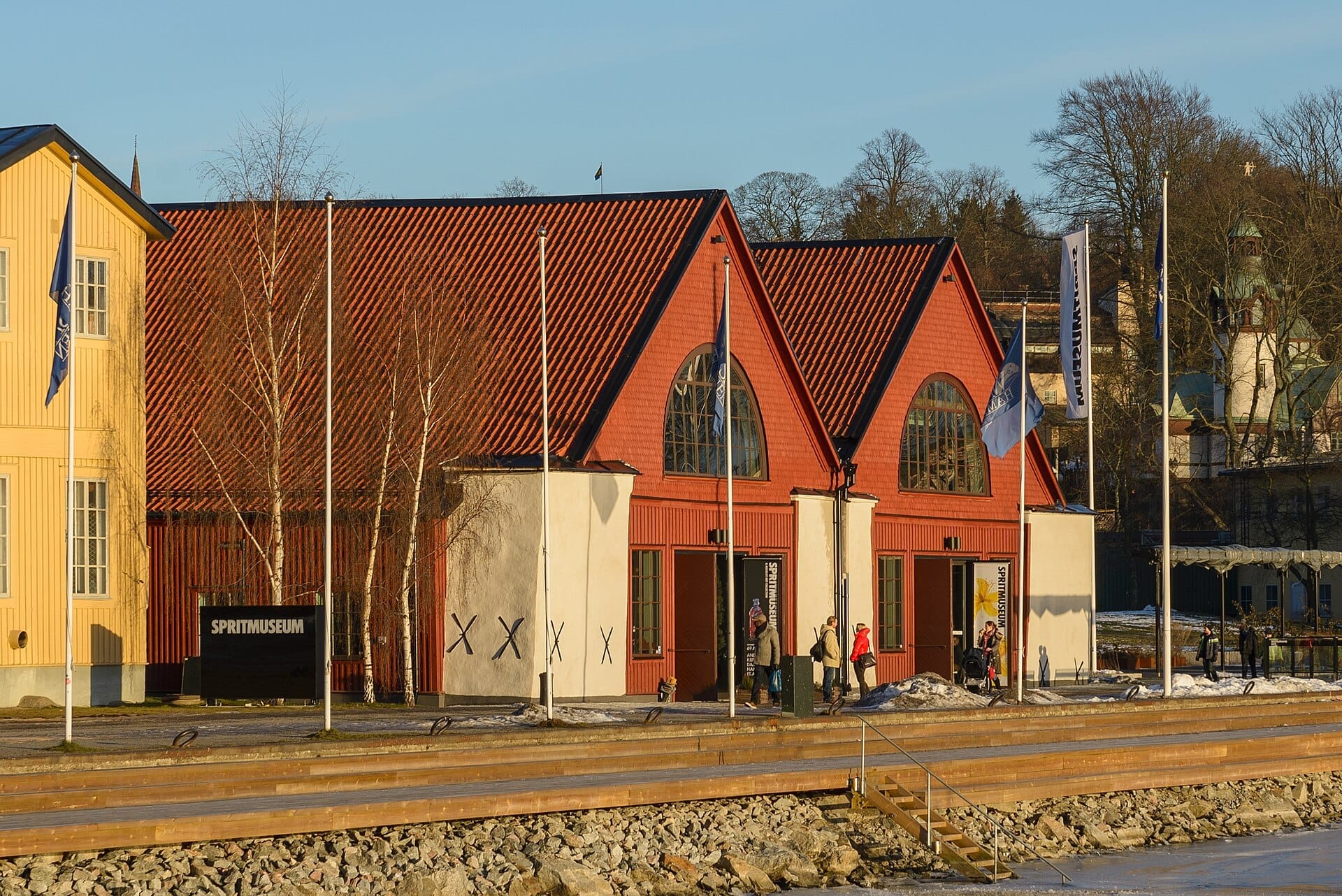
Spritmuseum, officially the Museum of Spirits, is not a bar with a few dusty bottles on display. It is a serious cultural institution that examines Sweden's relationship with alcohol across several centuries: the moral debates, the state monopoly, the design triumphs, and the social rituals around drinking that shape Swedish life. The museum traces its institutional roots to the 1960s, when it was established by the Swedish Wine and Spirits Corporation as a dedicated museum of drinking culture. It moved to its current location at Djurgårdsstrand 9 in 2012, taking over a row of beautifully restored 18th-century naval storage sheds on the southern waterfront of Djurgården.
The building itself rewards attention before you step inside. The low yellow-ochre sheds, long and narrow in the way of naval warehouses, sit right on the water's edge. Boats pass close enough to read their names from the terrace. The architecture creates an immediate sense of place: you are on an island, in a city built around water, looking at a history tied to trade and transit.
💡 Local tip
If you are arriving by public transport, Tram 7 from central Stockholm drops you a short walk from the entrance. The ride itself is pleasant, running along Strandvägen before crossing onto the island. In summer, the Djurgården ferry from Slussen or Nybroplan is the most atmospheric option.
The Permanent Exhibitions: More Than You Expect
The core of Spritmuseum is a walk through Swedish drinking culture from the 17th century to the present. Exhibits cover the temperance movement that once held enormous political power in Sweden, the creation of the state alcohol monopoly Systembolaget, and the complex social attitudes that still shape how Swedes buy and consume alcohol today. The content is handled with real intellectual seriousness, acknowledging both the harms and the pleasures associated with alcohol without moralizing.
Interactive elements are genuinely useful here, not gimmicky. There are smell stations where you can try to identify individual flavor compounds, including the grassy note of aquavit or the vanilla and sweetness of barrel-aged spirits. For visitors with no background in sensory evaluation, these stations tend to be revelatory. For those who do have some experience, they hold up.
The Absolut Art Collection deserves separate attention. Since the mid-1980s, Absolut Vodka has commissioned works from artists including Andy Warhol, Keith Haring, and a long roster of contemporary names. The collection now runs to thousands of pieces, and a rotating selection is displayed at Spritmuseum. It is one of the most significant corporate art collections in the world and it is shown in a serious gallery context, not as advertising. Visitors who come primarily as art tourists often find this section occupies more of their time than expected.
Tickets & tours
Live prices and dates from our booking partner. If you book, we may earn a commission at no extra cost to you.
2-hour archipelago tour on a RIB speedboat
From 122 €Instant confirmationFree cancellationHaunted Stockholm exploration game and tour
From 12 €Instant confirmationFree cancellationFotografiska Stockholm entrance tickets
From 0 €Instant confirmationFree cancellationStockholm: Nature Reserve Hiking Tour with Campfire Lunch
From 102 €Instant confirmationFree cancellation
Time of Day and Crowd Patterns
Spritmuseum is open Sunday through Tuesday from 11:00 to 19:00, and Wednesday through Saturday from 11:00 to 20:00, though hours can shift seasonally, so checking the museum's own website before visiting is strongly recommended. The museum draws a fraction of the crowds that queue outside the nearby Vasa Museum, which means weekday mornings tend to be genuinely quiet. You can move through the galleries at a thoughtful pace without bottlenecks around the interactive stations.
Weekend afternoons draw more visitors, and the adjacent restaurant and bar become a social destination in their own right, particularly in summer when the terrace fills up. If your goal is to engage deeply with the exhibitions rather than the café scene, a Tuesday or Wednesday morning visit is the clearest option. Late afternoon on weekdays offers softer light through the warehouse windows, which suits the exhibition spaces well.
ℹ️ Good to know
The museum is located a few minutes' walk from the Vasa Museum and Nordiska Museet. A full Djurgården museum day is entirely feasible, but Spritmuseum requires genuine engagement to get full value from. Rushing through it after two other museums produces diminishing returns.
The Bar and Restaurant
The on-site bar at Spritmuseum is not an afterthought. It focuses on Swedish spirits, aquavit in particular, and the bartenders are knowledgeable about production methods and regional differences in Scandinavian distilling. If you have no prior experience with aquavit, this is a reasonable place to try it with some context. The food menu uses Swedish producers and pairs logically with the drinks program.
In summer, the terrace opens directly onto the waterfront and the view across the channel toward central Stockholm is genuinely good. Tables fill early on warm evenings, and the crowd tends to be a mix of Stockholmers and visitors who have specifically sought out the space. Reservations for the restaurant are worth considering if you plan to eat.
How to Get There and What to Know Before You Go
Djurgården is a car-free cultural island and getting there is part of the experience. Tram 7 runs from Norrmalmstorg through Östermalm and onto the island, stopping near the main cluster of attractions. Bus 67 serves a similar route. From the metro, Karlaplan on the Red Line is about 15 minutes on foot. The Djurgården ferry, which runs from Slussen and Nybroplan seasonally, is the most enjoyable option in good weather and connects naturally with a visit to Gamla Stan or Södermalm. From Stockholm Central Station the walk takes around 35 minutes along pleasant waterfront paths.
Admission is 190 SEK for adults, 140 SEK for seniors and students, 95 SEK for visitors aged 15 to 18, and free for children aged 0–14. The Stockholm All-Inclusive Pass (Go City) covers entry, which is worth factoring into calculations if you are visiting multiple paid attractions in a short period.
Accessibility needs are best addressed by contacting the museum directly at info@spritmuseum.se before your visit. The buildings date from the 18th century and while the museum describes itself as interactive and welcoming, specific information on step-free access and other provisions is not detailed in publicly available sources.
⚠️ What to skip
Opening hours are subject to seasonal variation and special events. Always check spritmuseum.se directly before visiting rather than relying on third-party listings, which are not always current.
The Building's History and Its Place on Djurgården
The naval sheds at Djurgårdsstrand have a quiet grandeur that most visitors do not fully register. Built in the 18th century to store equipment for the Swedish navy, they represent a pragmatic, functional architecture that has aged well precisely because it was never ornate. Their conversion into a museum in 2012 preserved the structural bones while creating contemporary interior spaces suited to exhibition. The building sits in good company on an island that Djurgården has developed into one of Scandinavia's densest concentrations of major museums, alongside the Vasa Museum, Nordiska Museet, Junibacken, and Tekniska Museet.
Djurgården was historically a royal hunting ground, which accounts for both its preserved green spaces and the density of institutions established there under royal patronage. Walking between museums along the waterfront path gives a clear sense of how thoughtfully the island has been organized for visitors. For a broader picture of what else is on the island, the Nordiska Museet is directly adjacent, and the Vasa Museum is a few minutes' walk along the water.
Who Should Skip This
Spritmuseum is text-heavy in places, and several of the most substantive sections require reading in Swedish or English to get full value. Visitors who find museum-format learning tedious, or who prefer large-scale spectacle, are unlikely to find what they are looking for here. The Vasa Museum next door, with its 17th-century warship, provides an immediately overwhelming visual experience that Spritmuseum does not try to replicate.
Families with very young children can enter free, but the content is aimed at adults and older teenagers. The interactive smell and sensory stations may engage curious children briefly, but there are more specifically family-oriented options nearby, including Junibacken, which is designed around Swedish children's literature.
Insider Tips
- The aquavit tasting options at the bar allow you to compare different regional styles side by side. If you have time for only one drink, ask the bartender to recommend a herby, dill-forward style versus a caraway-dominant one — the difference is striking and forms a logical extension of the sensory exhibition inside.
- The Absolut Art Collection rotates, so what is on display changes. If there is a specific artist you want to see, check the museum's current exhibition page before visiting rather than assuming a particular work will be shown.
- The museum's position on the south-facing waterfront means the terrace catches afternoon sun well into the evening in summer. Arriving for the last exhibition entry and then moving to the terrace for drinks works particularly well on long June or July evenings.
- Combined Djurgården days work best if you start with Spritmuseum when it opens at 11:00 and you are fresh, then move to more visually immediate attractions later. Doing it in reverse tends to leave visitors too mentally full to absorb the exhibition content.
- The Stockholm All-Inclusive Pass (Go City) includes entry to Spritmuseum. If you are already planning to visit the Vasa Museum and one or two other paid attractions, the pass arithmetic generally works in your favor. Check the current pass guide for the most recent list of included venues.
Who Is Spritmuseum For?
- Travelers interested in Scandinavian design and cultural history who want more than surface-level sightseeing
- Art visitors drawn specifically to the Absolut Art Collection, one of the largest corporate art collections on public display anywhere
- Visitors who enjoy sensory or interactive museum formats rather than purely object-based displays
- Rainy-day itinerary planners who need a full indoor afternoon on Djurgården
- Adults looking for a bar with genuine knowledge and a view, wrapped inside a cultural experience
Nearby Attractions
Other things to see while in Djurgården:
- ABBA The Museum
ABBA The Museum is Stockholm's most popular music attraction, a permanent interactive exhibition dedicated to Sweden's most famous pop group. Located on Djurgården, it combines costumes, memorabilia, and hands-on experiences in a way that appeals well beyond die-hard fans.
- Gröna Lund
Gröna Lund has been drawing Stockholmers to Djurgården since 1883, packing around 30 rides, live concert stages, and seasonal events into just 3.8 hectares on the waterfront. This guide covers what the experience actually feels like across different times of day, who will love it, and who might want to skip it.
- Junibacken
Junibacken is a children's cultural centre on Djurgården dedicated to Astrid Lindgren's literary universe, featuring an indoor Story Train, immersive storybook scenes, live theatre, and a bookshop. Opened in 1996, it draws around 400,000 visitors a year and ranks consistently among Stockholm's most-visited attractions.
- Nordiska Museet
Nordiska museet on Djurgården holds over 1.5 million objects spanning 500 years of Nordic life, from peasant folk costumes to mid-century design. The building alone, a neo-Renaissance palace completed in 1907, earns a look even if you only have an hour. This guide covers what to see, when to go, and how to make the most of the visit.
Planning a trip? Discover personalized activities with the Nomado app.