Sorrento: The Clifftop Town Above the Bay of Naples
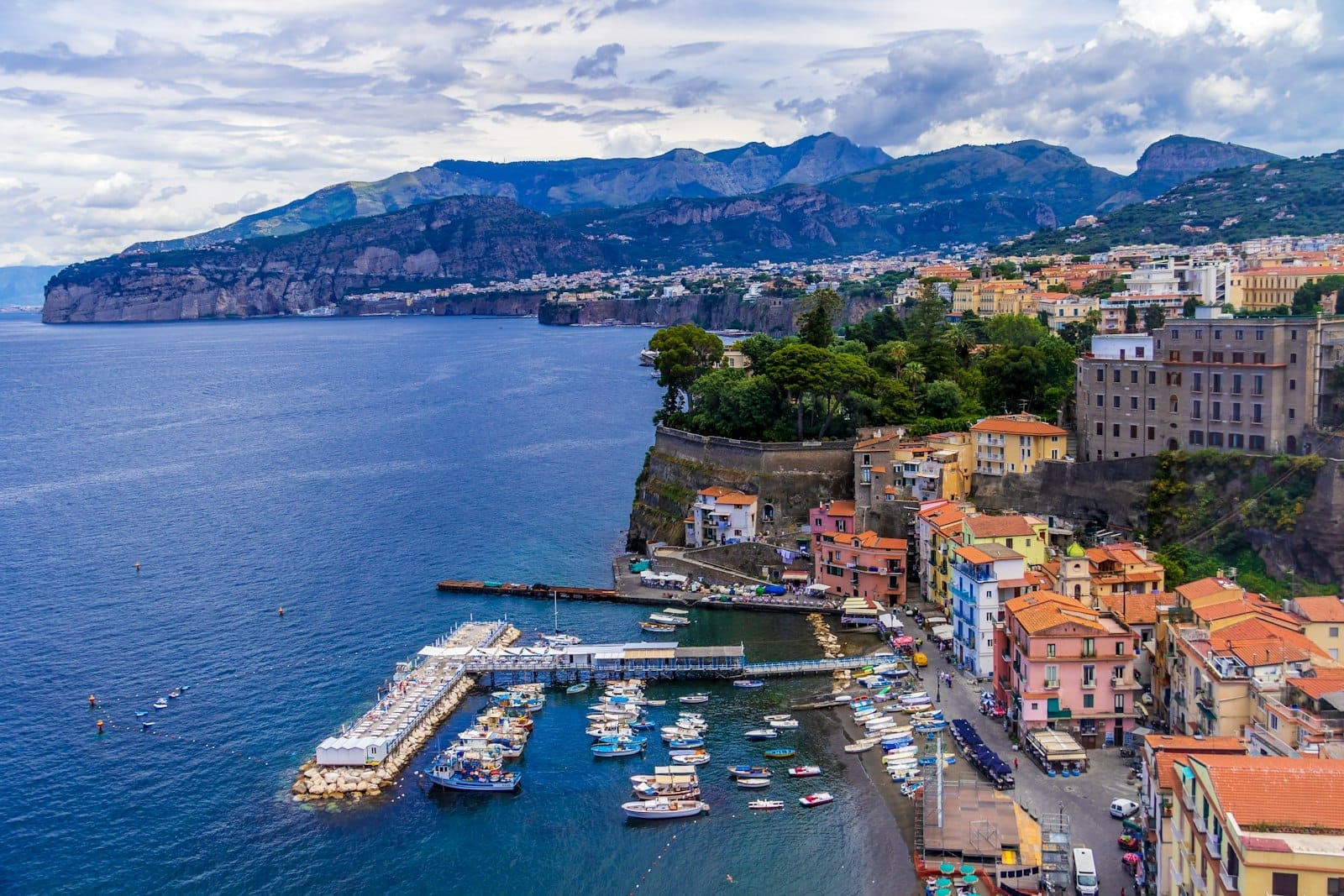
Perched on volcanic tufa cliffs above the Bay of Naples, Sorrento is one of southern Italy's most scenic small towns. With roots stretching back to Oscan settlements around 600 BC, it offers Roman ruins, a medieval basilica, citrus-scented lanes, and ferry connections to Capri and the Amalfi Coast. It works best as a half-day excursion from Naples or as a base for coastal exploration.
Quick Facts
- Location
- Sorrento, Metropolitan City of Naples, Campania, Italy
- Getting There
- Circumvesuviana train from Naples Piazza Garibaldi (Naples Centrale) or Porta Nolana to Sorrento station (approx. 70 min); ferry from Molo Beverello, Naples
- Time Needed
- Half day (3–4 hours) to full day if including boat trips or Bagni della Regina Giovanna
- Cost
- Free entry to town, Piazza Tasso, and waterfront; Circumvesuviana fare approx. €5 one way (verify before travel)
- Best for
- Day-trippers from Naples, coastal walkers, history browsers, and anyone using it as a gateway to Capri or the Amalfi Coast
- Official website
- www.sorrentotourism.com
What Sorrento Actually Is
Sorrento is a compact clifftop town of roughly 16,000 residents, sitting on a narrow ledge of volcanic tufa above the Bay of Naples, about 50 kilometers south of the city. It is not a beach resort in the conventional sense. The coast here is largely cliff-bound, and swimming access is limited to a handful of small marinas and one extraordinary natural pool. What Sorrento offers instead is a well-preserved historic center, sweeping views across to Mount Vesuvius and the islands, and exceptional transport links in every direction. For visitors based in Naples, it is one of the most rewarding half-day excursions available.
The town's history runs deep. Its Roman name, Surrentum, points to ancient foundations built on even older Oscan settlements dating to around 600 BC. Greek influence is also present: an ancient sanctuary known as the Athenaion once stood here, and local legend connects the site to the Sirens of Homer's Odyssey. That mythological undertow is part of Sorrento's appeal. If you are trying to decide how to structure your time in the Naples area, see this three-day Naples itinerary for how Sorrento fits into a broader trip.
💡 Local tip
The Circumvesuviana train is the most affordable and reliable way to reach Sorrento from Naples. Buy your ticket at the station before boarding — ticket inspectors do check, and the fine for riding without a valid ticket is significant.
Arriving and Orienting Yourself
The Circumvesuviana line departs from Naples Porta Nolana and Piazza Garibaldi (Naples Centrale) and runs all the way to Sorrento in approximately 70 minutes, stopping at Pompeii and Herculaneum along the way. The Sorrento station sits near the town's eastern edge, and it is an easy five-minute walk downhill into the historic center. The train is inexpensive but can be crowded in summer, especially on weekend mornings. If you plan to travel in July or August, aim for a departure before 9 AM or after 3 PM to avoid the worst of it. Carry your bag in front of you on the train.
Ferry connections from Naples's Molo Beverello take around 35 minutes by fast ferry and offer a dramatically different first impression: arriving by sea and seeing Sorrento from the water, with the cliffs rising above Marina Piccola, is one of the better approaches to any town on this coast. Ferries also connect Sorrento directly to Capri, making it a natural transit hub.
If you are driving from Naples, be aware that parking in Sorrento's historic center is extremely limited and traffic in summer is heavy. The train is genuinely the better option. For a full breakdown of transport options around the region, getting around Naples covers all the key routes.
Tickets & tours
Live prices and dates from our booking partner. If you book, we may earn a commission at no extra cost to you.
Small-group sailing tour along the Sorrento Coast
From 185 €Instant confirmationFree cancellationSorrento, Positano and Amalfi Private Tour
From 0 €Instant confirmationPompeii, Sorrento and Positano group tour
From 90 €Instant confirmationFree cancellationPompeii, Sorrento And Positano Private Tour
From 0 €Instant confirmation
Piazza Tasso and the Historic Center
The geographic and social heart of Sorrento is Piazza Tasso, the main square named after the poet Torquato Tasso, who was born here in 1544. A statue of Tasso stands in the square, which is flanked by cafes, hotels, and the beginning of the main pedestrian shopping street, Corso Italia. In the late morning, the piazza operates as a genuine town square: locals cut through on their way to errands, delivery scooters navigate the edge of the pedestrian zone, and the smell of espresso drifts from the surrounding bars. By late afternoon in summer, the tourist presence is at its peak and the square takes on a different character entirely. If you want to experience it as the locals do, come before 10 AM.
From Piazza Tasso, the historic center fans out through a grid of narrow lanes that date back to the Roman street plan. These streets, particularly Via San Cesareo, are lined with small shops selling Sorrento's signature crafts: intarsia woodwork (inlaid furniture and boxes, a tradition here since the 15th century), ceramics, and limoncello in bottles shaped like Vesuvius. The quality varies significantly. The better shops display their workshops openly; the less reputable ones sell mass-produced goods at artisanal prices. Look for places where you can see someone actually working the wood or the ceramic.
The lanes also carry a persistent citrus scent in spring and early summer, when lemon trees in the surrounding groves are in bloom. Sorrento's lemons, the large, mildly acidic sfusato variety, are a genuine local product — you will see them in nets outside virtually every shop. The limoncello made from them is thicker and less artificially bright than most of what you will find in Naples itself.
Basilica di Sant'Antonino and the Older Layer
A short walk from Piazza Tasso, the Basilica di Sant'Antonino is Sorrento's oldest surviving church, built in the 11th century and dedicated to the town's patron saint. It sits on a raised platform above Piazza Sant'Antonino, and the facade, while not ornate by Neapolitan standards, has an austere solidity that reflects its age. The interior is more rewarding: the crypt beneath the nave contains whale bones hung on the walls, offerings from sailors who credited Sant'Antonino with saving them from shipwrecks. It is a peculiar and memorable detail that most visitors walk past without noticing.
The area immediately around the basilica is noticeably quieter than the main shopping streets, and the small square in front of it is a good place to sit for a few minutes away from the peak-hour crowds. The church is generally open to visitors during the day, though hours can shift; check before making a dedicated trip.
If ecclesiastical architecture is a priority for your trip, Sorrento's churches are modest compared to what Naples itself offers. The best churches in Naples guide covers far more ambitious examples, including Gesù Nuovo and Santa Chiara, both within walking distance of each other in the historic center.
Bagni della Regina Giovanna: The Best Reason to Go Further
About three kilometers west of the town center, accessible on foot via a coastal path or by local bus, lies one of the most unusual swimming spots on this coastline: Bagni della Regina Giovanna. A narrow sea inlet has cut through the remains of a first-century BC Roman villa, the Villa di Pollio Felice, creating a sheltered natural pool where the Mediterranean is an extraordinary shade of clear green-blue. The ruins of the Roman villa — arches, walls, cisterns — surround the pool on three sides, and in the right light it reads as genuinely atmospheric rather than just picturesque.
The path down from the road is steep and rocky in places, and you will need shoes with some grip. The pool itself has no facilities: no changing rooms, no lifeguard, no food or water for sale. Bring everything you need. In July and August, it draws a steady crowd by mid-morning; on a weekday in May or late September, you may have it nearly to yourself. Early morning light hits the water well for photography.
⚠️ What to skip
The walk to Bagni della Regina Giovanna is not suitable for mobility-impaired visitors. The descent involves uneven rocky terrain and requires careful footing even for those in good physical condition.
Viewpoints and What You Can See
Sorrento's position on the cliffs gives it a natural advantage for views, but you need to know where to stand. The Villa Comunale public garden, a small park at the cliff edge just off Piazza Tasso, offers a direct look across the bay toward Naples, with Vesuvius rising behind the city. Early morning is the clearest time: by midday in summer, haze often softens the view. The garden itself is pleasant, with umbrella pines and benches, and it is a reasonable spot to decompress after the main street crowds.
The clifftop walk along the edge of the historic center toward the west also yields intermittent views down to Marina Grande, the older of Sorrento's two small ports. Marina Grande retains a slightly more lived-in character than the tourist-facing parts of town: fishing boats share the dock with pleasure craft, and there are a few restaurants serving straightforward seafood at water level. The descent to Marina Grande from the historic center is via a long staircase — manageable going down, genuinely tiring on the way back up in summer heat.
Sorrento is also one of the best launch points for Capri, and the views of the island from the clifftop are a reasonable preview. If you are weighing whether to make the crossing, this guide to getting to Capri from Naples covers the ferry options and what the island delivers.
Honest Assessment: Who This Is For
Sorrento is one of the most heavily visited towns on the Campanian coast, and in July and August, the main streets feel it. The Corso Italia and Via San Cesareo can reach a density that makes them difficult to enjoy, and hotel and restaurant prices reflect the demand. If your priority is authenticity or solitude, Sorrento in peak summer is not the place to find it.
For visitors traveling in April, May, September, or October, the calculus shifts considerably. The light is better, the temperature is comfortable for walking, the crowds are thinner, and prices drop. This is genuinely the better version of the town. Families with young children will find the historic center walkable and manageable; the lack of proper beaches in town is a limitation if swimming is the goal, but Bagni della Regina Giovanna compensates partly for that.
Solo travelers and couples using Sorrento as a transit base — catching ferries to Capri, day-tripping along the Amalfi Coast, or using it as a quieter alternative to staying in Naples itself — tend to get the most from it. For context on how Naples and the surrounding region compare for a base, see Naples or Sorrento: which makes the better base.
ℹ️ Good to know
Sorrento is not the right choice for anyone seeking a proper beach holiday. The coast here is predominantly cliffed, and the town's marinas are small and pebbled. If beach access is the priority, consider the islands or the coastal areas south of Positano.
Insider Tips
- The supermarkets and small alimentari on the side streets off Corso Italia sell local limoncello at a fraction of the tourist-shop price. The product is often identical or better quality.
- Ferries to Capri sell out on summer mornings — book your return crossing as soon as you arrive at Marina Piccola, not when you feel like leaving the island.
- The free public garden, Villa Comunale, is consistently overlooked by visitors rushing between Piazza Tasso and the shops. It has one of the best unobstructed bay views in town and is usually quieter than the clifftop terraces attached to hotels.
- If you are catching the Circumvesuviana back to Naples, check the schedule before you leave your last stop of the day — evening frequency drops and last trains fill quickly in summer.
- The walk from Sorrento station into the historic center passes through a pedestrian tunnel carved through the cliffs. It is free, functional, and often missed by visitors who take taxis instead — worth using at least once.
Who Is Sorrento For?
- Day-trippers from Naples who want a complete change of pace without committing to a full coastal resort
- Travelers using it as a ferry hub to reach Capri or the Amalfi Coast towns without navigating from Naples each time
- History browsers interested in Roman coastal settlements and early medieval churches
- Couples wanting a scenic clifftop town with good restaurants in the shoulder season (April, May, September, October)
- Anyone curious about Sorrento's intarsia woodwork tradition and local citrus products
Nearby Attractions
Combine your visit with:
- Amalfi Coast
The Amalfi Coast stretches 40 kilometres along one of Italy's most dramatic shorelines, linking 13 cliff-side towns between Vietri sul Mare and Positano. A UNESCO World Heritage Site since 1997, it rewards visitors with layered history, vertiginous views, and some of the most photographed coastline in the Mediterranean. Getting there from Naples takes planning, but the payoff is considerable.
- Capri
Capri is one of the most recognized islands in the Mediterranean, sitting at the southern edge of the Gulf of Naples. It offers dramatic limestone cliffs, the famous Blue Grotto, elegant piazzas, and views that justify the journey. But it comes with crowds, costs, and logistical quirks that every visitor should understand before boarding the ferry.
- Cimitero delle Fontanelle
Carved into volcanic tuff in the Sanità district, the Cimitero delle Fontanelle holds the remains of roughly 40,000 people, many of them victims of the 1656 plague. Reopened in April 2026 after a five-year closure, it is one of the most historically dense and atmospheric places in all of southern Italy.
- Città della Scienza
Città della Scienza is Naples' premier interactive science museum, set on a former industrial waterfront in the Bagnoli district. With hands-on exhibits spanning the human body, sea life, insects, and space, plus a full planetarium, it delivers a genuinely engaging half-day for families, curious adults, and school groups alike.
Planning a trip? Discover personalized activities with the Nomado app.