Soldier Field: Chicago's Lakefront Stadium with a Century of History
Soldier Field is one of America's most historically significant sports venues, a 1924 War Memorial stadium sitting at the edge of Lake Michigan on Chicago's Museum Campus. Whether you're attending a Chicago Bears game, a concert, or simply walking the landmark colonnades, the stadium offers a layered experience connecting military tribute, architectural drama, and live sports.
Quick Facts
- Location
- 1410 Museum Campus Drive, Chicago, IL 60605 (Museum Campus / South Loop)
- Getting There
- CTA Bus #146 (Museum Campus), or walk from Roosevelt Red/Green/Orange Line station (~15 min). Metra Electric Line to Museum Campus/11th St station on event days.
- Time Needed
- 30–45 min for an exterior visit; 3–5 hours for attending an event
- Cost
- Free to walk the colonnades and surrounding parkland. Event tickets vary by game or concert.
- Best for
- NFL fans, architecture enthusiasts, Museum Campus day-trippers, concert-goers
- Official website
- www.soldierfield.com
What Is Soldier Field?
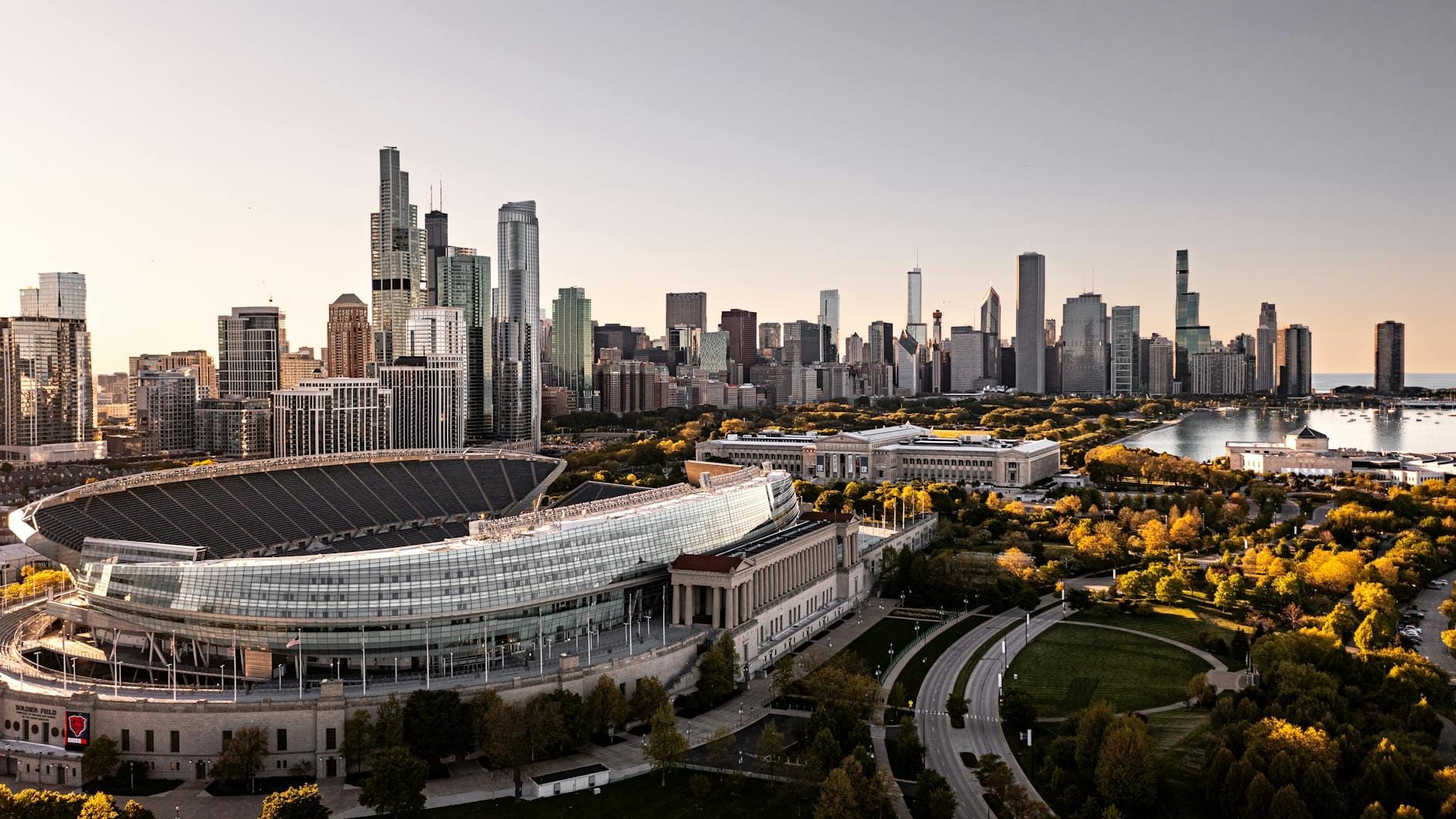
Soldier Field is a stadium, a war memorial, and one of Chicago's most debated architectural landmarks, all rolled into one. Located at 1410 Museum Campus Drive on the city's Near South Side, it opened in 1924 as Municipal Grant Park Stadium before being rededicated on November 11, 1925, Armistice Day, to honor U.S. soldiers who died in military service, with an emphasis on World War I casualties. That dedication shaped everything from its neoclassical colonnades to its name, which officially became Soldier Field on that day.
Today it is the home of the Chicago Bears of the NFL (since 1971), the Chicago Fire FC of MLS, and a major concert venue. By capacity, roughly 61,500 to 63,500 seats depending on configuration, it is the smallest stadium in the NFL; while it opened a century ago, it is not the oldest active stadium in either the NFL or MLS. Those two facts are central to understanding what kind of place this is: it has an intimacy that larger, newer stadiums lack, but it also carries the institutional weight of a Chicago landmark.
ℹ️ Good to know
The outdoor colonnades and surrounding parkland are publicly accessible year-round at no charge. You don't need a game ticket to see the most architecturally significant parts of the building.
The Architecture: Colonnades, Controversy, and Context
The original stadium was designed by the architectural firm Holabird and Roche in a Doric Greek Revival style. The defining feature is the double row of massive limestone colonnades running along the structure's exterior. Up close, these columns are genuinely imposing, each one weathered and thick-set, with a solemnity that matches the memorial intent of the building. The stonework, now nearly 100 years old, has acquired the slightly warm off-white color of aged limestone. Running your hand along the base of a column, you feel the texture of a building that has absorbed a century of Chicago weather.
The 2003 renovation, led by Wood and Zapata, is where the controversy begins. To expand capacity and update facilities, a modern glass-and-steel bowl was inserted inside the historic colonnade shell. The contrast is stark and intentional: a sleek 21st-century stadium structure visibly rising above and between the classical columns. The Chicago Tribune described the result as looking like a 'spaceship landed in a colosseum.' The National Football League considered it so disruptive to the historic character of the building that Soldier Field lost its listing on the National Register of Historic Places in 2006, making it one of very few landmarks to be delisted after a major renovation.
For visitors with an interest in architecture, the tension between the two structures is worth studying from a distance before walking closer. The best vantage point is from the east, approaching along the Museum Campus paths from the lakefront, where you can see both layers simultaneously. If you're already spending time exploring Chicago's built environment, this sits naturally alongside other architectural stops.
Soldier Field fits into the broader story of Chicago's architectural history, a city that demolished, rebuilt, and debated its built environment across two centuries. For a fuller picture of the city's architecture, the Chicago architecture guide covers key periods and styles, including the context that makes a building like Soldier Field so contested.
Tickets & tours
Hand-picked options from our booking partner. Prices are indicative; availability and final rates are confirmed when you complete your booking.
Chicago Bears football game ticket at Soldier Field
From 278 €Instant confirmationField Museum of Natural History tickets and audio tour
From 44 €Instant confirmationGo City | Chicago All-Inclusive Pass
From 127 €Instant confirmationFree cancellationiFLY Chicago Lincoln Park indoor skydiving experience
From 126 €Instant confirmationFree cancellation
Visiting Without a Ticket: The Colonnade Walk
Most visitors who don't have event tickets approach Soldier Field from the Museum Campus side, walking south from the Field Museum along the lakefront path. On a weekday morning with no event scheduled, this stretch is quiet, populated mainly by joggers, cyclists, and the occasional tour group. The stadium reads differently in this light: less a sporting venue, more a civic monument.
The colonnade level offers an unobstructed close-up of the original architecture. There are informational panels on the exterior that detail the memorial history and the major events that have taken place here over the decades, from a 1927 boxing match between Gene Tunney and Jack Dempsey to the 2008 Barack Obama election night rally. The scale of the colonnades only becomes fully apparent once you are standing beneath them. The columns rise to roughly 90 feet, and the length of the structure along the west side is substantial. Allow at least 20 to 30 minutes just for the exterior walk.
On days without events, the plaza areas around the stadium are calm enough to sit, have a coffee from one of the vendor carts that occasionally operate near the Museum Campus path, and simply observe the building. In summer, this area gets warm and there is limited shade away from the colonnade structures themselves, so mornings before 10 a.m. are noticeably more comfortable.
💡 Local tip
Approach from the east along the lakefront path for the most dramatic first view, where you see the modern bowl rising behind the classical columns. The contrast is clearest from about 200 yards out.
Attending an Event: Bears Games, Fire Matches, and Concerts
The experience inside Soldier Field on a Chicago Bears game day is different in character from larger NFL stadiums. With a capacity of roughly 62,500 to 63,500, the sightlines from most seats are relatively close to the field, and the sound is contained in a way that creates noticeable atmosphere during key moments. The lakefront setting means that on autumn afternoons, you often have a lake wind cutting through the stadium from the east, sometimes from the first quarter onward. Dress in more layers than you think you need for any Bears game from September onward, and especially for November and December fixtures.
Parking near Soldier Field is available in Museum Campus lots but fills quickly before major events, and prices for those lots are event-dependent. Most experienced Chicago sports fans traveling from within the city use public transit. The Metra Electric Line runs a dedicated Museum Campus/11th St stop with additional service on Bears game days, providing a direct connection from Millennium Station in the Loop in under 10 minutes. This is consistently the least stressful option if you are coming from the downtown area.
Chicago Fire FC matches have a smaller crowd draw and tend to create a livelier per-capita atmosphere, with organized supporter sections. If you want to experience the stadium without the full complexity of an NFL game day, a Fire match is a lower-cost, lower-logistical-effort option. Concert events at Soldier Field have historically included major acts drawn to its capacity and the outdoor lakefront setting; summer evening concerts benefit from the open sky above the bowl.
Soldier Field is about a 10-minute walk north from the Museum Campus, which means combining an event visit with the Field Museum, Shedd Aquarium, or Adler Planetarium is very practical, particularly on weekends.
The Museum Campus Setting and Surroundings
Soldier Field does not sit in isolation. The Museum Campus is one of Chicago's most densely visited lakefront zones, and the stadium anchors its southern end. To the north, within a 10-minute walk, are three major institutions: the Field Museum of Natural History, the Shedd Aquarium, and the Adler Planetarium. Grant Park, which includes Buckingham Fountain and connects northward to Millennium Park, begins just north of this cluster.
The Field Museum is the most substantial all-day attraction in the immediate area. The Shedd Aquarium and Adler Planetarium complete the cluster and are best combined into a single Museum Campus day rather than individual trips. Visitor numbers across all three are highest on weekends from late spring through late summer.
The lakefront path that runs east of Soldier Field along the water is part of the Chicago Lakefront Trail, an 18-mile continuous path. On warm days, this stretch between Northerly Island to the east and Grant Park to the north is heavily used by cyclists, inline skaters, and joggers, giving the area a specific energy that is quite different from the quieter neighborhood streets to the west.
If you are spending a full day in this part of Chicago, the Chicago lakefront guide gives a complete overview of what connects along the waterfront and how to plan your time efficiently.
Photography, Lighting, and Timing
The exterior of Soldier Field photographs best in the golden hour after sunrise, when the light hits the west-facing colonnades from the east. At this time, the limestone takes on a warm tone and the long shadows cast by the columns create strong geometry. By midday, the light flattens and the building reads as more monolithic. Late afternoon light from the west can work well for showing the modern glass bowl against the classical base.
On game days or during events, the approach from the south, coming along the Museum Campus path, gives you a wide compositional option with the stadium in the background and the landscape in the foreground. If you want crowd shots, the 90 minutes before game time produces the densest pedestrian flow along the main entrances.
⚠️ What to skip
Large bags, backpacks over a certain size, and glass containers are typically prohibited for events. Check Soldier Field's bag policy directly on the official website before your visit, as policies can change between seasons.
Honest Assessment: Who This Is and Is Not For
For sports fans attending a Bears game, Soldier Field delivers: the intimacy of the stadium, the lakefront setting, and the weight of a century of history make it a more resonant experience than many modern NFL facilities. The smallest-in-the-NFL capacity means demand for Bears tickets often exceeds supply, so plan ahead if this is a priority.
For architecture tourists, the colonnade walk is genuinely worthwhile, particularly if you have broader interests in how American civic and memorial architecture evolved in the early 20th century. The renovation controversy adds a layer of critical interest. However, if you are looking for access to a stadium interior without an event ticket, that is not available. What you can see, the exterior, the plazas, and the colonnade level, is meaningful but limited.
If you are not attending an event and have limited time, Soldier Field works best as a 30-minute stop integrated into a Museum Campus day, not as a standalone destination. Travelers who are neutral about American football, concerts, and architecture history and are looking for something more actively engaging may find the adjacent museums a better use of their time.
Insider Tips
- The Metra Electric Line to Museum Campus/11th St station runs enhanced service on Bears game days and is the fastest option from the Loop, taking under 10 minutes versus 20-plus minutes by bus in game-day traffic.
- The colonnade walk along the west facade is at its most atmospheric in the early morning before 9 a.m., when the grounds are nearly empty and the scale of the original 1924 structure is easiest to appreciate without crowds.
- Soldier Field's delisting from the National Register of Historic Places in 2006 due to the 2003 renovation is a detail worth knowing before you visit. It reframes how you read the building: what you are looking at is two separate architectural eras in direct tension with each other.
- If you want to experience the stadium on a tighter budget, Chicago Fire FC tickets are considerably less expensive than Bears tickets and provide full interior access. Summer evening Fire matches have a pleasant open-sky quality given the stadium bowl design.
- Northerly Island, directly east of Soldier Field across the lakefront path, offers a quiet natural counterpoint to the museum and stadium crowds, with walking paths, native plantings, and unobstructed lake views.
Who Is Soldier Field For?
- NFL fans wanting to tick off the league's smallest stadium
- Architecture enthusiasts interested in the tension between classical civic design and 21st-century stadium renovation
- Museum Campus day-trippers looking to round out a full lakefront afternoon
- Concert-goers attending major summer or autumn events
- Chicago history visitors tracing the city's public monuments and memorial spaces
Nearby Attractions
Other things to see while in Museum Campus & South Loop:
- Adler Planetarium
Opened in 1930 as the first planetarium in the Western Hemisphere, the Adler Planetarium combines immersive sky shows, serious astronomy collections, and one of the best unobstructed views of the Chicago skyline. Perched at the tip of a peninsula on Museum Campus, it rewards both science enthusiasts and casual visitors who stumble onto its lakefront terrace.
- Buddy Guy's Legends
Opened in 1989 by the legendary guitarist himself, Buddy Guy's Legends on South Wabash Avenue is the city's most historically significant blues club. This is where raw Chicago blues plays out in real time, where the walls are covered in signed memorabilia, and where any given Tuesday night can turn into a master class in American music.
- Field Museum of Natural History
One of the largest natural history museums in the world, the Field Museum of Natural History sits at the heart of Chicago's Museum Campus with over 20 million specimens spanning ancient Egypt, dinosaur fossils, and indigenous cultures from every continent. Whether you have three hours or a full day, this guide helps you make the most of it.
- Glessner House Museum
The Glessner House Museum is a surviving residential commission by architect H.H. Richardson in Chicago, completed in 1887 and now a National Historic Landmark. Guided tours of the granite fortress on Prairie Avenue reveal one of the most thoughtfully designed domestic interiors in American architectural history.