Sheshan National Forest Park: Shanghai's Forested Escape in Songjiang
Sheshan National Forest Park offers Shanghai's most accessible green escape: wooded hills, quiet trails, and a striking hilltop basilica about 30 km from the city center. It rewards early risers and anyone craving open space away from the urban core.
Quick Facts
- Location
- No. 9142 Qingsong Highway, Songjiang District, Shanghai
- Getting There
- Metro Line 9 to Sheshan Station, then Songjiang Bus 92 or other local buses to Forest Park Station and the park
- Time Needed
- 2–4 hours for a relaxed visit; half-day if hiking all trails
- Cost
- Park entry free (some specific attractions like the observatory may charge; verify before visiting)
- Best for
- Nature walks, photography, city escapers, architecture lovers
What Sheshan National Forest Park Actually Is
Sheshan National Forest Park sits in Songjiang District, roughly 30 kilometers southwest of central Shanghai. In a city that is famously flat and dense, the forested hills of Sheshan feel genuinely unusual. The park covers terrain that rises above the surrounding Yangtze River delta plains, giving it a quality that is rare anywhere in Shanghai: elevation, tree cover, and a sense of distance from the city.
The park is organized around two hills — East Sheshan and West Sheshan — connected by trails and service roads. West Sheshan is the more prominent and visitor-oriented of the two, crowned by the Basilica of Notre-Dame de Sheshan, a Catholic church whose construction history stretches back to the 19th century. The combination of forest walks and European-style religious architecture in a Chinese suburban setting is one of the more unexpected experiences in the Shanghai region.
ℹ️ Good to know
Opening hours typically run 08:30–18:30 in July–August, 08:30–18:00 from roughly mid-May to mid-October, and 08:30–16:30 for the rest of the year; verify directly before visiting, especially in winter months when daylight is shorter.
The Hilltop Basilica: Architecture Worth Climbing For
The Basilica of Notre-Dame de Sheshan (also written Sheshan Basilica) dominates the summit of West Sheshan Hill. The church visible today largely dates from a major construction effort completed in 1935, replacing an earlier structure. Its Romanesque-Gothic fusion design, red brick exterior, and prominent bell tower make it one of the most architecturally distinctive religious buildings in the Shanghai region — and an effective landmark visible from the surrounding plains on clear days.
The approach to the basilica is itself part of the experience. Visitors climb a stone stairway flanked by the Stations of the Cross, a series of shrines that mark the traditional Catholic pilgrimage path. Even for non-religious visitors, the ascent through the tree canopy, with the sound of birdsong and the gradual appearance of the church tower above the foliage, gives the climb a contemplative quality that is difficult to replicate elsewhere in Shanghai.
At the summit, the views across Songjiang's low-lying landscape are clear on dry autumn and spring days. Haze and humidity can reduce visibility significantly in summer. The interior of the basilica is open to visitors at certain times, though this can change around religious observances. Photography of the exterior is unrestricted; interior photography norms should be observed as in any active place of worship.
💡 Local tip
The basilica draws Catholic pilgrims in significant numbers around May (the Marian month in Chinese Catholic tradition). If you want quiet trails and a peaceful atmosphere, this is worth knowing before you plan your visit.
Tickets & tours
Hand-picked options from our booking partner. Prices are indicative; availability and final rates are confirmed when you complete your booking.
Shanghai city and Zhujiajiao water town private tour with lunch
From 371 €Instant confirmationFree cancellationShanghai private tour with iconic landmarks of the old and new city
From 284 €Instant confirmationFree cancellationShangai Yuyuan Garden entrance tickets
From 9 €Instant confirmationFree cancellation
The Forest Itself: What the Trails Are Like
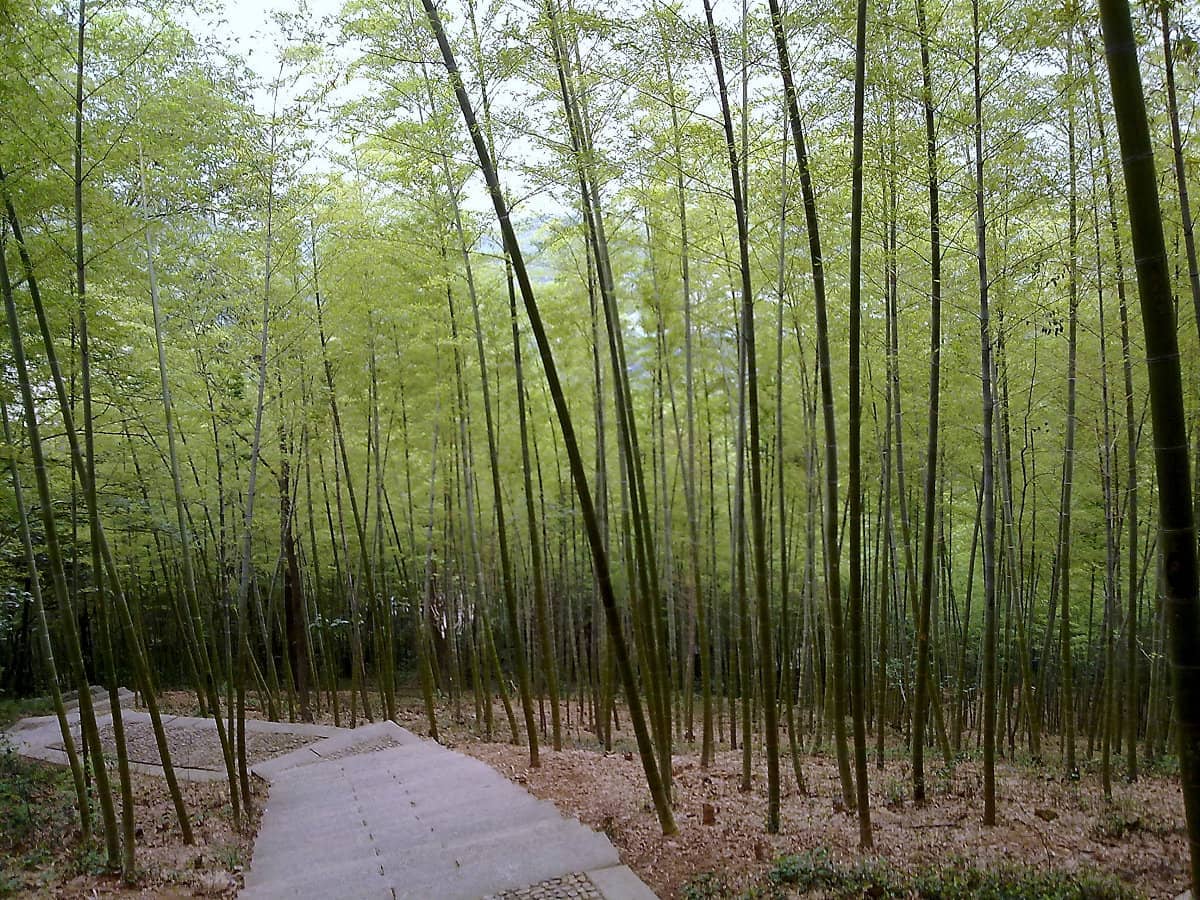
The park's forested hillsides are its main draw for most visitors who arrive on a weekday morning. The trails are a mix of paved paths and earthen tracks running through stands of broad-leaved trees and conifers. In spring, new growth gives the canopy a vivid green quality; in autumn, the mix of deciduous species produces reliable color change. Summer brings dense shade and humidity, which makes the forest feel oppressive by midday. Winter mornings, by contrast, are the quietest time: the air has a cool clarity, and the bare branches let more light through.
The terrain is genuinely hilly rather than flat parkland. Paths involve sustained ascents and some uneven ground, which makes the park less suitable for visitors with limited mobility. There is no formal information about wheelchair-accessible routes, so those with mobility considerations should investigate conditions directly before visiting.
Wildlife in the park is modest but present. Birdsong is a consistent feature of early morning visits, and the tree cover is dense enough to make the park feel genuinely removed from the surrounding suburban development. The sounds shift through the day: by late morning on weekends, school groups and family visitors fill the main paths, and the atmosphere becomes more recreational than contemplative.
When to Go: Time of Day and Season
Weekday mornings between 08:30 and 10:30 offer the best combination of light, quiet, and comfortable trail conditions. The forested paths are shaded enough to remain tolerable even in mid-summer mornings, though by midday the humidity makes sustained hiking uncomfortable. Arriving at opening time on a weekday means sharing the trails mainly with local residents doing morning exercise.
Seasonally, April to May and October to November align with Shanghai's milder weather windows. Autumn is particularly effective here: the deciduous cover on the hills changes color, the air is cleaner after summer humidity breaks, and the light on the basilica facade in the afternoon is warm and direct. Spring brings green growth and occasional mist, which suits photography but can make the stone paths slippery.
Shanghai's summer rainy season — the meiyu period in June and early July — brings sustained rainfall that can make unpaved trails muddy and less pleasant. Typhoon-related rain events from July to September can cause temporary closures. For a full seasonal overview of when conditions favor outdoor attractions, the guide to Shanghai in autumn covers the October–November window in detail.
Getting There: Metro and Local Bus
Shanghai Metro Line 9 serves Sheshan Station, which is the practical jumping-off point for the park. From central stations such as People's Square, the journey takes approximately 50–60 minutes depending on your starting point. From Sheshan Station, the park is not within comfortable walking distance; local bus services connect the station to the Sheshan scenic area. Bus availability and routing can change, so confirming the current connection at the station or via a local navigation app before arrival is advisable.
Taxis and ride-hailing via Didi are practical options if you are traveling in a group or want door-to-door convenience from central Shanghai, though the fare from central districts will be substantially higher than the metro. The journey by road takes roughly 40–60 minutes depending on traffic conditions and your starting point.
⚠️ What to skip
Navigation apps in China (Baidu Maps, Amap/Gaode) are more reliable for local bus and walking directions around Sheshan than Google Maps. If you rely on Google Maps for transit routing, results may be incomplete or inaccurate for suburban Shanghai connections.
What to Bring and Practical Preparation
Comfortable footwear with grip is the single most important preparation for Sheshan. The hilltop paths involve uneven stone surfaces and earthen trails that become slippery when wet. Flat-soled shoes or sandals are workable in dry conditions but ill-advised after rain. Light hiking shoes or trainers with rubber soles are adequate for the elevation and terrain involved.
Water and snacks are worth carrying. Facilities inside the park are limited, and while there are vendors in the surrounding scenic area, relying on them for provisions during the climb is not reliable. Sun protection matters more than it might seem: the summit area around the basilica is open and exposed, and the approach can be warm on sunny days even in spring and autumn.
For photography, early morning offers the best light on the basilica facade, which faces roughly eastward and catches direct sun in the morning hours. A wide-angle lens captures the full building from the terrace below the entrance. If you are building a broader photography itinerary for Shanghai, the best photo spots in Shanghai guide covers locations across the city that pair well with a day trip to Sheshan.
Sheshan in the Broader Shanghai Context
Sheshan National Forest Park sits within Songjiang District, which has its own historical layers worth knowing. Songjiang is one of Shanghai's older settlements, with roots predating the city's modern development. Visitors with an interest in the region's religious heritage can combine a visit to Sheshan with other sites in the district. Those interested in Shanghai's broader temple and religious architecture landscape will find useful context in the guide to the best temples in Shanghai, which covers Buddhist and other religious sites across the city.
As a day trip from central Shanghai, Sheshan fits naturally alongside other suburban and rural escapes. The day trips from Shanghai guide covers the full range of options, including water towns and island destinations that make for good multi-stop itineraries. For visitors combining Sheshan with a stay in Shanghai's western or southwestern districts, the area connects reasonably well to the Qibao Ancient Town further east along Line 9, which can make for a half-day extension.
Who Should Reconsider
Visitors with limited time in Shanghai and a primary interest in the city's urban architecture, food scene, or riverside landmarks will likely find the 50–60 minute metro journey a difficult trade-off. Sheshan does not offer the density of experience per hour that central-city neighborhoods provide. It is an escape rather than a highlights attraction, and it rewards visitors who want to slow down rather than tick off landmarks.
The park is also not the right choice for anyone expecting manicured landscaping or flat, easy walking. The trails are natural hillside paths, and the experience is primarily about being in a forested environment. Visitors expecting botanical-garden levels of presentation or accessibility may be disappointed.
Insider Tips
- Arrive at opening time on a weekday if your goal is solitude. By 10:00 on weekends, the main path to the basilica fills with tour groups and family visitors, and the contemplative atmosphere largely disappears.
- The stairway climb via the Stations of the Cross is the more interesting ascent route — it takes longer and is steeper than the main road, but the sequence of shrines through the forest is the defining experience of the hilltop, not just the basilica at the top.
- Mobile data works normally throughout the park on Chinese SIM cards or local roaming plans. Download an offline map of the Sheshan area before you go if you are relying on data for navigation — coverage in forest sections can be patchy.
- The park entrance area in the scenic zone has small food stalls selling hot drinks and snacks in the morning. These are worth stopping at before the climb rather than after, when they tend to be more crowded.
- Autumn weekday afternoons between 14:00 and 16:00 offer the best combination of warm afternoon light on the basilica facade and reduced foot traffic as day-trip crowds begin to leave.
Who Is Sheshan National Forest Park For?
- City escapers wanting forested trails without leaving Shanghai for a full day
- Architecture and religious heritage enthusiasts drawn to the Sheshan Basilica
- Photographers targeting the contrast of Gothic-Romanesque architecture against a Chinese forested hillside
- Families with older children comfortable with sustained uphill walking
- Early-morning walkers and birdwatchers who want quiet green space with genuine tree canopy
Nearby Attractions
Combine your visit with:
- Chongming Island
Chongming Island sits at the mouth of the Yangtze River, a vast alluvial island that functions as Shanghai's rural counterweight. Wetland reserves, a national forest park, cycling paths through farmland, and virtually no high-rises make it a genuinely different Shanghai experience.
- ERA Acrobatics Show
Running nightly at Shanghai Circus World in Jing'an District, ERA2 – Spirit of Shanghai is the city's flagship acrobatics production. Expect gravity-defying stunts, dramatic lighting, and a 60-to-100-minute show that needs no translation. Here is everything you need to know before buying a ticket.
- Jade Buddha Temple
The Jade Buddha Temple (玉佛禅寺, Yùfó Chán Sì) is one of Shanghai's most significant active Buddhist monasteries, housing two exceptional jade Buddha statues brought from Burma in the late 19th century. Unlike many temples that have become purely ceremonial attractions, this one functions as a working monastery, with monks in residence and daily rituals that visitors can witness firsthand.
- Jinshan City Beach
Jinshan City Beach (金山城市沙滩景区) is a man-made coastal resort on Hangzhou Bay, about 60 km south of central Shanghai. It is the closest thing to a genuine beach day the city offers, with designated swimming zones, a long promenade, and seasonal facilities. This guide covers what to realistically expect, when to go, and how to get there.