Shanghai Film Museum: A Century of Chinese Cinema on Four Floors
Housed on the former grounds of the legendary Shanghai Film Studio in Xuhui District, the Shanghai Film Museum traces more than a century of Chinese filmmaking through props, archives, interactive exhibits, and restored production equipment. It is one of the most substantive cinema museums in Asia, and one of the few in Shanghai where the building itself carries as much history as the collection inside.
Quick Facts
- Location
- Tower A, No. 595 North Caoxi Road, Xuhui District, Shanghai
- Getting There
- Shanghai Indoor Stadium Station (Lines 1 & 4), Exit 4, then approx. 500 m walk
- Time Needed
- 2–3 hours for a thorough visit; 90 minutes if moving at pace
- Cost
- Around ¥60 for standard adult admission (verify before visiting — prices subject to change)
- Best for
- Film history enthusiasts, architecture lovers, rainy-day culture seekers
- Official website
- http://www.shfilmmuseum.com
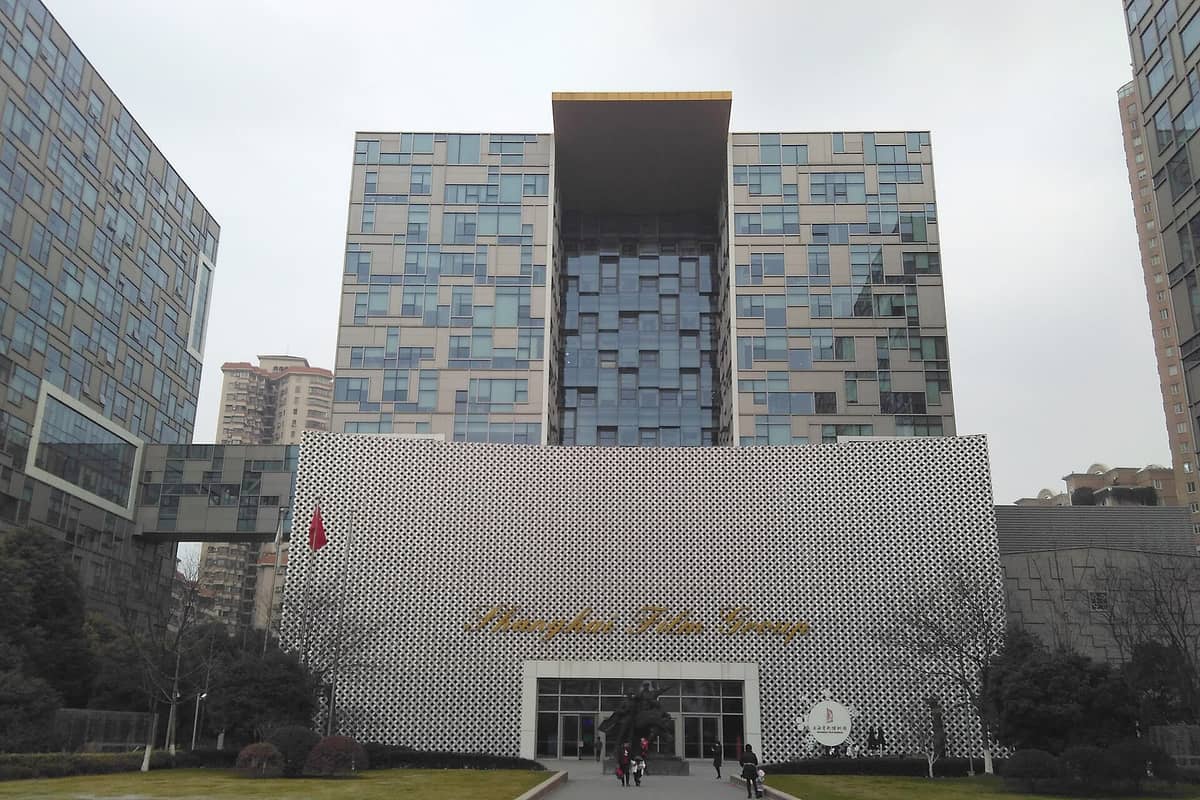
What the Shanghai Film Museum Actually Is
The Shanghai Film Museum (上海电影博物馆) occupies floors one through four of Tower A at No. 595 North Caoxi Road, on the site where the Shanghai Film Studio once produced some of China's most celebrated cinema. That studio legacy is not just a marketing detail — it shapes the entire character of the museum. You are not visiting a purpose-built exhibition hall. You are walking through a building that carries institutional memory, surrounded by restored equipment, original set fragments, and archival material that tells the story of an industry that defined Chinese popular culture for most of the twentieth century.
The museum opened in 2013 and covers Chinese filmmaking from the silent era of the 1920s and 1930s through to contemporary production. Shanghai was the Hollywood of Asia during the Republican era, producing stars, directors, and genres that influenced the entire Chinese-speaking world. That context matters enormously when reading the exhibits. This is not a generic film museum — it is specifically about Shanghai cinema and the studio system that grew up in this city.
💡 Local tip
Opening hours vary by day. Tuesday to Friday: 9:30–16:30 (last admission 16:00). Saturday, Sunday, and public holidays: 9:30–17:00 (last admission 16:30). Closed on Mondays, except public holidays. Verify hours on the official website before visiting, as they are subject to change.
Floor by Floor: What You Will Actually See
The four floors are organized thematically rather than strictly chronologically, which rewards visitors who take time to read the panels rather than simply walking through. The ground floor functions as orientation — a grand atrium that signals the scale of the collection above. Look up on entry: the ceiling installation and the visual weight of the space communicate ambition. It is one of the more arresting museum entrances in the West Bund and Xuhui area.
The upper floors divide into sections covering the history of Shanghai film production, the technical craft of filmmaking (cameras, lighting rigs, editing suites), the Golden Age of Shanghai cinema in the 1930s and 1940s, and exhibition areas dedicated to specific directors, actors, and films. There are original film reels behind glass, promotional posters in formats you will rarely see in other collections, and reconstructed set pieces that give a sense of how productions were physically assembled. Interactive stations allow visitors to experiment with dubbing and basic editing functions, which works particularly well for younger visitors.
One recurring observation from visitors is that the English-language labeling varies in quality across the floors. Some sections are well translated and informative; others rely heavily on Chinese text. If your Mandarin is limited, plan on spending extra time at the more visually oriented displays — the technical equipment, the props, and the poster archives — where the objects speak without requiring fluency.
Tickets & tours
Hand-picked options from our booking partner. Prices are indicative; availability and final rates are confirmed when you complete your booking.
Shanghai city and Zhujiajiao water town private tour with lunch
From 371 €Instant confirmationFree cancellationShanghai private tour with iconic landmarks of the old and new city
From 284 €Instant confirmationFree cancellationShangai Yuyuan Garden entrance tickets
From 9 €Instant confirmationFree cancellation
The Historical Weight of This Site
Understanding why this building matters requires a short detour into Shanghai's film history. From the 1920s onward, Shanghai was the engine of Chinese cinema. Studios here produced melodramas, left-wing social films, and genre pictures that circulated across Southeast Asia and beyond. The Shanghai Film Studio, which eventually occupied this site, was one of the main institutions that carried that tradition through the twentieth century, producing films that won international recognition including at Cannes.
The museum does not shy away from the complexity of that history. Films produced under different political periods, with different ideological requirements, are presented alongside each other, allowing visitors to trace how the industry adapted over decades. For visitors already familiar with Chinese cinema history, the depth here is genuinely satisfying. For those new to the subject, it is a strong introduction. If you want broader context on Shanghai's cultural layers before or after your visit, the Shanghai architecture guide covers how the city's built environment reflects similar historical turns.
Visiting by Time of Day: What Changes
Weekday mornings between 10:00 and 12:00 are the quietest window. School groups and tour parties tend to arrive mid-morning on weekends, particularly on Saturday, which can make the interactive stations and the more popular display areas feel congested. The atrium and lower floors absorb crowds reasonably well, but the upper floors — which have narrower corridors connecting exhibits — feel noticeably more comfortable with fewer people.
Afternoon visits on weekdays work well if you are arriving after lunch. The light inside the museum is largely controlled and artificial, so there is no meaningful difference in how the exhibits look at different times of day — unlike outdoor attractions where timing affects photography dramatically. That said, arriving at least 90 minutes before the last admission time is essential. The collection is dense, and rushing the final floor feels unsatisfying.
⚠️ What to skip
Children under 1.3 m in height and adults over 70 years of age are eligible for discounted tickets; check current terms on-site or via the official website and plan accordingly if visiting with young children or elderly family members.
Getting There and the Surrounding Area
The most straightforward route is Metro Lines 1 or 4 to Shanghai Indoor Stadium Station, then Exit 4, followed by a roughly 500-metre walk north along Caoxi North Road. The walk is flat and takes around six to eight minutes. The building is clearly marked and the entrance is on the ground floor of Tower A.
The museum sits within Xuhui District, part of the broader West Bund cultural corridor that has become one of Shanghai's most significant art and culture zones over the past decade. Within walking distance or a short taxi ride, you will find the Long Museum West Bund and the Power Station of Art, making it practical to combine several cultural visits in a single afternoon. The West Bund riverfront itself is worth a short walk if the weather is reasonable.
Taxis and ride-hailing services via Didi Chuxing are both reliable options if you are coming from further afield. The museum address — No. 595 North Caoxi Road, Xuhui District — is unambiguous enough to enter directly into any navigation app. Parking is available nearby, though driving in central Xuhui during peak hours is slower than the metro.
Practical Notes: Photography, Accessibility, and What to Bring
Photography is generally permitted in the main exhibition areas without flash. Some display cases with original posters and archival documents may have restrictions — follow posted signage on each floor. The indoor lighting is consistent and manageable for smartphone photography, though the reflective glass on display cases can be frustrating. Shooting from a slight angle rather than straight on reduces glare considerably.
The museum is fully indoors, which makes it a practical choice on Shanghai's less cooperative weather days — the heavy rain of the June–July meiyu season, or the grey, damp days of winter. For broader planning around weather and timing, the best time to visit Shanghai guide covers seasonal patterns in detail.
Detailed accessibility information for visitors with mobility requirements is not prominently documented in available sources. If this is a consideration, contacting the museum directly via the official website before visiting is the most reliable approach. The building is a modern commercial tower structure, so elevator access between floors is expected, but specifics should be confirmed.
Honest Assessment: Strengths and Limitations
The Shanghai Film Museum is one of the more undervisited cultural institutions in a city saturated with options. That works in the visitor's favor — it rarely feels overcrowded, the collection is substantial, and the site has genuine historical significance rather than being a constructed tourist attraction. At ¥60, it represents solid value for a two-to-three-hour visit.
The limitations are real, though. Visitors with no familiarity with Chinese cinema history, Chinese film stars, or the political and cultural context of twentieth-century China may find sections of the museum harder to engage with than expected. This is not a failure of the museum — it is simply calibrated for an audience that already has some connection to the subject. If you are looking for a broad popular-culture experience with strong international reference points, the museum may feel more specialist than anticipated. On the other hand, if you are building an itinerary around Shanghai's arts scene, it pairs naturally with stops at M50 Creative Park or a visit to the contemporary art spaces clustered along the West Bund.
Visitors who are primarily seeking interactive, entertainment-first experiences may find the pacing more documentary and archival than they prefer. The museum rewards curiosity and reading; it is not a walk-through spectacle.
Insider Tips
- Arrive on a Tuesday or Wednesday morning to have the upper floors almost entirely to yourself. Weekend afternoons are the busiest windows and the narrow corridors on the top floor become uncomfortable with large groups.
- The ground-floor atrium is worth spending more time in than most visitors allow. Look at the structural details and the way the space references studio architecture — it is doing more than simply providing an entrance hall.
- If your Mandarin is limited, focus your reading energy on the sections covering the 1930s Golden Age and the technical equipment displays. These areas have the strongest visual storytelling and the objects themselves carry the narrative even without fluent reading.
- The museum is within easy walking distance of the West Bund riverfront. Combine your visit with a walk south along the Huangpu to see the cultural corridor's recent architecture before or after your museum time.
- Last admission is 30 minutes before closing time on both weekdays and weekends. Do not cut it close — the upper floors require at least 45 minutes to cover properly.
Who Is Shanghai Film Museum For?
- Travelers with a serious interest in Chinese cinema, cultural history, or the Republican-era Shanghai cultural scene
- Architecture and design enthusiasts interested in how a significant industrial site has been repurposed for cultural use
- Visitors looking for a meaningful indoor option during rainy or very hot days in Xuhui District
- Anyone building a West Bund cultural day combining multiple museum and gallery visits
- Photographers interested in archival material, vintage posters, and production equipment as subjects
Nearby Attractions
Other things to see while in West Bund & Xuhui:
- Long Museum West Bund
Long Museum West Bund sits inside a converted industrial complex on Shanghai's Huangpu riverfront, housing one of China's most significant private collections of modern and contemporary art. Expect grand architectural spaces, rotating blockbuster exhibitions, and a serious curatorial vision that punches well above most municipal museums.
- Longhua Temple and Pagoda
Standing in Xuhui District since at least the Tang era, Longhua Temple (龙华寺) is Shanghai's largest active Buddhist temple and home to one of the city's oldest surviving pagodas. Unlike many heritage sites reduced to museums, this is a working place of worship where monks chant, incense smoke drifts through gilded halls, and the city's noise recedes entirely.