Schloss Schleissheim: The Baroque Palace Complex Munich Visitors Keep Overlooking
Just north of Munich, Schloss Schleissheim is a full Baroque palace ensemble comprising three distinct buildings set in a formal canal garden. Grander in scale than most visitors expect, it offers a quieter, more immersive alternative to the city's more famous royal sites.
Quick Facts
- Location
- Max-Emanuel-Platz 1, 85764 Oberschleißheim (approx. 15 km north of central Munich)
- Getting There
- S-Bahn to Oberschleißheim station, then bus 292 or 295 to 'Schloss' stop
- Time Needed
- 2.5 to 4 hours for all three palaces and the garden
- Cost
- New Palace: €6 regular / €5 reduced. Combination ticket (all three palaces): €10 regular / €8 reduced. Under 18: free
- Best for
- Architecture lovers, Baroque art, history fans, and anyone seeking royal splendor without city crowds
- Official website
- www.schloesser-schleissheim.de
What Schloss Schleissheim Actually Is
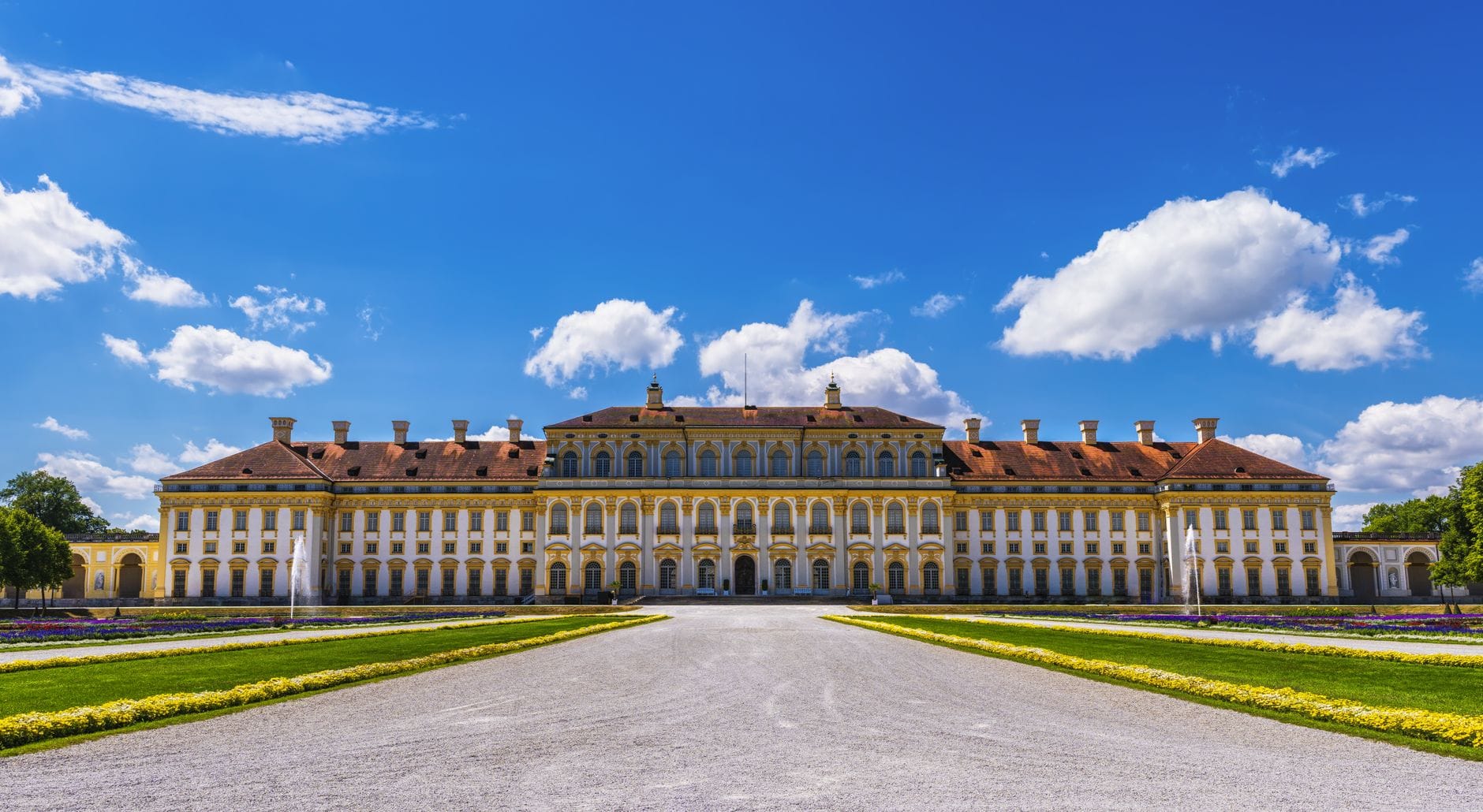
Schloss Schleissheim is not a single palace but a coordinated Baroque ensemble of three separate buildings: the Altes Schloss (Old Palace), the Neues Schloss (New Palace), and Schloss Lustheim, all connected by an elaborate formal garden with canals, fountains, and tree-lined avenues. The complex sits in the municipality of Oberschleißheim, roughly 15 kilometers north of central Munich, and was developed as a residence of the Bavarian Wittelsbach rulers over the 18th century until the end of the monarchy in 1918.
The scale here is the first thing that surprises visitors. The New Palace alone stretches over 300 meters in facade length, making it one of the largest Baroque palace buildings in southern Germany. Standing in the main courtyard and looking across toward the garden axis, then tracing it all the way to Lustheim on the far horizon, gives a clear sense of the ambition behind this project. It was conceived as Bavaria's answer to Versailles, and the spatial drama of the approach still delivers.
💡 Local tip
Buy the combination ticket (€10 regular) at the entrance. It covers all three palaces and represents significantly better value than single-building tickets if you plan to spend more than an hour here. It covers all three palaces and represents significantly better value than single-building tickets if you plan to spend more than an hour here.
The Three Palaces: What to Expect Inside Each One
Neues Schloss: The Baroque Showpiece
The New Palace is the centerpiece of the complex and the one most visitors prioritize. Construction began in 1701 under Elector Max Emanuel, designed by Enrico Zuccalli and later continued by Joseph Effner. The interior rooms are among the most richly decorated Baroque spaces in Bavaria: heavy gilt ceilings, painted galleries, state rooms with original Flemish and Dutch master paintings from the Wittelsbach collection, and a central festival hall with illusionistic ceiling frescoes by Cosmas Damian Asam.
The painting collection inside the New Palace is genuinely significant. It focuses on 17th-century Flemish and Dutch Baroque works, with pieces by Rubens and his school, and represents one of the strongest state collections in the region outside the Alte Pinakothek in Munich proper. Audio guides are available in German, English, French, and Italian for a supplementary fee, and given the depth of the collection, they are worth considering.
Altes Schloss: Older, Quieter, Often Skipped
The Old Palace predates the Baroque ensemble by over a century. Duke Wilhelm V built the original structure around 1598 as a retreat, and it has a plainer, more Renaissance character than the grandeur of the New Palace. Today it houses a museum of religious folk art. Visitor numbers here are noticeably lower than in the New Palace, which makes it a calm counterpoint to the more theatrical experience next door. If religious artifacts and medieval craftsmanship hold your interest, it rewards a 30 to 45-minute visit.
Schloss Lustheim: Porcelain and Canal Silence
Lustheim Palace sits at the far eastern end of the garden, on an artificial island formed by two lateral canals. It was built between 1684 and 1688, also by Zuccalli, as a hunting retreat and pleasure palace for Elector Max Emanuel and his wife. Today it houses the Meissen Porcelain Collection, one of the most extensive displays of early Meissen porcelain in Europe, including pieces from the very first years of production at the Meissen manufactory after 1710.
The walk to Lustheim along the central canal takes about 15 minutes at a comfortable pace. On a dry morning, before the gardens fill, the canal reflects the tree canopy and the silence is considerable. The palace interior is smaller and more intimate than the New Palace, and the porcelain collection has a focused, almost scholarly quality. For visitors without a specific interest in European ceramics, the walk itself may be the draw.
Tickets & tours
Live prices and dates from our booking partner. If you book, we may earn a commission at no extra cost to you.
Luggage Storage in Munich
From 6 €Instant confirmationFree cancellationOne hour city sightseeing bus tour in Munich
From 21 €Instant confirmationFree cancellationMunich Third Reich walking tour
From 32 €Instant confirmationFree cancellationRomantic Road Day Trip to Rothenburg and Harburg
From 74 €Instant confirmationFree cancellation
The Garden: Formal Baroque, Fountains, and Seasonal Variation
The Hofgarten (court garden) connecting the three palaces is a formal Baroque design on a large scale, with symmetrical parterres, clipped hedges, gravel paths, and three parallel canals running east to west. Fountains operate from April through mid-September, with timed shows that add movement and sound to what is otherwise a very still, geometric landscape.
In summer, the garden is at its fullest. The parterres are planted out, the fountains run, and the long axial views are framed by mature trees in full leaf. In early spring or late autumn, the experience is quieter and more austere. The bare geometry of the canal system and the hedge structure becomes more legible without foliage softening the lines. Winter visits are possible during open hours, and the garden paths remain accessible, but the palaces observe shorter hours from October through March (10:00 to 16:00).
ℹ️ Good to know
Fountain shows run April through mid-September. The garden itself is accessible with longer hours than the palaces. Check the official website for the current fountain schedule before visiting.
When to Go and How the Experience Changes by Time of Day
Arriving at opening time (09:00 in summer, 10:00 in winter) puts you in the New Palace ahead of tour groups and school visits, which tend to arrive mid-morning. The light inside the palace rooms is often better in morning hours, particularly in the east-facing state rooms where natural light enters at lower angles.
By midday in summer, the central garden parterres can be warm and exposed with little shade. The canal-side paths and the tree-lined avenues leading to Lustheim are significantly cooler and worth using for the return walk. If you arrive in the early afternoon, start with Lustheim and walk back toward the New Palace, so you finish with the main collection and can exit directly.
Weekday mornings from Tuesday through Thursday see the lightest crowds. Weekends in summer, particularly Saturday afternoons, bring the most visitors. The complex is large enough that it rarely feels overwhelmed, but the New Palace rooms can feel compressed during peak hours. Monday visits are not possible: all three palaces are closed on Mondays, except on certain public holidays.
⚠️ What to skip
All three palaces are closed on Mondays, except on public holidays. Closures also apply on 1 January, Shrove Tuesday, and 24, 25, and 31 December. Check the official calendar for public holiday exceptions.
Getting There from Munich
The most practical route from central Munich is by S-Bahn to Oberschleißheim station, followed by a short local bus ride to the 'Schloss' stop. The total one-way journey including the bus transfer is generally under 35 minutes, making Schleissheim a realistic half-day trip from the city center.
By car, the complex is accessible via the A9 or B471, with paid parking available at Max-Emanuel-Platz near the New Palace entrance. Driving gives more flexibility for reaching the palace early, but the S-Bahn option is straightforward and avoids parking logistics. For visitors already using Munich's public transport network, this fits naturally alongside other day-trip options. For context on transit options across the city, the guide to getting around Munich covers S-Bahn, U-Bahn, and bus networks in detail.
Historical and Cultural Context
The Schleissheim complex represents the peak of Wittelsbach ambition during the early 18th century. Elector Max Emanuel had spent years in exile in France and the Spanish Netherlands after the War of the Spanish Succession, and the New Palace was conceived in part as a statement of restored prestige on his return. The French influence on both the garden design and the interior decoration is deliberate and direct.
As a Wittelsbach royal residence, Schleissheim sits within a broader Munich context that includes Nymphenburg Palace to the west and the Munich Residenz in the city center. Each site reflects different phases of the dynasty's patronage. Nymphenburg is more approachable and frequently visited; the Residenz covers the full political history of the court over centuries. Schleissheim, by contrast, has a more unified period character concentrated in the early Baroque, and the painting collection here adds an art-historical dimension that the garden palaces do not always offer.
The complex survived World War II with significant but not total damage to the New Palace. Restoration work extended across the second half of the 20th century, and the result today reflects careful reconstruction rather than original survival throughout. Some of the painted ceilings and stucco decorations are post-war restorations based on historical documentation.
Practical Notes: Photography, Accessibility, and What to Bring
Photography without flash is generally permitted in the garden and common areas. Interior photography policies in the palace rooms can vary and are worth confirming at the entrance. The formal garden offers the best photography in the morning and late afternoon when the light falls at angles across the canal surface and the hedgerow geometry. The view from the central axis looking east toward Lustheim is the compositional anchor of the complex.
The garden paths are largely paved and level, making the outdoor sections reasonably accessible. The interior of the New Palace involves stairs and historic flooring, and visitors with detailed accessibility requirements are advised to contact the Schloss- und Gartenverwaltung Schleißheim directly before visiting. Comfortable walking shoes are appropriate for the garden, which can take 20 to 30 minutes to traverse on foot between buildings.
There is no large-scale food provision on site. Bring water, particularly in summer, and consider eating before you arrive or after returning to Oberschleißheim village. For food options back in Munich, the Munich eating guide covers options across the city center and surrounding districts.
Is Schleissheim Worth the Trip?
Honestly, this depends on what you are looking for. Schleissheim is not a compact city-center attraction that you pass on the way to something else. It requires a deliberate 30-plus minute journey each way and works best as a dedicated half-day. If Baroque architecture, 17th-century painting, formal garden design, or Wittelsbach history hold genuine interest, the journey is justified and the scale of the complex makes a strong impression.
Visitors with only two or three days in Munich and a long list of central attractions may reasonably prioritize the Residenz, the Pinakothek museums, or the Englischer Garten before making the trip north. But for anyone spending four days or more, or anyone who finds Nymphenburg Palace too crowded, Schleissheim offers more architectural coherence, a stronger painting collection, and far fewer tour groups.
Travelers who dislike walking long distances outdoors, or who are visiting Munich in rainy weather without interest in the interior collections, may find the complex less rewarding. The garden is central to the experience, and rain significantly changes the outdoor atmosphere.
Insider Tips
- Walk the full length of the garden to Lustheim before entering the New Palace. Doing it in reverse (Lustheim first, New Palace last) means you finish at the main entrance and avoid retracing steps across the full garden at the end of the visit.
- The festival hall on the upper floor of the New Palace, with its ceiling fresco by Cosmas Damian Asam, is the single most spectacular interior room on site. Do not rush through the ground floor and miss it.
- Fountain shows run on a timed schedule in the warmer months, not continuously. Check the timetable posted near the garden entrance so you can position yourself along the canal axis when the fountains activate.
- The combination ticket saves money compared to buying individual palace entries separately, but if you have no interest in porcelain or folk art, a single-entry ticket for the New Palace alone may suit your priorities.
- The garden is accessible before and after palace opening hours. If you arrive early, a walk along the canal before the palaces open costs nothing and gives you the formal landscape in quiet morning light.
Who Is Schloss Schleissheim For?
- Architecture and art history enthusiasts who want Baroque royal interiors without the central Munich crowds
- Families with children under 18, who enter all three palaces free
- Photographers looking for formal garden geometry, canal reflections, and long axial compositions
- Visitors on a longer Munich stay who have already covered the major city-center museums and palaces
- Anyone with a specific interest in early Meissen porcelain or 17th-century Flemish painting
Nearby Attractions
Combine your visit with:
- Allianz Arena & FC Bayern Museum
The Allianz Arena is one of Europe's most recognizable stadiums, home to FC Bayern München and capable of holding over 75,000 spectators. Paired with the FC Bayern Museum, it offers a full day of football history, architectural spectacle, and behind-the-scenes access for fans and curious visitors alike.
- Bavaria Statue & Ruhmeshalle
Standing 18.52 metres tall above Theresienwiese, the Bavaria Statue is one of the largest bronze figures in the world, and you can climb inside it. Behind her rises the Ruhmeshalle, a sweeping Doric colonnade commissioned by King Ludwig I to honour distinguished Bavarians. Together they form one of Munich's most undervisited monumental sites.
- Dachau Concentration Camp Memorial
The Dachau Concentration Camp Memorial Site, located 25 minutes from Munich by train, preserves the grounds of the first Nazi concentration camp, opened in 1933. With free admission, a comprehensive documentary exhibition, and guided tours in English, it draws many visitors each year who come to understand one of history's darkest chapters. Plan for at least three to four hours, and go prepared — emotionally as much as practically.
- Tierpark Hellabrunn (Munich Zoo)
Tierpark Hellabrunn has organized its animals by geographic region since 1928, making it the world's first geozoo. Spread across 40 hectares along the Isar River in southern Munich, it is one of Bavaria's most popular family destinations and a serious conservation institution. This guide covers everything you need to plan a rewarding visit.
Planning a trip? Discover personalized activities with the Nomado app.