Sardegna in Miniatura: Sardinia's Whole Island in One Afternoon
Set on 50,000 square metres of Mediterranean scrubland near Tuili, Parco Sardegna in Miniatura compresses the entire geography of Sardinia into a walkable landscape park. Alongside the scale-model island, visitors encounter a reconstructed Nuragic village, dinosaur park, biosphere dome, and planetarium — making it one of the most eclectic family attractions in the Marmilla interior.
Quick Facts
- Location
- Località Riu Lardi, 09029 Tuili (SU), Sardinia — approximately 1 km from Barumini
- Getting There
- Car strongly recommended; public transport is limited. Approx. 55 km north of Cagliari via SS131 and SS197.
- Time Needed
- 2–4 hours depending on which themed areas you visit
- Cost
- €24 adult (12+) / €20 child (1m tall–11 years old) / under 1m free
- Best for
- Families with children, first-time Sardinia visitors, rainy-day alternatives to beaches
- Official website
- http://www.sardegnainminiatura.it/en
What Is Sardegna in Miniatura?
Parco Sardegna in Miniatura — officially known in Italian as that name, and translated as Sardinia in Miniature Park — is a theme park and open-air museum near the village of Tuili in Sardinia's Marmilla region. The site sprawls across roughly 50,000 square metres of low Mediterranean scrub in the valley below the Giara di Gesturi plateau, and its centrepiece is a large-scale topographic reconstruction of the island of Sardinia itself, complete with coastline contours, mountain ranges, and major landmarks rendered at miniature scale.
Beyond the geographic model, the park branches into several distinct themed areas: a reconstructed Nuragic village, a dinosaur park with life-size replicas, a biosphere section, and a planetarium. It is simultaneously a geography lesson, a prehistory exhibit, and a natural-science experience — an unusual combination that works well for mixed-age family groups but can feel slightly unfocused if you arrive expecting a single coherent narrative.
ℹ️ Good to know
The park is seasonal and does not operate year-round. It typically opens in spring and closes by late October or early November. Always confirm current opening dates and hours directly with the park (+39 070 936 1004) or via the official website before making the drive out from Cagliari or Oristano.
Where It Sits: The Marmilla Interior
Tuili sits in the Marmilla subregion — a rolling, agricultural interior that most beach-focused tourists never reach. The landscape here is dramatically different from Sardinia's celebrated coastline: wide grain fields, basalt plateaus, and cork-oak woodland replace the turquoise coves and pink granite of the north. The Giara di Gesturi — the flat-topped basalt plateau that rises just a few kilometres from the park — is home to one of Europe's last populations of small wild horses, the Giara ponies.
This interior setting matters for a visit to Sardegna in Miniatura because the surrounding landscape provides real context for the park's miniature geography. Standing over the scale model of Sardinia and then looking up at the actual Giara plateau on the horizon is a quietly disorienting experience — you are looking at a replica of the island while standing inside the island. Travellers planning a broader inland itinerary might consider pairing this stop with the UNESCO-listed Su Nuraxi di Barumini, which is only about 1 kilometre away and represents one of the best-preserved Nuragic complexes in the Mediterranean.
Tickets & tours
Hand-picked options from our booking partner. Prices are indicative; availability and final rates are confirmed when you complete your booking.
Vineyard Guided Tour and 7 Wine Tasting in Palau
From 84 €Instant confirmationFree cancellationFull-Day Sailboat Tour in La Maddalena Archipelago from Cannigione
From 112 €Instant confirmationFree cancellationHiking excursion to the Devil's Saddle
From 35 €Instant confirmationFree cancellationExcursion to the Archaeological site of Nora
From 70 €Instant confirmationFree cancellation
The Miniature Sardinia: What You Actually See
The topographic reconstruction of the island is the park's most photographed feature and its genuine selling point. The model captures Sardinia's deeply irregular coastline — roughly 1,850 kilometres of it in reality — along with the mountainous interior dominated by the Gennargentu range and its highest peak, Punta La Marmora at 1,834 metres. Viewing it from above, you get an immediate sense of the island's proportions that no map quite conveys: how relatively narrow the northern Gallura region is, how the Campidano plain cuts a diagonal corridor through the island's centre, and how fragmented the southwestern coastline becomes around the Sulcis.
For first-time visitors to Sardinia, this overhead perspective serves a practical purpose. It orients you spatially before you start driving unfamiliar roads, helping you understand why the drive from Cagliari to Olbia takes the route it does, or why the Ogliastra coast feels so physically isolated. The model rewards careful observation rather than a quick glance — look for the detailed coastal inlets and the positioning of the major cities before moving on.
💡 Local tip
Arrive early in the day, ideally when the park opens at 09:00. The miniature model catches morning light at low angles that bring out topographic detail, and the open-air sections become uncomfortable in summer afternoon heat above 30°C. By midday in July and August, the exposed scrubland areas feel significantly hotter than the temperature suggests.
The Nuragic Village, Dinosaurs, and Science Sections
The reconstructed Nuragic village gives younger visitors a tangible encounter with a civilisation that built thousands of stone towers across Sardinia between roughly 1800 and 200 BCE. The structures here are reconstructions rather than originals, but they give a useful physical sense of scale and building technique that a ruined archaeological site sometimes struggles to communicate to children. The dry-stone construction method, the narrow doorways, and the corbelled interiors are all represented.
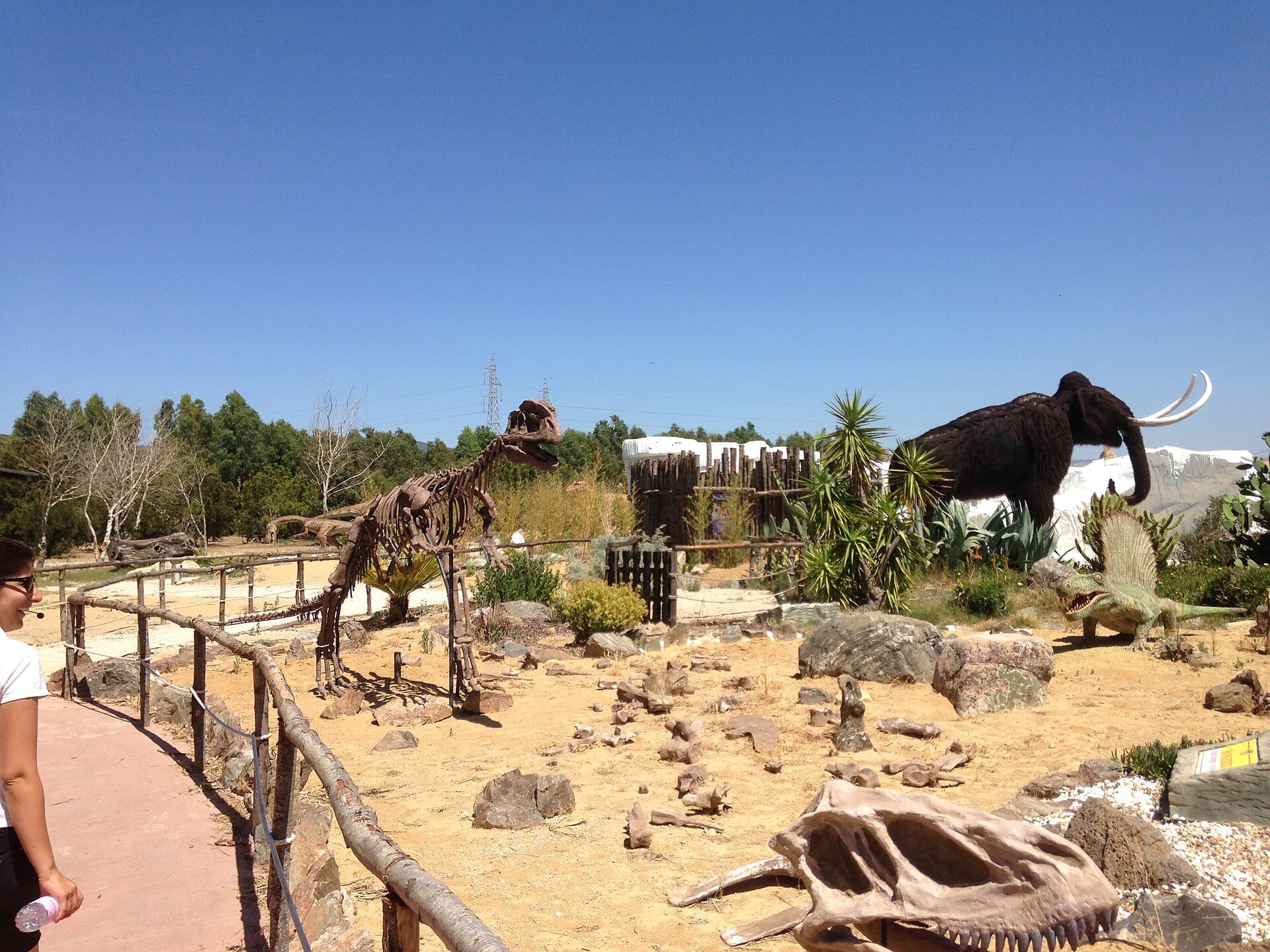
The dinosaur park section features life-size replicas positioned along a walking path through scrubland. It is frankly more thematic decoration than scientific exhibit — do not expect interpretive depth on par with a natural history museum — but children respond to it enthusiastically, and it extends the visit considerably. Sardinia has no significant fossil record from the Mesozoic period, so the dinosaurs have no particular local relevance; they exist to broaden the park's appeal to families. For deep Nuragic context, the Museo Archeologico Nazionale di Cagliari is the more authoritative destination.
The biosphere and planetarium sections round out the visit. The planetarium runs scheduled shows — confirm times at the entrance, as they vary by season — and the enclosed biosphere dome offers a change of environment from the outdoor sections. These areas tend to be quieter than the open-air walks, making them useful retreat options during peak summer heat between noon and 3 PM.
How the Experience Changes Through the Day
Morning visits, roughly between 09:00 and 11:00, offer the most comfortable conditions. The Mediterranean scrub carries a faint scent of rosemary and wild herbs that is strongest before the heat sets in, and the site feels peaceful before coach groups arrive. The Marmilla interior is not a primary tourist corridor, so even in August the park rarely reaches the crowd levels of coastal attractions — but school groups and organised family tours do arrive in late morning.
By early afternoon in summer, the outdoor sections become challenging. The flat, open terrain around the miniature model offers little shade, and the scrubland paths between the dinosaur replicas trap heat. If you are visiting in June, July, or August with young children, plan the planetarium and biosphere sections for the midday window and return to the outdoor areas after 16:00 when the light softens and the temperature drops a few degrees. In spring (April to May) and early autumn (September to October), afternoon visits are entirely comfortable and the light on the miniature topography is particularly good for photography.
Getting There and Practical Logistics
The park is located at Località Riu Lardi, near Tuili, which sits approximately 55 kilometres north of Cagliari via the SS131 and SS197. There is no practical public transport connection to the site — ARST regional buses serve Tuili village, but the timing and frequency make a day trip by bus extremely difficult. This is a car-dependent attraction. Rental car pickup from Cagliari airport takes about an hour to reach the park, and the drive through the Campidano plain is straightforward.
Parking at the site is available and free. The park sits near enough to Barumini that a combined visit is natural: spend the morning at Su Nuraxi di Barumini (which requires separate tickets and has its own guided tour schedule), then cross to Sardegna in Miniatura for the afternoon. Allow at least a full day for both. The Giara di Gesturi plateau is a short drive further and can extend the day into a genuine Marmilla inland circuit.
Admission is €22 for adults (12+) and €18 for children (from 1 metre tall up to 11 years); under-1-metre children enter free. A single ticket covers the main park areas, and full-price tickets can be validated for one free return visit in the same season. Verify packages and any add-ons on sardegnainminiatura.it before arriving.
⚠️ What to skip
Accessibility information is not clearly published. The site's flat terrain may suit some mobility needs, but step-free access to all areas, ramp availability, and accessible restroom provision are not confirmed in available sources. Visitors with specific accessibility requirements should call the park directly before travelling: +39 070 936 1004.
Is It Worth the Trip?
Sardegna in Miniatura occupies a particular niche. It is not a world-class attraction by any European standard, and visitors expecting a polished, museum-quality experience may find the thematic mix of miniature geography, dinosaur replicas, and science exhibits a little eclectic. The dinosaur section in particular has no coherent connection to Sardinia's actual natural history.
That said, it delivers reliably well for its target audience: families with children aged roughly 5 to 14, first-time Sardinia visitors who want geographic orientation, and travellers already in the Marmilla area for Su Nuraxi. For anyone combining it with the UNESCO site next door, the additional entry cost and hour or two of extra time represent good value. Solo travellers or couples without children who have limited days on the island should probably prioritise the surrounding countryside — the Nuragic sites across Sardinia and the Barbagia interior offer deeper cultural experiences.
Weather significantly affects the quality of a visit. Rain turns the outdoor paths muddy and reduces the visual impact of the miniature model. Extreme summer heat makes the open-air sections unpleasant between noon and 4 PM. The sweet spot is a dry morning in May, September, or October, when the park is at its best and the Marmilla landscape itself is at its greenest or most golden.
Insider Tips
- Buy tickets in advance through Tiqets or the official site rather than queuing at the gate, especially if you are visiting during August when school groups and family tours converge in late morning.
- The miniature Sardinia model photographs best from above with a wide-angle lens or smartphone camera in portrait orientation — the full outline of the island fits cleanly into frame from the elevated viewing position on the west side of the model.
- Combine the visit with Su Nuraxi di Barumini by booking the Nuragic complex's guided tour for 09:30 (tours run on a fixed schedule; book ahead in summer), then walk or drive 1 kilometre to Sardegna in Miniatura for midday.
- The planetarium show schedule is fixed and limited — ask for the timetable at the entrance immediately upon arrival and plan your route through the outdoor sections around it rather than leaving the planetarium for last.
- Bring water and sunscreen regardless of the forecast. The open scrubland terrain offers almost no natural shade, and even in June a two-hour outdoor walk in the park will feel drier and hotter than coastal Sardinia at the same temperature.
Who Is Sardegna in Miniatura For?
- Families with children aged 5 to 14 looking for an engaging, multi-activity half-day in the Sardinian interior
- First-time visitors to Sardinia who want a geographic overview of the island before exploring by car
- Travellers already visiting Su Nuraxi di Barumini who want to extend the day without driving far
- Groups with mixed interests, where one section (planetarium, dinosaurs, miniature model) can satisfy different members simultaneously
- Visitors caught in an unexpectedly overcast or hot inland day who want a structured, partially covered alternative to a beach
Nearby Attractions
Other things to see while in Barbagia & Nuoro:
- Giara di Gesturi
Rising to around 550 metres above central Sardinia, the Giara di Gesturi is a 45-square-kilometre basalt plateau formed by Oligocene volcanic activity. Cork oak forests, seasonal wetlands, and an extraordinary population of small wild horses make it one of the most ecologically singular landscapes on the island.
- Gola di Su Gorropu
Gola di Su Gorropu is a karst canyon in Sardinia's Supramonte massif with walls rising over 500 metres and passages as narrow as 4 metres across. It's a serious hiking destination that rewards physical effort with one of the most dramatic landscapes in the Mediterranean.
- Monte Ortobene
Reaching a maximum elevation of 955 metres above sea level near the inland city of Nuoro, Monte Ortobene is a forested mountain with panoramic views across central Sardinia, a landmark bronze statue of Cristo Redentore, and walking paths through fragrant Mediterranean scrubland. Access is free, the road reaches the summit, and the atmosphere is unlike anything on the coast.
- Murales di Orgosolo
Orgosolo, a small hill town in the Barbagia region of central Sardinia, has covered its streets in around 150 murals since the late 1960s. Free to visit at any hour, the Murales di Orgosolo form one of the most politically charged and visually striking open-air art experiences in Italy.